
 My Inquiry
 My Account


Analog Devices Inc. TMP17FS
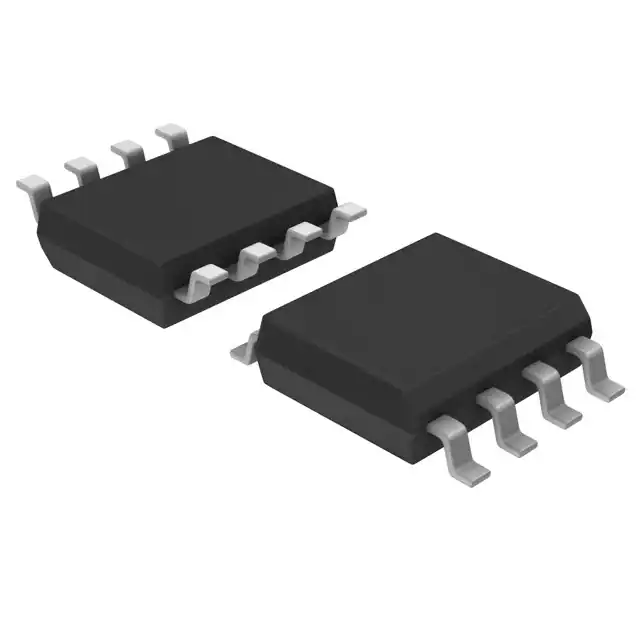
- Part No.:
- TMP17FS
- Manufacturer:
- Analog Devices Inc.
- Category:
- Analog and Digital Output
- Package:
- 8-SOIC (0.154", 3.90mm Width)
- Datasheet:
-
 TMP17FS.pdf
- Description:
- SENSOR ANALOG -40C-105C 8SOIC
- Quantity:
- Payment:

- Shipping:

Inventory:3,230
Please send an inquiry. Send us your inquiry, and we will respond immediately.
Product details
Overview
TMP17FS from Texas Instruments is a precision analog temperature sensor IC delivering a PTAT (Proportional-To-Absolute-Temperature) current output of 1 µA/K, with ±2.5°C calibration accuracy at +25°C and ±3.5°C error over –40°C to +105°C, operating from 4 V to 30 V supply. It functions as a two-terminal current-source transducer in remote or distributed thermal monitoring systems, such as industrial process controllers and HVAC sensor nodes.
For engineers reviewing the TMP17FS datasheet, TMP17FS pinout, TMP17FS application, or TMP17FS equivalent, this page provides verified electrical specifications, SOIC-8 package details, real-world thermal response data, trimming methodology for improved system accuracy, and validated alternative options for temperature sensing in voltage-constrained or high-reliability environments.
Technical Context
The TMP17FS implements a silicon bandgap-based PTAT current source architecture, where base-emitter voltage difference between matched transistors is converted to a highly linear 1 µA/K output current using low-TC thin-film resistors. Factory laser-trimmed at wafer level for scale factor accuracy, it requires no external active components for basic operation.
Its two-terminal configuration enables simple series/parallel connection topologies for average or minimum temperature measurement, while its 4–30 V supply compliance and 0.3 °C/V PSRR above 5 V support unregulated or noisy power rails. Thermal time constant ranges from 10 s (forced air @ 500 FPM) to 52 s (still air), per JEDEC MS-012AA SOIC-8 mounting conditions.
Key Specifications
| Parameter | Value and Actual Design Meaning |
|---|---|
| Output Type | Two-terminal current source: 1 µA/K nominal, enabling direct Kelvin-to-current conversion without external biasing. |
| Accuracy @ +25°C | ±2.5°C - maximum deviation before trim; supports single-point calibration to reduce to <±0.5°C in end equipment. |
| Accuracy Over Temp | ±3.5°C across –40°C to +105°C - guaranteed total error including initial offset, scale drift, and nonlinearity. |
| Nonlinearity | 0.5°C max - defined as deviation from best-fit line; not removable by trimming, sets ultimate system resolution limit. |
| Supply Range | 4 V to 30 V - allows use with legacy 12 V/24 V industrial rails and eliminates need for LDO regulation. |
| PSRR | 0.3 °C/V (5–30 V range) - suppresses supply ripple-induced temperature reading errors in noisy environments. |
| Long-Term Stability | 0.2°C/month at 150°C - quantifies aging drift under accelerated stress; informs maintenance interval planning in high-temp deployments. |
Pinout & Package
Package: 8-Lead SOIC-Narrow (R-8), JEDEC MS-012AA compliant; body dimensions 4.9 mm × 3.9 mm × 1.75 mm; lead pitch 1.27 mm; coplanarity ≤ 0.10 mm.
| Pin/Terminal | Circuit Role | Design Meaning |
|---|---|---|
| V+ | Positive supply terminal | Accepts 4–30 V; supplies internal PTAT core and bias circuitry; also serves as output return path in two-wire configuration. |
| V− | Negative supply / output terminal | Sinks output current (e.g., 298.2 µA at 25°C); forms two-terminal loop with load resistor to ground or reference. |
Key Features
| Feature | Design Value |
|---|---|
| PTAT Current Output | 1 µA/K scale factor - enables direct Kelvin measurement with 1 kΩ load yielding 1 mV/K, simplifying ADC interface design. |
| Two-Terminal Operation | No separate ground or reference pin - reduces wiring count in remote sensors and enables series/parallel multi-sensor configurations. |
| High Supply Rejection | 0.3 °C/V PSRR above 5 V - permits use with unregulated supplies without introducing measurable temperature error. |
| Thermal Time Constant | 10 s (forced air @ 500 FPM) - defines dynamic response speed for closed-loop control or transient thermal event capture. |
| ESD Protection | 4 kV HBM - integrated protection mitigates handling damage risk during PCB assembly and field service. |
Applications
| Industrial Process Monitoring | HVAC Sensor Node |
|---|---|
|
Use Scenario: Continuous temperature logging in chemical reactor jackets with 4–20 mA loop integration. IC Role / Device Role / Timing Role: Primary temperature transducer converting local junction temperature into scalable current output for transmitter stage. Use Value: ±3.5°C full-range accuracy ensures compliance with ISA-75.01.01 control loop tolerances; 30 V max supply supports 24 V DC plant infrastructure. |
Use Scenario: Distributed room temperature sensing across multi-zone commercial HVAC systems. IC Role / Device Role / Timing Role: Local ambient temperature sensing element interfaced to microcontroller via precision I-to-V converter. Use Value: 0.5°C nonlinearity enables <±0.3°C system-level accuracy after single 25°C trim; SOIC-8 footprint allows compact PCB layout. |
| Cold Junction Compensation | Remote Multiplexed Sensing |
|
Use Scenario: Thermocouple signal conditioning in data acquisition modules requiring automatic CJC. IC Role / Device Role / Timing Role: Reference junction temperature sensor providing 1 µA/K input to op-amp gain/offset network. Use Value: Matched TC to thermocouple types J/K/E eliminates ice-bath dependency; 0.2°C/month stability maintains calibration integrity over 12+ months. |
Use Scenario: Monitoring 80+ motor windings in factory automation using matrix multiplexer topology. IC Role / Device Role / Timing Role: Individual node in column-row addressed sensor array, selected via CMOS mux and BCD decoder. Use Value: Two-terminal current output prevents on-resistance errors from FET switches; 4 V minimum compliance enables reliable selection across long traces. |
Equivalent & Alternatives
The following parts are listed as comparable options for similar analog temperature transducer applications.
| Alternative Part | Technical Difference | Application Difference | Selection Advice |
|---|---|---|---|
| LM35DH/NOPB | Voltage-output (10 mV/°C); requires 4 V min supply; ±0.5°C typical accuracy at 25°C but ±2°C over –40°C to +125°C. | Needs regulated supply and rail-to-rail op amp for low-voltage operation; less immune to EMI than current-mode output. | Prefer when board space allows dedicated VCC/GND routing and system already uses voltage-output sensors. |
| ADT75ARMZ | Digital I²C output; 12-bit resolution; ±2°C accuracy over –55°C to +125°C; requires 2.7–5.5 V supply and external pull-ups. | Eliminates analog signal chain but adds firmware overhead; unsuitable for analog multiplexing or passive averaging topologies. | Choose when digital bus integration, higher resolution, or lower self-heating (<0.1°C) is prioritized over analog simplicity. |
Compared with LM35DH/NOPB and ADT75ARMZ, the TMP17FS offers superior noise immunity via current-mode signaling, native support for multi-sensor averaging/min detection, and wider supply range-making it optimal for industrial analog signal conditioning where wiring distance, EMI, and supply variability are critical constraints.
Availability
TMP17FS is available at Aetrix Electronics and suitable for industrial process monitoring, HVAC sensor nodes, cold junction compensation circuits, and remote multiplexed sensing applications requiring stable component supply and long-term calibration integrity.
Supply support for TMP17FS includes scheduled delivery planning, volume procurement assistance, BOM continuity management, traceable sourcing, and lifecycle availability coordination for OEM customers, industrial embedded developers, connected-device designers, and electronics production programs.
Manufacturer
Texas Instruments is a global semiconductor leader specializing in analog and embedded processing technologies, with decades of heritage in precision signal conditioning and industrial-grade IC design.
The TMP17FS belongs to TI's analog temperature sensor product line, engineered specifically for high-accuracy, two-wire, current-output thermal measurement in harsh industrial and building automation environments.
FAQ
What is the output format and scaling of the TMP17FS?
The TMP17FS delivers a two-terminal PTAT current output scaled at 1 µA per Kelvin (1 µA/K). At 25°C (298.2 K), it sources 298.2 µA; at 0°C (273.15 K), it sources 273.15 µA. This linear relationship holds across its full –40°C to +105°C operating range and enables direct Kelvin-to-current conversion without external active components. The TMP17FS does not provide voltage output natively.
Can the TMP17FS be used in series or parallel configurations?
Yes - the TMP17FS supports both configurations due to its two-terminal current-source architecture. Connecting multiple TMP17FS devices in parallel sums their output currents, yielding an average temperature reading. Connecting them in series results in the lowest sensed temperature dominating the loop current, enabling minimum-temperature detection. These topologies are explicitly validated in TI's application notes and require no additional circuitry beyond load resistors.
Does the TMP17FS require external calibration to achieve its specified accuracy?
The TMP17FS achieves ±2.5°C accuracy at +25°C and ±3.5°C over temperature without external calibration. However, a single-point trim at 25°C can reduce calibration error to near zero, improving system accuracy to <±0.5°C. TI provides reference circuits (e.g., Figure 3 and Figure 15) using adjustable resistors to implement this trim, which compensates for initial offset without affecting the 1 µA/K scale factor.
What is the thermal time constant of the TMP17FS in different environments?
The TMP17FS thermal time constant varies with mounting and airflow: 52 seconds in still air, 10 seconds in forced air at 500 FPM, and ~2 seconds in Fluorinert liquid. These values reflect the time to reach 63.2% of final temperature and are measured on SOIC-8 packages soldered to 0.5″ × 0.3″ copper PCBs. Self-heating error remains ≤0.2°C in typical free-air 5 V operation, per TI characterization data.
Is the TMP17FS compatible with 4–20 mA industrial current loops?
No - the TMP17FS is not directly compatible with standard 4–20 mA loops. Its output is a 1 µA/K current source, not a programmable 4–20 mA transmitter. However, TI provides a reference design (Figure 10) using an op amp and precision resistors to convert TMP17FS output into a calibrated 4–20 mA signal spanning user-defined temperature ranges (e.g., 17°C to 33°C), provided external active circuitry is added.
TMP17FS Specifications
- Product attributes
- Attribute value
- Manufacturer:
- Analog Devices Inc.
- Series:
- -
- Package/Case:
- 8-SOIC (0.154", 3.90mm Width)
- Packaging:
- Tube
- Product Status:
- Obsolete
- Sensor Type:
- Analog, Local
- Sensing Temperature - Local:
- -40°C ~ 105°C
- Sensing Temperature - Remote:
- -
- Output Type:
- Analog Current
- Voltage - Supply:
- 4V ~ 30V
- Resolution:
- -
- Features:
- -
- Accuracy - Highest (Lowest):
- ±2.5°C (±3.5°C)
- Test Condition:
- 25°C (-40°C ~ 105°C)
- Operating Temperature:
- -40°C ~ 105°C
- Mounting Type:
- Surface Mount
- Grade:
- -
- Qualification:
- -
- Supplier Device Package:
- 8-SOIC
TMP17FS FAQ
1.How can I place an order for TMP17FS through Aetrix?
Please submit a Request for Quotation (RFQ) for TMP17FS on Aetrix. Our sales agent will provide a competitive quotation and guide you through the order confirmation once you accept the terms.
2.Are the price and stock information for TMP17FS reliable?
The price and inventory of TMP17FS are updated periodically and may fluctuate due to market conditions. Stock and pricing data are typically refreshed every 24 hours. Quotation validity for TMP17FS is usually 5 days.
3.What payment methods are accepted for TMP17FS?
We accept Wire Transfer, PayPal, Credit Card, Western Union, MoneyGram, and Escrow for TMP17FS transactions.
Note: Certain payment methods may incur a processing fee.
4.How is shipping managed for TMP17FS?
TMP17FS orders can be shipped via leading logistics carriers, including DHL, UPS, FedEx, TNT, or Registered Mail.
Once your TMP17FS order is processed, you will receive an email with the shipment details and tracking number.
Note: Tracking information may take up to 24 hours to appear. Express delivery typically takes 3–5 business days.
5.How can I obtain technical support or documentation for TMP17FS?
For technical support, including TMP17FS datasheets, pinout diagrams, or application guidance, please contact our engineering support team. They can provide detailed documentation and assistance for your TMP17FS requirements.
6.How does Aetrix verify that TMP17FS is sourced from the original manufacturer or authorized distributors?
All TMP17FS products on Aetrix are procured from qualified distributors and authorized channels. Our dedicated quality assurance team conducts strict verification, including traceability checks and, if necessary, third-party testing. This ensures that TMP17FS meets industry standards.
7.What is the process for return or replacement of TMP17FS?
All TMP17FS units undergo pre-shipment inspection (PSI). If there is an issue with TMP17FS, returns or replacements are accepted under the following conditions:
1.Quantity discrepancies, incorrect items, or visible external defects (such as breakage or corrosion), acknowledged by Aetrix.
2.The issue is reported within 90 days of delivery.
3.The TMP17FS part is unused and in its original packaging.
Return procedure for TMP17FS:
1.Submit a request within 90 days.
2.Obtain a Return Material Authorization (RMA) from Aetrix.
TMP17FS Tags
-
MCP9700T-E/TT
Microchip Technology
-
MCP9700T-E/LT
Microchip Technology
-
MCP9701T-E/TT
Microchip Technology
-
MCP9701T-E/LT
Microchip Technology
-
TMP235A4DBZR
Texas Instruments
-
MCP9700AT-E/TT
Microchip Technology
-
MCP9700AT-E/LT
Microchip Technology
-
MCP9701AT-E/LT
Microchip Technology
-
MCP9701AT-E/TT
Microchip Technology
,TO-226_straightlead.jpg)
-
LM335Z
STMicroelectronics
-
TMP1075NDRLR
Texas Instruments
-
TMP1075DGKR
Texas Instruments
Tech Hub

A practical engineering guide to 3.3V and 5V logic compatibility, input thresholds, resistor dividers, translator ICs, MOSFET level shifting, I2C pull-ups, timing limits and power-sequencing risks.

The 74HC595 uses push-pull logic outputs, while the TPIC6B595 uses 50 V open-drain DMOS sinks for higher-power loads. This guide compares timing, current limits, 3.3 V interfacing, load wiring, thermal…

The 74HC595 converts serial data into eight stable parallel outputs. This guide covers pin functions, shift and storage timing, OE and MR behavior, drive-current limits, cascading, voltage compatibilit…

A technical comparison of level-sensitive latches and edge-triggered flip-flops, covering timing windows, setup and hold limits, master–slave operation, time borrowing, race-through, HDL inference and…

A D latch stores one bit while Enable controls when data can pass. This reference covers gate-level operation, truth tables, transparency, setup and hold timing, LE versus OE, common ICs and practical …

An SR latch stores one bit through cross-coupled feedback. This engineering reference covers NOR and NAND implementations, truth tables, forbidden-state recovery, gated operation, switch debouncing, fa…

Latch circuits retain one bit through feedback. This technical reference covers SR and D latches, truth tables, transparency, timing limits, latch-versus-flip-flop behavior, applications and common log…

An engineering guide to LED driver operation, constant-current and constant-voltage outputs, linear and switching topologies, dimming, IC selection, calculations, replacement compatibility, and fault c…

Operational amplifier guide covering op amp basics, feedback, ideal vs real op amps, common configurations, buffer circuits, offset, bias current, gain-bandwidth, slew rate, rail-to-rail limits and sel…

Jumper cables guide covering safe connection order, red and black clamp placement, final ground connection, cable gauge, length, clamp quality, copper vs CCA cables, jump starter comparison and battery…


