
 My Inquiry
 My Account


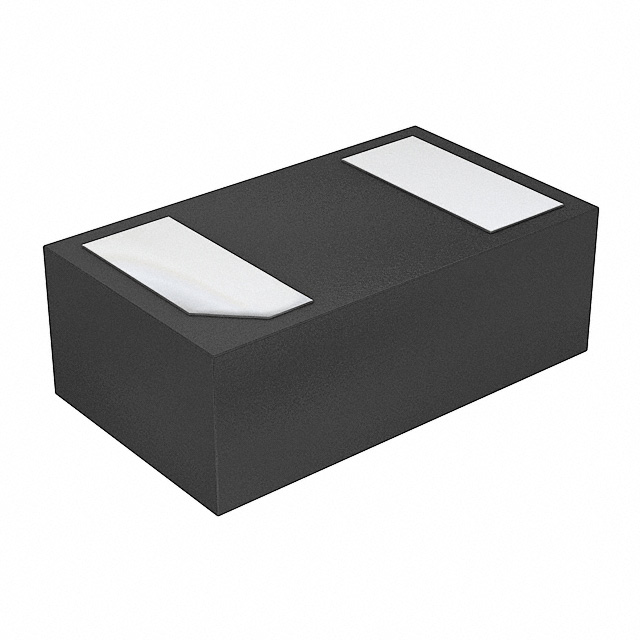
Texas Instruments TMP6431DECT
- Part No.:
- TMP6431DECT
- Manufacturer:
- Texas Instruments
- Category:
- PTC Thermistors
- Package:
- 0402 (1006 Metric)
- Datasheet:
-
 TMP6431DECT.pdf
- Description:
- SENSOR PTC 47KOHM 1% X1SON
- Quantity:
- Payment:

- Shipping:

Inventory:304
Please send an inquiry. Send us your inquiry, and we will respond immediately.
Product details
Overview
TMP6431DECT from Texas Instruments is a silicon-based linear positive temperature coefficient (PTC) thermistor with 47-kΩ nominal resistance at 25 °C (±1% tolerance over 0 °C to 70 °C), 6400 ppm/°C TCR at 25 °C, and –40 °C to +150 °C operating range in a 0402-compatible X1SON package. It delivers fast thermal response (0.6 s in stirred liquid) and built-in fail-safe behavior during short-circuit events, enabling precise temperature monitoring in space-constrained motor control and charger systems.
For engineers reviewing the TMP6431DECT datasheet, TMP6431DECT pinout, TMP6431DECT application, or TMP6431DECT equivalent, key selection considerations include its linear R–T curve eliminating NTC linearization circuitry, ±0.2% typical TCR tolerance across temperature, 100 µA max bias current compliance, and compatibility with ratiometric ADC interfaces using 47-kΩ bias resistors.
Technical Context
The TMP6431DECT operates as a two-terminal voltage-biased PTC sensor whose resistance increases linearly with temperature-enabling direct polynomial or lookup-table conversion without external linearization components. Its silicon process ensures consistent TCR (6400 ppm/°C at 25 °C) and low long-term drift (0.5% typical after 600 h at 150 °C).
It requires unidirectional biasing: pin 2 (+) must be held at higher potential than pin 1 (–) to maintain proper junction polarization. Self-heating is minimized by low thermal mass and operation within 0–100 µA bias current, with dissipation effects quantified via RθJA = 443.4 °C/W (X1SON).
Key Specifications
| Parameter | Value and Actual Design Meaning |
|---|---|
| R25 | 47 kΩ ±1% (0 °C to 70 °C); enables accurate baseline calibration with minimal binning |
| TCR at 25 °C | +6400 ppm/°C ±0.2%; provides stable sensitivity for linear temperature-to-voltage conversion |
| Operating Range | –40 °C to +150 °C (SOT-5X3/DYA); supports high-temp industrial and automotive thermal management |
| Thermal Response | 0.6 s (63% step in stirred liquid); allows rapid detection of transient thermal events |
| Max Bias Current | 100 µA; limits self-heating error to <0.1 °C under typical 5.5 V bias |
| Long-Term Drift | 0.5% typical after 600 h at 150 °C; ensures stable calibration over product lifetime |
| ESD Rating | ±2000 V HBM; withstands standard handling without additional protection circuitry |
Pinout & Package
TMP6431DECT uses a 2-pin X1SON package (0.60 mm × 1.00 mm), footprint-compatible with industry-standard 0402 (inch) land patterns. The device has no internal circuitry-only passive thermistor terminals requiring correct polarity for reliable operation.
| Pin/Terminal | Circuit Role | Design Meaning |
|---|---|---|
| 1 (–) | Thermistor cathode terminal | Must be connected to lower voltage potential; reverse bias risks parametric shift or damage |
| 2 (+) | Thermistor anode terminal | Must be connected to higher voltage potential; defines direction of current flow and junction polarization |
Key Features
| Feature | Design Value |
|---|---|
| Linear PTC resistance curve | Eliminates need for NTC linearization resistors or complex calibration-reduces BOM count and firmware overhead |
| Built-in short-circuit fail-safe | Resistance rises during overcurrent, limiting power dissipation and preventing thermal runaway unlike NTCs |
| Low self-heating impact | 0.5% typical long-term drift at 150 °C confirms minimal measurement error from internal heating |
| Ratiometric ADC compatibility | 47-kΩ nominal R25 matches common bias resistor values, enabling supply-tolerance cancellation in voltage-divider circuits |
| Fast thermal response | 0.6 s in stirred liquid enables real-time thermal event detection in motor windings and power converters |
Applications
| Motor Control Thermal Protection | USB-C Charger Temperature Monitoring |
|---|---|
Use Scenario: Real-time winding temperature sensing in BLDC motor drivers to prevent insulation failure. IC Role / Device Role / Timing Role: Two-terminal PTC thermistor placed adjacent to stator windings, biased with 100 µA current source. Use Value: Linear 6400 ppm/°C TCR enables direct microcontroller ADC interpretation without lookup tables-reducing code size and latency. | Use Scenario: In-situ temperature monitoring of GaN FETs and output capacitors in compact USB-C PD chargers. IC Role / Device Role / Timing Role: Surface-mount thermistor on primary-side PCB, interfaced via ratiometric voltage divider with MCU's internal ADC reference. Use Value: 0.6 s thermal response captures rapid MOSFET junction transients; ±1% R25 tolerance avoids per-unit calibration. |
| HVAC Thermostat Sensing | Industrial PLC I/O Module Compensation |
Use Scenario: Ambient air temperature measurement in wall-mounted smart thermostats with tight form factor constraints. IC Role / Device Role / Timing Role: 0402-compatible X1SON thermistor mounted on front-panel PCB, biased at 42.6 µA for optimal linearity. Use Value: –40 °C to +125 °C operating range covers full residential HVAC ambient envelope; 0.2% TCR tolerance ensures ±0.1 °C accuracy over decades. | Use Scenario: Temperature compensation of analog input channel gain/offset in DIN-rail mounted programmable logic controllers. IC Role / Device Role / Timing Role: Thermistor integrated into signal conditioning path near op-amp feedback network to track thermal drift. Use Value: Consistent 6400 ppm/°C TCR across –40 °C to +150 °C enables single-point compensation algorithm-replacing multi-point NTC calibration. |
Equivalent & Alternatives
The following parts are listed as comparable options for similar linear PTC thermistor applications.
| Alternative Part | Technical Difference | Application Difference | Selection Advice |
|---|---|---|---|
| TMP6431DCKT | Same R25, TCR, and specs; uses SOT-23-3 package with exposed pad-higher thermal conductivity but larger footprint | Preferred where board-level heat sinking is required; not 0402 drop-in compatible | Select when thermal performance outweighs size constraints and PCB layout allows SOT-23-3 placement |
| TMP6131DECT | 10-kΩ R25, same ±1% tolerance and 6400 ppm/°C TCR, identical X1SON package | Better suited for low-voltage systems (<3.3 V bias) due to lower absolute resistance and reduced self-heating | Select when system bias voltage is limited or lower power consumption is critical |
Compared with TMP6431DECT, TMP6431DCKT offers superior thermal dissipation in high-power environments but requires PCB redesign, while TMP6131DECT maintains identical form factor and linearity at 10 kΩ-making it ideal for low-voltage, low-power thermal sensing where 47 kΩ would exceed ADC input impedance limits.
Availability
TMP6431DECT is available at Aetrix Electronics and suitable for motor control thermal protection, USB-C charger temperature monitoring, and HVAC thermostat sensing requiring stable component supply across extended temperature ranges and high-reliability production cycles.
Supply support for TMP6431DECT includes scheduled delivery planning, volume procurement assistance, BOM continuity management, traceable sourcing, and lifecycle availability coordination for OEM customers, industrial embedded developers, connected-device designers, and electronics production programs.
Manufacturer
Texas Instruments is a global semiconductor company specializing in analog and embedded processing technologies, with leadership in precision sensing, power management, and signal chain solutions.
The TMP64 series is part of TI's linear thermistor portfolio designed specifically to replace NTCs in high-accuracy, low-maintenance temperature sensing applications-emphasizing linearity, long-term stability, and fail-safe behavior in industrial and automotive systems.
FAQ
What is the maximum operating temperature for TMP6431DECT?
The TMP6431DECT supports continuous operation up to +150 °C when used in the SOT-5X3 (DYA) package variant. In the X1SON (DEC) package-such as the TMP6431DECT-the maximum rated operating temperature is +125 °C. This distinction is defined in the device comparison table and confirmed in Section 7.3 of the datasheet. Exceeding these limits may accelerate long-term drift or compromise reliability. Always verify package type and corresponding thermal ratings before final design validation.
Does TMP6431DECT require external linearization circuitry?
No, TMP6431DECT does not require external linearization circuitry. Its silicon-based PTC structure delivers a highly linear resistance-vs.-temperature curve (±0.2% TCR tolerance), enabling direct use with simple voltage dividers or current-source biasing. Unlike NTC thermistors-which demand parallel resistors or complex polynomials-TMP6431DECT supports straightforward polynomial or lookup-table conversion. TI's Thermistor Design Tool generates application-specific R–T tables based on actual bias conditions, ensuring accuracy without added components.
What is the recommended bias current for TMP6431DECT?
The recommended bias current for TMP6431DECT is 42.553 µA, as specified in Section 7.5 of the datasheet for electrical characterization. This value balances linearity, self-heating error (<0.05 °C), and signal-to-noise ratio across the full temperature range. While operation up to 100 µA is permitted, higher currents increase self-heating and reduce measurement accuracy-especially above 85 °C. For ratiometric ADC interfaces, maintaining 42.553 µA ensures optimal TCR stability and matches TI's published R–T tables.
How does TMP6431DECT provide built-in fail-safe behavior?
TMP6431DECT provides built-in fail-safe behavior through its positive temperature coefficient: during a short-to-supply fault, rising current causes increased self-heating, which raises resistance and inherently limits further current flow-preventing thermal runaway. This contrasts with NTCs, whose resistance drops under overtemperature, creating destructive positive feedback. The fail-safe mechanism is intrinsic to the silicon PTC structure and requires no external circuitry, making TMP6431DECT suitable for safety-critical thermal cutoff applications in motor drives and power supplies.
Is TMP6431DECT pin-compatible with other TMP6x devices?
Yes, TMP6431DECT is pin-compatible with other TMP6x variants in the same X1SON (DEC) package-including TMP6131DECT and TMP6331DECT-as all share identical 2-pin pinout (pin 1 = –, pin 2 = +) and 0.60 mm × 1.00 mm body dimensions. However, R25 values differ (10 kΩ, 47 kΩ, 100 kΩ), so direct substitution requires verification of bias network compatibility and ADC scaling. No changes to PCB layout are needed when swapping within the DEC package family.
TMP6431DECT Specifications
- Product attributes
- Attribute value
- Manufacturer:
- Texas Instruments
- Series:
- -
- Package/Case:
- 0402 (1006 Metric)
- Packaging:
- Tape & Reel (TR)
- Product Status:
- Obsolete
- Resistance @ 25°C:
- 47 kOhms
- Resistance Tolerance:
- ±1%
- Operating Temperature:
- -40°C ~ 125°C
- Power - Max:
- -
- Mounting Type:
- Surface Mount
- Grade:
- -
- Qualification:
- -
- Supplier Device Package:
- 2-X1SON (1x0.6)
TMP6431DECT FAQ
1.How can I place an order for TMP6431DECT through Aetrix?
Please submit a Request for Quotation (RFQ) for TMP6431DECT on Aetrix. Our sales agent will provide a competitive quotation and guide you through the order confirmation once you accept the terms.
2.Are the price and stock information for TMP6431DECT reliable?
The price and inventory of TMP6431DECT are updated periodically and may fluctuate due to market conditions. Stock and pricing data are typically refreshed every 24 hours. Quotation validity for TMP6431DECT is usually 5 days.
3.What payment methods are accepted for TMP6431DECT?
We accept Wire Transfer, PayPal, Credit Card, Western Union, MoneyGram, and Escrow for TMP6431DECT transactions.
Note: Certain payment methods may incur a processing fee.
4.How is shipping managed for TMP6431DECT?
TMP6431DECT orders can be shipped via leading logistics carriers, including DHL, UPS, FedEx, TNT, or Registered Mail.
Once your TMP6431DECT order is processed, you will receive an email with the shipment details and tracking number.
Note: Tracking information may take up to 24 hours to appear. Express delivery typically takes 3–5 business days.
5.How can I obtain technical support or documentation for TMP6431DECT?
For technical support, including TMP6431DECT datasheets, pinout diagrams, or application guidance, please contact our engineering support team. They can provide detailed documentation and assistance for your TMP6431DECT requirements.
6.How does Aetrix verify that TMP6431DECT is sourced from the original manufacturer or authorized distributors?
All TMP6431DECT products on Aetrix are procured from qualified distributors and authorized channels. Our dedicated quality assurance team conducts strict verification, including traceability checks and, if necessary, third-party testing. This ensures that TMP6431DECT meets industry standards.
7.What is the process for return or replacement of TMP6431DECT?
All TMP6431DECT units undergo pre-shipment inspection (PSI). If there is an issue with TMP6431DECT, returns or replacements are accepted under the following conditions:
1.Quantity discrepancies, incorrect items, or visible external defects (such as breakage or corrosion), acknowledged by Aetrix.
2.The issue is reported within 90 days of delivery.
3.The TMP6431DECT part is unused and in its original packaging.
Return procedure for TMP6431DECT:
1.Submit a request within 90 days.
2.Obtain a Return Material Authorization (RMA) from Aetrix.
TMP6431DECT Tags
.jpg)
-
B59421A0075A062
EPCOS - TDK Electronics
-
B59641A0105A062
EPCOS - TDK Electronics

-
B59721A0100A062
EPCOS - TDK Electronics
-
B59701A0100A062
EPCOS - TDK Electronics
-
TFPT0603L1001FM
Vishay Dale
.jpg)
-
TFPT0805L1000FV
Vishay Dale
-
TFPT0603L1001FV
Vishay Dale
.jpg)
-
TFPT1206L1002FV
Vishay Dale

-
B59052D1090A040
EPCOS - TDK Electronics
-
102PS1G
Littelfuse Inc.
-
B59100M1100A070
EPCOS - TDK Electronics
-
STS110003CHIP
Cantherm
Tech Hub

A practical engineering guide to 3.3V and 5V logic compatibility, input thresholds, resistor dividers, translator ICs, MOSFET level shifting, I2C pull-ups, timing limits and power-sequencing risks.

The 74HC595 uses push-pull logic outputs, while the TPIC6B595 uses 50 V open-drain DMOS sinks for higher-power loads. This guide compares timing, current limits, 3.3 V interfacing, load wiring, thermal…

The 74HC595 converts serial data into eight stable parallel outputs. This guide covers pin functions, shift and storage timing, OE and MR behavior, drive-current limits, cascading, voltage compatibilit…

A technical comparison of level-sensitive latches and edge-triggered flip-flops, covering timing windows, setup and hold limits, master–slave operation, time borrowing, race-through, HDL inference and…

A D latch stores one bit while Enable controls when data can pass. This reference covers gate-level operation, truth tables, transparency, setup and hold timing, LE versus OE, common ICs and practical …

An SR latch stores one bit through cross-coupled feedback. This engineering reference covers NOR and NAND implementations, truth tables, forbidden-state recovery, gated operation, switch debouncing, fa…

Latch circuits retain one bit through feedback. This technical reference covers SR and D latches, truth tables, transparency, timing limits, latch-versus-flip-flop behavior, applications and common log…

An engineering guide to LED driver operation, constant-current and constant-voltage outputs, linear and switching topologies, dimming, IC selection, calculations, replacement compatibility, and fault c…

Operational amplifier guide covering op amp basics, feedback, ideal vs real op amps, common configurations, buffer circuits, offset, bias current, gain-bandwidth, slew rate, rail-to-rail limits and sel…

Jumper cables guide covering safe connection order, red and black clamp placement, final ground connection, cable gauge, length, clamp quality, copper vs CCA cables, jump starter comparison and battery…


