
 My Inquiry
 My Account


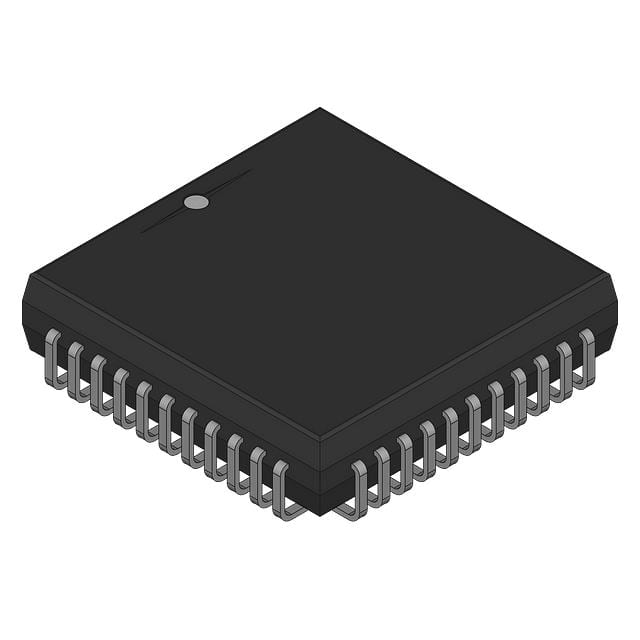
Texas Instruments TMS320C10FNL
- Part No.:
- TMS320C10FNL
- Manufacturer:
- Texas Instruments
- Category:
- DSP (Digital Signal Processors)
- Package:
- 44-LCC (J-Lead)
- Datasheet:
-
 TMS320C10FNL.pdf
- Description:
- DIGITAL SIGNAL PROCESSOR, 16-BIT
- Quantity:
- Payment:

- Shipping:

Inventory:1,452
Please send an inquiry. Send us your inquiry, and we will respond immediately.
Product details
Overview
TMS320C10FNL from Texas Instruments is a 16-bit fixed-point digital signal processor (DSP) with a 200-ns instruction cycle time, 144-word on-chip data RAM, 1.5K-word on-chip program ROM, 32-bit ALU/accumulator, and 16×16-bit hardware multiplier-designed for real-time signal processing in telecom and industrial control systems.
For engineers reviewing the TMS320C10FNL datasheet, TMS320C10FNL pinout, TMS320C10FNL application, or TMS320C10FNL equivalent, key selection criteria include its 5-V single-supply operation, microcomputer/microprocessor mode flexibility via MC/MP pin, 4K-word external memory expansion capability at full speed, and compatibility with legacy TMS32010 object code.
Technical Context
The TMS320C10FNL implements a modified Harvard architecture enabling simultaneous instruction fetch and data access while permitting program/data space transfers-critical for coefficient loading from ROM into RAM. Its 32-bit accumulator supports double-precision arithmetic, and the 0–16-bit barrel shifter enables efficient scaling during filtering operations.
It features a dedicated 16×16-bit two's-complement multiplier delivering 32-bit products in one cycle, essential for convolution and correlation. The device uses a four-level hardware stack for interrupt and subroutine handling and supports both maskable interrupts and polling via the BIO pin.
Key Specifications
| Parameter | Value and Actual Design Meaning |
|---|---|
| Instruction Cycle Time | 200 ns - determines maximum sustained throughput of 5 MIPS for real-time loop execution |
| Data RAM Size | 144 words × 16 bits - sufficient for small filter buffers or state variables in embedded DSP tasks |
| Program ROM Size | 1.5K words × 16 bits - holds boot code and core algorithms without external memory dependency |
| External Memory Support | Up to 4K words at full speed - enables program extension while maintaining deterministic timing |
| Multiplier | 16 × 16-bit with 32-bit product - executes FIR coefficients or dot products in single-cycle latency |
| Operating Voltage | +5 V ± 5% - compatible with standard TTL/CMOS logic interfaces and legacy power rails |
| Temperature Range | 0°C to 70°C - suitable for commercial-grade industrial and telecom equipment enclosures |
Pinout & Package
Package: 40-pin plastic DIP (N package), lead pitch 0.1 inch, body width 0.6 inch.
| Pin/Terminal | Circuit Role | Design Meaning |
|---|---|---|
| A11–A0/PA2–PA0 | Address bus / I/O port multiplex | 12-bit address lines with 3-bit parallel I/O capability; enables memory-mapped I/O and compact peripheral interfacing |
| D15–D0 | 16-bit bidirectional data bus | Transfers instructions, data, and I/O values; supports byte/word access with DEN and WE control |
| MC/MP | Mode select input | High = microcomputer mode (on-chip ROM active); Low = microprocessor mode (all program memory external) |
| INT | Maskable interrupt input | Triggers hardware vector interrupt; used for real-time event response (e.g., ADC completion) |
| BIO | Polling input | Enables bit-test-and-branch (BIOZ) for synchronous peripheral status checking without interrupt overhead |
| CLKOUT | System clock output | Provides ¼ of X1/X2 frequency; drives slave peripherals or timing reference for external logic |
| X1, X2/CLKIN | Crystal oscillator inputs | Supports quartz crystal (X1–X2) or external clock (X2 only); sets core timing base for deterministic execution |
| VCC, VSS | Power supply pins | Single +5 V supply with ground return; requires local decoupling for noise-sensitive analog/digital coexistence |
Key Features
| Feature | Design Value |
|---|---|
| Modified Harvard Architecture | Enables concurrent instruction fetch and data access while allowing program/data space transfers for coefficient loading |
| 32-Bit Accumulator | Supports double-precision arithmetic and overflow detection for stable recursive filter implementations |
| Hardware Barrel Shifter (0–16 bits) | Performs scaling, normalization, or bit-field extraction in parallel with ALU operations-no clock penalty |
| On-Chip Clock Oscillator | Eliminates need for external clock generator; reduces BOM count and layout complexity in cost-sensitive designs |
| Object Code Compatibility | Runs unmodified TMS32010 binaries-enables migration path for legacy DSP firmware reuse |
Applications
| Telecom Channel Coding | Industrial Motor Control |
|---|---|
Use Scenario: Real-time Viterbi decoding and CRC generation in voice-band modems. IC Role / Device Role / Timing Role: Dedicated DSP executing fixed-point convolution and bit manipulation in <200-ns per instruction cycle. Use Value: Enables 9600-bps data transmission with error correction using on-chip ROM-resident algorithms and 144-word RAM for trellis state storage. | Use Scenario: Closed-loop PWM generation and current sensing feedback in brushless DC motor drives. IC Role / Device Role / Timing Role: Real-time PID computation and interrupt-driven commutation sequencing with deterministic 200-ns instruction latency. Use Value: Achieves sub-millisecond control loop update rates using 16×16 multiplier for torque calculation and barrel shifter for gain scaling. |
| Audio Signal Preprocessing | Test Equipment Waveform Synthesis |
Use Scenario: Anti-aliasing filtering and sample-rate conversion prior to ADC in portable audio recorders. IC Role / Device Role / Timing Role: Fixed-point FIR filter engine with coefficient loading from on-chip ROM and data buffering in 144-word RAM. Use Value: Delivers 48-kHz real-time filtering using 32-bit accumulator precision to prevent quantization noise accumulation across stages. | Use Scenario: Arbitrary waveform generation in benchtop signal sources using stored lookup tables. IC Role / Device Role / Timing Role: Table-driven DAC controller executing TBLR/TBLW instructions to read waveform samples from program ROM. Use Value: Generates 100-kHz+ waveforms with jitter-free timing via CLKOUT-synchronized output and zero-wait-state external memory access. |
Equivalent & Alternatives
The following parts are listed as comparable options for similar digital signal processing applications.
| Alternative Part | Technical Difference | Application Difference | Selection Advice |
|---|---|---|---|
| TMS320C10-25 | 160-ns cycle time (vs. 200 ns), same pinout and memory map | Higher throughput for tighter real-time loops; identical software compatibility | Select when >5 MIPS sustained performance is required without code changes |
| TMS320C15 | 256-word RAM, 4K-word ROM, 40-pin DIP package, 200-ns cycle time | Expanded memory for larger filters or multi-channel processing; same instruction set | Choose for applications needing >144-word data buffers while retaining footprint and voltage compatibility |
Compared with TMS320C10FNL, the TMS320C10-25 delivers 25% higher instruction throughput within identical packaging and power constraints, while the TMS320C15 provides 78% more on-chip RAM for complex multi-stage algorithms-both maintain binary compatibility and require no PCB redesign.
Availability
TMS320C10FNL is available at Aetrix Electronics and suitable for telecom infrastructure, industrial motor control, and test equipment requiring stable component supply and long-term obsolescence management.
Supply support for TMS320C10FNL includes scheduled delivery planning, volume procurement assistance, BOM continuity management, traceable sourcing, and lifecycle availability coordination for OEM customers, industrial embedded developers, connected-device designers, and electronics production programs.
Manufacturer
Texas Instruments is a U.S.-based semiconductor company founded in 1930, specializing in analog, embedded processing, and digital signal processing technologies.
The TMS320C1x family was designed as cost-effective, single-chip alternatives to multichip bit-slice processors-targeting real-time signal processing in telecommunications, computer peripherals, and industrial automation.
FAQ
What is the instruction cycle time of the TMS320C10FNL?
The TMS320C10FNL has a 200-ns instruction cycle time, yielding a sustained throughput of 5 million instructions per second (MIPS). This timing is confirmed in the SPRS009C datasheet revision July 1991 and applies specifically to the TMS320C10 variant in 40-pin DIP packaging. The TMS320C10FNL executes all single-cycle instructions-including MPY, ADD, and LAC-in this fixed latency, enabling predictable real-time behavior in control loops.
Does the TMS320C10FNL support external program memory expansion?
Yes, the TMS320C10FNL supports up to 4K words of external program memory accessed at full speed-without wait states-when operating in microprocessor mode (MC/MP = 0). This capability is documented in the "program memory expansion" section of SPRS009C and distinguishes it from later C17-family devices that lack external memory support. External memory is addressed via the A11–A0 bus and controlled by MEN, DEN, and WE signals.
What package type is used for the TMS320C10FNL?
The TMS320C10FNL uses a 40-pin plastic dual in-line package (DIP), designated as the "N" package in TI documentation. This is explicitly listed in Table 1 of SPRS009C under "TMS320C10" with "DIP" and "40" entries, and confirmed in the mechanical drawing on page 10 showing the "N/JD Package" top view. It is not offered in PLCC or ceramic packages-those apply to other variants like TMS320C14.
Is the TMS320C10FNL pin-compatible with other TMS320C1x devices?
No, the TMS320C10FNL is not pin-compatible with most other TMS320C1x devices. Its 40-pin DIP layout differs from the 44-pin PLCC (e.g., TMS320C14) and 68-pin packages (e.g., TMS320C17). Even functionally similar parts like TMS320C15 use the same 40-pin DIP but differ in pin assignments-for example, TMS320C15 adds A12–A15 address lines not present on TMS320C10FNL. Pin compatibility is limited to same-package variants such as TMS320C10-14 and TMS320C10-25.
What is the role of the MC/MP pin on the TMS320C10FNL?
The MC/MP pin on the TMS320C10FNL selects between microcomputer mode (MC/MP = high) and microprocessor mode (MC/MP = low). In microcomputer mode, the on-chip 1.5K-word ROM is mapped into program memory space for self-contained execution. In microprocessor mode, all program memory is external, allowing flexible code updates via EPROM or RAM. This dual-mode capability is defined in the "microcomputer/microprocessor operating modes" section of SPRS009C and applies identically to the TMS320C10FNL.
TMS320C10FNL Specifications
- Product attributes
- Attribute value
- Manufacturer:
- Texas Instruments
- Series:
- TMS320C1x
- Package/Case:
- 44-LCC (J-Lead)
- Packaging:
- Bulk
- Product Status:
- Active
- Type:
- Fixed Point
- Interface:
- Parallel
- Clock Rate:
- 25MHz
- Non-Volatile Memory:
- ROM (3kB)
- On-Chip RAM:
- 288B
- Voltage - I/O:
- 5.00V
- Voltage - Core:
- 5.00V
- Operating Temperature:
- 0°C ~ 70°C (TA)
- Grade:
- -
- Qualification:
- -
- Mounting Type:
- Surface Mount
- Supplier Device Package:
- 44-PLCC (16.58x16.58)
TMS320C10FNL FAQ
1.How can I place an order for TMS320C10FNL through Aetrix?
Please submit a Request for Quotation (RFQ) for TMS320C10FNL on Aetrix. Our sales agent will provide a competitive quotation and guide you through the order confirmation once you accept the terms.
2.Are the price and stock information for TMS320C10FNL reliable?
The price and inventory of TMS320C10FNL are updated periodically and may fluctuate due to market conditions. Stock and pricing data are typically refreshed every 24 hours. Quotation validity for TMS320C10FNL is usually 5 days.
3.What payment methods are accepted for TMS320C10FNL?
We accept Wire Transfer, PayPal, Credit Card, Western Union, MoneyGram, and Escrow for TMS320C10FNL transactions.
Note: Certain payment methods may incur a processing fee.
4.How is shipping managed for TMS320C10FNL?
TMS320C10FNL orders can be shipped via leading logistics carriers, including DHL, UPS, FedEx, TNT, or Registered Mail.
Once your TMS320C10FNL order is processed, you will receive an email with the shipment details and tracking number.
Note: Tracking information may take up to 24 hours to appear. Express delivery typically takes 3–5 business days.
5.How can I obtain technical support or documentation for TMS320C10FNL?
For technical support, including TMS320C10FNL datasheets, pinout diagrams, or application guidance, please contact our engineering support team. They can provide detailed documentation and assistance for your TMS320C10FNL requirements.
6.How does Aetrix verify that TMS320C10FNL is sourced from the original manufacturer or authorized distributors?
All TMS320C10FNL products on Aetrix are procured from qualified distributors and authorized channels. Our dedicated quality assurance team conducts strict verification, including traceability checks and, if necessary, third-party testing. This ensures that TMS320C10FNL meets industry standards.
7.What is the process for return or replacement of TMS320C10FNL?
All TMS320C10FNL units undergo pre-shipment inspection (PSI). If there is an issue with TMS320C10FNL, returns or replacements are accepted under the following conditions:
1.Quantity discrepancies, incorrect items, or visible external defects (such as breakage or corrosion), acknowledged by Aetrix.
2.The issue is reported within 90 days of delivery.
3.The TMS320C10FNL part is unused and in its original packaging.
Return procedure for TMS320C10FNL:
1.Submit a request within 90 days.
2.Obtain a Return Material Authorization (RMA) from Aetrix.
TMS320C10FNL Tags
-
TMS320C5535AZAY10
Texas Instruments
-
TMS320VC5501PGF300
Texas Instruments
-
ADSP-BF592KCPZ
Analog Devices Inc.
-
ADAU1463WBCPZ150
Analog Devices Inc.
-
TMS320VC5402PGE100
Texas Instruments
-
ADAU1701JSTZ-RL
Analog Devices Inc.
-
ADAU1701JSTZ
Analog Devices Inc.
-
TMS320VC5502PGF300
Texas Instruments
-
ADAU1462WBCPZ300RL
Analog Devices Inc.
-
ADAU1452KCPZRL
Analog Devices Inc.
-
ADAU1452WBCPZ-RL
Analog Devices Inc.
-
TMS320C6747DZKB3
Texas Instruments
Tech Hub

A practical engineering guide to 3.3V and 5V logic compatibility, input thresholds, resistor dividers, translator ICs, MOSFET level shifting, I2C pull-ups, timing limits and power-sequencing risks.

The 74HC595 uses push-pull logic outputs, while the TPIC6B595 uses 50 V open-drain DMOS sinks for higher-power loads. This guide compares timing, current limits, 3.3 V interfacing, load wiring, thermal…

The 74HC595 converts serial data into eight stable parallel outputs. This guide covers pin functions, shift and storage timing, OE and MR behavior, drive-current limits, cascading, voltage compatibilit…

A technical comparison of level-sensitive latches and edge-triggered flip-flops, covering timing windows, setup and hold limits, master–slave operation, time borrowing, race-through, HDL inference and…

A D latch stores one bit while Enable controls when data can pass. This reference covers gate-level operation, truth tables, transparency, setup and hold timing, LE versus OE, common ICs and practical …

An SR latch stores one bit through cross-coupled feedback. This engineering reference covers NOR and NAND implementations, truth tables, forbidden-state recovery, gated operation, switch debouncing, fa…

Latch circuits retain one bit through feedback. This technical reference covers SR and D latches, truth tables, transparency, timing limits, latch-versus-flip-flop behavior, applications and common log…

An engineering guide to LED driver operation, constant-current and constant-voltage outputs, linear and switching topologies, dimming, IC selection, calculations, replacement compatibility, and fault c…

Operational amplifier guide covering op amp basics, feedback, ideal vs real op amps, common configurations, buffer circuits, offset, bias current, gain-bandwidth, slew rate, rail-to-rail limits and sel…

Jumper cables guide covering safe connection order, red and black clamp placement, final ground connection, cable gauge, length, clamp quality, copper vs CCA cables, jump starter comparison and battery…


