
 My Inquiry
 My Account


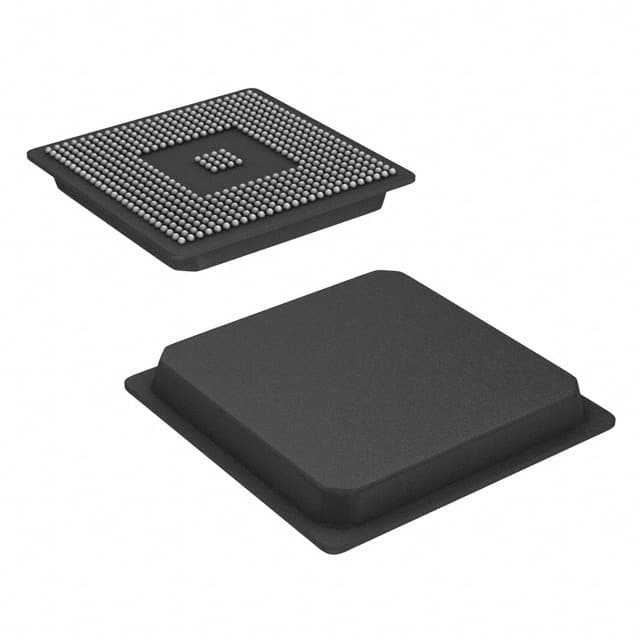
Texas Instruments TMS320C6412AZNZ6
- Part No.:
- TMS320C6412AZNZ6
- Manufacturer:
- Texas Instruments
- Category:
- DSP (Digital Signal Processors)
- Package:
- 548-BBGA, FCBGA
- Datasheet:
-
 TMS320C6412AZNZ6.pdf
- Description:
- IC FIXED-POINT DSP 548-FCBGA
- Quantity:
- Payment:

- Shipping:

Inventory:2,913
Please send an inquiry. Send us your inquiry, and we will respond immediately.
Product details
Overview
TMS320C6412AZNZ6 from Texas Instruments is a fixed-point digital signal processor (DSP) featuring a 600-MHz C64x+ CPU core, 1-MB on-chip L2 unified memory (SRAM/cache), and integrated peripherals including EMIF, EMAC, PCI, I²C, McBSP, HPI, and MDIO. It operates at 1.2-V core voltage and 3.3-V I/O, supporting real-time audio, telecom baseband, and industrial control applications requiring deterministic low-latency processing.
For engineers reviewing the TMS320C6412AZNZ6 datasheet, TMS320C6412AZNZ6 pinout, TMS320C6412AZNZ6 application, or TMS320C6412AZNZ6 equivalent, key selection criteria include its 600-MHz instruction throughput (4800 MIPS), BGA-361 ZNZ package with 0.8-mm pitch, EMAC/PCI dual-host interface capability, and support for SDRAM, asynchronous SRAM, and flash via EMIFA.
Technical Context
The TMS320C6412AZNZ6 implements the C64x+ VLIW architecture with eight parallel execution units (two multipliers, six ALUs), enabling single-cycle execution of up to eight instructions. Its memory subsystem includes 64 KB L1P program cache, 64 KB L1D data cache, and configurable 1-MB L2 memory partitioned as SRAM or cache.
Peripherals are tightly coupled via a 64-bit internal bus: the EMIF supports 16-/32-bit SDRAM, 8-/16-/32-bit asynchronous memory, and programmable synchronous interfaces; the EMAC provides 10/100 Mbps Ethernet MAC with MDIO management; and the PCI module complies with PCI Rev 2.2, supporting 33/66 MHz operation in target or host mode.
Key Specifications
| Parameter | Value and Actual Design Meaning |
|---|---|
| CPU Core | C64x+ VLIW DSP core delivering 4800 MIPS at 600 MHz - enables real-time multi-channel audio encoding/decoding |
| L2 Memory | 1-MB on-chip unified memory configurable as SRAM or cache - eliminates external memory latency for critical buffers and code |
| EMIF Bus Width | 16-/32-bit SDRAM + 8-/16-/32-bit asynchronous interface - supports DDR1 SDRAM and NOR/NAND flash booting |
| EMAC Interface | 10/100 Mbps IEEE 802.3-compliant MAC with MDIO management - enables embedded networking without external PHY |
| PCI Compliance | PCI Rev 2.2, 33/66 MHz, 32-bit data bus - allows direct connection to x86 host systems or FPGA co-processors |
| I/O Voltage | 3.3-V tolerant I/O with 1.2-V core supply - ensures compatibility with legacy 3.3-V logic while minimizing dynamic power |
| Package | 361-pin ZNZ BGA (16 × 16 mm, 0.8-mm pitch) - requires standard PCB assembly processes with thermal pad for heat dissipation |
Pinout & Package
The TMS320C6412AZNZ6 is housed in a 361-pin ZNZ BGA package (16 mm × 16 mm, 0.8-mm ball pitch) with an exposed thermal pad on the underside. The package supports JEDEC-standard reflow profiles and requires controlled impedance routing for high-speed buses (EMIF, PCI, EMAC).
| Pin/Terminal | Circuit Role | Design Meaning |
|---|---|---|
| CLKIN | Input clock reference | Accepts 12–50 MHz crystal or oscillator input; feeds PLL to generate internal 600-MHz CPU clock |
| CLKOUT4 / CLKOUT6 | Programmable output clocks | Provide synchronized clocks for external SDRAM (CLKOUT4) or peripheral logic (CLKOUT6) with programmable duty cycle |
| EMIFA[31:0] / EMIFA[17:0] | External memory interface address/data bus | Time-multiplexed 32-bit address/data bus supporting SDRAM row/column addressing and burst transfers |
| EMAC_MII_TXD[3:0] / RXD[3:0] | Ethernet MII transmit/receive data | 4-bit nibble-wide MII interface - requires external PHY for full 10/100 Mbps physical layer connectivity |
| PCI_AD[31:0] | PCI address/data multiplexed bus | 32-bit multiplexed address/data bus compliant with PCI Rev 2.2 - enables host/target mode operation without glue logic |
| HPI_HD[15:0] | Host-port interface data bus | 16-bit parallel interface for host CPU access to internal memory and registers - used for firmware loading and debug monitoring |
Key Features
| Feature | Design Value |
|---|---|
| Enhanced C64x+ Instruction Set | Includes bit-field manipulation, circular buffering, and saturated arithmetic - accelerates FIR/IIR filtering and FFT kernels |
| Configurable L2 Memory | Software-selectable SRAM/cache partitioning - balances deterministic latency (SRAM) vs. code density (cache) |
| Dual-Mode EMIF | Supports both SDRAM refresh and asynchronous memory wait-state insertion - simplifies mixed-memory system design |
| Integrated EMAC + MDIO | On-die Ethernet MAC with IEEE 802.3 management interface - reduces BOM count and PCB area vs. discrete MAC+PHY |
| PCI Target/Host Flexibility | Configurable as PCI master or slave via PERCFG register - enables use in both endpoint and bridge applications |
| Low-Power Modes | Four power-down states (IDLE, STANDBY, HALT, DEEPSLEEP) with wake-up via GPIO/external interrupt - extends runtime in battery-powered edge nodes |
Applications
| Audio Processing System | Industrial Ethernet Gateway |
|---|---|
Use Scenario: Real-time multi-channel audio codec in VoIP gateway or digital mixer. IC Role / Device Role / Timing Role: Primary DSP executing G.722/G.711 encode/decode, echo cancellation, and mixing algorithms with sub-100 µs latency. Use Value: 4800 MIPS throughput and L1/L2 cache hierarchy ensure deterministic execution of 32-channel audio pipelines without external memory bottlenecks. | Use Scenario: Protocol translation between Modbus RTU fieldbus and Ethernet TCP/IP in PLC backplane. IC Role / Device Role / Timing Role: Central controller running real-time OS, managing dual-network stacks (Modbus over UART, TCP/IP over EMAC), and handling packet bridging. Use Value: Integrated EMAC + PCI enables simultaneous Ethernet communication and host CPU offload, eliminating need for external network controller or PCIe bridge. |
| Telecom Baseband Unit | Video Surveillance Encoder |
Use Scenario: Channelized T1/E1 framer and HDLC processor in remote radio head or small-cell base station. IC Role / Device Role / Timing Role: Fixed-point DSP performing frame synchronization, CRC checking, and timeslot mapping for 32 E1 channels. Use Value: McBSP ports configured for TDM mode and EMIF-connected SDRAM provide precise timing alignment and buffer storage for 2-Mbps aggregate traffic. | Use Scenario: H.264 video compression engine in IP camera with local SD card storage and Ethernet streaming. IC Role / Device Role / Timing Role: Main processor executing motion estimation, quantization, and entropy coding while managing SD card I/O via EMIF and network streaming via EMAC. Use Value: 1-MB L2 SRAM accommodates full-frame YUV buffers and coefficient tables, avoiding slow external DRAM accesses during encode bursts. |
Equivalent & Alternatives
The following parts are listed as comparable options for similar fixed-point DSP applications.
| Alternative Part | Technical Difference | Application Difference | Selection Advice |
|---|---|---|---|
| TMS320C6416TZLZA6 | Higher clock speed (720 MHz), 2-MB L2 memory, same ZLZ package (361-pin, 0.8-mm pitch) | Targeted at higher channel-count audio/video systems requiring >5700 MIPS | Select when sustained computational load exceeds 4800 MIPS or larger on-chip memory is required for algorithm scalability |
| TMS320C6748ZWT6 | Floating-point C674x core, 375 MHz, ARM9 coprocessor, 128 MB DDR2 via EMIF, NFBGA-361 | Designed for mixed-signal control + signal processing (e.g., motor drive with current loop + FFT analysis) | Choose when floating-point precision is mandatory for control law stability or ARM/DSP dual-core coordination is needed |
Compared with TMS320C6412AZNZ6, the TMS320C6416TZLZA6 offers higher performance within identical PCB footprint and pinout, while the TMS320C6748ZWT6 trades raw fixed-point throughput for floating-point accuracy and heterogeneous processing - making each suitable for distinct architectural trade-offs in latency-critical vs. precision-critical systems.
Availability
TMS320C6412AZNZ6 is available at Aetrix Electronics and suitable for industrial automation gateways, telecom infrastructure equipment, and professional audio hardware requiring stable component supply across extended product lifecycles.
Supply support for TMS320C6412AZNZ6 includes scheduled delivery planning, volume procurement assistance, BOM continuity management, traceable sourcing, and lifecycle availability coordination for OEM customers, industrial embedded developers, connected-device designers, and electronics production programs.
Manufacturer
Texas Instruments is a global semiconductor leader specializing in analog, embedded processing, and digital signal processing technologies with over 50 years of innovation in high-reliability IC design.
The TMS320C6412AZNZ6 belongs to TI's C6000™ fixed-point DSP platform, engineered for cost-sensitive, high-throughput real-time signal processing in communications, industrial, and audio applications where deterministic latency and MIPS-per-watt efficiency are critical.
FAQ
What is the maximum operating frequency of the TMS320C6412AZNZ6?
The TMS320C6412AZNZ6 is rated for a maximum CPU clock frequency of 600 MHz, delivering 4800 million instructions per second (MIPS). This rating is guaranteed under recommended operating conditions: core supply voltage of 1.20 V ± 0.03 V and case temperature range of 0°C to 90°C. The device achieves this speed using an internal PLL that multiplies a 12–50 MHz external CLKIN source, and the actual achievable frequency depends on board-level signal integrity and thermal management of the ZNZ BGA package.
Does the TMS320C6412AZNZ6 support Ethernet connectivity out of the box?
The TMS320C6412AZNZ6 integrates a fully compliant IEEE 802.3 10/100 Mbps Ethernet MAC (EMAC) with MDIO management interface, but it does not include a physical layer (PHY). To achieve functional Ethernet connectivity, an external 10/100BASE-TX PHY (e.g., DP83848) must be connected to the EMAC's MII signals (TXD/RXD, TX_EN, CRS, COL, etc.). The TMS320C6412AZNZ6 handles MAC-layer framing, checksum generation, and DMA-based packet buffering, reducing host CPU overhead compared to software-only implementations.
Can the TMS320C6412AZNZ6 boot from external flash memory?
Yes, the TMS320C6412AZNZ6 supports booting from external parallel NOR flash memory mapped through its EMIF. During reset, the device samples configuration pins (e.g., BOOTMODE[3:0]) to select boot mode; for flash boot, it initializes the EMIF, fetches the first 64 KB of code from flash address 0x00000000 into internal RAM, and begins execution. Supported flash types include 8-/16-/32-bit devices with common command sets (e.g., AMD/Fujitsu), and timing parameters (e.g., CE setup/hold, OE pulse width) must comply with Section 5 (Asynchronous Memory Timing) of the SPRS219J datasheet.
What is the function of the HPI interface on the TMS320C6412AZNZ6?
The Host-Port Interface (HPI) on the TMS320C6412AZNZ6 is a 16-bit parallel bus (HPI_HD[15:0], HPI_HCNTL[1:0], HPI_HDS1/HDS2, HPI_HR/W, HPI_HCS) that allows an external host processor (e.g., ARM or microcontroller) to directly read from and write to the TMS320C6412AZNZ6's internal memory map and peripheral registers. It is commonly used for firmware loading during startup, real-time debug monitoring, and runtime parameter updates - all without halting the DSP core, preserving deterministic signal processing behavior.
How does the TMS320C6412AZNZ6 manage power consumption in battery-operated systems?
The TMS320C6412AZNZ6 implements four hardware-controlled power-down modes (IDLE, STANDBY, HALT, DEEPSLEEP) accessible via the CSR register's PWRD field. In DEEPSLEEP mode, core clocks are gated, L1/L2 caches are flushed, and I/Os enter high-impedance state - reducing total current draw to ~1 mA. Wake-up is triggered by GPIO interrupts or external events (e.g., EMAC packet arrival), with typical resume latency under 10 µs. This enables energy-efficient operation in portable audio analyzers or wireless sensor gateways where active duty cycle is low.
TMS320C6412AZNZ6 Specifications
- Product attributes
- Attribute value
- Manufacturer:
- Texas Instruments
- Series:
- TMS320C6410/12/13/18
- Package/Case:
- 548-BBGA, FCBGA
- Packaging:
- Bulk
- Product Status:
- Active
- Type:
- Fixed Point
- Interface:
- Host Interface, McBSP, PCI
- Clock Rate:
- 600MHz
- Non-Volatile Memory:
- External
- On-Chip RAM:
- 288kB
- Voltage - I/O:
- 3.30V
- Voltage - Core:
- 1.40V
- Operating Temperature:
- 0°C ~ 90°C (TC)
- Grade:
- -
- Qualification:
- -
- Mounting Type:
- Surface Mount
- Supplier Device Package:
- 548-FCBGA (27x27)
TMS320C6412AZNZ6 FAQ
1.How can I place an order for TMS320C6412AZNZ6 through Aetrix?
Please submit a Request for Quotation (RFQ) for TMS320C6412AZNZ6 on Aetrix. Our sales agent will provide a competitive quotation and guide you through the order confirmation once you accept the terms.
2.Are the price and stock information for TMS320C6412AZNZ6 reliable?
The price and inventory of TMS320C6412AZNZ6 are updated periodically and may fluctuate due to market conditions. Stock and pricing data are typically refreshed every 24 hours. Quotation validity for TMS320C6412AZNZ6 is usually 5 days.
3.What payment methods are accepted for TMS320C6412AZNZ6?
We accept Wire Transfer, PayPal, Credit Card, Western Union, MoneyGram, and Escrow for TMS320C6412AZNZ6 transactions.
Note: Certain payment methods may incur a processing fee.
4.How is shipping managed for TMS320C6412AZNZ6?
TMS320C6412AZNZ6 orders can be shipped via leading logistics carriers, including DHL, UPS, FedEx, TNT, or Registered Mail.
Once your TMS320C6412AZNZ6 order is processed, you will receive an email with the shipment details and tracking number.
Note: Tracking information may take up to 24 hours to appear. Express delivery typically takes 3–5 business days.
5.How can I obtain technical support or documentation for TMS320C6412AZNZ6?
For technical support, including TMS320C6412AZNZ6 datasheets, pinout diagrams, or application guidance, please contact our engineering support team. They can provide detailed documentation and assistance for your TMS320C6412AZNZ6 requirements.
6.How does Aetrix verify that TMS320C6412AZNZ6 is sourced from the original manufacturer or authorized distributors?
All TMS320C6412AZNZ6 products on Aetrix are procured from qualified distributors and authorized channels. Our dedicated quality assurance team conducts strict verification, including traceability checks and, if necessary, third-party testing. This ensures that TMS320C6412AZNZ6 meets industry standards.
7.What is the process for return or replacement of TMS320C6412AZNZ6?
All TMS320C6412AZNZ6 units undergo pre-shipment inspection (PSI). If there is an issue with TMS320C6412AZNZ6, returns or replacements are accepted under the following conditions:
1.Quantity discrepancies, incorrect items, or visible external defects (such as breakage or corrosion), acknowledged by Aetrix.
2.The issue is reported within 90 days of delivery.
3.The TMS320C6412AZNZ6 part is unused and in its original packaging.
Return procedure for TMS320C6412AZNZ6:
1.Submit a request within 90 days.
2.Obtain a Return Material Authorization (RMA) from Aetrix.
TMS320C6412AZNZ6 Tags
-
TMS320C5535AZAY10
Texas Instruments
-
TMS320VC5501PGF300
Texas Instruments
-
ADSP-BF592KCPZ
Analog Devices Inc.
-
ADAU1463WBCPZ150
Analog Devices Inc.
-
TMS320VC5402PGE100
Texas Instruments
-
ADAU1701JSTZ-RL
Analog Devices Inc.
-
ADAU1701JSTZ
Analog Devices Inc.
-
TMS320VC5502PGF300
Texas Instruments
-
ADAU1462WBCPZ300RL
Analog Devices Inc.
-
ADAU1452KCPZRL
Analog Devices Inc.
-
ADAU1452WBCPZ-RL
Analog Devices Inc.
-
TMS320C6747DZKB3
Texas Instruments
Tech Hub

A practical engineering guide to 3.3V and 5V logic compatibility, input thresholds, resistor dividers, translator ICs, MOSFET level shifting, I2C pull-ups, timing limits and power-sequencing risks.

The 74HC595 uses push-pull logic outputs, while the TPIC6B595 uses 50 V open-drain DMOS sinks for higher-power loads. This guide compares timing, current limits, 3.3 V interfacing, load wiring, thermal…

The 74HC595 converts serial data into eight stable parallel outputs. This guide covers pin functions, shift and storage timing, OE and MR behavior, drive-current limits, cascading, voltage compatibilit…

A technical comparison of level-sensitive latches and edge-triggered flip-flops, covering timing windows, setup and hold limits, master–slave operation, time borrowing, race-through, HDL inference and…

A D latch stores one bit while Enable controls when data can pass. This reference covers gate-level operation, truth tables, transparency, setup and hold timing, LE versus OE, common ICs and practical …

An SR latch stores one bit through cross-coupled feedback. This engineering reference covers NOR and NAND implementations, truth tables, forbidden-state recovery, gated operation, switch debouncing, fa…

Latch circuits retain one bit through feedback. This technical reference covers SR and D latches, truth tables, transparency, timing limits, latch-versus-flip-flop behavior, applications and common log…

An engineering guide to LED driver operation, constant-current and constant-voltage outputs, linear and switching topologies, dimming, IC selection, calculations, replacement compatibility, and fault c…

Operational amplifier guide covering op amp basics, feedback, ideal vs real op amps, common configurations, buffer circuits, offset, bias current, gain-bandwidth, slew rate, rail-to-rail limits and sel…

Jumper cables guide covering safe connection order, red and black clamp placement, final ground connection, cable gauge, length, clamp quality, copper vs CCA cables, jump starter comparison and battery…


