
 My Inquiry
 My Account


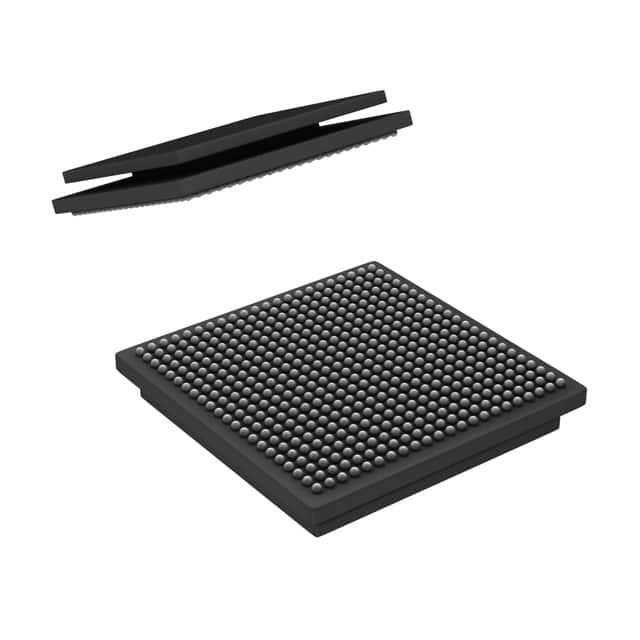
Texas Instruments TMS320DM6467CZUTD7
- Part No.:
- TMS320DM6467CZUTD7
- Manufacturer:
- Texas Instruments
- Category:
- DSP (Digital Signal Processors)
- Package:
- 529-BFBGA
- Datasheet:
-
 TMS320DM6467CZUTD7.pdf
- Description:
- IC DIGITAL MEDIA SOC 529FCBGA
- Quantity:
- Payment:

- Shipping:

Inventory:4,106
Please send an inquiry. Send us your inquiry, and we will respond immediately.
Product details
Overview
TMS320DM6467CZUTD7 from Texas Instruments is a dual-core digital media system-on-chip (SoC) integrating a 729-MHz TMS320C64x+ DSP and a 364.5-MHz ARM926EJ-S RISC processor, with 128KB L2 unified RAM/cache, dual HDVICP video co-processors, and 10/100/1000-Mb/s Ethernet MAC - deployed in networked video infrastructure and real-time H.264/MPEG4 encode/decode systems.
For engineers reviewing the TMS320DM6467CZUTD7 datasheet, TMS320DM6467CZUTD7 pinout, TMS320DM6467CZUTD7 application, or TMS320DM6467CZUTD7 equivalent, key selection criteria include DDR2 memory controller timing (310.5 MHz), VPIF video capture bandwidth (108 MHz), HDVICP hardware acceleration support for H.264/VC1, and industrial temperature grade (-40°C to 85°C) compliance.
Technical Context
The TMS320DM6467CZUTD7 implements a tightly coupled heterogeneous architecture: the ARM926EJ-S handles OS management, peripheral control, and high-level protocol stacks, while the C64x+ DSP executes real-time video algorithms at up to 5832 MIPS. Both cores share access to 128KB L2 memory with flexible RAM/cache allocation and coordinate via EDMA3 (64 channels) and shared interrupt controllers.
Hardware acceleration is distributed across dedicated subsystems: dual HDVICP engines perform parallel encode/decode of H.264, MPEG2, VC1, and MPEG4 SP/ASP; VDCE handles chroma conversion (4:2:2 ↔ 4:2:0) and downscaling; CRGEN modules enable precise clock recovery for TSIF transport stream inputs; and EMAC+MDIO provides full QoS-aware Gigabit Ethernet with automatic PHY enumeration.
Key Specifications
| Parameter | Value and Actual Design Meaning |
|---|---|
| DSP Core Clock | 729 MHz - delivers 5832 MIPS and 4752 MMACS for real-time video processing without software-only bottlenecks |
| ARM Core Clock | 364.5 MHz - enables Linux/RTOS execution with full MMU support and Jazelle Java acceleration |
| L2 Memory | 128KB unified RAM/cache - configurable as mapped memory, cache, or hybrid; critical for low-latency inter-core data exchange |
| VPIF Capture Rate | 108 MHz - supports single 16-bit BT.1120 HD video input or dual 8-bit BT.656 SD streams simultaneously |
| DDR2 Controller | 310.5 MHz, 32-bit bus - provides 9.9 GB/s peak bandwidth for frame buffers and codec working memory |
| HDVICP Engines | 2 independent co-processors - offload H.264 Baseline/Main/High Profile decode and encode, freeing DSP cycles |
| Operating Temp | -40°C to +85°C - qualified for industrial video infrastructure deployments including IP cameras and edge encoders |
| Package | 529-pin Pb-free BGA (CUT), 19 × 19 mm, 0.8-mm ball pitch - requires controlled-impedance PCB stackup for DDR2 and VPIF signal integrity |
Pinout & Package
529-pin Pb-free BGA (CUT package), 19 × 19 mm body, 0.8-mm ball pitch, RoHS-compliant. Pin mapping follows TI's standardized DM6467 ball-out layout with dedicated banks for DDR2 (A/B/C), VPIF (G/H), EMAC (M/N), and power/ground distribution per JESD51-7 thermal guidelines.
| Pin/Terminal | Circuit Role | Design Meaning |
|---|---|---|
| DEV_CLKIN | Primary reference clock input | Accepts 27-MHz crystal or oscillator; feeds PLLC1 for DSP/ARM clock generation with x14–x27 multiplication |
| VDD_DDR | DDR2 I/O supply | 1.8-V regulated rail; must be sequenced before VDD_CORE and isolated from analog supplies |
| VP0_CLKIN / VP0_CLKOUT | VPIF channel 0 clock pair | Supports bidirectional pixel clocking for BT.656/BT.1120 video capture/display with programmable phase alignment |
| EMAC_TXD[3:0] / EMAC_RXD[3:0] | Gigabit Ethernet data lanes | 4-bit nibble-aligned interface for MII/GMII; requires matched trace lengths ≤500 mils and 50-Ω termination |
| HPI_HD[31:0] | Host port interface data bus | 32-bit multiplexed address/data bus for FPGA or external host CPU communication; operates up to 100 MHz |
| TSIF0_D[7:0] | Transport stream parallel input | 8-bit MPEG-TS data path with associated sync/valid signals; supports 27-MHz synchronous sampling |
Key Features
| Feature | Design Value |
|---|---|
| Dual HDVICP hardware accelerators | Enable concurrent H.264 High Profile decode + MPEG4 ASP encode without DSP core intervention |
| VDCE video pre/post-processing | Performs real-time 4:2:2 ↔ 4:2:0 chroma conversion and horizontal/vertical downscaling in fixed-function logic |
| CRGEN clock recovery modules | Two independent generators synchronize TSIF inputs to external VCXOs, eliminating need for external PLL ICs |
| EDMA3 with 64 channels | Zero-CPU-overhead data movement between DDR2, L2, peripherals, and HDVICP; supports scatter-gather chaining |
| ARM926EJ-S with ETB11 | 4KB embedded trace buffer enables non-intrusive real-time instruction tracing for complex multi-threaded firmware debug |
| SmartReflex-compatible power control | Dynamic voltage scaling (1.05 V / 1.2 V core) reduces active power by up to 30% during variable workload conditions |
Applications
| IP Video Encoder | HD Video Conferencing Terminal |
|---|---|
Use Scenario: Real-time encoding of 1080p60 video from HDMI or BT.1120 sensor input into H.264 Main Profile bitstream for RTMP streaming. IC Role / Device Role / Timing Role: Primary SoC executing Linux, managing network stack, and orchestrating HDVICP-assisted encode while DSP handles motion estimation and entropy coding. Use Value: Achieves sub-100ms end-to-end latency with sustained 12 Mbps bitrate using only on-chip accelerators - no external FPGA or ASIC required. | Use Scenario: Dual-stream video terminal capturing local camera feed and remote decoded stream, mixing audio/video, and transmitting over SIP/RTP. IC Role / Device Role / Timing Role: Central media processor running TI DVSDK, synchronizing VPIF capture, HDVICP decode/encode, McASP audio I/O, and EMAC packet scheduling. Use Value: Enables simultaneous 720p30 encode + decode with <50ms audio-video sync drift using hardware VDCE resampling and CRGEN-based lip-sync correction. |
| Network DVR/NVR Platform | Industrial Video Analytics Edge Node |
Use Scenario: 16-channel HD surveillance recorder ingesting BT.656 video over VPIF, storing to SATA HDD via ATA controller, and serving live views via RTSP. IC Role / Device Role / Timing Role: System controller managing EMIFA NAND boot, DDR2 frame buffers, dual HDVICP decode pipelines, and ATA/PCI host interface to storage controller. Use Value: Supports 16× 720p30 decode at <3W total SoC power via SmartReflex voltage scaling and selective peripheral clock gating. | Use Scenario: Embedded vision node performing real-time object detection on 1080p video using CNN inference accelerated on C64x+ DSP with OpenVX. IC Role / Device Role / Timing Role: Compute-intensive DSP host with L2-cached weights, VPIF-sourced frames, and GPIO-triggered event logging via UART/USB. Use Value: Delivers 25 FPS inference on YOLOv3-tiny using optimized C64x+ assembly kernels - enabled by 32KB L1P/L1D caches and 5832-MIPS throughput. |
Equivalent & Alternatives
The following parts are listed as comparable options for similar digital media SoC applications.
| Alternative Part | Technical Difference | Application Difference | Selection Advice |
|---|---|---|---|
| TMS320DM6467CZUTD6 | Rated for 594-MHz DSP / 297-MHz ARM operation; lower DDR2 speed (297 MHz); -40°C to 85°C industrial grade | Suitable for cost-sensitive HD encode-only systems without dual HDVICP full-load concurrency | Select when thermal budget limits or lower video channel count reduces need for 729-MHz headroom |
| i.MX6Q | Quad-core ARM Cortex-A9 @ 1 GHz; no integrated DSP; GPU-based video acceleration (Vivante GC2000); lacks HDVICP-class codec hardware | Better for Android/Linux GUI-rich applications; weaker deterministic real-time video processing vs. C64x+ + HDVICP | Choose for UI-centric multimedia gateways where DSP offload is secondary to application CPU performance |
Compared with TMS320DM6467CZUTD7, the CZUTD6 offers identical packaging and industrial temp rating but trades 23% lower DSP throughput and reduced DDR2 bandwidth for lower power and cost; i.MX6Q provides higher general-purpose CPU performance and modern GPU acceleration but lacks the deterministic, low-latency video pipeline architecture and dual-HDVICP hardware essential for professional broadcast-grade encode/decode.
Availability
TMS320DM6467CZUTD7 is available at Aetrix Electronics and suitable for industrial video infrastructure, networked media encode/decode systems, and HD video conferencing terminals requiring stable component supply across extended product lifecycles.
Supply support for TMS320DM6467CZUTD7 includes scheduled delivery planning, volume procurement assistance, BOM continuity management, traceable sourcing, and lifecycle availability coordination for OEM customers, industrial embedded developers, connected-device designers, and electronics production programs.
Manufacturer
Texas Instruments is a global semiconductor company headquartered in Dallas, Texas, delivering analog and embedded processing solutions for industrial, automotive, and communications markets since 1930.
The TMS320DM6467CZUTD7 belongs to TI's DaVinci™ digital media SoC family, engineered specifically for real-time video analytics, multi-format encode/decode, and networked media infrastructure where deterministic DSP performance and hardware-accelerated video pipelines are mandatory.
FAQ
What is the maximum DDR2 data rate supported by the TMS320DM6467CZUTD7?
The TMS320DM6467CZUTD7 supports a DDR2 memory controller operating at 310.5 MHz, enabling a peak theoretical bandwidth of 9.9 GB/s on its 32-bit bus. This rate is validated for industrial temperature range (-40°C to +85°C) operation and requires strict PCB layout adherence to TI's DDR2 routing guidelines, including length matching within ±10 mils and controlled impedance of 50 Ω ±5%.
Does the TMS320DM6467CZUTD7 include hardware support for H.264 High Profile decoding?
Yes, the TMS320DM6467CZUTD7 integrates two independent HDVICP (High-Definition Video/Imaging Co-Processor) engines that natively support H.264 High Profile decoding and encoding, along with MPEG2, VC1, and MPEG4 SP/ASP. These accelerators operate in parallel with the C64x+ DSP core, allowing full-resolution 1080p60 decode without consuming DSP MIPS - confirmed in TI's SPRS403H datasheet Section 1.1 and DVSDK 3.x documentation.
What is the function of the CRGEN modules in the TMS320DM6467CZUTD7?
The TMS320DM6467CZUTD7 includes two Clock Recovery Generator (CRGEN) modules, each paired with a TSIF transport stream interface. These modules recover precise bit-clock and byte-clock timing from asynchronous MPEG-TS serial streams using an external VCXO, enabling jitter-free demultiplexing without requiring external clock recovery ICs - a key feature for broadcast-grade IPTV and DVB-ASI receiver designs.
Can the TMS320DM6467CZUTD7 operate in both little-endian and big-endian modes?
No, the TMS320DM6467CZUTD7 operates exclusively in little-endian mode for both the ARM926EJ-S and C64x+ DSP cores, as explicitly stated in Section 1.1 of the SPRS403H datasheet. Endianness is hardwired and not software-configurable; all memory-mapped peripherals, L1/L2 caches, and DMA transfers assume little-endian byte ordering.
What boot sources are supported by the TMS320DM6467CZUTD7's on-chip ROM bootloader?
The TMS320DM6467CZUTD7's on-chip ARM ROM bootloader (RBL) supports boot from NAND flash, NOR flash, UART, and EMIFA-connected peripherals - as documented in Section 4.4 of SPRS403H. It does not support direct boot from DDR2 or USB; those require secondary-stage loaders. Boot mode is selected via strap pins (BOOTCFG[3:0]) at reset, with NAND boot being most common for field-upgradable video systems.
TMS320DM6467CZUTD7 Specifications
- Product attributes
- Attribute value
- Manufacturer:
- Texas Instruments
- Series:
- TMS320DM646x, DaVinci™
- Package/Case:
- 529-BFBGA
- Packaging:
- Tube
- Product Status:
- Discontinued at Digi-Key
- Type:
- Digital Media System-on-Chip (DMSoC)
- Interface:
- EBI/EMI, Ethernet, HPI, I2C, McASP, PCI, SPI, UART, USB
- Clock Rate:
- 729MHz DSP, 364.5MHz ARM®
- Non-Volatile Memory:
- ROM (8kB)
- On-Chip RAM:
- 248kB
- Voltage - I/O:
- 1.8V, 3.3V
- Voltage - Core:
- 1.20V
- Operating Temperature:
- -40°C ~ 85°C (TC)
- Grade:
- -
- Qualification:
- -
- Mounting Type:
- Surface Mount
- Supplier Device Package:
- 529-FCBGA (19x19)
TMS320DM6467CZUTD7 FAQ
1.How can I place an order for TMS320DM6467CZUTD7 through Aetrix?
Please submit a Request for Quotation (RFQ) for TMS320DM6467CZUTD7 on Aetrix. Our sales agent will provide a competitive quotation and guide you through the order confirmation once you accept the terms.
2.Are the price and stock information for TMS320DM6467CZUTD7 reliable?
The price and inventory of TMS320DM6467CZUTD7 are updated periodically and may fluctuate due to market conditions. Stock and pricing data are typically refreshed every 24 hours. Quotation validity for TMS320DM6467CZUTD7 is usually 5 days.
3.What payment methods are accepted for TMS320DM6467CZUTD7?
We accept Wire Transfer, PayPal, Credit Card, Western Union, MoneyGram, and Escrow for TMS320DM6467CZUTD7 transactions.
Note: Certain payment methods may incur a processing fee.
4.How is shipping managed for TMS320DM6467CZUTD7?
TMS320DM6467CZUTD7 orders can be shipped via leading logistics carriers, including DHL, UPS, FedEx, TNT, or Registered Mail.
Once your TMS320DM6467CZUTD7 order is processed, you will receive an email with the shipment details and tracking number.
Note: Tracking information may take up to 24 hours to appear. Express delivery typically takes 3–5 business days.
5.How can I obtain technical support or documentation for TMS320DM6467CZUTD7?
For technical support, including TMS320DM6467CZUTD7 datasheets, pinout diagrams, or application guidance, please contact our engineering support team. They can provide detailed documentation and assistance for your TMS320DM6467CZUTD7 requirements.
6.How does Aetrix verify that TMS320DM6467CZUTD7 is sourced from the original manufacturer or authorized distributors?
All TMS320DM6467CZUTD7 products on Aetrix are procured from qualified distributors and authorized channels. Our dedicated quality assurance team conducts strict verification, including traceability checks and, if necessary, third-party testing. This ensures that TMS320DM6467CZUTD7 meets industry standards.
7.What is the process for return or replacement of TMS320DM6467CZUTD7?
All TMS320DM6467CZUTD7 units undergo pre-shipment inspection (PSI). If there is an issue with TMS320DM6467CZUTD7, returns or replacements are accepted under the following conditions:
1.Quantity discrepancies, incorrect items, or visible external defects (such as breakage or corrosion), acknowledged by Aetrix.
2.The issue is reported within 90 days of delivery.
3.The TMS320DM6467CZUTD7 part is unused and in its original packaging.
Return procedure for TMS320DM6467CZUTD7:
1.Submit a request within 90 days.
2.Obtain a Return Material Authorization (RMA) from Aetrix.
TMS320DM6467CZUTD7 Tags
-
TMS320C5535AZAY10
Texas Instruments
-
TMS320VC5501PGF300
Texas Instruments
-
ADSP-BF592KCPZ
Analog Devices Inc.
-
ADAU1463WBCPZ150
Analog Devices Inc.
-
TMS320VC5402PGE100
Texas Instruments
-
ADAU1701JSTZ-RL
Analog Devices Inc.
-
ADAU1701JSTZ
Analog Devices Inc.
-
TMS320VC5502PGF300
Texas Instruments
-
ADAU1462WBCPZ300RL
Analog Devices Inc.
-
ADAU1452KCPZRL
Analog Devices Inc.
-
ADAU1452WBCPZ-RL
Analog Devices Inc.
-
TMS320C6747DZKB3
Texas Instruments
Tech Hub

A practical engineering guide to 3.3V and 5V logic compatibility, input thresholds, resistor dividers, translator ICs, MOSFET level shifting, I2C pull-ups, timing limits and power-sequencing risks.

The 74HC595 uses push-pull logic outputs, while the TPIC6B595 uses 50 V open-drain DMOS sinks for higher-power loads. This guide compares timing, current limits, 3.3 V interfacing, load wiring, thermal…

The 74HC595 converts serial data into eight stable parallel outputs. This guide covers pin functions, shift and storage timing, OE and MR behavior, drive-current limits, cascading, voltage compatibilit…

A technical comparison of level-sensitive latches and edge-triggered flip-flops, covering timing windows, setup and hold limits, master–slave operation, time borrowing, race-through, HDL inference and…

A D latch stores one bit while Enable controls when data can pass. This reference covers gate-level operation, truth tables, transparency, setup and hold timing, LE versus OE, common ICs and practical …

An SR latch stores one bit through cross-coupled feedback. This engineering reference covers NOR and NAND implementations, truth tables, forbidden-state recovery, gated operation, switch debouncing, fa…

Latch circuits retain one bit through feedback. This technical reference covers SR and D latches, truth tables, transparency, timing limits, latch-versus-flip-flop behavior, applications and common log…

An engineering guide to LED driver operation, constant-current and constant-voltage outputs, linear and switching topologies, dimming, IC selection, calculations, replacement compatibility, and fault c…

Operational amplifier guide covering op amp basics, feedback, ideal vs real op amps, common configurations, buffer circuits, offset, bias current, gain-bandwidth, slew rate, rail-to-rail limits and sel…

Jumper cables guide covering safe connection order, red and black clamp placement, final ground connection, cable gauge, length, clamp quality, copper vs CCA cables, jump starter comparison and battery…


