
 My Inquiry
 My Account


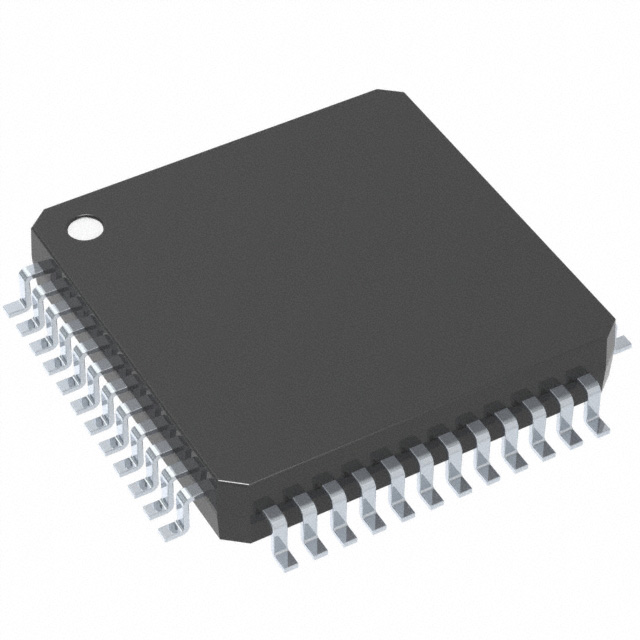
Texas Instruments TMS320F280260PTT
- Part No.:
- TMS320F280260PTT
- Manufacturer:
- Texas Instruments
- Category:
- Microcontrollers
- Package:
- 48-LQFP
- Datasheet:
-
 TMS320F280260PTT.pdf
- Description:
- IC MCU 32BIT 16KB FLASH 48LQFP
- Quantity:
- Payment:

- Shipping:

Inventory:1,927
Please send an inquiry. Send us your inquiry, and we will respond immediately.
Product details
Overview
TMS320F280260PTT from Texas Instruments is a 50-MHz C28x-core Piccolo™ microcontroller in 48-pin LQFP packaging, featuring 8K × 16-bit on-chip flash, 3K × 16-bit SARAM, 6-channel 12-bit ADC with 800-ns conversion time, and three 32-bit CPU timers. It integrates ePWM (6 channels), eCAP (1 input), SPI, I²C, SCI, and on-chip voltage regulation for single 3.3-V supply operation in motor control and power conversion systems.
For engineers reviewing the TMS320F280260PTT datasheet, TMS320F280260PTT pinout, TMS320F280260PTT application, or TMS320F280260PTT equivalent, key selection criteria include flash size (8K words), ADC resolution and speed, ePWM channel count, GPIO count (22 multiplexed), and LQFP-48 thermal and layout compatibility.
Technical Context
The TMS320F280260PTT implements the TMS320C28x 32-bit fixed-point CPU core with 20-ns instruction cycle time, Harvard bus architecture, and unified memory programming model. It supports atomic operations, fast interrupt response with automatic context save, and little-endian data handling.
Its peripheral subsystem includes a 32-bit peripheral bus with PIE interrupt expansion, dynamic PLL ratio changes, missing-clock detection, and integrated power-on/brown-out reset. The ADC operates at full SYSCLKOUT (50 MHz) without prescaling and supports ratio-metric VREFHI/VREFLO references.
Key Specifications
| Parameter | Value and Actual Design Meaning |
|---|---|
| CPU Core | TMS320C28x 32-bit fixed-point, 50-MHz (20-ns cycle), Harvard architecture, little-endian |
| Flash Memory | 8K × 16-bit (2 × 4K sectors), secure, code-protected, mapped to both program and data space |
| RAM | 3K × 16-bit SARAM + 8K × 16-bit Boot ROM + 1K × 16-bit OTP, all zero-wait-state for critical execution |
| ADC | 12-bit, 6-channel, 1.25 MSPS, 800-ns conversion time, ratio-metric reference support |
| ePWM | 3 modules, 6 total output channels, independent 16-bit timer per module, TZ fault protection inputs |
| Package | PT: 48-pin Low-Profile Quad Flatpack (LQFP), 7 mm × 7 mm, 0.5-mm pitch, RoHS-compliant |
| Operating Temp | –40°C to +105°C (T grade), qualified for industrial motor control and power electronics environments |
Pinout & Package
Package: PT variant denotes 48-pin LQFP (Low-Profile Quad Flatpack), 7 mm × 7 mm body, 0.5-mm lead pitch, exposed thermal pad (not electrically connected), JEDEC MS-026 compliant.
| Pin/Terminal | Circuit Role | Design Meaning |
|---|---|---|
| VDD, VSS | Core power/ground | 3.3-V digital supply pair; decoupling required within 10 mm of package corner |
| VDDA, VSSA | Analog power/ground | Separate 3.3-V analog rail; must be isolated from digital ground with ferrite bead or split plane |
| GPIO0–GPIO21 | Multiplexed I/O | 22 pins configurable as digital I/O, ePWM, eCAP, SCI, SPI, I²C, or ADC inputs; programmable input filtering |
| EPWMxA/EPWMxB | ePWM outputs | Dedicated high/low-side PWM outputs per module; support dead-time insertion and trip-zone fault response |
| ECAP1 | Capture input | Single enhanced capture pin supporting timestamping, pulse-width measurement, and frequency monitoring |
| SCITXDA/SCIRXDA | SCI interface | UART transmit/receive pins (GPIO29/GPIO28); support bootloader and host communication |
| SPISIMOA/SPISOMIA/SPICLKA/SPISTEA | SPI interface | Four-pin master/slave SPI port (GPIO16–GPIO19); used for firmware update and sensor interfacing |
| SDAA/SCLA | I²C interface | Open-drain bidirectional I²C bus (GPIO32/GPIO33); supports EEPROM and PMIC configuration |
Key Features
| Feature | Design Value |
|---|---|
| Single 3.3-V supply operation | Eliminates multi-rail power design; internal regulator enables direct connection to 3.3-V system rail |
| On-chip oscillators | Two zero-pin internal oscillators reduce BOM cost and board space; one used for system clock, one for watchdog |
| Code security module | 128-bit password protection prevents unauthorized readback of flash/SARAM/OTP contents |
| Peripheral interrupt expansion (PIE) | Centralized 12-group, 96-vector interrupt controller enables deterministic latency for real-time motor control loops |
| Temperature sensor | Integrated die-temperature sensor calibrated in production; usable for thermal derating in motor drives |
Applications
| Motor Control in eBikes | Industrial Sewing Machines |
|---|---|
Use Scenario: Closed-loop BLDC motor commutation with current sensing, position feedback, and torque regulation in compact eBike controllers. IC Role / Device Role / Timing Role: Real-time execution of FOC algorithms, synchronized ePWM generation, and ADC sampling at 10–20 kHz loop rates. Use Value: 50-MHz C28x core delivers sufficient MIPS for dual-loop control; 6-channel ADC enables simultaneous phase current and DC-link voltage acquisition. |
Use Scenario: Precision needle positioning, thread tension control, and foot-pedal responsiveness in electromechanical sewing machines. IC Role / Device Role / Timing Role: High-resolution timing engine managing stepper/servo motion profiles, encoder interpolation, and real-time I/O event handling. Use Value: Three 32-bit CPU timers and ePWM modules enable independent axis control; 22 GPIOs support diverse sensors and actuators in tight mechanical envelopes. |
| White Goods Inverter Drives | Small Appliance Power Conversion |
Use Scenario: Variable-speed compressor and fan control in refrigerators and washing machines using sensorless FOC or hall-based commutation. IC Role / Device Role / Timing Role: System-level controller coordinating gate drive signals, fault monitoring (overcurrent, overtemperature), and communication with UI MCU. Use Value: Integrated trip-zone (TZ) inputs allow hardware-fast shutdown (<100 ns response); on-chip temperature sensor enables thermal margin management without external components. |
Use Scenario: Digital power supply control in vacuum cleaners, blenders, and food processors requiring efficient AC-DC or DC-DC conversion. IC Role / Device Role / Timing Role: Primary controller for resonant LLC or buck-boost topologies, managing switching frequency, duty cycle, and load transient response. Use Value: 8K flash accommodates complex control law + safety firmware; SPI/I²C interfaces enable communication with secondary MCUs or status LEDs. |
Equivalent & Alternatives
The following parts are listed as comparable options for similar microcontroller applications.
| Alternative Part | Technical Difference | Application Difference | Selection Advice |
|---|---|---|---|
| TMS320F280270PTT | Same 48-pin LQFP package, 50-MHz core, but 16K × 16-bit flash and 4K × 16-bit SARAM | Supports larger control algorithms and dual-application firmware (e.g., motor + comms stack) | Select when >8K flash is required for feature-rich firmware or field-upgradable functionality |
| TMS320F280230PTT | Same 48-pin LQFP package and peripherals, but 40-MHz core (25-ns cycle) and 16K flash | Lower computational throughput; suitable for less demanding control loops or cost-sensitive designs | Select when 40-MHz performance suffices and flash headroom is prioritized over CPU speed |
Compared with TMS320F280260PTT, the TMS320F280270PTT offers double flash capacity at identical speed and package, while the TMS320F280230PTT trades 10-MHz CPU bandwidth for increased flash-enabling flexible trade-offs between algorithm complexity, real-time latency, and firmware scalability.
Availability
TMS320F280260PTT is available at Aetrix Electronics and suitable for industrial motor control, white goods inverter drives, and eBike powertrain systems requiring stable component supply across multi-year production cycles.
Supply support for TMS320F280260PTT includes scheduled delivery planning, volume procurement assistance, BOM continuity management, traceable sourcing, and lifecycle availability coordination for OEM customers, industrial embedded developers, connected-device designers, and electronics production programs.
Manufacturer
Texas Instruments is a global semiconductor leader specializing in analog, embedded processing, and connectivity technologies, with decades of expertise in industrial and automotive microcontrollers.
The TMS320F2802x0 Piccolo™ family targets cost-sensitive, high-efficiency digital power and motor control applications, emphasizing integration, low system cost, and real-time determinism in compact packages.
FAQ
What is the maximum operating frequency of the TMS320F280260PTT?
The TMS320F280260PTT operates at a maximum CPU frequency of 50 MHz, corresponding to a 20-ns instruction cycle time. This speed is achieved using the internal PLL with an external crystal or oscillator input, and it applies to all on-chip peripherals including ePWM, ADC, and timers. The TMS320F280260PTT maintains full specification compliance-including timing, ADC accuracy, and flash write/erase-across its rated temperature range (–40°C to +105°C) at this frequency.
Does the TMS320F280260PTT support hardware-based code security?
Yes, the TMS320F280260PTT includes a dedicated Code Security Module with 128-bit password protection for on-chip flash, SARAM, and OTP memory blocks. Once enabled, it prevents unauthorized read access via JTAG or boot ROM interfaces. The security password is stored in fixed flash locations (0x3F7FF8–0x3F7FFF), and programming it requires careful initialization to avoid permanent lockout. This feature is fully implemented in silicon and does not rely on external components or software-only enforcement.
How many ePWM channels does the TMS320F280260PTT provide?
The TMS320F280260PTT provides six ePWM output channels across three independent ePWM modules (ePWM1, ePWM2, ePWM3). Each module includes complementary A/B outputs, dead-band generation, trip-zone inputs for hardware fault shutdown, and an independent 16-bit time-base counter. These channels are fully functional in the PT (48-pin LQFP) package and are accessible on dedicated GPIO pins with no multiplexing conflict in default configuration.
Is the ADC on the TMS320F280260PTT synchronous with the CPU clock?
Yes, the 12-bit ADC in the TMS320F280260PTT runs synchronously with the SYSCLKOUT signal (50 MHz), requiring no prescaler and delivering 1.25 MSPS throughput with 800-ns conversion time. Its sample-and-hold circuitry supports simultaneous sampling across multiple channels, and the ADC interface uses zero-overhead result loading into CPU-accessible registers-enabling deterministic sampling intervals critical for motor current reconstruction and control loop stability.
What boot modes are supported by the TMS320F280260PTT?
The TMS320F280260PTT supports five boot modes selected via GPIO37, GPIO34, and TRST pins: SCI (UART), SPI, I²C, Parallel I/O, and emulation boot. The Boot ROM contains factory-programmed loader firmware for each mode, and GPIO pins used for boot (e.g., SCIRXDA/SCITXDA for SCI mode) are documented in Table 2-7 of the SPRS810B datasheet. Emulation boot activates automatically when a JTAG debugger is connected, bypassing pin-based selection.
TMS320F280260PTT Specifications
- Product attributes
- Attribute value
- Manufacturer:
- Texas Instruments
- Package/Case:
- 48-LQFP
- Series:
- C2000™ C28x Piccolo™
- Packaging:
- Bulk
- Product Status:
- Obsolete
- Programmable:
- Not Verified
- Core Processor:
- C28x
- Core Size:
- 32-Bit Single-Core
- Speed:
- 50MHz
- Connectivity:
- I2C, SCI, SPI, UART/USART
- Peripherals:
- Brown-out Detect/Reset, POR, PWM, WDT
- Number of I/O:
- 22
- Program Memory Size:
- 16KB (8K x 16)
- Program Memory Type:
- FLASH
- EEPROM Size:
- -
- RAM Size:
- 3K x 16
- Voltage - Supply (Vcc/Vdd):
- 1.71V ~ 1.995V
- Data Converters:
- A/D 8x12b
- Oscillator Type:
- Internal
- Operating Temperature:
- -40°C ~ 105°C (TA)
- Grade:
- -
- Qualification:
- -
- Mounting Type:
- Surface Mount
- Supplier Device Package:
TMS320F280260PTT FAQ
1.How can I place an order for TMS320F280260PTT through Aetrix?
Please submit a Request for Quotation (RFQ) for TMS320F280260PTT on Aetrix. Our sales agent will provide a competitive quotation and guide you through the order confirmation once you accept the terms.
2.Are the price and stock information for TMS320F280260PTT reliable?
The price and inventory of TMS320F280260PTT are updated periodically and may fluctuate due to market conditions. Stock and pricing data are typically refreshed every 24 hours. Quotation validity for TMS320F280260PTT is usually 5 days.
3.What payment methods are accepted for TMS320F280260PTT?
We accept Wire Transfer, PayPal, Credit Card, Western Union, MoneyGram, and Escrow for TMS320F280260PTT transactions.
Note: Certain payment methods may incur a processing fee.
4.How is shipping managed for TMS320F280260PTT?
TMS320F280260PTT orders can be shipped via leading logistics carriers, including DHL, UPS, FedEx, TNT, or Registered Mail.
Once your TMS320F280260PTT order is processed, you will receive an email with the shipment details and tracking number.
Note: Tracking information may take up to 24 hours to appear. Express delivery typically takes 3–5 business days.
5.How can I obtain technical support or documentation for TMS320F280260PTT?
For technical support, including TMS320F280260PTT datasheets, pinout diagrams, or application guidance, please contact our engineering support team. They can provide detailed documentation and assistance for your TMS320F280260PTT requirements.
6.How does Aetrix verify that TMS320F280260PTT is sourced from the original manufacturer or authorized distributors?
All TMS320F280260PTT products on Aetrix are procured from qualified distributors and authorized channels. Our dedicated quality assurance team conducts strict verification, including traceability checks and, if necessary, third-party testing. This ensures that TMS320F280260PTT meets industry standards.
7.What is the process for return or replacement of TMS320F280260PTT?
All TMS320F280260PTT units undergo pre-shipment inspection (PSI). If there is an issue with TMS320F280260PTT, returns or replacements are accepted under the following conditions:
1.Quantity discrepancies, incorrect items, or visible external defects (such as breakage or corrosion), acknowledged by Aetrix.
2.The issue is reported within 90 days of delivery.
3.The TMS320F280260PTT part is unused and in its original packaging.
Return procedure for TMS320F280260PTT:
1.Submit a request within 90 days.
2.Obtain a Return Material Authorization (RMA) from Aetrix.
TMS320F280260PTT Tags

-
ATTINY4-TSHR
Microchip Technology
-
ATTINY10-TSHR
Microchip Technology
-
ATTINY10-TS8R
Microchip Technology

-
ATTINY202-SSNR
Microchip Technology
-
ATTINY202-SSFR
Microchip Technology
-
ATTINY402-SSNR
Microchip Technology

-
PIC16F15213T-I/MF
Microchip Technology
-
PIC16F15213-E/MF
Microchip Technology

-
PIC10F200T-I/OT
Microchip Technology
-
ATTINY412-SSNR
Microchip Technology
-
PIC10F202T-I/OT
Microchip Technology

-
ATTINY404-SSNR
Microchip Technology
Tech Hub

A practical engineering guide to 3.3V and 5V logic compatibility, input thresholds, resistor dividers, translator ICs, MOSFET level shifting, I2C pull-ups, timing limits and power-sequencing risks.

The 74HC595 uses push-pull logic outputs, while the TPIC6B595 uses 50 V open-drain DMOS sinks for higher-power loads. This guide compares timing, current limits, 3.3 V interfacing, load wiring, thermal…

The 74HC595 converts serial data into eight stable parallel outputs. This guide covers pin functions, shift and storage timing, OE and MR behavior, drive-current limits, cascading, voltage compatibilit…

A technical comparison of level-sensitive latches and edge-triggered flip-flops, covering timing windows, setup and hold limits, master–slave operation, time borrowing, race-through, HDL inference and…

A D latch stores one bit while Enable controls when data can pass. This reference covers gate-level operation, truth tables, transparency, setup and hold timing, LE versus OE, common ICs and practical …

An SR latch stores one bit through cross-coupled feedback. This engineering reference covers NOR and NAND implementations, truth tables, forbidden-state recovery, gated operation, switch debouncing, fa…

Latch circuits retain one bit through feedback. This technical reference covers SR and D latches, truth tables, transparency, timing limits, latch-versus-flip-flop behavior, applications and common log…

An engineering guide to LED driver operation, constant-current and constant-voltage outputs, linear and switching topologies, dimming, IC selection, calculations, replacement compatibility, and fault c…

Operational amplifier guide covering op amp basics, feedback, ideal vs real op amps, common configurations, buffer circuits, offset, bias current, gain-bandwidth, slew rate, rail-to-rail limits and sel…

Jumper cables guide covering safe connection order, red and black clamp placement, final ground connection, cable gauge, length, clamp quality, copper vs CCA cables, jump starter comparison and battery…


