
 My Inquiry
 My Account


Texas Instruments TMS320F2802PZA
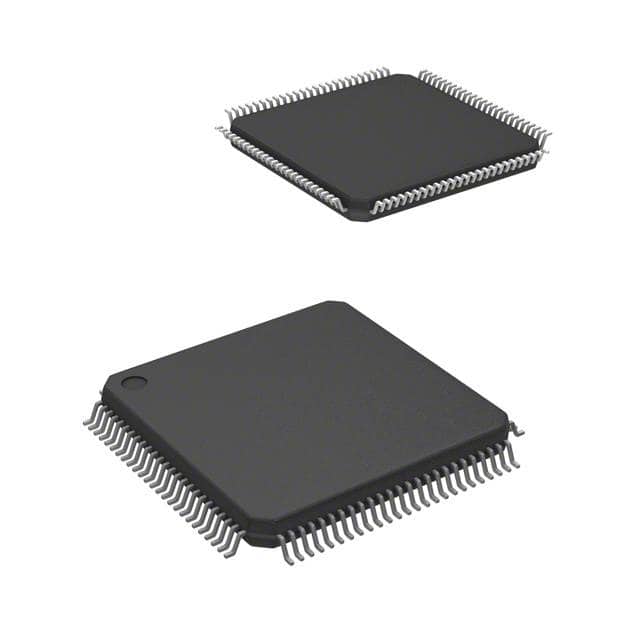
- Part No.:
- TMS320F2802PZA
- Manufacturer:
- Texas Instruments
- Category:
- Microcontrollers
- Package:
- 100-LQFP
- Datasheet:
-
 TMS320F2802PZA.pdf
- Description:
- IC MCU 32BIT 64KB FLASH 100LQFP
- Quantity:
- Payment:

- Shipping:

Inventory:4,640
Please send an inquiry. Send us your inquiry, and we will respond immediately.
Product details
Overview
TMS320F2802PZA from Texas Instruments is a 60-MHz C28x digital signal processor optimized for real-time motor control and digital power conversion, featuring 32K × 16 flash, 6K × 16 SARAM, 12-bit 16-channel ADC with 267 ns conversion time, three 32-bit CPU timers, and ePWM/ECAP/eQEP peripherals - deployed in brushless DC motor drives and AC-DC power supplies.
For engineers reviewing the TMS320F2802PZA datasheet, TMS320F2802PZA pinout, TMS320F2802PZA application, or TMS320F2802PZA equivalent, key selection criteria include its 100-pin LQFP (PZ) package, 1.8-V core / 3.3-V I/O voltage architecture, integrated code security module, and support for SCI-A, SPI-A/B, I2C-A, and single eCAN-A interfaces in industrial embedded control designs.
Technical Context
The TMS320F2802PZA implements the fixed-point TMS320C28x CPU core with Harvard bus architecture, atomic operations, and unified memory model, enabling deterministic real-time execution. It integrates a Peripheral Interrupt Expansion (PIE) block supporting 43 peripheral interrupts and uses little-endian data organization.
Its system control includes an on-chip oscillator, PLL-based clock generation, watchdog timer, and low-power modes (IDLE, STANDBY, HALT). The device supports boot from SCI, SPI, CAN, I2C, or parallel I/O via 4K × 16 boot ROM containing standard math tables.
Key Specifications
| Parameter | Value and Actual Design Meaning |
|---|---|
| CPU Core | TMS320C28x 32-bit fixed-point DSP running at 60 MHz (16.67-ns cycle time) |
| Flash Memory | 32K × 16 words (512 KB) with 128-bit security key/lock for firmware protection |
| SARAM | 6K × 16 words (96 KB) of single-access RAM across L0, M0, M1 blocks |
| ADC | 12-bit, 16-channel SAR ADC with 267 ns conversion time (3.75 MSPS), dual sample-and-hold |
| PWM Outputs | 6 ePWM channels (ePWM1–ePWM3) with trip-zone protection and HRPWM capability |
| Communication | SCI-A (UART), SPI-A/B, I2C-A, and one eCAN-A controller (32 mailbox buffers) |
| Package & Temp | 100-pin LQFP (PZ), 14.0 mm × 14.0 mm, rated for –40°C to +85°C (A grade) |
Pinout & Package
Package: Thin quad flatpack (PZ), 100-pin LQFP, 14.0 mm × 14.0 mm body size, 0.5-mm pitch, lead-free and RoHS-compliant.
| Pin/Terminal | Circuit Role | Design Meaning |
|---|---|---|
| GPIO0/EPWM1A | General-purpose I/O / Enhanced PWM output A | Primary high-side gate drive signal for motor phase A; configurable as digital I/O |
| GPIO24/ECAP1 | General-purpose I/O / Enhanced Capture input 1 | Measures pulse width or period of external signals (e.g., encoder index or fault pulses) |
| GPIO20/EQEP1A | General-purpose I/O / Quadrature Encoder input A | Accepts A-phase quadrature signal for position/speed feedback in BLDC/PMSM motors |
| ADCINA0–ADCINA7 | Analog input channel A multiplexer inputs | Eight dedicated analog inputs for current/voltage sensing in power stage monitoring |
| VDDAIO / VSSAIO | Analog I/O supply and ground | Isolated 3.3-V analog domain powering ADC and reference circuitry; critical for noise immunity |
| XCLKIN / X1 / X2 | External clock input / Crystal oscillator terminals | Supports external crystal (e.g., 20 MHz) or clock source for precise timing control |
Key Features
| Feature | Design Value |
|---|---|
| Code Security Module | 128-bit encryption key locks flash/SARAM/OTP to prevent firmware reverse-engineering and unauthorized access |
| ePWM with Trip Zones | 6-channel enhanced PWM with programmable dead-band, synchronization, and hardware fault shutdown (TZ1–TZ6) |
| Integrated Boot ROM | 4K × 16-word ROM enables flexible startup from SCI, SPI, CAN, I2C, or parallel I/O without external memory |
| Peripheral Interrupt Expansion | PIE block routes all 43 peripheral interrupts to CPU with priority management and vectoring |
| Low-Power Operation | IDLE, STANDBY, and HALT modes plus individual peripheral clock gating reduce active power consumption |
Applications
| Brushless DC Motor Drive | Digital AC-DC Power Supply |
|---|---|
Use Scenario: Closed-loop commutation and torque control of 3-phase BLDC motors in HVAC blowers and industrial fans. IC Role / Device Role / Timing Role: Real-time execution of FOC (field-oriented control) algorithms with sub-microsecond interrupt latency and synchronized PWM updates. Use Value: Enables precise 6-step or sinusoidal commutation using eQEP feedback and 6-channel ePWM outputs with 150-ps MEP resolution. | Use Scenario: Active PFC and LLC resonant converter control in telecom rectifiers and server PSUs. IC Role / Device Role / Timing Role: Dual-loop regulation (voltage + current) with fast ADC sampling and deterministic PWM timing for adaptive frequency modulation. Use Value: 267 ns ADC conversion and hardware-triggered SOC events allow synchronous sampling of line and output currents at switching frequencies up to 1 MHz. |
| Solar Microinverter Control | Industrial PLC I/O Module |
Use Scenario: MPPT tracking and grid-synchronized sine-wave inversion in single-phase residential solar inverters. IC Role / Device Role / Timing Role: High-precision grid synchronization using eQEP or SCI-based time-stamping, coupled with dual ADC sampling for isolation-free current sensing. Use Value: Integrated eCAN-A interface enables communication with master controller; 35 GPIOs support isolated gate drivers and status monitoring. | Use Scenario: Analog input conditioning and discrete I/O management in modular PLC backplanes for factory automation. IC Role / Device Role / Timing Role: Real-time acquisition of 16-channel analog sensor inputs (4–20 mA, 0–10 V) and deterministic response to fieldbus-triggered events. Use Value: 12-bit ADC with internal reference and programmable gain amplifiers eliminates need for external signal conditioning ICs. |
Equivalent & Alternatives
The following parts are listed as comparable options for similar real-time control applications.
| Alternative Part | Technical Difference | Application Difference | Selection Advice |
|---|---|---|---|
| TMS320F28027PZA | Same 60-MHz C28x core, but adds 128-bit OTP memory and enhanced ePWM (6 channels + 3 HRPWM), 10K × 16 SARAM | Supports higher-resolution motor control with HRPWM; suitable for servo-grade positioning where 150-ps MEP is required | Select when needing extended SARAM, OTP configuration storage, or HRPWM for advanced digital power topologies |
| TMS320F280049CPZAR | 100-MHz C28x core, 256K flash, CLA co-processor, 16-bit ADC (4 MSPS), dual eCAN, and enhanced analog front-end | Enables multi-axis motion control and complex digital power with hardware-accelerated math; requires PCB redesign due to 100-pin TQFP-to-100-pin LQFP compatibility only in footprint | Choose for next-generation designs requiring CLA offload, faster ADC, or dual CAN; not drop-in compatible |
Compared with TMS320F2802PZA, the TMS320F28027PZA offers expanded memory and HRPWM for finer timing resolution, while the TMS320F280049CPZAR delivers significantly higher compute throughput and analog performance at the cost of increased complexity and non-pin-compatible layout changes.
Availability
TMS320F2802PZA is available at Aetrix Electronics and suitable for motor drive, digital power, and industrial automation applications requiring stable component supply, long-term lifecycle support, and traceable sourcing.
Supply support for TMS320F2802PZA includes scheduled delivery planning, volume procurement assistance, BOM continuity management, traceable sourcing, and lifecycle availability coordination for OEM customers, industrial embedded developers, connected-device designers, and electronics production programs.
Manufacturer
Texas Instruments is a global semiconductor leader delivering analog, embedded processing, and connectivity solutions for industrial, automotive, and consumer markets.
The TMS320F2802PZA belongs to TI's C2000™ real-time microcontroller family, designed specifically for closed-loop digital control in power electronics, motor drives, and energy systems - emphasizing deterministic timing, integrated analog peripherals, and robust code security.
FAQ
What is the maximum operating frequency of the TMS320F2802PZA?
The TMS320F2802PZA operates at a maximum CPU frequency of 60 MHz, corresponding to a 16.67-ns instruction cycle time. This speed is achieved using an internal PLL that multiplies the input clock (e.g., from X1/X2 crystal or external source). The device does not support 100-MHz operation - that capability is reserved for higher-tier F2806/F2808/F2809 variants. All timing specifications in the datasheet assume this 60-MHz base clock.
Does the TMS320F2802PZA include on-chip flash memory and security features?
Yes, the TMS320F2802PZA integrates 32K × 16 words (512 KB) of on-chip flash memory and supports full 128-bit code-security locking of flash, SARAM, and OTP blocks. This prevents unauthorized readout or firmware cloning. The security module enforces secure boot and restricts JTAG access when enabled. Unlike some later C2000 devices, it does not include a separate 1K × 16 OTP ROM - its security key resides in flash-protected memory space.
How many PWM outputs does the TMS320F2802PZA support, and what advanced timing features are included?
The TMS320F2802PZA supports six ePWM outputs (ePWM1–ePWM3, each with A/B pairs) and includes trip-zone inputs (TZ1–TZ6) for hardware fault shutdown, dead-band generation, and synchronization signals (EPWMSYNCI/EPWMSYNCO). It also provides three HRPWM outputs with 150-ps minimum edge placement resolution - essential for high-frequency digital power control. These features are implemented in dedicated hardware, ensuring deterministic timing independent of CPU load.
What analog-to-digital converter (ADC) capabilities does the TMS320F2802PZA provide?
The TMS320F2802PZA integrates a 12-bit successive-approximation ADC with 16 input channels, organized into two 8-channel multiplexers (ADCINA and ADCINB). It achieves a 267 ns conversion time (3.75 MSPS), supports simultaneous sampling across both banks, and includes two sample-and-hold circuits. Internal references (ADCREFP/M) and external reference support (ADCRESEXT) enable flexible sensor interfacing without external op-amps in most industrial applications.
Which communication interfaces are available on the TMS320F2802PZA, and are they pin-compatible with other F280x devices?
The TMS320F2802PZA includes SCI-A (UART), SPI-A/B, I2C-A, and one eCAN-A controller - consistent with the F2801/F2802/F2806 pinout group. All these interfaces use dedicated pins mapped in the 100-pin PZ package and are electrically and functionally identical across this subset. However, it lacks the second CAN (eCAN-B), second SCI, and additional SPI modules found in F2808/F2809, so migration to those devices requires firmware and layout adjustments.
TMS320F2802PZA Specifications
- Product attributes
- Attribute value
- Manufacturer:
- Texas Instruments
- Package/Case:
- 100-LQFP
- Series:
- C2000™ C28x Fixed-Point
- Packaging:
- Tray
- Product Status:
- Active
- Programmable:
- Not Verified
- Core Processor:
- C28x
- Core Size:
- 32-Bit Single-Core
- Speed:
- 100MHz
- Connectivity:
- CANbus, I2C, SCI, SPI, UART/USART
- Peripherals:
- POR, PWM, WDT
- Number of I/O:
- 35
- Program Memory Size:
- 64KB (32K x 16)
- Program Memory Type:
- FLASH
- EEPROM Size:
- -
- RAM Size:
- 6K x 16
- Voltage - Supply (Vcc/Vdd):
- 1.71V ~ 1.89V
- Data Converters:
- A/D 16x12b
- Oscillator Type:
- Internal
- Operating Temperature:
- -40°C ~ 85°C (TA)
- Grade:
- Automotive
- Qualification:
- AEC-Q100
- Mounting Type:
- Surface Mount
- Supplier Device Package:
TMS320F2802PZA FAQ
1.How can I place an order for TMS320F2802PZA through Aetrix?
Please submit a Request for Quotation (RFQ) for TMS320F2802PZA on Aetrix. Our sales agent will provide a competitive quotation and guide you through the order confirmation once you accept the terms.
2.Are the price and stock information for TMS320F2802PZA reliable?
The price and inventory of TMS320F2802PZA are updated periodically and may fluctuate due to market conditions. Stock and pricing data are typically refreshed every 24 hours. Quotation validity for TMS320F2802PZA is usually 5 days.
3.What payment methods are accepted for TMS320F2802PZA?
We accept Wire Transfer, PayPal, Credit Card, Western Union, MoneyGram, and Escrow for TMS320F2802PZA transactions.
Note: Certain payment methods may incur a processing fee.
4.How is shipping managed for TMS320F2802PZA?
TMS320F2802PZA orders can be shipped via leading logistics carriers, including DHL, UPS, FedEx, TNT, or Registered Mail.
Once your TMS320F2802PZA order is processed, you will receive an email with the shipment details and tracking number.
Note: Tracking information may take up to 24 hours to appear. Express delivery typically takes 3–5 business days.
5.How can I obtain technical support or documentation for TMS320F2802PZA?
For technical support, including TMS320F2802PZA datasheets, pinout diagrams, or application guidance, please contact our engineering support team. They can provide detailed documentation and assistance for your TMS320F2802PZA requirements.
6.How does Aetrix verify that TMS320F2802PZA is sourced from the original manufacturer or authorized distributors?
All TMS320F2802PZA products on Aetrix are procured from qualified distributors and authorized channels. Our dedicated quality assurance team conducts strict verification, including traceability checks and, if necessary, third-party testing. This ensures that TMS320F2802PZA meets industry standards.
7.What is the process for return or replacement of TMS320F2802PZA?
All TMS320F2802PZA units undergo pre-shipment inspection (PSI). If there is an issue with TMS320F2802PZA, returns or replacements are accepted under the following conditions:
1.Quantity discrepancies, incorrect items, or visible external defects (such as breakage or corrosion), acknowledged by Aetrix.
2.The issue is reported within 90 days of delivery.
3.The TMS320F2802PZA part is unused and in its original packaging.
Return procedure for TMS320F2802PZA:
1.Submit a request within 90 days.
2.Obtain a Return Material Authorization (RMA) from Aetrix.
TMS320F2802PZA Tags

-
ATTINY4-TSHR
Microchip Technology
-
ATTINY10-TSHR
Microchip Technology
-
ATTINY10-TS8R
Microchip Technology

-
ATTINY202-SSNR
Microchip Technology
-
ATTINY202-SSFR
Microchip Technology
-
ATTINY402-SSNR
Microchip Technology
-
PIC16F15213T-I/MF
Microchip Technology
-
PIC16F15213-E/MF
Microchip Technology

-
PIC10F200T-I/OT
Microchip Technology
-
ATTINY412-SSNR
Microchip Technology
-
PIC10F202T-I/OT
Microchip Technology
-
ATTINY404-SSNR
Microchip Technology
Tech Hub

A practical engineering guide to 3.3V and 5V logic compatibility, input thresholds, resistor dividers, translator ICs, MOSFET level shifting, I2C pull-ups, timing limits and power-sequencing risks.

The 74HC595 uses push-pull logic outputs, while the TPIC6B595 uses 50 V open-drain DMOS sinks for higher-power loads. This guide compares timing, current limits, 3.3 V interfacing, load wiring, thermal…

The 74HC595 converts serial data into eight stable parallel outputs. This guide covers pin functions, shift and storage timing, OE and MR behavior, drive-current limits, cascading, voltage compatibilit…

A technical comparison of level-sensitive latches and edge-triggered flip-flops, covering timing windows, setup and hold limits, master–slave operation, time borrowing, race-through, HDL inference and…

A D latch stores one bit while Enable controls when data can pass. This reference covers gate-level operation, truth tables, transparency, setup and hold timing, LE versus OE, common ICs and practical …

An SR latch stores one bit through cross-coupled feedback. This engineering reference covers NOR and NAND implementations, truth tables, forbidden-state recovery, gated operation, switch debouncing, fa…

Latch circuits retain one bit through feedback. This technical reference covers SR and D latches, truth tables, transparency, timing limits, latch-versus-flip-flop behavior, applications and common log…

An engineering guide to LED driver operation, constant-current and constant-voltage outputs, linear and switching topologies, dimming, IC selection, calculations, replacement compatibility, and fault c…

Operational amplifier guide covering op amp basics, feedback, ideal vs real op amps, common configurations, buffer circuits, offset, bias current, gain-bandwidth, slew rate, rail-to-rail limits and sel…

Jumper cables guide covering safe connection order, red and black clamp placement, final ground connection, cable gauge, length, clamp quality, copper vs CCA cables, jump starter comparison and battery…


