
 My Inquiry
 My Account


Texas Instruments TMS320F28075PTPS
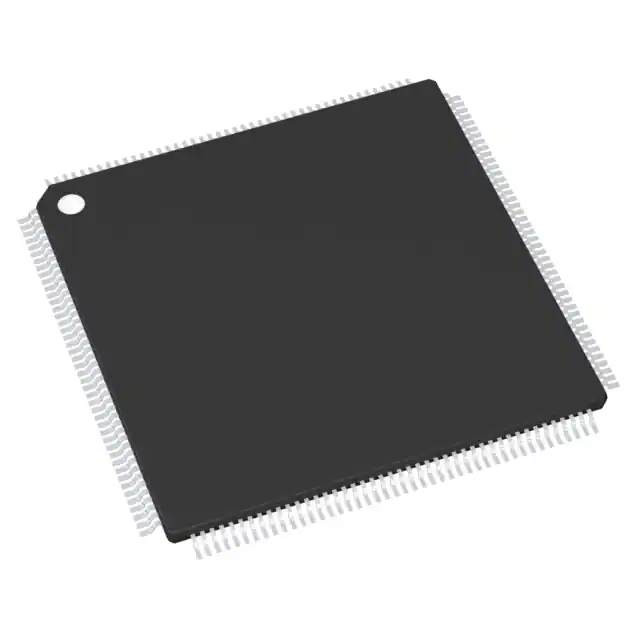
- Part No.:
- TMS320F28075PTPS
- Manufacturer:
- Texas Instruments
- Category:
- Microcontrollers
- Package:
- 176-LQFP Exposed Pad
- Datasheet:
-
 TMS320F28075PTPS.pdf
- Description:
- IC MCU 32BIT 512KB FLSH 176HLQFP
- Quantity:
- Payment:

- Shipping:

Inventory:1,030
Please send an inquiry. Send us your inquiry, and we will respond immediately.
Product details
Overview
TMS320F28075PTPS from Texas Instruments is a 120MHz C28x 32-bit floating-point real-time microcontroller with IEEE 754 FPU, Trigonometric Math Unit (TMU), and independent 120MHz Control Law Accelerator (CLA). It integrates 512KB ECC-protected flash, 100KB RAM (ECC/parity), three 12-bit ADCs (3.1MSPS each), 24 ePWM channels (16 HRPWM), dual CAN, USB 2.0, and CLB for motor control in traction inverters and solar power converters.
For engineers reviewing the TMS320F28075PTPS datasheet, TMS320F28075PTPS pinout, TMS320F28075PTPS application, or TMS320F28075PTPS equivalent, key selection criteria include HRPWM resolution for SiC/GaN gate drive timing, CLA offloading capability for torque-loop execution, ADC simultaneous sampling across three phases, functional safety certification up to ASIL B/SIL 2, and thermal performance of the 176-pin HLQFP PowerPAD package.
Technical Context
The TMS320F28075PTPS implements a dual-core real-time architecture: the C28x CPU handles system-level tasks while the CLA executes time-critical control loops-such as field-oriented control (FOC) or sensorless estimation-in parallel without CPU intervention. Its analog subsystem supports simultaneous sampling across three independent 12-bit ADCs with hardware post-processing including windowed comparators, DAC-referenced trip generation, and saturation calibration.
Peripherals are optimized for high-fidelity power conversion: 16 HRPWM channels deliver sub-nanosecond dead-time control on both A/B legs; six eCAP modules capture precise edge timing for encoder or resolver feedback; and SDFM interfaces support sigma-delta current sensors with fast out-of-range detection. The device operates at –40°C to 105°C junction temperature and includes dual internal 10MHz oscillators plus crystal oscillator support.
Key Specifications
| Parameter | Value and Actual Design Meaning |
|---|---|
| CPU Core | C28x 32-bit with IEEE 754 single-precision FPU and TMU for real-time trigonometric computation |
| CLA Coprocessor | Independent 120MHz 32-bit floating-point unit executing control code concurrently with main CPU |
| Flash / RAM | 512KB ECC-protected flash; 100KB RAM (50KW) with ECC or parity protection |
| ADC System | Three 12-bit ADCs, 3.1MSPS each, supporting simultaneous sampling and hardware post-processing |
| PWM Capability | 24 ePWM channels with 16 HRPWM outputs enabling <150ps resolution and programmable dead-band |
| Communication | Dual CAN 2.0B, USB 2.0 (MAC + PHY), 4 SCI/UART, 3 SPI, 2 I²C, 2 McBSP |
| Safety Certification | ISO 26262 ASIL B and IEC 61508 SIL 2 certified by TÜV SÜD; hardware integrity rated ASIL B/SIL 2 |
Pinout & Package
Package: 176-pin PowerPAD™ Thermally Enhanced Low-Profile Quad Flatpack (HLQFP), 26mm × 26mm body, exposed thermal pad soldered to PCB ground plane for optimal thermal conduction and digital grounding.
| Pin/Terminal | Circuit Role | Design Meaning |
|---|---|---|
| VDD / VDDIO | Core & I/O supply | 1.2V core (internal regulator), 3.3V I/O; separate power domains with dedicated decoupling |
| VREFHIA / VREFLOA | ADC-A reference | External high/low reference inputs requiring ≥1µF local bypass capacitor per pair |
| ADCINA0–ADCINA5 | ADC-A analog inputs | 6 single-ended inputs with 50kΩ internal pulldown; used for phase voltage/current sensing |
| EPWM1A / EPWM1B | HRPWM outputs | High-resolution A/B outputs supporting sub-ns timing adjustment and independent dead-band control |
| CANRXA / CANTXA | CAN-A transceiver interface | Differential bus interface compliant with ISO 11898-1; supports pin-bootable firmware update |
| USBDM / USBDP | USB 2.0 differential pair | Full-speed (12Mbps) PHY-integrated interface for host communication and firmware download |
| X1 / X2 | Clock input | Crystal oscillator pins supporting 1–20MHz fundamental-mode crystals for precise system timing |
| TCK / TMS / TDO / TDI | JTAG debug interface | IEEE 1149.1-compliant boundary-scan and emulation interface for development and production test |
Key Features
| Feature | Design Value |
|---|---|
| Trigonometric Math Unit (TMU) | Hardware-accelerated sine, cosine, arctangent - reduces torque-loop execution time by >40% vs software-only |
| Configurable Logic Block (CLB) | 4-tile logic fabric augmenting ePWM/eCAP peripherals for position manager or custom state-machine implementation |
| Windowed Comparator Subsystem (CMPSS) | Eight independent comparators with 12-bit DAC references enabling <100ns overcurrent trip response |
| Enhanced Capture (eCAP) | Six modules with 32-bit timestamp counter and pulse-width/period measurement for encoder or Hall sensor decoding |
| Sigma-Delta Filter Module (SDFM) | 8 input channels (2 parallel filters per channel) for direct interface with isolated ΣΔ current sensors |
Applications
| Traction Inverter Motor Control | Solar String Inverter |
|---|---|
Use Scenario: Real-time field-oriented control of permanent magnet synchronous motors in EV powertrains with SiC MOSFETs. IC Role / Device Role / Timing Role: Primary controller executing torque loop at 20kHz, managing HRPWM gate timing, ADC sampling, and fault response via CMPSS. Use Value: CLA offloads FOC calculations from C28x CPU, enabling deterministic 100ns PWM updates and <500ns overcurrent shutdown via comparator-to-PWM trip path. |
Use Scenario: MPPT and grid-synchronization control in residential solar string inverters with transformerless topology. IC Role / Device Role / Timing Role: Dual-role controller performing high-frequency current regulation (16kHz) and low-frequency grid-phase tracking (50/60Hz). Use Value: Three synchronized ADCs sample DC-link voltage, AC output current, and grid voltage simultaneously; USB enables remote firmware updates and diagnostics. |
| EV DC Charging Station Power Module | Industrial AC Drive Control Module |
Use Scenario: Bidirectional AC/DC and DC/DC power conversion in 15–30kW EV fast-charging stations. IC Role / Device Role / Timing Role: Master controller coordinating interleaved PFC and LLC resonant stages using dual CAN for module synchronization. Use Value: Dual CAN modules support ISO 15118-compliant vehicle-to-grid (V2G) handshaking; 176-pin package provides GPIO headroom for auxiliary monitoring and safety interlocks. |
Use Scenario: Closed-loop vector control of induction motors in HVAC and pump applications with dynamic load changes. IC Role / Device Role / Timing Role: Real-time motion controller managing speed/position loops, thermal monitoring, and Modbus RTU communication. Use Value: eQEP modules decode quadrature encoder feedback at >10MHz; CLB implements custom braking logic without CPU overhead. |
Equivalent & Alternatives
The following parts are listed as comparable options for similar real-time motor control applications.
| Alternative Part | Technical Difference | Application Difference | Selection Advice |
|---|---|---|---|
| TMS320F28076PTP | Same package and pinout; adds 4 CLB tiles (vs 0) and full 97 GPIO (vs 97, but PZP variant has only 41) | Enables complex position manager logic and additional I/O for multi-axis coordination | Select when CLB-based encoder interpolation or custom PWM sequencing is required beyond TMS320F28075PTPS capability |
| TMS320F280049CPTP | Smaller 128-pin HTQFP; 100MHz CPU; 256KB flash; 2x 12-bit ADCs (2.5MSPS); no CLA or TMU | Targeted at cost-sensitive, lower-performance AC drives and BLDC fans | Select when functional safety certification, HRPWM resolution, or triple ADC concurrency are not required |
Compared with TMS320F28075PTPS, TMS320F28076PTP delivers enhanced configurability for advanced motion algorithms, while TMS320F280049CPTP offers reduced cost and footprint at the expense of computational throughput, analog concurrency, and safety certification-making TMS320F28075PTPS the balanced choice for ASIL B–compliant, high-fidelity power conversion.
Availability
TMS320F28075PTPS is available at Aetrix Electronics and suitable for traction inverter motor control, solar string inverter design, and EV DC charging station power modules requiring stable component supply, long-term industrial lifecycle support, and traceable sourcing.
Supply support for TMS320F28075PTPS includes scheduled delivery planning, volume procurement assistance, BOM continuity management, traceable sourcing, and lifecycle availability coordination for OEM customers, industrial embedded developers, connected-device designers, and electronics production programs.
Manufacturer
Texas Instruments is a global semiconductor company specializing in analog and embedded processing technologies, with leadership in real-time control, power management, and signal chain solutions.
The TMS320F28075PTPS belongs to TI's C2000™ Premium performance MCU line, designed specifically for high-accuracy, high-bandwidth closed-loop control in power electronics, motor drives, and renewable energy systems.
FAQ
What is the operating temperature range for the TMS320F28075PTPS?
The TMS320F28075PTPS is rated for a junction temperature range of –40°C to 105°C (industrial grade, 'T' suffix). This rating is validated per JEDEC JESD22-A104 and supports deployment in under-hood automotive power modules and industrial inverters without forced cooling. The thermal design leverages the exposed PowerPAD on the 176-pin HLQFP package for efficient heat dissipation into the PCB ground plane. TMS320F28075PTPS maintains full specification compliance across this range, including ADC accuracy, PWM timing, and flash retention.
Does the TMS320F28075PTPS support functional safety certification?
Yes, the TMS320F28075PTPS is ISO 26262 certified up to ASIL B and IEC 61508 certified up to SIL 2 by TÜV SÜD. Certification covers hardware integrity, diagnostic coverage, and failure-in-time (FIT) data. Documentation-including safety manuals, FMEDA reports, and diagnostic software libraries-is provided by Texas Instruments to support system-level compliance up to ASIL D (ISO 26262) and SIL 3 (IEC 61508). TMS320F28075PTPS includes hardware features such as ECC on flash/RAM, windowed watchdog, and clock failure detection to meet these requirements.
How many high-resolution PWM channels does the TMS320F28075PTPS provide?
The TMS320F28075PTPS provides 16 High-Resolution PWM (HRPWM) channels across eight ePWM modules, with both A and B outputs of each module supporting sub-nanosecond resolution. This enables precise dead-time insertion, phase-shifted carrier modulation, and adaptive gate drive for wide-bandgap devices. Each HRPWM channel achieves <150ps step resolution and supports independent trip-zone (TZ) inputs for immediate fault shutdown. TMS320F28075PTPS uses this capability for SiC/GaN inverter control where timing margin is critical.
Can the TMS320F28075PTPS execute control code independently of the main CPU?
Yes, the TMS320F28075PTPS includes a dedicated Control Law Accelerator (CLA) - a 32-bit floating-point coprocessor running at 120MHz, fully independent of the main C28x CPU. The CLA responds to peripheral interrupts (e.g., ADC end-of-conversion, ePWM timer overflow) and executes control law code stored in shared RAM or CLA-specific RAM. This allows concurrent execution: for example, the CLA can run inner-current loops while the C28x CPU manages communications, diagnostics, and outer-position loops. TMS320F28075PTPS uses this architecture to achieve deterministic sub-microsecond control latency without CPU scheduling jitter.
What analog peripherals are integrated into the TMS320F28075PTPS?
The TMS320F28075PTPS integrates three 12-bit analog-to-digital converters (ADCs), each capable of 3.1MSPS sampling with simultaneous start capability; eight windowed comparators (CMPSS) with 12-bit DAC references for ultra-fast overvoltage/overcurrent tripping; and three 12-bit buffered DAC outputs for reference generation or analog feedback. Each ADC includes a dedicated sample-and-hold circuit and hardware post-processing (e.g., offset calibration, error-from-setpoint calculation). TMS320F28075PTPS uses this analog subsystem to monitor all three motor phases concurrently while maintaining independent fault response paths.
TMS320F28075PTPS Specifications
- Product attributes
- Attribute value
- Manufacturer:
- Texas Instruments
- Package/Case:
- 176-LQFP Exposed Pad
- Series:
- C2000™ C28x Piccolo™, Functional Safety (FuSa)
- Packaging:
- Tray
- Product Status:
- Active
- Programmable:
- Not Verified
- Core Processor:
- C28x
- Core Size:
- 32-Bit Single-Core
- Speed:
- 120MHz
- Connectivity:
- CANbus, EBI/EMI, I2C, McBSP, SCI, SPI, UART/USART, USB
- Peripherals:
- DMA, POR, PWM, WDT
- Number of I/O:
- 97
- Program Memory Size:
- 512KB (256K x 16)
- Program Memory Type:
- FLASH
- EEPROM Size:
- -
- RAM Size:
- 50K x 16
- Voltage - Supply (Vcc/Vdd):
- 1.14V ~ 3.47V
- Data Converters:
- A/D 17x12b; D/A 3x12b
- Oscillator Type:
- External
- Operating Temperature:
- -40°C ~ 125°C (TJ)
- Grade:
- -
- Qualification:
- -
- Mounting Type:
- Surface Mount
- Supplier Device Package:
TMS320F28075PTPS FAQ
1.How can I place an order for TMS320F28075PTPS through Aetrix?
Please submit a Request for Quotation (RFQ) for TMS320F28075PTPS on Aetrix. Our sales agent will provide a competitive quotation and guide you through the order confirmation once you accept the terms.
2.Are the price and stock information for TMS320F28075PTPS reliable?
The price and inventory of TMS320F28075PTPS are updated periodically and may fluctuate due to market conditions. Stock and pricing data are typically refreshed every 24 hours. Quotation validity for TMS320F28075PTPS is usually 5 days.
3.What payment methods are accepted for TMS320F28075PTPS?
We accept Wire Transfer, PayPal, Credit Card, Western Union, MoneyGram, and Escrow for TMS320F28075PTPS transactions.
Note: Certain payment methods may incur a processing fee.
4.How is shipping managed for TMS320F28075PTPS?
TMS320F28075PTPS orders can be shipped via leading logistics carriers, including DHL, UPS, FedEx, TNT, or Registered Mail.
Once your TMS320F28075PTPS order is processed, you will receive an email with the shipment details and tracking number.
Note: Tracking information may take up to 24 hours to appear. Express delivery typically takes 3–5 business days.
5.How can I obtain technical support or documentation for TMS320F28075PTPS?
For technical support, including TMS320F28075PTPS datasheets, pinout diagrams, or application guidance, please contact our engineering support team. They can provide detailed documentation and assistance for your TMS320F28075PTPS requirements.
6.How does Aetrix verify that TMS320F28075PTPS is sourced from the original manufacturer or authorized distributors?
All TMS320F28075PTPS products on Aetrix are procured from qualified distributors and authorized channels. Our dedicated quality assurance team conducts strict verification, including traceability checks and, if necessary, third-party testing. This ensures that TMS320F28075PTPS meets industry standards.
7.What is the process for return or replacement of TMS320F28075PTPS?
All TMS320F28075PTPS units undergo pre-shipment inspection (PSI). If there is an issue with TMS320F28075PTPS, returns or replacements are accepted under the following conditions:
1.Quantity discrepancies, incorrect items, or visible external defects (such as breakage or corrosion), acknowledged by Aetrix.
2.The issue is reported within 90 days of delivery.
3.The TMS320F28075PTPS part is unused and in its original packaging.
Return procedure for TMS320F28075PTPS:
1.Submit a request within 90 days.
2.Obtain a Return Material Authorization (RMA) from Aetrix.
TMS320F28075PTPS Tags

-
ATTINY4-TSHR
Microchip Technology
-
ATTINY10-TSHR
Microchip Technology
-
ATTINY10-TS8R
Microchip Technology

-
ATTINY202-SSNR
Microchip Technology
-
ATTINY202-SSFR
Microchip Technology
-
ATTINY402-SSNR
Microchip Technology

-
PIC16F15213T-I/MF
Microchip Technology
-
PIC16F15213-E/MF
Microchip Technology

-
PIC10F200T-I/OT
Microchip Technology
-
ATTINY412-SSNR
Microchip Technology
-
PIC10F202T-I/OT
Microchip Technology

-
ATTINY404-SSNR
Microchip Technology
Tech Hub

A practical engineering guide to 3.3V and 5V logic compatibility, input thresholds, resistor dividers, translator ICs, MOSFET level shifting, I2C pull-ups, timing limits and power-sequencing risks.

The 74HC595 uses push-pull logic outputs, while the TPIC6B595 uses 50 V open-drain DMOS sinks for higher-power loads. This guide compares timing, current limits, 3.3 V interfacing, load wiring, thermal…

The 74HC595 converts serial data into eight stable parallel outputs. This guide covers pin functions, shift and storage timing, OE and MR behavior, drive-current limits, cascading, voltage compatibilit…

A technical comparison of level-sensitive latches and edge-triggered flip-flops, covering timing windows, setup and hold limits, master–slave operation, time borrowing, race-through, HDL inference and…

A D latch stores one bit while Enable controls when data can pass. This reference covers gate-level operation, truth tables, transparency, setup and hold timing, LE versus OE, common ICs and practical …

An SR latch stores one bit through cross-coupled feedback. This engineering reference covers NOR and NAND implementations, truth tables, forbidden-state recovery, gated operation, switch debouncing, fa…

Latch circuits retain one bit through feedback. This technical reference covers SR and D latches, truth tables, transparency, timing limits, latch-versus-flip-flop behavior, applications and common log…

An engineering guide to LED driver operation, constant-current and constant-voltage outputs, linear and switching topologies, dimming, IC selection, calculations, replacement compatibility, and fault c…

Operational amplifier guide covering op amp basics, feedback, ideal vs real op amps, common configurations, buffer circuits, offset, bias current, gain-bandwidth, slew rate, rail-to-rail limits and sel…

Jumper cables guide covering safe connection order, red and black clamp placement, final ground connection, cable gauge, length, clamp quality, copper vs CCA cables, jump starter comparison and battery…


