
 My Inquiry
 My Account


Texas Instruments TMS320WP010PZ
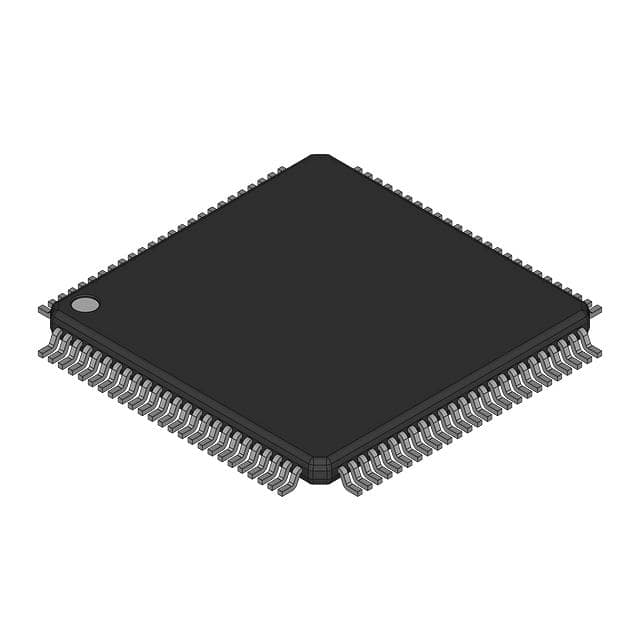
- Part No.:
- TMS320WP010PZ
- Manufacturer:
- Texas Instruments
- Category:
- DSP (Digital Signal Processors)
- Package:
- -
- Datasheet:
-
 TMS320WP010PZ.pdf
- Description:
- DIGITAL SIGNAL PROCESSOR, 16-BIT
- Quantity:
- Payment:

- Shipping:

Inventory:720
Please send an inquiry. Send us your inquiry, and we will respond immediately.
Product details
Overview
TMS320WP010PZ from Texas Instruments is a ROM-coded digital signal processor (DSP) designed specifically for acoustic echo cancellation (AEC), line echo cancellation (LEC), and adaptive noise suppression (ANS) in automotive hands-free cellular phone cradles. It implements a 16-bit TMS320C5x-based architecture, supports up to 44 ms acoustic echo path cancellation with >20 dB/s initial adaptation rate, delivers zero speech delay, and achieves up to 30 dB echo return loss for speech in automobile environments.
For engineers reviewing the TMS320WP010PZ datasheet, TMS320WP010PZ pinout, TMS320WP010PZ application, or TMS320WP010PZ equivalent, key selection considerations include its dedicated AEC/LEC/ANS firmware, 100-pin TQFP (PZ) package with dual serial ports for codec interfacing, industrial temperature range (–40°C to 85°C), 5 V operation, and MCU-controlled function enable/disable capability.
Technical Context
The TMS320WP010PZ integrates three co-located adaptive filtering engines: an FIR-based AEC with continuous coefficient update for speaker-to-microphone paths up to 44 ms; an LEC optimized for network impedance mismatch feedback up to 16 ms; and an ANS that suppresses wind, engine, and tire noise by up to 10 dB without speech distortion. All functions operate with no initial system training and adapt continuously to changing acoustic conditions.
It interfaces via two independent serial ports-RX1/TX1 for telephone-line codec connection and RX2/TX2 for microphone/speaker codec connection-and features a parallel 16-bit address/data bus, JTAG emulation support (TDI/TDO/TMS/TCK/TRST), and programmable clock modes including PLL, external divide-by-two, and internal oscillator options. The device executes ROM-resident algorithms and accepts real-time control commands from an external microcontroller.
Key Specifications
| Parameter | Value and Actual Design Meaning |
|---|---|
| Echo Cancellation Type | AEC (acoustic), LEC (line), ANS (adaptive noise suppression) - all implemented in fixed ROM firmware |
| Max Acoustic Echo Path | 44 ms - enables full cancellation of long reverberant paths typical in vehicle cabins |
| Initial AEC Adaptation Rate | >20 dB/s - ensures rapid convergence during call setup or sudden environment changes |
| Echo Return Loss | Up to 30 dB for speech, 41 dB for sine wave - meets stringent automotive hands-free audio quality requirements |
| Noise Suppression | Up to 10 dB without speech distortion - preserves intelligibility while reducing wind/engine/tire noise |
| Processing Delay | Zero speech delay (AEC), 16 ms (ANS) - maintains natural full-duplex conversation flow |
| Supply Voltage | 4.75 V to 5.25 V - compatible with standard 5 V industrial power rails |
| Operating Temperature | –40°C to 85°C - qualified for under-hood and cabin-mounted automotive applications |
Pinout & Package
Package: 100-pin plastic thin quad flatpack (TQFP), PZ package per JEDEC MO-152, body size 14.0 mm × 14.0 mm, 0.5 mm lead pitch.
| Pin/Terminal | Circuit Role | Design Meaning |
|---|---|---|
| A0–A15 | Address bus inputs/outputs | 16-bit multiplexed address lines for external memory or peripheral access |
| D0–D15 | Data bus inputs/outputs | 16-bit bidirectional data interface supporting parallel host or memory expansion |
| DX1/DX2, DR1/DR2 | Serial transmit/receive data | Dual independent serial ports: DX1/DR1 for line codec; DX2/DR2 for mic/speaker codec |
| CLKX1/CLKX2, CLKR1/CLKR2 | Serial clock I/O | Configurable as input or output to support master/slave serial timing across both ports |
| FSX1/FSX2, FSR1/FSR2 | Frame sync I/O | Frame synchronization signals enabling time-division multiplexing with voice codecs like TCM320AC36 |
| MP/MC | Mode select input | High = microcomputer mode (enables internal ROM execution); critical for boot configuration |
| EMU0/EMU1/OFF | Emulation control | Supports TI JTAG debugging; EMU1 low places all outputs in high-impedance state |
| X2/CLKIN, X1 | Oscillator interface | Crystal or external clock input (X2/CLKIN); X1 is oscillator output - enables flexible clock sourcing |
Key Features
| Feature | Design Value |
|---|---|
| ROM-coded AEC/LEC/ANS algorithms | Eliminates need for external program memory and firmware development - reduces BOM and qualification effort |
| Dual independent serial ports | Enables simultaneous connection to line-side and acoustic-side codecs without time-sharing or buffering overhead |
| MCU control interface | Allows external microcontroller to dynamically enable/disable AEC, LEC, or ANS - essential for adaptive system-level power and feature management |
| Continuous acoustic adaptation | No initial training required; tracks speaker/mic position shifts, window openings, or passenger movement in real time |
| JTAG emulation support | Full boundary-scan and debug capability via TDI/TDO/TMS/TCK/TRST pins - accelerates lab validation and field diagnostics |
| Industrial temperature grade | Rated for –40°C to 85°C ambient - validated for deployment in vehicle interior electronics without derating |
Applications
| Automotive Hands-Free Cradle | Cellular Phone Docking Station |
|---|---|
Use Scenario: Integrated into OEM or aftermarket vehicle-mounted cellular cradles to enable full-duplex voice communication without echo or noise interference. IC Role / Device Role / Timing Role: Primary DSP executing real-time AEC, LEC, and ANS algorithms; synchronizes with TC320AC36 codec via dual serial ports. Use Value: Delivers 30 dB echo return loss and 10 dB noise suppression in moving vehicles, meeting ITU-T P.79 and ETSI EN 300 119 acoustic performance benchmarks. |
Use Scenario: Embedded in desktop or console-based cellular docking stations used in fleet dispatch centers or mobile offices. IC Role / Device Role / Timing Role: Standalone echo/noise processing engine interfaced to host MCU and dual-channel audio codec; operates at 5 V with zero-latency AEC. Use Value: Enables carrier-grade voice clarity in high-noise environments (e.g., warehouses, emergency response vehicles) without requiring host CPU intervention. |
| In-Vehicle Infotainment (IVI) Gateway | Commercial Fleet Communication Hub |
Use Scenario: Used as a dedicated audio preprocessing block within IVI head units supporting Bluetooth and wired phone integration. IC Role / Device Role / Timing Role: Offloads echo cancellation and noise suppression from main application processor; receives analog audio via external codec and outputs clean digital stream. Use Value: Reduces host CPU load by >15 MIPS while maintaining sub-20 ms total audio path latency - critical for real-time voice assistant responsiveness. |
Use Scenario: Deployed in ruggedized fleet communication terminals installed in delivery vans, service trucks, and public safety vehicles. IC Role / Device Role / Timing Role: Core signal conditioning IC handling microphone input and speaker output in harsh electrical and thermal environments. Use Value: Sustains intelligible voice transmission despite 85 dB(A) broadband cabin noise and 10 g mechanical vibration - validated per ISO 16750-4. |
Equivalent & Alternatives
The following parts are listed as comparable options for similar acoustic echo and noise suppression applications.
| Alternative Part | Technical Difference | Application Difference | Selection Advice |
|---|---|---|---|
| TMS320VC549PGE | General-purpose C54x DSP with no ROM-based AEC/LEC/ANS firmware; requires external program memory and custom algorithm implementation | Suitable for flexible, multi-function audio processing but lacks plug-and-play echo/noise suppression | Select when system requires reconfigurable signal processing beyond fixed AEC/ANS - not a drop-in replacement |
| TLV320AIC10IPFB | Integrated audio codec with basic echo cancellation (non-adaptive, <16 ms path), no ANS, and no LEC functionality | Targets cost-sensitive consumer hands-free accessories, not automotive-grade full-duplex systems | Select only for non-automotive, low-complexity applications where 30 dB echo return loss and 10 dB noise suppression are not required |
Compared with TMS320VC549PGE and TLV320AIC10IPFB, the TMS320WP010PZ provides verified, production-ready AEC/LEC/ANS performance out-of-box - eliminating algorithm development, qualification, and memory interface design, while delivering automotive-grade robustness unattainable with general-purpose or codec-integrated alternatives.
Availability
TMS320WP010PZ is available at Aetrix Electronics and suitable for automotive hands-free cradles, cellular docking stations, in-vehicle infotainment gateways, and commercial fleet communication hubs requiring stable component supply and long-term lifecycle support.
Supply support for TMS320WP010PZ includes scheduled delivery planning, volume procurement assistance, BOM continuity management, traceable sourcing, and lifecycle availability coordination for OEM customers, industrial embedded developers, connected-device designers, and electronics production programs.
Manufacturer
Texas Instruments is a global semiconductor leader specializing in analog, embedded processing, and digital signal processing technologies, with over 50 years of innovation in high-reliability industrial and automotive electronics.
The TMS320WP010PZ belongs to TI's Wireless Peripheral DSP product line, engineered specifically to offload computationally intensive acoustic processing from host microcontrollers in automotive voice communication systems.
FAQ
What is the primary function of the TMS320WP010PZ?
The TMS320WP010PZ is a dedicated digital signal processor implementing three fixed-function algorithms: acoustic echo cancellation (AEC), line echo cancellation (LEC), and adaptive noise suppression (ANS). It is not a general-purpose DSP - all signal processing is pre-programmed in ROM and optimized for hands-free cellular voice communication in automotive environments. The TMS320WP010PZ delivers zero speech delay, up to 44 ms echo path handling, and continuous environmental adaptation without requiring host CPU involvement.
Does the TMS320WP010PZ require external program memory?
No, the TMS320WP010PZ contains ROM-coded AEC/LEC/ANS firmware and executes directly from internal non-volatile memory. Unlike general-purpose TMS320C5x devices, it does not require external program memory, boot ROM, or firmware loading. Its MP/MC pin must be held high to enable microcomputer mode and activate the internal ROM - making the TMS320WP010PZ a self-contained, turnkey solution for echo and noise processing.
Which audio codecs are compatible with the TMS320WP010PZ?
The TMS320WP010PZ is explicitly designed to interface with TI's TCM320AC36 voiceband codec, as confirmed in the datasheet. Its dual serial ports (SP0 and SP1) support industry-standard audio frame formats, including I²S-like and Motorola SPI-compatible protocols. The TMS320WP010PZ uses FSX1/FSR1 and CLKX1/CLKR1 for line-side codec connection, and FSX2/FSR2 and CLKX2/CLKR2 for microphone/speaker-side codec connection - enabling simultaneous, independent audio streams without multiplexing.
Can the AEC, LEC, and ANS functions be controlled independently on the TMS320WP010PZ?
Yes, the TMS320WP010PZ supports independent enable/disable control of AEC, LEC, and ANS via MCU command interface. The device accepts control signals through its parallel bus (e.g., via PS/DS/IS and data lines) or serial port registers, allowing dynamic runtime adjustment - for example, disabling ANS during quiet conditions to preserve processing headroom or turning off LEC when operating on GSM networks where line echo is negligible. This configurability is documented in the functional description section of the SPRS040 datasheet.
What clocking options does the TMS320WP010PZ support?
The TMS320WP010PZ supports three clocking modes selected via CLKMD1 and CLKMD2 pins: (1) PLL clock generator (multiply-by-one only), (2) internal oscillator with external crystal (X1/X2), and (3) external divide-by-two clock injected at X2/CLKIN. The internal oscillator option supports fundamental or overtone crystals at 20 pF load capacitance; the PLL option accepts external clocks from 25 MHz to 75 MHz (multiply-by-one). All modes deliver stable operation across –40°C to 85°C, and the TMS320WP010PZ is fully static - permitting clock stoppage during IDLE2 mode for ultra-low-power states.
TMS320WP010PZ Specifications
- Product attributes
- Attribute value
- Manufacturer:
- Texas Instruments
- Series:
- *
- Package/Case:
- -
- Packaging:
- Bulk
- Product Status:
- Active
- Type:
- -
- Interface:
- -
- Clock Rate:
- -
- Non-Volatile Memory:
- -
- On-Chip RAM:
- -
- Voltage - I/O:
- -
- Voltage - Core:
- -
- Operating Temperature:
- -
- Grade:
- -
- Qualification:
- -
- Mounting Type:
- -
- Supplier Device Package:
- -
TMS320WP010PZ FAQ
1.How can I place an order for TMS320WP010PZ through Aetrix?
Please submit a Request for Quotation (RFQ) for TMS320WP010PZ on Aetrix. Our sales agent will provide a competitive quotation and guide you through the order confirmation once you accept the terms.
2.Are the price and stock information for TMS320WP010PZ reliable?
The price and inventory of TMS320WP010PZ are updated periodically and may fluctuate due to market conditions. Stock and pricing data are typically refreshed every 24 hours. Quotation validity for TMS320WP010PZ is usually 5 days.
3.What payment methods are accepted for TMS320WP010PZ?
We accept Wire Transfer, PayPal, Credit Card, Western Union, MoneyGram, and Escrow for TMS320WP010PZ transactions.
Note: Certain payment methods may incur a processing fee.
4.How is shipping managed for TMS320WP010PZ?
TMS320WP010PZ orders can be shipped via leading logistics carriers, including DHL, UPS, FedEx, TNT, or Registered Mail.
Once your TMS320WP010PZ order is processed, you will receive an email with the shipment details and tracking number.
Note: Tracking information may take up to 24 hours to appear. Express delivery typically takes 3–5 business days.
5.How can I obtain technical support or documentation for TMS320WP010PZ?
For technical support, including TMS320WP010PZ datasheets, pinout diagrams, or application guidance, please contact our engineering support team. They can provide detailed documentation and assistance for your TMS320WP010PZ requirements.
6.How does Aetrix verify that TMS320WP010PZ is sourced from the original manufacturer or authorized distributors?
All TMS320WP010PZ products on Aetrix are procured from qualified distributors and authorized channels. Our dedicated quality assurance team conducts strict verification, including traceability checks and, if necessary, third-party testing. This ensures that TMS320WP010PZ meets industry standards.
7.What is the process for return or replacement of TMS320WP010PZ?
All TMS320WP010PZ units undergo pre-shipment inspection (PSI). If there is an issue with TMS320WP010PZ, returns or replacements are accepted under the following conditions:
1.Quantity discrepancies, incorrect items, or visible external defects (such as breakage or corrosion), acknowledged by Aetrix.
2.The issue is reported within 90 days of delivery.
3.The TMS320WP010PZ part is unused and in its original packaging.
Return procedure for TMS320WP010PZ:
1.Submit a request within 90 days.
2.Obtain a Return Material Authorization (RMA) from Aetrix.
TMS320WP010PZ Tags
-
TMS320C5535AZAY10
Texas Instruments
-
TMS320VC5501PGF300
Texas Instruments
-
ADSP-BF592KCPZ
Analog Devices Inc.
-
ADAU1463WBCPZ150
Analog Devices Inc.
-
TMS320VC5402PGE100
Texas Instruments
-
ADAU1701JSTZ-RL
Analog Devices Inc.
-
ADAU1701JSTZ
Analog Devices Inc.
-
TMS320VC5502PGF300
Texas Instruments
-
ADAU1462WBCPZ300RL
Analog Devices Inc.
-
ADAU1452KCPZRL
Analog Devices Inc.
-
ADAU1452WBCPZ-RL
Analog Devices Inc.
-
TMS320C6747DZKB3
Texas Instruments
Tech Hub

A practical engineering guide to 3.3V and 5V logic compatibility, input thresholds, resistor dividers, translator ICs, MOSFET level shifting, I2C pull-ups, timing limits and power-sequencing risks.

The 74HC595 uses push-pull logic outputs, while the TPIC6B595 uses 50 V open-drain DMOS sinks for higher-power loads. This guide compares timing, current limits, 3.3 V interfacing, load wiring, thermal…

The 74HC595 converts serial data into eight stable parallel outputs. This guide covers pin functions, shift and storage timing, OE and MR behavior, drive-current limits, cascading, voltage compatibilit…

A technical comparison of level-sensitive latches and edge-triggered flip-flops, covering timing windows, setup and hold limits, master–slave operation, time borrowing, race-through, HDL inference and…

A D latch stores one bit while Enable controls when data can pass. This reference covers gate-level operation, truth tables, transparency, setup and hold timing, LE versus OE, common ICs and practical …

An SR latch stores one bit through cross-coupled feedback. This engineering reference covers NOR and NAND implementations, truth tables, forbidden-state recovery, gated operation, switch debouncing, fa…

Latch circuits retain one bit through feedback. This technical reference covers SR and D latches, truth tables, transparency, timing limits, latch-versus-flip-flop behavior, applications and common log…

An engineering guide to LED driver operation, constant-current and constant-voltage outputs, linear and switching topologies, dimming, IC selection, calculations, replacement compatibility, and fault c…

Operational amplifier guide covering op amp basics, feedback, ideal vs real op amps, common configurations, buffer circuits, offset, bias current, gain-bandwidth, slew rate, rail-to-rail limits and sel…

Jumper cables guide covering safe connection order, red and black clamp placement, final ground connection, cable gauge, length, clamp quality, copper vs CCA cables, jump starter comparison and battery…


