
 My Inquiry
 My Account


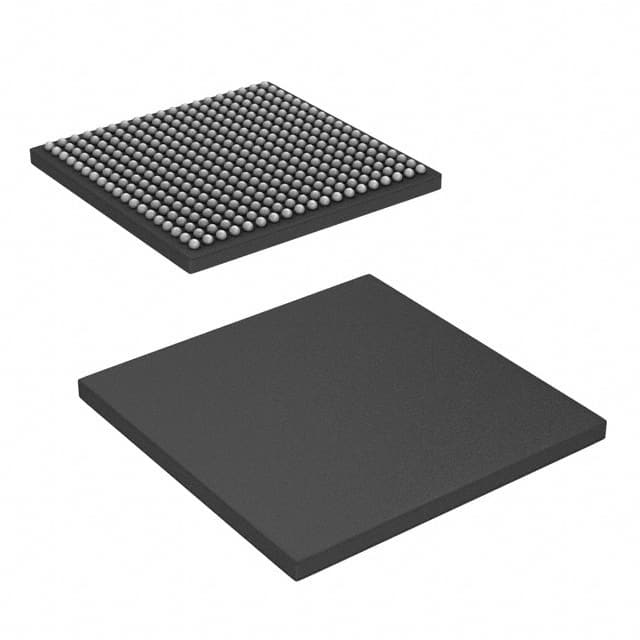
Texas Instruments TNETV2665VIDZWT7
- Part No.:
- TNETV2665VIDZWT7
- Manufacturer:
- Texas Instruments
- Category:
- DSP (Digital Signal Processors)
- Package:
- 361-LFBGA
- Datasheet:
-
 TNETV2665VIDZWT7.pdf
- Description:
- DAVINCI DIGITAL MEDIA SYSTEM-ON-
- Quantity:
- Payment:

- Shipping:

Inventory:2,073
Please send an inquiry. Send us your inquiry, and we will respond immediately.
Product details
Overview
TNETV2665VIDZWT7 from Texas Instruments is a fixed-point digital signal processor (DSP) based on the C64x+™ VLIW architecture, delivering up to 5600 MIPS at 700 MHz with 32 KB L1P program RAM/cache, 80 KB L1D data RAM/cache, and 128 KB unified L2 RAM/cache. It integrates a 10/100-Mb/s Ethernet MAC, DDR2 SDRAM controller, dual McBSPs, McASP0 with SPDIF support, and 111 GPIO pins - deployed in telecom infrastructure, industrial motor control, and audio processing systems.
For engineers reviewing the TNETV2665VIDZWT7 datasheet, TNETV2665VIDZWT7 pinout, TNETV2665VIDZWT7 application, or TNETV2665VIDZWT7 equivalent, key selection criteria include its 361-pin ZWT PBGA package, 1.2-V core / 1.8-V I/O voltage operation, flexible memory mapping (L1/L2 configurable as cache or mapped RAM), and hardware acceleration for telecom codecs, FFTs, and real-time control loops.
Technical Context
The TNETV2665VIDZWT7 implements the C64x+™ DSP core with eight functional units (six ALUs, two multipliers), 64 × 32-bit general-purpose registers, and VelociTI.2™ instruction set extensions enabling four 16×16-bit or eight 8×8-bit MACs per cycle. Its memory subsystem features independent L1P/L1D controllers and a unified L2 controller supporting cache coherency and flexible allocation between program/data space.
Peripheral integration includes a fully IEEE 802.3-compliant EMAC with MII/RMII interfaces and MDIO management, a 32-bit 33-MHz PCI interface, dual UARTs (one with RTS/CTS), I²C master/slave, three PWM outputs, and a 16-bit HPI - all managed via a centralized interrupt controller and EDMA3 engine with 64 independent channels.
Key Specifications
| Parameter | Value and Actual Design Meaning |
|---|---|
| CPU Core | C64x+™ VLIW DSP with eight functional units, 64 32-bit registers, and VelociTI.2™ extensions for parallel arithmetic and complex multiply acceleration. |
| Max Clock Rate | 700 MHz (–7 speed grade), enabling 5600 MIPS throughput - sufficient for real-time baseband processing in wireless infrastructure. |
| Memory Architecture | L1P: 32 KB (configurable as cache/mapped RAM); L1D: 80 KB (48 KB mapped + 32 KB cacheable); L2: 128 KB unified, shared program/data space. |
| DDR2 Interface | 32-bit synchronous controller supporting DDR2-400 (333-MHz data rate), 256-MB address space, 1.8-V I/O - enables high-bandwidth streaming of audio/video buffers. |
| EMAC | 10/100-Mb/s Ethernet MAC with MII/RMII, hardware flow control, QoS, and integrated MDIO for PHY enumeration - supports embedded networking without external PHY glue logic. |
| Package & Pin Count | 361-pin Pb-free PBGA (ZWT suffix), 0.8-mm ball pitch, 16×16 mm footprint - compatible with standard BGA reflow profiles and high-density PCB layouts. |
| Supply Voltages | Core: 1.2 V (–7/–6/–5/–4/Q-grade); Core: 1.05 V (–L/–Q5); I/O: 1.8 V and 3.3 V - allows dynamic power scaling and mixed-voltage system interfacing. |
Pinout & Package
361-pin Pb-free plastic ball grid array (PBGA), ZWT package, 0.8-mm ball pitch, 16×16 mm body size, RoHS-compliant. Thermal pad exposed on underside for enhanced heat dissipation in continuous DSP workloads.
| Pin/Terminal | Circuit Role | Design Meaning |
|---|---|---|
| CLKIN / MXI | Primary clock input | Accepts 15–30 MHz crystal or oscillator reference; feeds PLL for internal 700-MHz core clock generation. |
| CVDD | Core power supply | 1.2-V (or 1.05-V for low-power variants) supply for CPU and L1/L2 memory subsystems; requires tight regulation (±3%). |
| DVDD | I/O power supply | 1.8-V and/or 3.3-V supply for DDR2, EMIFA, GPIO, UART, I²C, and peripheral I/O banks - supports mixed-voltage signaling. |
| EMAC_RXD[3:0] | Ethernet receive data | 4-bit nibble-wide MII receive path; synchronized to RX_CLK - enables direct connection to standard 10/100 PHYs. |
| HPI[15:0] | Host-port interface bus | 16-bit parallel slave interface for host processor access to internal memory and registers - used for bootloading and debug monitoring. |
| GPIO[110:0] | General-purpose I/O | Up to 111 multiplexed pins supporting interrupt/event generation, PWM output, timer capture, and peripheral function assignment. |
Key Features
| Feature | Design Value |
|---|---|
| EDMA3 Controller | 64 independent channels with QDMA support - offloads CPU from memory-mapped peripheral transfers (e.g., McBSP ↔ L2 RAM), enabling zero-cycle context switching for real-time audio streams. |
| McASP0 with SPDIF | Four serializers supporting I²S, TDM, AC97, and S/PDIF (DIT mode) - enables direct digital audio output to DACs or receivers without external format conversion logic. |
| VLYNQ Interface | 4-bit transmit / 4-bit receive FPGA interconnect - provides low-latency, glueless communication with custom logic for protocol acceleration or sensor fusion. |
| Boot ROM | 64 KB on-chip ROM with configurable boot sequence (EMIF, SPI, HPI, UART) - eliminates need for external boot PROM and simplifies field firmware updates. |
| Flexible PLL | Programmable x14 to x32 multiplication of 15–30 MHz reference - supports precise clock synthesis for DDR2 timing, EMAC bit rates, and audio sample clocks (e.g., 44.1/48 kHz). |
Applications
| Telecom Baseband Processing | Industrial Motor Control |
|---|---|
Use Scenario: Real-time modulation/demodulation, channel coding, and packet processing in DSLAMs and small-cell base stations. IC Role / Device Role / Timing Role: Primary DSP executing OFDM, Viterbi, and Reed-Solomon algorithms with deterministic latency under 10 µs per frame. Use Value: 5600 MIPS and dedicated MAC units enable concurrent execution of multiple LTE/DOCSIS physical-layer stacks without external coprocessors. |
Use Scenario: Field-oriented control (FOC) of 3-phase PMSM/BLDC motors in CNC drives and robotics. IC Role / Device Role / Timing Role: Real-time current/voltage loop executor with sub-1-µs PWM update resolution and synchronized ADC sampling. Use Value: Three hardware PWM outputs with dead-time insertion and 111 GPIOs allow direct gate-driver interfacing and encoder feedback acquisition. |
| Professional Audio Processing | Embedded Networking Gateway |
Use Scenario: Multi-channel mixing, effects processing, and format bridging (AES3 ↔ USB ↔ Dante) in digital mixers and stage boxes. IC Role / Device Role / Timing Role: Audio stream router and DSP engine handling 64-channel I²S/TDM with sample-rate conversion and FIR filtering. Use Value: McASP0 with SPDIF DIT mode and 128 KB L2 RAM provide buffer headroom for 24-bit/192-kHz audio with <5-ms end-to-end latency. |
Use Scenario: Protocol translation and firewalling in industrial IoT gateways connecting Modbus RTU, CAN, and Ethernet networks. IC Role / Device Role / Timing Role: Network edge processor running lightweight TCP/IP stack and application logic while managing serial-to-Ethernet bridging. Use Value: Integrated EMAC + MDIO + dual UARTs + I²C enable single-chip connectivity across heterogeneous field buses without external transceivers or bridge ICs. |
Equivalent & Alternatives
The following parts are listed as comparable options for similar fixed-point DSP applications.
| Alternative Part | Technical Difference | Application Difference | Selection Advice |
|---|---|---|---|
| TMS320C6422ZWT | Same C64x+ core, 500-MHz max clock (–5 grade), 256 KB L2 RAM, no EMAC or PCI - lower cost, reduced peripheral set. | Suitable for cost-sensitive audio codecs or motor control where Ethernet or high-speed expansion is unnecessary. | Select when system requirements exclude networking and PCIe, and 4000 MIPS suffices for algorithm complexity. |
| TMS320C6455ZTZ | Higher-performance C64x+ variant: 1-GHz clock, 2-MB L2 RAM, SRIO interface, enhanced EMAC with TSN support - larger 529-pin ZTZ package. | Targeted at advanced radar, medical imaging, and carrier-grade networking requiring >10,000 MIPS and deterministic low-latency interconnect. | Choose for next-generation systems needing scalable performance headroom, SRIO backplane connectivity, or time-sensitive networking. |
Compared with TMS320C6422ZWT, TNETV2665VIDZWT7 adds full EMAC+MDIO and PCI for system-level connectivity; versus TMS320C6455ZTZ, it trades raw throughput and SRIO for smaller footprint, lower power, and proven qualification in telecom edge deployments.
Availability
TNETV2665VIDZWT7 is available at Aetrix Electronics and suitable for telecom infrastructure, industrial motor control, and professional audio equipment requiring stable component supply, long-term lifecycle assurance, and traceable sourcing from authorized channels.
Supply support for TNETV2665VIDZWT7 includes scheduled delivery planning, volume procurement assistance, BOM continuity management, traceable sourcing, and lifecycle availability coordination for OEM customers, industrial embedded developers, connected-device designers, and electronics production programs.
Manufacturer
Texas Instruments is a global semiconductor leader specializing in analog, embedded processing, and connectivity technologies, with decades of DSP innovation powering communications, industrial, and automotive systems.
The TNETV2665VIDZWT7 belongs to TI's TMS320C6000™ DSP platform, designed specifically for high-throughput, low-latency fixed-point signal processing in resource-constrained embedded environments.
FAQ
What is the maximum operating frequency of the TNETV2665VIDZWT7?
The TNETV2665VIDZWT7 operates at up to 700 MHz (–7 speed grade), achieving 5600 MIPS performance. This frequency is supported at 1.2-V core voltage; operation at 1.05 V reduces max frequency to 560 MHz. The device uses an internal PLL to multiply a 15–30 MHz external reference clock, and timing closure must account for DDR2 interface constraints and EMAC setup/hold requirements. TNETV2665VIDZWT7 datasheet Section 2.1 confirms these ratings under recommended operating conditions.
Does the TNETV2665VIDZWT7 support DDR2 memory interfacing?
Yes, the TNETV2665VIDZWT7 integrates a 32-bit DDR2 SDRAM memory controller supporting DDR2-400 (333-MHz data rate) with 256-MB address space and 1.8-V I/O. It complies with JEDEC DDR2 standards and includes programmable timing parameters for tRCD, tRP, tRAS, and refresh intervals. The controller supports burst lengths of 4 or 8 and auto-precharge, and is validated for Micron MT47H64M8CF-25 and Samsung K4T51163QG-BCF7 modules. TNETV2665VIDZWT7 hardware design requires matched trace lengths and proper termination per TI Application Report SPRABE7.
Can the TNETV2665VIDZWT7 boot from NAND flash?
Yes, the TNETV2665VIDZWT7 supports NAND flash boot via its asynchronous EMIF (EMIFA) with built-in NAND controller logic, handling ECC generation/checking, bad-block management, and page-read/write sequencing. It supports both 8-bit and 16-bit NAND devices with ONFI 1.0 compliance, including Toshiba TH58NVG4S3HTA20 and Samsung K9F1G08U0A. Boot configuration is set by strapping pins at reset, and the on-chip 64 KB ROM bootloader executes initial image load before handing control to user code. TNETV2665VIDZWT7 boot modes are detailed in Section 3.4 of the datasheet.
What peripherals are included in the TNETV2665VIDZWT7 for audio applications?
The TNETV2665VIDZWT7 includes McASP0 with four serializers supporting I²S, TDM, AC97, and S/PDIF (DIT mode), two multichannel buffered serial ports (McBSPs), and a 16-bit HPI for host audio controller interfacing. McASP0 provides independent transmit/receive clocks, programmable word length (8–32 bits), and hardware slot synchronization - enabling simultaneous 64-channel audio I/O. Its integrated SPDIF transmitter eliminates external DIT ICs, and EDMA3 channels allow zero-CPU-transfer streaming between McASP0 and L2 RAM. TNETV2665VIDZWT7 audio use cases are validated in TI Reference Design TIDA-00266.
Is the TNETV2665VIDZWT7 pin-compatible with other C642x devices?
No, the TNETV2665VIDZWT7 is not pin-compatible with other C642x family members such as the C6422 or C6426. While all share the ZWT 361-pin PBGA package outline, pin functions differ significantly across variants - for example, EMAC signals, DDR2 bus width, and GPIO multiplexing vary per device. Migration requires PCB redesign and firmware adaptation. TI explicitly states in SPRS347D Section 2.4 that "pin assignments are device-specific" and cautions against assuming mechanical or functional compatibility. Always verify pin mapping using the TNETV2665VIDZWT7-specific pin diagram in Section 2.5.
TNETV2665VIDZWT7 Specifications
- Product attributes
- Attribute value
- Manufacturer:
- Texas Instruments
- Series:
- TMS320C642x
- Package/Case:
- 361-LFBGA
- Packaging:
- Tray
- Product Status:
- Active
- Type:
- Fixed Point
- Interface:
- EBI/EMI, HPI, I2C, McASP, McBSP, UART, 10/100 Ethernet MAC
- Clock Rate:
- 700MHz
- Non-Volatile Memory:
- ROM (64kB)
- On-Chip RAM:
- 240kB
- Voltage - I/O:
- 1.8V, 3.3V
- Voltage - Core:
- 1.05V, 1.20V
- Operating Temperature:
- 0°C ~ 90°C (TJ)
- Grade:
- -
- Qualification:
- -
- Mounting Type:
- Surface Mount
- Supplier Device Package:
- 361-NFBGA (16x16)
TNETV2665VIDZWT7 FAQ
1.How can I place an order for TNETV2665VIDZWT7 through Aetrix?
Please submit a Request for Quotation (RFQ) for TNETV2665VIDZWT7 on Aetrix. Our sales agent will provide a competitive quotation and guide you through the order confirmation once you accept the terms.
2.Are the price and stock information for TNETV2665VIDZWT7 reliable?
The price and inventory of TNETV2665VIDZWT7 are updated periodically and may fluctuate due to market conditions. Stock and pricing data are typically refreshed every 24 hours. Quotation validity for TNETV2665VIDZWT7 is usually 5 days.
3.What payment methods are accepted for TNETV2665VIDZWT7?
We accept Wire Transfer, PayPal, Credit Card, Western Union, MoneyGram, and Escrow for TNETV2665VIDZWT7 transactions.
Note: Certain payment methods may incur a processing fee.
4.How is shipping managed for TNETV2665VIDZWT7?
TNETV2665VIDZWT7 orders can be shipped via leading logistics carriers, including DHL, UPS, FedEx, TNT, or Registered Mail.
Once your TNETV2665VIDZWT7 order is processed, you will receive an email with the shipment details and tracking number.
Note: Tracking information may take up to 24 hours to appear. Express delivery typically takes 3–5 business days.
5.How can I obtain technical support or documentation for TNETV2665VIDZWT7?
For technical support, including TNETV2665VIDZWT7 datasheets, pinout diagrams, or application guidance, please contact our engineering support team. They can provide detailed documentation and assistance for your TNETV2665VIDZWT7 requirements.
6.How does Aetrix verify that TNETV2665VIDZWT7 is sourced from the original manufacturer or authorized distributors?
All TNETV2665VIDZWT7 products on Aetrix are procured from qualified distributors and authorized channels. Our dedicated quality assurance team conducts strict verification, including traceability checks and, if necessary, third-party testing. This ensures that TNETV2665VIDZWT7 meets industry standards.
7.What is the process for return or replacement of TNETV2665VIDZWT7?
All TNETV2665VIDZWT7 units undergo pre-shipment inspection (PSI). If there is an issue with TNETV2665VIDZWT7, returns or replacements are accepted under the following conditions:
1.Quantity discrepancies, incorrect items, or visible external defects (such as breakage or corrosion), acknowledged by Aetrix.
2.The issue is reported within 90 days of delivery.
3.The TNETV2665VIDZWT7 part is unused and in its original packaging.
Return procedure for TNETV2665VIDZWT7:
1.Submit a request within 90 days.
2.Obtain a Return Material Authorization (RMA) from Aetrix.
TNETV2665VIDZWT7 Tags
-
TMS320C5535AZAY10
Texas Instruments
-
TMS320VC5501PGF300
Texas Instruments
-
ADSP-BF592KCPZ
Analog Devices Inc.
-
ADAU1463WBCPZ150
Analog Devices Inc.
-
TMS320VC5402PGE100
Texas Instruments
-
ADAU1701JSTZ-RL
Analog Devices Inc.
-
ADAU1701JSTZ
Analog Devices Inc.
-
TMS320VC5502PGF300
Texas Instruments
-
ADAU1462WBCPZ300RL
Analog Devices Inc.
-
ADAU1452KCPZRL
Analog Devices Inc.
-
ADAU1452WBCPZ-RL
Analog Devices Inc.
-
TMS320C6747DZKB3
Texas Instruments
Tech Hub

A practical engineering guide to 3.3V and 5V logic compatibility, input thresholds, resistor dividers, translator ICs, MOSFET level shifting, I2C pull-ups, timing limits and power-sequencing risks.

The 74HC595 uses push-pull logic outputs, while the TPIC6B595 uses 50 V open-drain DMOS sinks for higher-power loads. This guide compares timing, current limits, 3.3 V interfacing, load wiring, thermal…

The 74HC595 converts serial data into eight stable parallel outputs. This guide covers pin functions, shift and storage timing, OE and MR behavior, drive-current limits, cascading, voltage compatibilit…

A technical comparison of level-sensitive latches and edge-triggered flip-flops, covering timing windows, setup and hold limits, master–slave operation, time borrowing, race-through, HDL inference and…

A D latch stores one bit while Enable controls when data can pass. This reference covers gate-level operation, truth tables, transparency, setup and hold timing, LE versus OE, common ICs and practical …

An SR latch stores one bit through cross-coupled feedback. This engineering reference covers NOR and NAND implementations, truth tables, forbidden-state recovery, gated operation, switch debouncing, fa…

Latch circuits retain one bit through feedback. This technical reference covers SR and D latches, truth tables, transparency, timing limits, latch-versus-flip-flop behavior, applications and common log…

An engineering guide to LED driver operation, constant-current and constant-voltage outputs, linear and switching topologies, dimming, IC selection, calculations, replacement compatibility, and fault c…

Operational amplifier guide covering op amp basics, feedback, ideal vs real op amps, common configurations, buffer circuits, offset, bias current, gain-bandwidth, slew rate, rail-to-rail limits and sel…

Jumper cables guide covering safe connection order, red and black clamp placement, final ground connection, cable gauge, length, clamp quality, copper vs CCA cables, jump starter comparison and battery…


