
 My Inquiry
 My Account


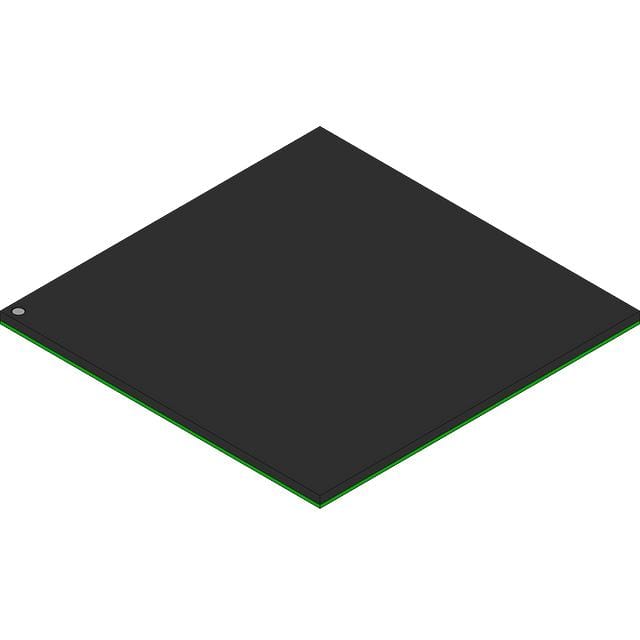
Texas Instruments TNETX3150GGP
- Part No.:
- TNETX3150GGP
- Manufacturer:
- Texas Instruments
- Category:
- Telecom
- Package:
- -
- Datasheet:
-
 TNETX3150GGP.pdf
- Description:
- SUPPORT CIRCUIT, CMOS, PBGA352
- Quantity:
- Payment:

- Shipping:

Inventory:2,529
Please send an inquiry. Send us your inquiry, and we will respond immediately.
Product details
Overview
TNETX3150GGP from Texas Instruments is a 15-port shared-memory Ethernet switch IC supporting 12×10-Mbit/s, 2×10-/100-Mbit/s, and 1×10-/100-/200-Mbit/s MAC interfaces. It implements cut-through and store-and-forward switching, full-duplex operation on all ports, VLAN support, and integrated RMON/EtherStat statistics collection. It enables low-cost desktop switching solutions when paired with external EDO DRAM and PHY devices.
For engineers reviewing the TNETX3150GGP datasheet, TNETX3150GGP pinout, TNETX3150GGP application, or TNETX3150GGP equivalent, key selection considerations include its 352-pin BGA package, 5-V-tolerant I/Os, JTAG compliance (with external pullups), EEPROM auto-configuration capability, and support for both MII and SNI physical layer interfaces.
Technical Context
The TNETX3150GGP integrates 15 independent MAC blocks - twelve 10-Mbit/s SNI ports (03–14), two 10-/100-Mbit/s MII/SNI ports (01–02), and one 10-/100-/200-Mbit/s uplink port (00) with bidirectional tagging and flow control. Its queue manager supports round-robin arbitration and per-port RX/TX FIFO buffering.
Switching logic uses internal address compare, external address match (EAM), or frame tagging for forwarding decisions. The DRAM controller supports 60-ns EDO DRAM with page-burst access, and the DIO interface provides direct register-level access to port statistics, control registers, and memory-mapped configuration space.
Key Specifications
| Parameter | Value and Actual Design Meaning |
|---|---|
| Port Count & Type | 15 total: 12×10-Mbit/s SNI, 2×10-/100-Mbit/s MII/SNI, 1×10-/100-/200-Mbit/s uplink with cascading support |
| Switching Modes | Cut-through (for same/slower-speed egress) and store-and-forward (error filtering, low-to-high speed) |
| Memory Interface | EDO DRAM controller with 60-ns timing, page-burst capable, no external memory controller required |
| Management | SNMP-compliant MIB, EtherStat/RMON per-port counters, NMON port mirroring, DIO register access |
| Configuration | EEPROM auto-configuration (x24C02), no CPU required; JTAG boundary-scan with external pullup requirement |
| Supply & I/O | 3.3-V core, 5-V-tolerant I/Os, compatible with 5-V TTL logic without level shifters |
Pinout & Package
Packaged in a 352-pin plastic ball grid array (PBGA), GGP package, with solder balls arranged in a 23×23 array (excluding corner blanks). Pinout organized by functional interface groups: 10-Mbit/s MAC (ports 03–14), 10-/100-Mbit/s MAC (ports 01–02), 10-/100-/200-Mbit/s uplink (port 00), DRAM, EEPROM, DIO, LED, JTAG, EAM, and NMON.
| Pin/Terminal | Circuit Role | Design Meaning |
|---|---|---|
| M03RXD–M14RXD | 10-Mbit/s receive data (12 ports) | Synchronous to respective MXXRCLK; supports CSMA/CD half/full-duplex operation |
| M01RXD3–M02RXD0 / M01TXD3–M02TXD0 | 10-/100-Mbit/s nibble I/O (ports 01–02) | Configurable via MWIDTH and MSPEED bits; MII mode at 100 Mbit/s, SNI at 10 Mbit/s |
| M00COL / M00CRS | Uplink port 00 carrier/collision sense | In full-duplex 200-Mbit/s mode, M00COL serves as flow-control input per IEEE 802.3x |
| DIO[7:0] | Direct Input/Output interface | 8-bit multiplexed address/data bus for real-time register access, statistics readout, and configuration |
| DRAM[15:0] / DRAM_ADDR[12:0] | EDO DRAM data/address bus | Supports burst-mode transfers within page boundaries; enables high-bandwidth packet buffering |
Key Features
| Feature | Design Value |
|---|---|
| Per-port full-duplex capability | Enables simultaneous 20-Mbit/s (10-Mbit/s ports) or 200-Mbit/s (100-Mbit/s ports) bidirectional throughput without collision domain constraints |
| Uplink port 00 with 200-Mbit/s full-duplex | Provides 400-Mbit/s aggregate bandwidth for stacking, fabric interconnect, or high-speed server uplinks |
| Hardware-accelerated VLAN support | Internal VLAN registers + EAM interface enable broadcast/multicast filtering and workgroup segmentation without host CPU intervention |
| Integrated statistics engine | Independent EtherStat/RMON counters per port accessible via DIO-eliminates need for external monitoring ASICs |
| EEPROM auto-configuration | Loads initialization parameters at power-on; removes boot firmware dependency and reduces BOM cost |
Applications
| Enterprise Desktop Switching | Industrial Ethernet Hub Replacement |
|---|---|
Use Scenario: 15-port unmanaged or lightly managed desktop switch deployed in office LANs with mixed 10/100-Mbit/s client devices and a 200-Mbit/s uplink to backbone. IC Role / Device Role / Timing Role: Central shared-memory switch fabric handling frame buffering, forwarding, and statistics aggregation. Use Value: Eliminates need for external microcontroller or complex software stack; EEPROM-based auto-configuration enables plug-and-play deployment. | Use Scenario: Retrofit of legacy industrial hubs with deterministic, full-duplex Ethernet connectivity in factory-floor control networks. IC Role / Device Role / Timing Role: Deterministic store-and-forward switching with per-port error checking and RMON monitoring for network health diagnostics. Use Value: Full-duplex operation removes CSMA/CD latency jitter; built-in EtherStat counters provide real-time link utilization metrics for predictive maintenance. |
| Multi-tenant Building Network Node | Embedded Network Appliance Bridging |
Use Scenario: Shared infrastructure node serving multiple tenants, requiring logical isolation via VLANs and traffic prioritization. IC Role / Device Role / Timing Role: VLAN-aware switching engine enforcing broadcast domain separation and port-based traffic classification. Use Value: Hardware VLAN registers and EAM interface allow dynamic reconfiguration without firmware updates or service interruption. | Use Scenario: Integrated switch in network-attached storage (NAS) or IP camera gateway requiring local LAN segmentation and uplink aggregation. IC Role / Device Role / Timing Role: Low-latency cut-through switching for intra-device traffic; store-and-forward for uplink integrity verification. Use Value: Dual-mode switching optimizes latency for local transfers while ensuring error-free delivery to upstream routers or cloud gateways. |
Equivalent & Alternatives
The following parts are listed as comparable options for similar Ethernet switch applications.
| Alternative Part | Technical Difference | Application Difference | Selection Advice |
|---|---|---|---|
| Marvell 88E6093 | 16-port 10/100-Mbit/s switch with integrated PHYs; requires external DRAM only for advanced features; supports IEEE 802.1Q VLAN tagging in hardware | Targets higher integration density (PHY+MAC+switch); less suitable for designs requiring discrete PHY selection or EDO DRAM optimization | Select when PHY integration and reduced board area outweigh flexibility in PHY choice and memory architecture |
| Intel NS32FX165 | 16-port 10/100-Mbit/s switch with PCI host interface; lacks uplink port >100-Mbit/s; no native EAM or NMON support | Designed for PC-embedded or add-in card use with host CPU control; not self-contained for standalone switching | Select when host-driven management and PCI connectivity are required over autonomous operation and uplink scalability |
Compared with Marvell 88E6093 and Intel NS32FX165, the TNETX3150GGP uniquely combines a 200-Mbit/s uplink, EDO DRAM optimization, and EEPROM auto-configuration-making it optimal for cost-sensitive, standalone desktop switches where PHY flexibility and minimal firmware overhead are critical.
Availability
TNETX3150GGP is available at Aetrix Electronics and suitable for enterprise desktop switching, industrial Ethernet hub replacement, multi-tenant building network nodes, and embedded network appliance bridging requiring stable component supply and long-term obsolescence planning.
Supply support for TNETX3150GGP includes scheduled delivery planning, volume procurement assistance, BOM continuity management, traceable sourcing, and lifecycle availability coordination for OEM customers, industrial embedded developers, connected-device designers, and electronics production programs.
Manufacturer
Texas Instruments is a global semiconductor leader focused on analog, embedded processing, and connectivity technologies, with deep expertise in networking silicon dating to the 1990s.
The TNETX3150GGP belongs to TI's ThunderSWITCH family-designed specifically for low-cost, high-integration Ethernet switching in standalone desktop and embedded applications where CPU offload, EEPROM configurability, and flexible PHY interfacing are essential.
FAQ
What is the maximum supported DRAM capacity for the TNETX3150GGP?
The TNETX3150GGP supports up to 2 MB of EDO DRAM via its 16-bit data bus and 13-bit address bus (DRAM_ADDR[12:0]). The RAM Size Register (address 0x31) reports actual configured size during initialization, and system performance scales with memory bandwidth-not just capacity-so 60-ns timing compliance is mandatory for full-port concurrency.
Does the TNETX3150GGP support IEEE 802.1Q VLAN tagging?
Yes, the TNETX3150GGP supports VLAN functionality through two mechanisms: internal VLAN registers for single-address-per-port broadcast/multicast control, and the External Address Match (EAM) interface for hardware-assisted VLAN classification based on tag fields. However, it does not perform IEEE 802.1Q frame insertion/stripping in hardware-the uplink port 00 handles tagged frames transparently when enabled via port control registers.
Can the TNETX3150GGP operate without an external microcontroller?
Yes, the TNETX3150GGP supports full autonomous operation using EEPROM auto-configuration (e.g., x24C02). Upon power-up, it loads port settings, VLAN maps, and system control values directly from EEPROM-enabling true "zero-software" desktop switch implementations with no CPU, firmware, or boot sequence required.
What are the key differences between the TNETX3150GGP and TNETX3150A variant?
The TNETX3150GGP and TNETX3150A share identical functionality, pinout, and electrical specifications. The 'A' suffix denotes a revised silicon revision released in September 1997, incorporating minor timing and reliability enhancements-but no architectural or feature changes. Both are drop-in compatible, and the GGP package designation applies identically to both versions.
How does cut-through switching behave across different port speed combinations on the TNETX3150GGP?
Cut-through is permitted only when egress port speed ≤ ingress port speed: a 100-Mbit/s port can cut through to another 100-Mbit/s or 10-Mbit/s port, but a 10-Mbit/s port cannot cut through to a 100-Mbit/s port (store-and-forward is enforced automatically). Uplink port 00 (200-Mbit/s) supports cut-through to any lower-speed port, reducing latency for time-sensitive traffic like VoIP or industrial control packets.
TNETX3150GGP Specifications
- Product attributes
- Attribute value
- Manufacturer:
- Texas Instruments
- Series:
- *
- Package/Case:
- -
- Packaging:
- Bulk
- Product Status:
- Active
- Function:
- -
- Interface:
- -
- Number of Circuits:
- -
- Voltage - Supply:
- -
- Current - Supply:
- -
- Power (Watts):
- -
- Operating Temperature:
- -
- Grade:
- -
- Qualification:
- -
- Mounting Type:
- -
- Supplier Device Package:
- -
TNETX3150GGP FAQ
1.How can I place an order for TNETX3150GGP through Aetrix?
Please submit a Request for Quotation (RFQ) for TNETX3150GGP on Aetrix. Our sales agent will provide a competitive quotation and guide you through the order confirmation once you accept the terms.
2.Are the price and stock information for TNETX3150GGP reliable?
The price and inventory of TNETX3150GGP are updated periodically and may fluctuate due to market conditions. Stock and pricing data are typically refreshed every 24 hours. Quotation validity for TNETX3150GGP is usually 5 days.
3.What payment methods are accepted for TNETX3150GGP?
We accept Wire Transfer, PayPal, Credit Card, Western Union, MoneyGram, and Escrow for TNETX3150GGP transactions.
Note: Certain payment methods may incur a processing fee.
4.How is shipping managed for TNETX3150GGP?
TNETX3150GGP orders can be shipped via leading logistics carriers, including DHL, UPS, FedEx, TNT, or Registered Mail.
Once your TNETX3150GGP order is processed, you will receive an email with the shipment details and tracking number.
Note: Tracking information may take up to 24 hours to appear. Express delivery typically takes 3–5 business days.
5.How can I obtain technical support or documentation for TNETX3150GGP?
For technical support, including TNETX3150GGP datasheets, pinout diagrams, or application guidance, please contact our engineering support team. They can provide detailed documentation and assistance for your TNETX3150GGP requirements.
6.How does Aetrix verify that TNETX3150GGP is sourced from the original manufacturer or authorized distributors?
All TNETX3150GGP products on Aetrix are procured from qualified distributors and authorized channels. Our dedicated quality assurance team conducts strict verification, including traceability checks and, if necessary, third-party testing. This ensures that TNETX3150GGP meets industry standards.
7.What is the process for return or replacement of TNETX3150GGP?
All TNETX3150GGP units undergo pre-shipment inspection (PSI). If there is an issue with TNETX3150GGP, returns or replacements are accepted under the following conditions:
1.Quantity discrepancies, incorrect items, or visible external defects (such as breakage or corrosion), acknowledged by Aetrix.
2.The issue is reported within 90 days of delivery.
3.The TNETX3150GGP part is unused and in its original packaging.
Return procedure for TNETX3150GGP:
1.Submit a request within 90 days.
2.Obtain a Return Material Authorization (RMA) from Aetrix.
TNETX3150GGP Tags

-
LMC567CMX/NOPB
Texas Instruments
-
LM567CMX/NOPB
Texas Instruments
-
LM567CM/NOPB
Texas Instruments
-
VSC8531XMW-02
Microchip Technology
-
VSC8531XMW-05
Microchip Technology

-
GPY115C0VI
MaxLinear, Inc.
-
SI32185-A-FMR
Skyworks Solutions Inc.
-
VSC8541XMV-05
Microchip Technology
-
SI32178-B-FM1R
Skyworks Solutions Inc.
-
GPY215C0VI
MaxLinear, Inc.
-
CPC7514ZTR
Littelfuse Inc.
-
VSC8502XML-03
Microchip Technology
Tech Hub

A practical engineering guide to 3.3V and 5V logic compatibility, input thresholds, resistor dividers, translator ICs, MOSFET level shifting, I2C pull-ups, timing limits and power-sequencing risks.

The 74HC595 uses push-pull logic outputs, while the TPIC6B595 uses 50 V open-drain DMOS sinks for higher-power loads. This guide compares timing, current limits, 3.3 V interfacing, load wiring, thermal…

The 74HC595 converts serial data into eight stable parallel outputs. This guide covers pin functions, shift and storage timing, OE and MR behavior, drive-current limits, cascading, voltage compatibilit…

A technical comparison of level-sensitive latches and edge-triggered flip-flops, covering timing windows, setup and hold limits, master–slave operation, time borrowing, race-through, HDL inference and…

A D latch stores one bit while Enable controls when data can pass. This reference covers gate-level operation, truth tables, transparency, setup and hold timing, LE versus OE, common ICs and practical …

An SR latch stores one bit through cross-coupled feedback. This engineering reference covers NOR and NAND implementations, truth tables, forbidden-state recovery, gated operation, switch debouncing, fa…

Latch circuits retain one bit through feedback. This technical reference covers SR and D latches, truth tables, transparency, timing limits, latch-versus-flip-flop behavior, applications and common log…

An engineering guide to LED driver operation, constant-current and constant-voltage outputs, linear and switching topologies, dimming, IC selection, calculations, replacement compatibility, and fault c…

Operational amplifier guide covering op amp basics, feedback, ideal vs real op amps, common configurations, buffer circuits, offset, bias current, gain-bandwidth, slew rate, rail-to-rail limits and sel…

Jumper cables guide covering safe connection order, red and black clamp placement, final ground connection, cable gauge, length, clamp quality, copper vs CCA cables, jump starter comparison and battery…


