
 My Inquiry
 My Account


Texas Instruments TPIC8101DW
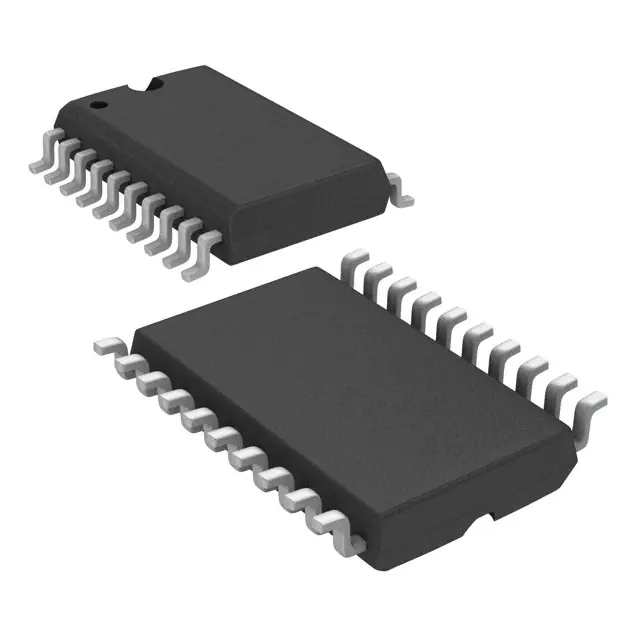
- Part No.:
- TPIC8101DW
- Manufacturer:
- Texas Instruments
- Category:
- Sensor and Detector Interfaces
- Package:
- 20-SOIC (0.295", 7.50mm Width)
- Datasheet:
-
 TPIC8101DW.pdf
- Description:
- IC KNOCK SENSOR INTERFACE 20SOIC
- Quantity:
- Payment:

- Shipping:

Inventory:3,698
Please send an inquiry. Send us your inquiry, and we will respond immediately.
Product details
Overview
TPIC8101DW from Texas Instruments is a dual-channel automotive-grade knock sensor interface IC designed for gasoline engine detonation detection. It integrates two wide-band amplifiers, programmable band-pass filtering (1.22–19.98 kHz), full-wave rectification, and a 10-bit SAR ADC with 200 kHz sampling, delivering conditioned analog and digital outputs for spark timing control in engine management systems.
For engineers reviewing the TPIC8101DW datasheet, TPIC8101DW pinout, TPIC8101DW application, or TPIC8101DW equivalent, this device requires attention to its SPI-configurable gain (0.111–2.0), integrator time constant (0.5–10 ms), third-order anti-aliasing filter (35–55 kHz cutoff), AEC-Q100 Grade 1 qualification (−40°C to 125°C), and SOIC-20 package layout constraints.
Technical Context
The TPIC8101DW implements a signal chain where each channel feeds a rail-to-rail amplifier (gain set by external R1/R2), then a programmable MUX selects one channel into a third-order antialiasing filter (cutoff 35–55 kHz), followed by a 10-bit SAR ADC (200 kHz fs) and digital processing block. The output path includes a programmable band-pass filter (64 center frequencies), full-wave rectifier, and integrator with reset-controlled timing window.
Control is fully SPI-based (8-bit protocol, CS/SDI/SCLK/SDO), supporting both default and advanced modes. The INT/HOLD pin directly gates integration timing, while XIN/XOUT support external crystal/resonator or MCU clock input (4–24 MHz), prescaled internally to drive the ADC and DAC sampling at precisely 200 kHz.
Key Specifications
| Parameter | Value and Actual Design Meaning |
|---|---|
| ADC Resolution | 10-bit SAR with ±1 LSB DNL and ±1 LSB INL - ensures precise knock energy quantization for closed-loop spark retard decisions. |
| Sampling Frequency | 200 kHz (±1%) - enables accurate capture of high-frequency knock transients up to ~100 kHz before aliasing. |
| Band-Pass Center Frequency | Programmable across 64 values from 1.22 kHz to 19.98 kHz - matches engine-specific ping signatures while rejecting combustion noise. |
| Integrator Time Constant | Configurable from 0.5 ms to 10 ms via SPI - aligns integration window with engine knock event duration per RPM/load condition. |
| Operating Temperature | −40°C to +125°C (AEC-Q100 Grade 1) - validated for under-hood automotive environments without derating. |
| Supply Voltage | 5 V ±5% - compatible with standard automotive microcontroller power domains and supports internal Vref generation. |
| ESD Rating | HBM Class 3A (4 kV), CDM Class C6 (1.5 kV) - meets stringent automotive board-level ESD immunity requirements. |
Pinout & Package
TPIC8101DW is housed in a 20-pin SOIC package (7.50 mm × 12.80 mm, body size nominal), optimized for automotive PCB thermal and mechanical reliability. Pin 1 is located at the top-left corner when viewing the top side with the marking notch oriented left.
| Pin/Terminal | Circuit Role | Design Meaning |
|---|---|---|
| VDD | Power supply input | 5-V regulated input requiring 4.7 µF bulk decoupling; powers all analog and digital blocks. |
| GND | Ground reference | System ground return for all internal circuits; must be low-impedance connection to minimize noise coupling. |
| Vref | Internal reference output | Stable bias voltage for amplifier inputs; requires 22 nF external bypass capacitor to suppress supply ripple. |
| OUT | Analog integrator output | Buffered analog representation of integrated knock energy; interfaces directly to MCU ADC with 2.2 nF stabilization cap. |
| INT/HOLD | Integration mode control | Active-high signal (internal pulldown) that triggers integration start; falling edge initiates hold for MCU readout. |
| CS | SPI chip select | Active-low enable for SPI communication (internal pullup); must be asserted before SCLK transitions. |
| XIN / XOUT | Oscillator interface | Differential crystal/resonator or single-ended clock input pair; sets base frequency for internal prescaler and ADC timing. |
| SDO / SDI / SCLK | SPI data interface | Standard 3-wire serial bus (tri-state SDO, pullup SDI/SCLK); supports 5 MHz max clock for configuration and data readback. |
| CH1P/CH1N/CH1FB CH2P/CH2N/CH2FB | Dual-channel sensor interface | Differential inputs and feedback outputs for two independent piezoelectric knock sensors; gain set externally via R1/R2. |
| TEST | Test mode enable | Active-low entry to diagnostic test mode (open or tied high for normal operation; internal pullup). |
Key Features
| Feature | Design Value |
|---|---|
| Dual-channel knock signal conditioning | Independent amplification, filtering, and integration paths for two piezoelectric sensors - enables cylinder-specific knock detection and mitigation. |
| Programmable band-pass filter | 64 selectable center frequencies (1.22–19.98 kHz) with fixed gain of 2 - rejects low-frequency engine noise while isolating resonant knock peaks. |
| Full-wave rectification + integrator | Hardware-based rectification and configurable integration time (0.5–10 ms) - eliminates need for software envelope detection and improves real-time response. |
| 10-bit ADC + 10-bit DAC | 200 kHz sampling ADC for digital knock analysis and matching 200 kHz DAC for analog output buffering - preserves signal fidelity across both domains. |
| AEC-Q100 Grade 1 qualification | Validated for −40°C to +125°C ambient operation with HBM 4 kV / CDM 1.5 kV - certified for direct integration into production engine control units. |
Applications
| Engine Knock Detection | Fuel Management Optimization |
|---|---|
Use Scenario: Real-time monitoring of acoustic transients in multi-cylinder gasoline engines during acceleration and high-load conditions. IC Role / Device Role / Timing Role: Analog front-end signal processor that conditions, filters, rectifies, and integrates knock sensor outputs prior to MCU ADC sampling or SPI readout. Use Value: Enables precise spark timing retard decisions based on measured knock energy, improving fuel efficiency and preventing engine damage. |
Use Scenario: Closed-loop adjustment of ignition timing maps in ECU firmware using knock-integrated voltage or digital output from TPIC8101DW. IC Role / Device Role / Timing Role: Provides time-aligned, noise-rejected analog/digital knock metrics synchronized to engine cycle via INT/HOLD pulse timing. Use Value: Reduces reliance on software-based signal processing, lowering MCU computational load and improving deterministic timing for safety-critical spark control. |
| Multi-Sensor Acoustic Monitoring | Automotive Diagnostic Systems |
Use Scenario: Simultaneous acquisition from two spatially separated knock sensors to distinguish localized cylinder knock versus global engine resonance. IC Role / Device Role / Timing Role: Dual-channel MUX-controlled signal path with independent gain and filter settings per channel - supports channel-selective configuration via SPI. Use Value: Eliminates need for two discrete signal chains, reducing BOM count, PCB area, and calibration complexity in compact ECU designs. |
Use Scenario: On-vehicle diagnostics for knock sensor health, wiring integrity, and ECU timing loop validation during service or OBD-II compliance testing. IC Role / Device Role / Timing Role: Integrated test mode (via TEST pin) and SPI-accessible register states provide visibility into internal signal paths and configuration status. Use Value: Supports factory and field diagnostics without external instrumentation, accelerating root-cause analysis of misfire or timing-related drivability complaints. |
Equivalent & Alternatives
The following parts are listed as comparable options for similar knock sensor interface applications.
| Alternative Part | Technical Difference | Application Difference | Selection Advice |
|---|---|---|---|
| MAX9601ETA+ | Single-channel, 12-bit ADC, no integrated band-pass filter or rectifier; requires external op-amps and passive filtering. | Lacks hardware integration for knock-specific signal chain - increases design effort and component count for equivalent functionality. | Choose when higher resolution (12-bit) is prioritized over integration density and automotive qualification. |
| AD8232ACPZ-R7 | Single-channel, AC-coupled instrumentation amp with RF filter; no ADC, DAC, or programmable band-pass capability. | Designed for biopotential sensing (ECG), not engine acoustics - lacks knock-specific frequency range, integration, or AEC-Q100 rating. | Consider only for non-automotive acoustic monitoring where cost and simplicity outweigh functional completeness. |
Compared with MAX9601ETA+ and AD8232ACPZ-R7, the TPIC8101DW delivers complete knock signal conditioning-including dual-channel amplification, programmable band-pass filtering, rectification, integration, and 10-bit ADC/DAC-in a single AEC-Q100-qualified SOIC package, minimizing system-level design risk and validation effort for engine control applications.
Availability
TPIC8101DW is available at Aetrix Electronics and suitable for engine control units, automotive diagnostic tools, and fuel management systems requiring stable component supply with long-term automotive lifecycle support.
Supply support for TPIC8101DW includes scheduled delivery planning, volume procurement assistance, BOM continuity management, traceable sourcing, and lifecycle availability coordination for OEM customers, industrial embedded developers, connected-device designers, and electronics production programs.
Manufacturer
Texas Instruments is a global semiconductor leader specializing in analog and embedded processing technologies, with deep expertise in automotive electronics and functional safety solutions.
The TPIC8101DW belongs to TI's automotive sensor interface product line, engineered specifically to replace discrete knock signal conditioning circuits in engine control modules with a single-chip, AEC-Q100-compliant solution.
FAQ
What is the primary function of the TPIC8101DW in an engine control system?
The TPIC8101DW serves as a dedicated knock sensor interface IC that conditions, filters, rectifies, and integrates signals from piezoelectric knock sensors. It provides both analog (via OUT pin) and digital (via SPI) outputs representing knock energy magnitude, enabling the ECU to dynamically adjust spark timing and prevent engine damage. Its dual-channel architecture supports cylinder-specific knock detection in modern gasoline engines.
How does the TPIC8101DW achieve engine-specific knock frequency filtering?
The TPIC8101DW implements a digitally programmable band-pass filter with 64 selectable center frequencies ranging from 1.22 kHz to 19.98 kHz. This selection is configured via SPI commands (00 D[5:0] command), allowing precise alignment with the resonant frequency signature of a given engine and transducer combination. The filter has a fixed gain of 2 and is placed after the anti-aliasing stage to isolate knock-related energy while rejecting combustion noise.
Can the TPIC8101DW operate with an external microcontroller clock instead of a crystal?
Yes, the TPIC8101DW accepts external clock signals on the XIN pin, including square-wave outputs from microcontrollers. Supported frequencies range from 4 MHz to 24 MHz, and the internal prescaler adjusts the clock to generate the precise 200 kHz sampling rate required by the ADC and DAC. No crystal is mandatory - ceramic resonators or buffered MCU clocks are valid alternatives when properly biased with the recommended 1-MΩ feedback resistor between XIN and XOUT.
What is the role of the INT/HOLD pin on the TPIC8101DW?
The INT/HOLD pin controls the integrator's timing window: a high logic level initiates integration of the rectified knock signal, while a low level holds the integrated value for readout. It features an internal pulldown resistor, so it defaults to HOLD mode when un-driven. This pin synchronizes integration with engine crank-angle events, ensuring measurements align with specific combustion cycles - critical for accurate knock detection and closed-loop spark control in the TPIC8101DW.
Is the TPIC8101DW pin-compatible with other members of the TPIC8101 family?
Yes, all TPIC8101 variants - including TPIC8101DW (SOIC-20), TPIC8101PW (TSSOP-20), and TPIC8101DB (SSOP-20) - share identical pinouts and electrical characteristics. The DW suffix denotes the SOIC package, but register mapping, SPI protocol, timing behavior, and functional operation are fully consistent across packages. This allows drop-in replacement during layout optimization or thermal redesign without firmware or schematic changes to the TPIC8101DW implementation.
TPIC8101DW Specifications
- Product attributes
- Attribute value
- Manufacturer:
- Texas Instruments
- Package/Case:
- 20-SOIC (0.295", 7.50mm Width)
- Series:
- -
- Packaging:
- Bulk
- Product Status:
- Obsolete
- Programmable:
- Not Verified
- Type:
- Sensor Interface
- Input Type:
- Serial
- Output Type:
- Serial
- Current - Supply:
- 20 mA
- Operating Temperature:
- -40°C ~ 125°C
- Grade:
- Automotive
- Qualification:
- AEC-Q100
- Mounting Type:
- Surface Mount
- Supplier Device Package:
- 20-SOIC
TPIC8101DW FAQ
1.How can I place an order for TPIC8101DW through Aetrix?
Please submit a Request for Quotation (RFQ) for TPIC8101DW on Aetrix. Our sales agent will provide a competitive quotation and guide you through the order confirmation once you accept the terms.
2.Are the price and stock information for TPIC8101DW reliable?
The price and inventory of TPIC8101DW are updated periodically and may fluctuate due to market conditions. Stock and pricing data are typically refreshed every 24 hours. Quotation validity for TPIC8101DW is usually 5 days.
3.What payment methods are accepted for TPIC8101DW?
We accept Wire Transfer, PayPal, Credit Card, Western Union, MoneyGram, and Escrow for TPIC8101DW transactions.
Note: Certain payment methods may incur a processing fee.
4.How is shipping managed for TPIC8101DW?
TPIC8101DW orders can be shipped via leading logistics carriers, including DHL, UPS, FedEx, TNT, or Registered Mail.
Once your TPIC8101DW order is processed, you will receive an email with the shipment details and tracking number.
Note: Tracking information may take up to 24 hours to appear. Express delivery typically takes 3–5 business days.
5.How can I obtain technical support or documentation for TPIC8101DW?
For technical support, including TPIC8101DW datasheets, pinout diagrams, or application guidance, please contact our engineering support team. They can provide detailed documentation and assistance for your TPIC8101DW requirements.
6.How does Aetrix verify that TPIC8101DW is sourced from the original manufacturer or authorized distributors?
All TPIC8101DW products on Aetrix are procured from qualified distributors and authorized channels. Our dedicated quality assurance team conducts strict verification, including traceability checks and, if necessary, third-party testing. This ensures that TPIC8101DW meets industry standards.
7.What is the process for return or replacement of TPIC8101DW?
All TPIC8101DW units undergo pre-shipment inspection (PSI). If there is an issue with TPIC8101DW, returns or replacements are accepted under the following conditions:
1.Quantity discrepancies, incorrect items, or visible external defects (such as breakage or corrosion), acknowledged by Aetrix.
2.The issue is reported within 90 days of delivery.
3.The TPIC8101DW part is unused and in its original packaging.
Return procedure for TPIC8101DW:
1.Submit a request within 90 days.
2.Obtain a Return Material Authorization (RMA) from Aetrix.
TPIC8101DW Tags

-
RE46C100S8TF
Microchip Technology
-
XTR111AIDRCR
Texas Instruments
-
XTR111AIDGQR
Texas Instruments
-
XTR117AIDGKR
Texas Instruments
-
XTR111AIDGQT
Texas Instruments

-
XTR115UA/2K5
Texas Instruments
-
MAX14626ETT+T
Analog Devices Inc./Maxim Integrated
-
XTR116UA/2K5
Texas Instruments
-
XTR115U/2K5
Texas Instruments
-
XTR116U/2K5
Texas Instruments
-
PGA308AIDGSR
Texas Instruments
-
XTR300AIRGWR
Texas Instruments
Tech Hub

A practical engineering guide to 3.3V and 5V logic compatibility, input thresholds, resistor dividers, translator ICs, MOSFET level shifting, I2C pull-ups, timing limits and power-sequencing risks.

The 74HC595 uses push-pull logic outputs, while the TPIC6B595 uses 50 V open-drain DMOS sinks for higher-power loads. This guide compares timing, current limits, 3.3 V interfacing, load wiring, thermal…

The 74HC595 converts serial data into eight stable parallel outputs. This guide covers pin functions, shift and storage timing, OE and MR behavior, drive-current limits, cascading, voltage compatibilit…

A technical comparison of level-sensitive latches and edge-triggered flip-flops, covering timing windows, setup and hold limits, master–slave operation, time borrowing, race-through, HDL inference and…

A D latch stores one bit while Enable controls when data can pass. This reference covers gate-level operation, truth tables, transparency, setup and hold timing, LE versus OE, common ICs and practical …

An SR latch stores one bit through cross-coupled feedback. This engineering reference covers NOR and NAND implementations, truth tables, forbidden-state recovery, gated operation, switch debouncing, fa…

Latch circuits retain one bit through feedback. This technical reference covers SR and D latches, truth tables, transparency, timing limits, latch-versus-flip-flop behavior, applications and common log…

An engineering guide to LED driver operation, constant-current and constant-voltage outputs, linear and switching topologies, dimming, IC selection, calculations, replacement compatibility, and fault c…

Operational amplifier guide covering op amp basics, feedback, ideal vs real op amps, common configurations, buffer circuits, offset, bias current, gain-bandwidth, slew rate, rail-to-rail limits and sel…

Jumper cables guide covering safe connection order, red and black clamp placement, final ground connection, cable gauge, length, clamp quality, copper vs CCA cables, jump starter comparison and battery…


