
 My Inquiry
 My Account


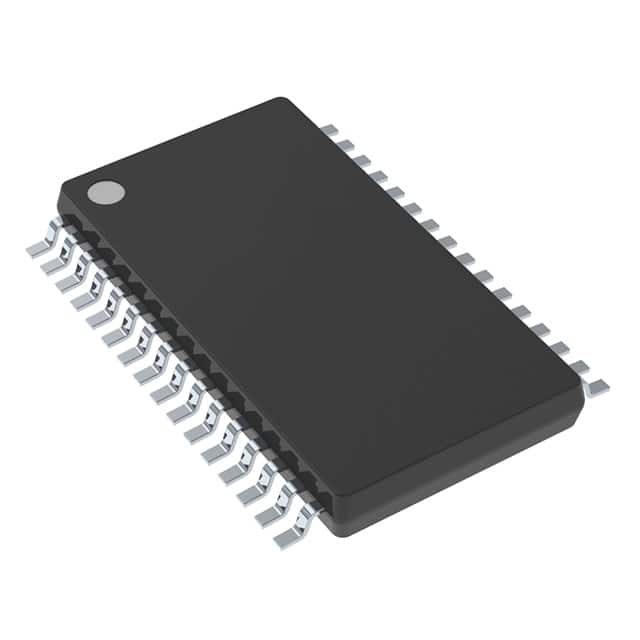
Texas Instruments TPS2236DAP
- Part No.:
- TPS2236DAP
- Manufacturer:
- Texas Instruments
- Package:
- 32-PowerTSSOP (0.240", 6.10mm Width)
- Datasheet:
-
 TPS2236DAP.pdf
- Description:
- IC PWR SWITCH 1:2 32HTSSOP
- Quantity:
- Payment:

- Shipping:

Inventory:4,427
Please send an inquiry. Send us your inquiry, and we will respond immediately.
Product details
Overview
TPS2236DAP from Texas Instruments is a dual-channel ExpressCard™ power interface switch IC designed to manage 3.3 V, 1.5 V, and AUX power rails for dual-slot ExpressCard|34/|54 host systems. It integrates current-limiting, thermal shutdown, undervoltage lockout (UVLO), and PERST/RCLKEN timing control, delivering up to 1.3 A on 3.3VOUT, 650 mA on 1.5VOUT, and 275 mA on AUXOUT - enabling compliant hot-plug power sequencing in notebook and desktop host controllers.
For engineers reviewing the TPS2236DAP datasheet, TPS2236DAP pinout, TPS2236DAP application, or TPS2236DAP equivalent, key selection criteria include dual-slot ExpressCard power rail coordination, per-rail current limiting with deglitch, PERST assertion/de-assertion timing relative to output voltage stability, RCLKEN-controlled reset sequencing, and thermal protection under sustained load conditions.
Technical Context
The TPS2236DAP implements two independent power switch channels - each with dedicated 3.3VIN→3.3VOUT, 1.5VIN→1.5VOUT, and AUXIN→AUXOUT paths - supporting simultaneous operation of two ExpressCard slots. Each channel includes integrated MOSFETs with on-resistance of 45 mΩ (3.3V), 46 mΩ (1.5V), and 120 mΩ (AUX) at TJ = 25°C, plus discharge FETs for safe rail discharge during card removal or shutdown.
Control logic enforces ExpressCard-compliant behavior: PERST is asserted when any output falls below its UVLO threshold (e.g., 3.3VOUT < 2.7 V), with 500 ns delay from fault onset and 4–20 ms de-assertion delay after all rails stabilize; RCLKEN serves as bidirectional reference clock enable with open-drain output and input capability, directly gating PERST timing via host coordination.
Key Specifications
| Parameter | Value and Actual Design Meaning |
|---|---|
| Output Channels | Dual independent ExpressCard power rails (Slot 1 + Slot 2) |
| 3.3V Output Current | 1.3 A continuous per channel; supports full-power ExpressCard|54 operation |
| 1.5V Output Current | 650 mA continuous per channel; meets ExpressCard 1.5V rail requirements |
| AUX Output Current | 275 mA continuous per channel; powers auxiliary circuitry and chip bias |
| On-Resistance (3.3V) | 45 mΩ typical at 25°C; limits conduction loss and self-heating under 1.3 A load |
| UVLO Thresholds | 3.3VIN: 2.6–2.9 V; 1.5VIN: 1.0–1.25 V; AUXIN: 2.6–2.9 V - ensures rail-dependent sequencing |
| PERST Timing | 500 ns assertion delay from rail fault; 4–20 ms de-assertion delay after stabilization - satisfies ExpressCard timing windows |
Pinout & Package
The TPS2236DAP is housed in a 32-pin PowerPAD™ HTSSOP package with exposed thermal pad, optimized for dual-slot ExpressCard host designs requiring high thermal efficiency and board-level EMI control.
| Pin/Terminal | Circuit Role | Design Meaning |
|---|---|---|
| 3.3VIN (8,9) | Input supply for 3.3V rail | Accepts 3.0–3.6 V; enables 3.3VOUT switching only when above 2.6 V UVLO |
| 1.5VIN (24,25) | Input supply for 1.5V rail | Accepts 1.35–1.65 V; enables 1.5VOUT only when above 1.0 V UVLO |
| AUXIN (15) | Main bias and control supply | Powers internal logic, pulls up all logic inputs; required for all functions |
| GND (21) | Power ground reference | Common return for all power switches and logic; connects to thermal pad |
| 3.3VOUT1 (7), 3.3VOUT2 (10) | Switched 3.3V outputs | Deliver regulated 3.3 V to ExpressCard Slot 1 and Slot 2 respectively |
| 1.5VOUT1 (26), 1.5VOUT2 (23) | Switched 1.5V outputs | Deliver regulated 1.5 V to ExpressCard Slot 1 and Slot 2 respectively |
| AUXOUT1 (14), AUXOUT2 (16) | Switched AUX outputs | Deliver AUX voltage (typically 3.3 V) to both slots for card detection and bias |
| CPPE1/2 (1,2), CPUSB1/2 (3,6) | Card presence inputs | Active-low signals indicating PCI Express or USB card insertion per slot |
| SHDN1/2 (17,18), STBY1/2 (28,27) | Per-slot control inputs | Independent shutdown/standby control for each ExpressCard slot |
| RCLKEN1/2 (32,31), PERST1/2 (13,11), OC1/2 (19,20) | Per-slot status I/O | Open-drain outputs for clock enable, power-good reset, and overcurrent flag per slot |
Key Features
| Feature | Design Value |
|---|---|
| Dual independent ExpressCard power channels | Enables concurrent support of ExpressCard|34 and |54 in same system without shared fault propagation |
| Per-rail current limiting with 6–20 ms deglitch | Prevents false trip during inrush while protecting against sustained short circuits on any output |
| ExpressCard-compliant PERST timing | Guarantees 500 ns fault-to-PERST assertion and 4–20 ms stabilization-to-deassertion per spec |
| RCLKEN bidirectional control | Allows host to delay PERST de-assertion by holding RCLKEN low - critical for clock domain synchronization |
| Integrated discharge FETs on all outputs | Ensures rapid, controlled rail discharge during card removal or SHDN activation - meets hot-swap safety |
| Thermal shutdown with 155–165°C trip and 10°C hysteresis | Protects against PCB overheating in compact host layouts with limited airflow |
Applications
| Notebook Computers | Desktop Computers |
|---|---|
Use Scenario: Dual ExpressCard slot implementation in ultraportable notebooks with space-constrained motherboard layout. IC Role / Device Role / Timing Role: Primary power interface switch managing independent 3.3V/1.5V/AUX delivery, PERST generation, and RCLKEN coordination for two hot-pluggable expansion slots. Use Value: Enables simultaneous use of ExpressCard SSD and wireless WAN modules without cross-rail interference or timing violation. |
Use Scenario: High-end desktop motherboards offering ExpressCard|54 and ExpressCard|34 expansion via front-panel or riser connectors. IC Role / Device Role / Timing Role: Dual-channel power sequencer ensuring compliant voltage ramp-up, fault isolation, and synchronized reset signaling across physically separated slots. Use Value: Eliminates need for discrete power management components and custom timing logic - reduces BOM count and layout complexity. |
| Personal Digital Assistants (PDAs) | Digital Cameras |
Use Scenario: Industrial PDA platforms requiring field-upgradable connectivity via ExpressCard modems or GPS receivers. IC Role / Device Role / Timing Role: Hot-swap power controller with robust overcurrent and thermal protection for mission-critical embedded applications. Use Value: Sustains reliable operation across –40°C to 85°C ambient range while preventing latch-up during repeated card insertion cycles. |
Use Scenario: Professional digital cameras with ExpressCard-based video capture or storage expansion. IC Role / Device Role / Timing Role: Low-noise, fast-turn-on power switch ensuring clean 3.3V/1.5V delivery to high-speed image sensor interfaces and memory controllers. Use Value: Achieves sub-millisecond turn-on propagation delay (0.05–0.1 ms) to minimize boot latency after card insertion. |
Equivalent & Alternatives
The following parts are listed as comparable options for similar ExpressCard power interface applications.
| Alternative Part | Technical Difference | Application Difference | Selection Advice |
|---|---|---|---|
| TPS2231PWP | Single-channel HTSSOP-24; supports only one ExpressCard slot; lower max 3.3VOUT current (1.3 A vs dual 1.3 A) | Applicable only to single-slot host designs; lacks PERST2/RCLKEN2/OC2 and dual CPPE/CPUSB pairs | Select when system requires only one ExpressCard interface and board space is constrained - uses smaller 24-pin package. |
| TPS2231PW | Single-channel TSSOP-20; no PowerPAD thermal enhancement; higher thermal resistance (704 mW max vs 993 mW for DAP) | Suitable for cost-sensitive, low-power single-slot applications; not recommended for sustained dual-rail loads or high-ambient environments | Choose for entry-level notebooks or docking stations where thermal headroom is sufficient and footprint priority outweighs performance margin. |
Compared with TPS2231 variants, the TPS2236DAP provides true dual-slot independence - including separate SHDN/STBY/PERST/RCLKEN/OC per slot - enabling fault containment and asynchronous power management essential for multi-card host systems.
Availability
TPS2236DAP is available at Aetrix Electronics and suitable for notebook computers, desktop computers, personal digital assistants (PDAs), and digital cameras requiring stable component supply for ExpressCard expansion interfaces.
Supply support for TPS2236DAP includes scheduled delivery planning, volume procurement assistance, BOM continuity management, traceable sourcing, and lifecycle availability coordination for OEM customers, industrial embedded developers, connected-device designers, and electronics production programs.
Manufacturer
Texas Instruments is a global semiconductor leader specializing in analog, embedded processing, and connectivity technologies for industrial, automotive, and computing markets.
The TPS2236DAP belongs to TI's ExpressCard power interface product line, engineered specifically to meet the stringent voltage sequencing, timing, and safety requirements defined in the ExpressCard standard for dual-slot host systems.
FAQ
What is the primary function of the TPS2236DAP in an ExpressCard host system?
The TPS2236DAP serves as a dual-channel power interface switch that manages independent 3.3 V, 1.5 V, and AUX power delivery to two ExpressCard slots. It enforces ExpressCard-compliant sequencing, provides per-rail current limiting and thermal protection, and generates coordinated PERST and RCLKEN signals - all within a single 32-pin PowerPAD HTSSOP package. The TPS2236DAP ensures safe hot-plug operation and fault isolation between slots.
How does the TPS2236DAP handle overcurrent events on its output rails?
The TPS2236DAP monitors each output rail (3.3VOUT1/2, 1.5VOUT1/2, AUXOUT1/2) with dedicated current-sense circuitry. Upon detecting an overcurrent condition, it asserts the corresponding OC1 or OC2 open-drain output after a 6–20 ms deglitch period to prevent false triggering. The affected rail remains disabled until the fault clears and the device resets - ensuring system-level reliability without latch-up. The TPS2236DAP does not auto-retry.
What is the role of RCLKEN in the TPS2236DAP, and how does it interact with PERST?
RCLKEN in the TPS2236DAP is a bidirectional pin serving as both an output (power-good indicator) and input (reset gate). As an output, it transitions high only after all three output rails stabilize within tolerance; this rising edge starts an internal timer that triggers PERST de-assertion after 4–20 ms. As an input, holding RCLKEN low externally delays PERST de-assertion - allowing host coordination with clock domain readiness. The TPS2236DAP relies on this interaction to meet ExpressCard timing compliance.
Does the TPS2236DAP support independent control of each ExpressCard slot?
Yes, the TPS2236DAP provides fully independent control per slot: SHDN1/SHDN2, STBY1/STBY2, CPPE1/CPPE2, CPUSB1/CPUSB2, PERST1/PERST2, RCLKEN1/RCLKEN2, and OC1/OC2 are electrically isolated signal pairs. This allows asymmetric power states - e.g., Slot 1 active while Slot 2 is in standby - and prevents fault propagation between slots. The TPS2236DAP is explicitly designed for such dual-slot autonomy.
What thermal performance can be expected from the TPS2236DAP in a typical host design?
In a JEDEC low-k board with the PowerPAD soldered to a thermal plane, the TPS2236DAP delivers 993.4 mW continuous power dissipation at TA = 25°C, derating to 366 mW at TA = 85°C. Its thermal shutdown activates at 155–165°C junction temperature with 10°C hysteresis. For sustained dual-rail operation (e.g., 1.3 A on both 3.3VOUTs), proper PCB copper area under the PowerPAD is essential - the TPS2236DAP's thermal design assumes direct pad-to-plane connection.
TPS2236DAP Specifications
- Product attributes
- Attribute value
- Manufacturer:
- Texas Instruments
- Package/Case:
- 32-PowerTSSOP (0.240", 6.10mm Width)
- Series:
- -
- Packaging:
- Bulk
- Product Status:
- Obsolete
- Switch Type:
- ExpressCard™ Switch
- Number of Outputs:
- 6
- Ratio - Input:Output:
- 1:2
- Output Configuration:
- High Side
- Output Type:
- -
- Interface:
- -
- Voltage - Load:
- 1.5V, 3.3V
- Voltage - Supply (Vcc/Vdd):
- Not Required
- Current - Output (Max):
- 1.3A
- Rds On (Typ):
- 45mOhm
- Input Type:
- -
- Features:
- Power Good, Status Flag
- Fault Protection:
- Current Limiting (Fixed), Over Temperature
- Operating Temperature:
- -40°C ~ 85°C (TA)
- Grade:
- -
- Qualification:
- -
- Mounting Type:
- Surface Mount
- Supplier Device Package:
- 32-HTSSOP
TPS2236DAP FAQ
1.How can I place an order for TPS2236DAP through Aetrix?
Please submit a Request for Quotation (RFQ) for TPS2236DAP on Aetrix. Our sales agent will provide a competitive quotation and guide you through the order confirmation once you accept the terms.
2.Are the price and stock information for TPS2236DAP reliable?
The price and inventory of TPS2236DAP are updated periodically and may fluctuate due to market conditions. Stock and pricing data are typically refreshed every 24 hours. Quotation validity for TPS2236DAP is usually 5 days.
3.What payment methods are accepted for TPS2236DAP?
We accept Wire Transfer, PayPal, Credit Card, Western Union, MoneyGram, and Escrow for TPS2236DAP transactions.
Note: Certain payment methods may incur a processing fee.
4.How is shipping managed for TPS2236DAP?
TPS2236DAP orders can be shipped via leading logistics carriers, including DHL, UPS, FedEx, TNT, or Registered Mail.
Once your TPS2236DAP order is processed, you will receive an email with the shipment details and tracking number.
Note: Tracking information may take up to 24 hours to appear. Express delivery typically takes 3–5 business days.
5.How can I obtain technical support or documentation for TPS2236DAP?
For technical support, including TPS2236DAP datasheets, pinout diagrams, or application guidance, please contact our engineering support team. They can provide detailed documentation and assistance for your TPS2236DAP requirements.
6.How does Aetrix verify that TPS2236DAP is sourced from the original manufacturer or authorized distributors?
All TPS2236DAP products on Aetrix are procured from qualified distributors and authorized channels. Our dedicated quality assurance team conducts strict verification, including traceability checks and, if necessary, third-party testing. This ensures that TPS2236DAP meets industry standards.
7.What is the process for return or replacement of TPS2236DAP?
All TPS2236DAP units undergo pre-shipment inspection (PSI). If there is an issue with TPS2236DAP, returns or replacements are accepted under the following conditions:
1.Quantity discrepancies, incorrect items, or visible external defects (such as breakage or corrosion), acknowledged by Aetrix.
2.The issue is reported within 90 days of delivery.
3.The TPS2236DAP part is unused and in its original packaging.
Return procedure for TPS2236DAP:
1.Submit a request within 90 days.
2.Obtain a Return Material Authorization (RMA) from Aetrix.
TPS2236DAP Tags
-
TPS22919DCKR
Texas Instruments
-
MIC2091-1YM5-TR
Microchip Technology
-
MIC2090-1YM5-TR
Microchip Technology

-
TPS22995RZFR
Texas Instruments
-
TPS22975DSGR
Texas Instruments
-
SIP32510DT-T1-GE3
Vishay Siliconix
-
ULN2003D1013TR
STMicroelectronics
-
MIC2005A-1YM5-TR
Microchip Technology

-
MIC2005A-1YM6-TR
Microchip Technology
-
TPS22916BYFPR
Texas Instruments

-
TPS22917DBVR
Texas Instruments

-
ULN2003APWR
Texas Instruments
Tech Hub

A practical engineering guide to 3.3V and 5V logic compatibility, input thresholds, resistor dividers, translator ICs, MOSFET level shifting, I2C pull-ups, timing limits and power-sequencing risks.

The 74HC595 uses push-pull logic outputs, while the TPIC6B595 uses 50 V open-drain DMOS sinks for higher-power loads. This guide compares timing, current limits, 3.3 V interfacing, load wiring, thermal…

The 74HC595 converts serial data into eight stable parallel outputs. This guide covers pin functions, shift and storage timing, OE and MR behavior, drive-current limits, cascading, voltage compatibilit…

A technical comparison of level-sensitive latches and edge-triggered flip-flops, covering timing windows, setup and hold limits, master–slave operation, time borrowing, race-through, HDL inference and…

A D latch stores one bit while Enable controls when data can pass. This reference covers gate-level operation, truth tables, transparency, setup and hold timing, LE versus OE, common ICs and practical …

An SR latch stores one bit through cross-coupled feedback. This engineering reference covers NOR and NAND implementations, truth tables, forbidden-state recovery, gated operation, switch debouncing, fa…

Latch circuits retain one bit through feedback. This technical reference covers SR and D latches, truth tables, transparency, timing limits, latch-versus-flip-flop behavior, applications and common log…

An engineering guide to LED driver operation, constant-current and constant-voltage outputs, linear and switching topologies, dimming, IC selection, calculations, replacement compatibility, and fault c…

Operational amplifier guide covering op amp basics, feedback, ideal vs real op amps, common configurations, buffer circuits, offset, bias current, gain-bandwidth, slew rate, rail-to-rail limits and sel…

Jumper cables guide covering safe connection order, red and black clamp placement, final ground connection, cable gauge, length, clamp quality, copper vs CCA cables, jump starter comparison and battery…


