
 My Inquiry
 My Account


Texas Instruments TPS25810RVCR
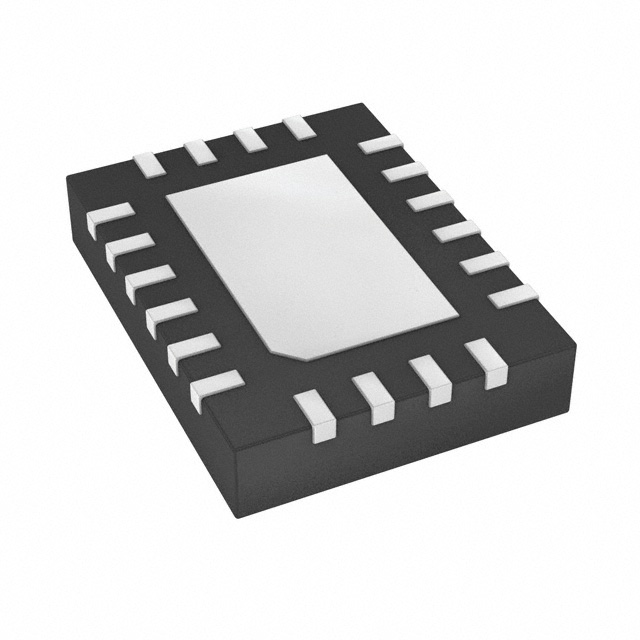
- Part No.:
- TPS25810RVCR
- Manufacturer:
- Texas Instruments
- Category:
- Specialized
- Package:
- 20-WFQFN Exposed Pad
- Datasheet:
-
 TPS25810RVCR.pdf
- Description:
- IC INTERFACE SPECIALIZED 20WQFN
- Quantity:
- Payment:

- Shipping:

Inventory:7,347
Please send an inquiry. Send us your inquiry, and we will respond immediately.
Product details
Overview
TPS25810RVCR from Texas Instruments is a USB Type-C Downstream Facing Port (DFP) controller with integrated 3-A power switch, supporting VBUS sourcing, VCONN application to electronically marked cables, and CC-line-based accessory identification (audio/debug). It features dual current-limit settings (1.7 A / 3.4 A), 34-mΩ high-side MOSFET, and load-detection output (LD_DET) for multi-port power management in notebook docking stations.
For engineers reviewing the TPS25810RVCR datasheet, TPS25810RVCR pinout, TPS25810RVCR application, or TPS25810RVCR equivalent, key selection considerations include its USB Type-C Rev. 1.2 compliance, three-supply architecture (IN1/IN2/AUX), 0.7-µA quiescent current in unattached state, and thermal shutdown at 155°C - all critical for sleep-charging host port designs requiring low-power wake capability and robust cable-handling logic.
Technical Context
The TPS25810RVCR implements full USB Type-C Rev. 1.2 DFP functionality without USB Power Delivery (PD) negotiation: it detects UFP attachment via Rd termination on CC1/CC2, advertises STD/1.5-A/3-A sourcing capability using Rp values, determines plug polarity (POL output), and applies VCONN to Ra-marked cables. Its dual-switch architecture separates VBUS (IN1→OUT) and VCONN (IN2→CC1/CC2) paths, each with independent current limiting and thermal protection.
Power management is enabled through AUX-supplied operation in S4/S5 system states, where UFP output disables the main 5-V rail while the device remains active on 3.3-V auxiliary supply. Load detection (LD_DET) triggers at 1.95 A nominal and provides hysteresis (125 mA), enabling dynamic current allocation across multiple Type-C ports sharing limited total power budget.
Key Specifications
| Parameter | Value and Actual Design Meaning |
|---|---|
| USB Compliance | USB Type-C Rev. 1.2 DFP controller - supports mandatory CC-line detection, Rp advertisement, and VCONN delivery per spec. |
| VBUS Switch RDS(on) | 34 mΩ (typ) at 25°C - enables low-drop, high-efficiency 3-A sourcing with <100 mV drop at full load. |
| Current Limit Options | 1.7 A ±7.1% or 3.4 A ±7.1% - selectable via CHG/CHG_HI logic inputs to match Type-C receptacle capability. |
| Quiescent Current | 0.7 µA (typ) when unattached - minimizes battery drain in always-on host port applications like notebook sleep charging. |
| Operating Supply Range | IN1: 4.5–6.5 V; IN2: 4.5–5.5 V; AUX: 2.9–5.5 V - supports flexible power domain partitioning and low-voltage wake operation. |
| Load Detection Threshold | 1.95 A nominal rising threshold with 125 mA hysteresis - enables precise, stable current-triggered resource arbitration in multi-port systems. |
| ESD Protection | ±8 kV IEC 61000-4-2 contact discharge on CC1/CC2 - ensures robustness against real-world connector handling events. |
Pinout & Package
TPS25810RVCR is housed in a thermally enhanced 20-pin WQFN package (3.0 mm × 4.0 mm) with exposed thermal pad for PCB heat dissipation. The package supports JEDEC-standard reflow and meets UL File No. E169910 safety listing.
| Pin/Terminal | Circuit Role | Design Meaning |
|---|---|---|
| IN1 (pins 2,3) | VBUS input supply | Primary 4.5–6.5 V source for VBUS power switch; connects directly to OUT pins under control of EN. |
| IN2 (pin 4) | VCONN input supply | 4.5–5.5 V source for electronically marked cable power; routed to CC1 or CC2 based on POL signal. |
| AUX (pin 5) | Auxiliary system rail | Enables Power Wake mode: sustains operation at 2.9–5.5 V during S4/S5 states while disabling higher-power supplies. |
| CC1/CC2 (pins 11,13) | Configuration Channel I/O | Analog bidirectional interface for Rd/Ra detection, Rp advertisement, and accessory identification per USB Type-C spec. |
| OUT (pins 14,15) | VBUS power switch output | Drives USB Type-C receptacle VBUS line; delivers up to 3.4 A with integrated 34-mΩ MOSFET and overcurrent/thermal fault protection. |
| LD_DET (pin 20) | Load-detect logic output | Open-drain signal asserting when VBUS current exceeds 1.95 A - used for inter-port current coordination in multi-port hosts. |
| UFP (pin 19) | Upstream-facing port detect | Asserts when valid UFP (e.g., smartphone, peripheral) is attached - enables system-level power sequencing and rail enable/disable control. |
| FAULT (pin 1) | Fault event indicator | Open-drain output signaling overcurrent or thermal shutdown (155°C); requires external pull-up for logic-level interfacing. |
Key Features
| Feature | Design Value |
|---|---|
| Integrated VBUS + VCONN switches | Dual-path architecture eliminates need for external MOSFETs and discrete VCONN regulators - reduces BOM count and layout complexity. |
| Programmable current limits | Hardware-selectable 1.7 A / 3.4 A thresholds align precisely with USB Type-C specification-defined current modes. |
| Low-power wake support | Operates from 3.3-V AUX rail in S4/S5 states while monitoring CC lines - enables true "always-on" USB-C port detection without main system power. |
| Electronically marked cable handling | Automatically applies VCONN to Ra-terminated cables and routes CC signals correctly using POL output - ensures reliable SuperSpeed lane muxing. |
| Accessory mode detection | Distinguishes audio accessories (via CC2) and debug accessories (via CC1) with dedicated open-drain outputs (AUDIO/DEBUG) - enables OS-level accessory-aware driver loading. |
Applications
| USB-C Notebook Sleep Charging | Multi-Port Docking Station |
|---|---|
Use Scenario: Notebook maintains USB-C port powered during S3/S4 sleep states to charge connected smartphones or peripherals. IC Role / Device Role: TPS25810RVCR acts as DFP controller and VBUS switch, detecting UFP attachment and enabling AUX-supplied operation while main 5-V rail is off. Use Value: Achieves <0.7 µA quiescent current in unattached state and full UFP detection capability during deep sleep - extending battery life without sacrificing connectivity. | Use Scenario: Docking station with four USB-C ports shares limited 60-W total power budget across simultaneous device connections. IC Role / Device Role: TPS25810RVCR provides LD_DET output per port to coordinate current allocation, preventing overloading when multiple 3-A devices attach concurrently. Use Value: Enables dynamic port power capping using LD_DET hysteresis (125 mA) - avoids thermal throttling and ensures stable operation under mixed-load conditions. |
| Type-C Wall Charger w/ VCONN | Monitor/Peripheral Hub with Audio Support |
Use Scenario: Compact wall charger delivers 5 V/3 A to UFP and powers Ra-marked cables for full-speed data transfer. IC Role / Device Role: TPS25810RVCR serves as complete DFP solution - applying VBUS, detecting UFP, and supplying VCONN to cable's CC pin based on Ra signature. Use Value: Eliminates need for separate VCONN LDO and CC-line logic - achieves full USB-C compliance in space-constrained AC/DC adapter designs. | Use Scenario: LCD monitor with built-in USB-C hub supports analog audio dongles and debug tools alongside data/peripheral functions. IC Role / Device Role: TPS25810RVCR identifies audio accessories via CC2 and debug accessories via CC1, asserting AUDIO/DEBUG outputs accordingly. Use Value: Provides hardware-level accessory classification - allows host OS to load appropriate drivers without enumeration delays or software polling overhead. |
Equivalent & Alternatives
The following parts are listed as comparable options for similar USB Type-C DFP controller applications.
| Alternative Part | Technical Difference | Application Difference | Selection Advice |
|---|---|---|---|
| TPS65987D | Supports full USB Power Delivery (PD) 3.0 negotiation (up to 100 W), includes integrated PD PHY and policy engine; larger 32-pin QFN package. | Required for systems needing variable VBUS (5–20 V), DRP capability, or alternate mode (DisplayPort/PCIe) support. | Select TPS65987D only if USB PD negotiation or >5 V VBUS is required; TPS25810RVCR is optimal for fixed 5-V DFP-only applications with lower cost and smaller footprint. |
| FUSB302B | Standalone USB Type-C CC logic controller (no integrated power switch); requires external VBUS/VCONN MOSFETs and gate drivers. | Suitable for designs where discrete power switching is preferred for thermal or layout reasons, or where custom current limits exceed 3.4 A. | Choose FUSB302B when flexibility in power stage design outweighs integration benefits; TPS25810RVCR reduces component count and simplifies layout for standard 3-A DFP implementations. |
Compared with TPS65987D and FUSB302B, the TPS25810RVCR delivers optimal balance of integration, low quiescent current, and USB Type-C Rev. 1.2 compliance for fixed 5-V host ports - eliminating external switches while retaining essential accessory detection and load-coordination logic not found in basic CC controllers.
Availability
TPS25810RVCR is available at Aetrix Electronics and suitable for USB-C notebook sleep charging, multi-port docking stations, and Type-C wall chargers requiring stable component supply, long-term lifecycle support, and production-ready qualification.
Supply support for TPS25810RVCR includes scheduled delivery planning, volume procurement assistance, BOM continuity management, traceable sourcing, and lifecycle availability coordination for OEM customers, industrial embedded developers, connected-device designers, and electronics production programs.
Manufacturer
Texas Instruments is a global semiconductor company specializing in analog, embedded processing, and connectivity solutions, with leadership in power management and interface ICs.
The TPS25810RVCR belongs to TI's USB Type-C port controller product line, designed specifically for cost-sensitive, fixed-voltage DFP applications in consumer and computing systems where full USB PD complexity is unnecessary.
FAQ
What is the primary function of the TPS25810RVCR in a USB-C system?
The TPS25810RVCR serves as a complete USB Type-C Downstream Facing Port (DFP) controller with integrated power switch. It detects UFP attachment via CC-line Rd termination, advertises current capability (STD/1.5-A/3-A), applies VBUS and VCONN power, identifies audio/debug accessories, and manages load detection for multi-port power coordination - all without requiring USB Power Delivery negotiation.
How does the TPS25810RVCR support low-power system states like S4/S5?
The TPS25810RVCR supports low-power system states by operating from the AUX supply (2.9–5.5 V) while main rails (IN1/IN2) are disabled. In this mode, it maintains CC-line monitoring and UFP detection with only 0.7 µA quiescent current, enabling wake-on-attach functionality during hibernation or soft-off states - a core capability for notebook sleep charging applications.
What are the current limit options for the VBUS power switch in the TPS25810RVCR?
The TPS25810RVCR offers two factory-programmed current limit options for its VBUS power switch: 1.7 A ±7.1% and 3.4 A ±7.1%. These are selected using the CHG and CHG_HI logic inputs per the USB Type-C specification, allowing alignment with receptacle capabilities (e.g., USB 2.0 vs USB 3.1) and preventing overcurrent in downstream devices.
Does the TPS25810RVCR provide protection against overtemperature or overcurrent conditions?
Yes, the TPS25810RVCR includes comprehensive protection: overcurrent shutdown triggers within 1.5–4 µs of short-circuit detection, and thermal shutdown activates at 155°C (rising threshold) with 20°C hysteresis. Both conditions assert the open-drain FAULT output, allowing system-level fault handling and recovery - ensuring robust operation in thermally constrained enclosures.
Can the TPS25810RVCR identify USB-C audio accessories, and how is this signaled?
Yes, the TPS25810RVCR identifies USB-C analog audio accessories by detecting Ra termination on both CC1 and CC2 lines. When recognized, it asserts the open-drain AUDIO output, which can be pulled up to a microcontroller GPIO to trigger driver loading or system notification - enabling plug-and-play audio dongle support without enumeration delays.
TPS25810RVCR Specifications
- Product attributes
- Attribute value
- Manufacturer:
- Texas Instruments
- Series:
- -
- Package/Case:
- 20-WFQFN Exposed Pad
- Packaging:
- Tape & Reel (TR)
- Product Status:
- Active
- Applications:
- USB
- Interface:
- -
- Voltage - Supply:
- 4.5V ~ 6.5V
- Supplier Device Package:
- 20-WQFN (3x4)
- Grade:
- -
- Qualification:
- -
- Mounting Type:
- Surface Mount
TPS25810RVCR FAQ
1.How can I place an order for TPS25810RVCR through Aetrix?
Please submit a Request for Quotation (RFQ) for TPS25810RVCR on Aetrix. Our sales agent will provide a competitive quotation and guide you through the order confirmation once you accept the terms.
2.Are the price and stock information for TPS25810RVCR reliable?
The price and inventory of TPS25810RVCR are updated periodically and may fluctuate due to market conditions. Stock and pricing data are typically refreshed every 24 hours. Quotation validity for TPS25810RVCR is usually 5 days.
3.What payment methods are accepted for TPS25810RVCR?
We accept Wire Transfer, PayPal, Credit Card, Western Union, MoneyGram, and Escrow for TPS25810RVCR transactions.
Note: Certain payment methods may incur a processing fee.
4.How is shipping managed for TPS25810RVCR?
TPS25810RVCR orders can be shipped via leading logistics carriers, including DHL, UPS, FedEx, TNT, or Registered Mail.
Once your TPS25810RVCR order is processed, you will receive an email with the shipment details and tracking number.
Note: Tracking information may take up to 24 hours to appear. Express delivery typically takes 3–5 business days.
5.How can I obtain technical support or documentation for TPS25810RVCR?
For technical support, including TPS25810RVCR datasheets, pinout diagrams, or application guidance, please contact our engineering support team. They can provide detailed documentation and assistance for your TPS25810RVCR requirements.
6.How does Aetrix verify that TPS25810RVCR is sourced from the original manufacturer or authorized distributors?
All TPS25810RVCR products on Aetrix are procured from qualified distributors and authorized channels. Our dedicated quality assurance team conducts strict verification, including traceability checks and, if necessary, third-party testing. This ensures that TPS25810RVCR meets industry standards.
7.What is the process for return or replacement of TPS25810RVCR?
All TPS25810RVCR units undergo pre-shipment inspection (PSI). If there is an issue with TPS25810RVCR, returns or replacements are accepted under the following conditions:
1.Quantity discrepancies, incorrect items, or visible external defects (such as breakage or corrosion), acknowledged by Aetrix.
2.The issue is reported within 90 days of delivery.
3.The TPS25810RVCR part is unused and in its original packaging.
Return procedure for TPS25810RVCR:
1.Submit a request within 90 days.
2.Obtain a Return Material Authorization (RMA) from Aetrix.
TPS25810RVCR Tags
-
NVT4857UKAZ
NXP Semiconductors
-
TCA8418RTWR
Texas Instruments
-
PCA9546APWR
Texas Instruments

-
MD0100N8-G
Microchip Technology
-
PCA9548APW,118
NXP Semiconductors
-
PCA9540BDP,118
NXP Semiconductors
-
PCA9548APWR
Texas Instruments
-
PCA9546APW,118
NXP Semiconductors
-
PTN3360DBS,518
NXP Semiconductors
-
PCA9546ABS,118
NXP Semiconductors
-
PCA9518PWR
Texas Instruments
-
PCA9545APW,118
NXP Semiconductors
Tech Hub

A practical engineering guide to 3.3V and 5V logic compatibility, input thresholds, resistor dividers, translator ICs, MOSFET level shifting, I2C pull-ups, timing limits and power-sequencing risks.

The 74HC595 uses push-pull logic outputs, while the TPIC6B595 uses 50 V open-drain DMOS sinks for higher-power loads. This guide compares timing, current limits, 3.3 V interfacing, load wiring, thermal…

The 74HC595 converts serial data into eight stable parallel outputs. This guide covers pin functions, shift and storage timing, OE and MR behavior, drive-current limits, cascading, voltage compatibilit…

A technical comparison of level-sensitive latches and edge-triggered flip-flops, covering timing windows, setup and hold limits, master–slave operation, time borrowing, race-through, HDL inference and…

A D latch stores one bit while Enable controls when data can pass. This reference covers gate-level operation, truth tables, transparency, setup and hold timing, LE versus OE, common ICs and practical …

An SR latch stores one bit through cross-coupled feedback. This engineering reference covers NOR and NAND implementations, truth tables, forbidden-state recovery, gated operation, switch debouncing, fa…

Latch circuits retain one bit through feedback. This technical reference covers SR and D latches, truth tables, transparency, timing limits, latch-versus-flip-flop behavior, applications and common log…

An engineering guide to LED driver operation, constant-current and constant-voltage outputs, linear and switching topologies, dimming, IC selection, calculations, replacement compatibility, and fault c…

Operational amplifier guide covering op amp basics, feedback, ideal vs real op amps, common configurations, buffer circuits, offset, bias current, gain-bandwidth, slew rate, rail-to-rail limits and sel…

Jumper cables guide covering safe connection order, red and black clamp placement, final ground connection, cable gauge, length, clamp quality, copper vs CCA cables, jump starter comparison and battery…


