
 My Inquiry
 My Account


Texas Instruments TPS3838K33DBVTG4
- Part No.:
- TPS3838K33DBVTG4
- Manufacturer:
- Texas Instruments
- Category:
- Supervisors
- Package:
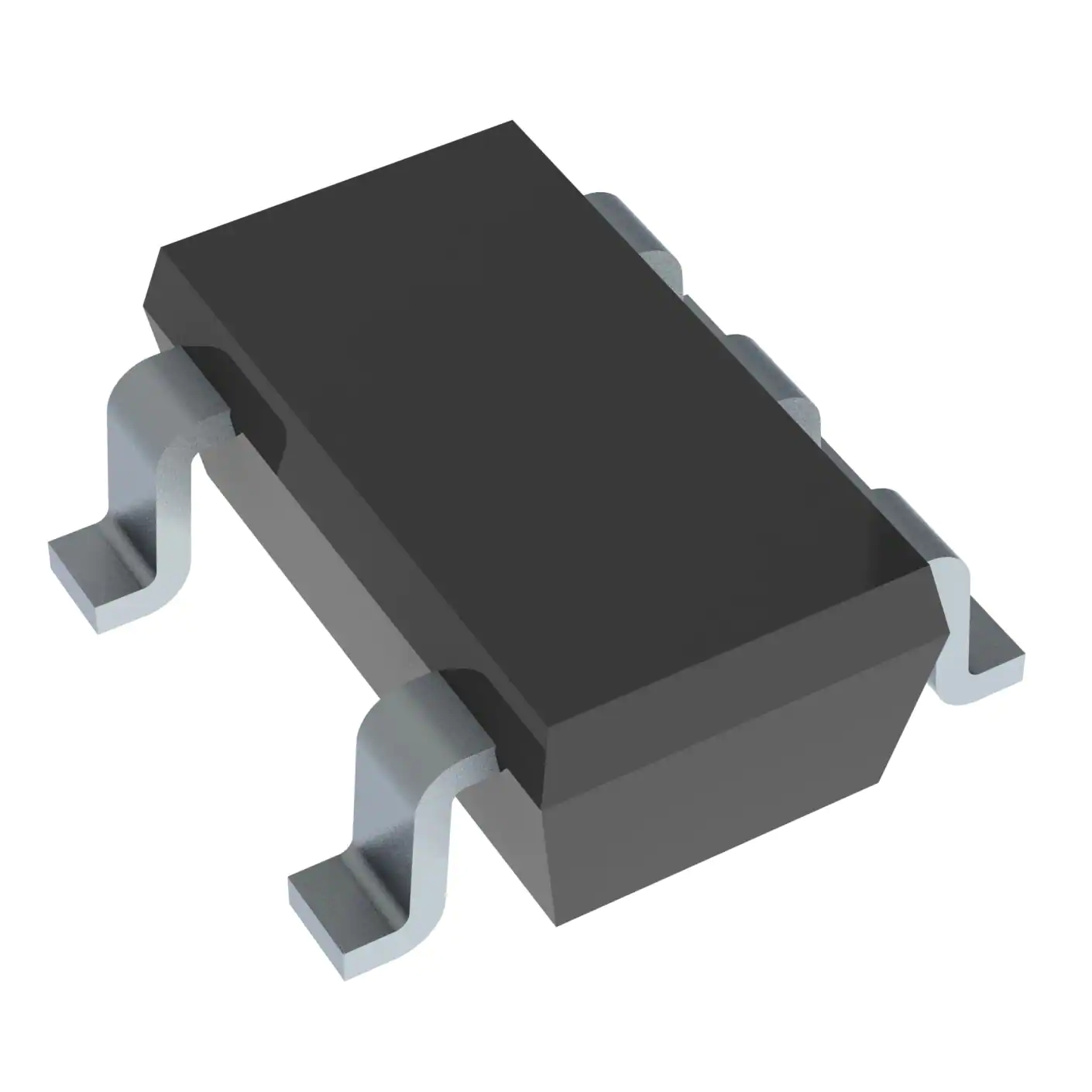
- SC-74A, SOT-753
- Datasheet:
-
 TPS3838K33DBVTG4.pdf
- Description:
- IC SUPERVISOR 1 CHANNEL SOT23-5
- Quantity:
- Payment:

- Shipping:

Inventory:3,940
Please send an inquiry. Send us your inquiry, and we will respond immediately.
Product details
Overview
TPS3838K33DBVTG4 from Texas Instruments is a nano-power voltage supervisor IC with active-low open-drain RESET output, 2.93 V threshold voltage (VIT), 220 nA typical supply current, and selectable 10 ms or 200 ms reset delay via CT pin-designed for undervoltage monitoring in lithium-ion battery–powered MSP430 microcontroller systems.
For engineers reviewing the TPS3838K33DBVTG4 datasheet, TPS3838K33DBVTG4 pinout, TPS3838K33DBVTG4 application, or TPS3838K33DBVTG4 equivalent, key selection considerations include its open-drain RESET architecture requiring an external pullup resistor, precise 2.93 V supervision level for 3.3 V nominal rails, –40°C to 85°C operation, and WSON-6 (DRV) package compatibility with space-constrained portable designs.
Technical Context
The TPS3838K33DBVTG4 implements a precision bandgap-based voltage comparator with 40 mV hysteresis (VHYS) to prevent oscillation near threshold, coupled with a refresh timer that enforces reset assertion until VDD exceeds VIT + VHYS for the full selected delay period. Its MR input supports active-low manual reset with 0.3 µs propagation delay.
Unlike push-pull variants (TPS3836/TPS3837), the TPS3838K33DBVTG4 uses an open-drain output stage, mandating an external pullup resistor per recommended operating conditions; CT pin configuration directly selects between 10 ms (CT = GND) and 200 ms (CT = VDD) delay without external components.
Key Specifications
| Parameter | Value and Actual Design Meaning |
|---|---|
| Supply Voltage Range | 1.6 V to 6 V - supports direct monitoring of Li-ion (3.6 V), 3.3 V, and 2.5 V rails without regulation |
| Threshold Voltage (VIT) | 2.93 V (typical) - precisely matches 3.3 V system undervoltage detection at ~10% drop |
| Reset Delay Options | 10 ms (CT = GND) or 200 ms (CT = VDD) - eliminates need for external RC timing networks |
| Supply Current (IDD) | 220 nA (typical) at VDD > VIT, VDD < 3 V - enables multi-year battery life in always-on monitoring |
| Output Type | Active-low open-drain - requires external pullup but allows wired-OR reset bus sharing across multiple supervisors |
| Hysteresis (VHYS) | 40 mV - prevents chatter during slow-rising or noisy supply transitions near 2.93 V |
| Propagation Delay (tPHL) | 10 µs (max) - ensures fast fault response while maintaining noise immunity |
Pinout & Package
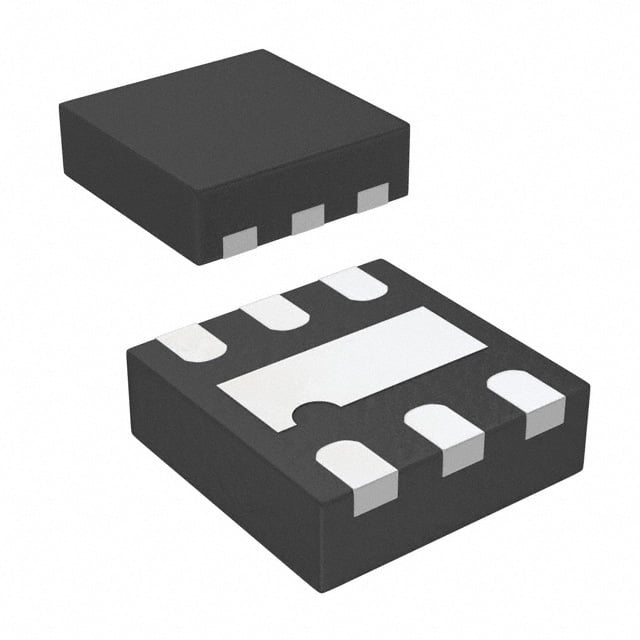
TPS3838K33DBVTG4 is packaged in a 2.00 mm × 2.00 mm, 6-pin WSON (DRV) package with wettable flanks, optimized for automated optical inspection and high-density PCB layouts.
| Pin/Terminal | Circuit Role | Design Meaning |
|---|---|---|
| VDD | Power Input | Main supply voltage input monitored by internal comparator; absolute max 7 V |
| GND | Ground Reference | Analog and digital ground reference for all internal circuitry and threshold generation |
| CT | Delay Configuration | Connect to GND for 10 ms delay or to VDD for 200 ms delay; no external capacitor required |
| MR | Manual Reset Input | Active-low logic input; asserts RESET when pulled low; internal 30 kΩ pullup if left unconnected |
| RESET | Open-Drain Output | Active-low reset signal; requires external pullup resistor (value specified in Recommended Operating Conditions) |
| N/C | No Connect | Internally unconnected pin; must be left floating or tied to GND per layout guidelines |
Key Features
| Feature | Design Value |
|---|---|
| Nano-power operation | 220 nA typical IDD enables >10-year battery life in coin-cell–powered IoT endpoints |
| Selectably timed reset delay | Hardware-configurable 10 ms / 200 ms delay eliminates firmware timing dependencies and external RC parts |
| Open-drain RESET output | Enables shared reset bus architectures and flexible voltage-level translation via external pullup |
| Precision 2.93 V threshold | Guaranteed ±1.5% over temperature ensures reliable 3.3 V rail supervision without calibration |
| –40°C to 85°C operation | Qualified for industrial and extended-temperature portable applications including handheld medical devices |
Applications
| Portable Medical Sensors | Lithium-Ion Battery Management |
|---|---|
|
Use Scenario: Continuous glucose monitor powered by CR2032 coin cell, requiring guaranteed MCU reset if battery drops below 2.8 V. IC Role / Device Role / Timing Role: Voltage supervisor asserting open-drain RESET to MSP430FR2355 when VDD falls below 2.93 V, holding reset for 200 ms after recovery. Use Value: Prevents brownout-induced flash corruption and sensor data loss during battery depletion, extending usable runtime by eliminating premature shutdown. |
Use Scenario: Wearable fitness tracker using 3.6 V Li-ion cell with fuel gauge and low-power BLE SoC. IC Role / Device Role / Timing Role: Monitors main battery rail and triggers system-wide reset before deep discharge damages cell chemistry. Use Value: Enables safe graceful shutdown sequence at 2.93 V threshold, preserving battery cycle life and preventing over-discharge failure. |
| Industrial Wireless Transmitters | MSP430-Based Data Loggers |
|
Use Scenario: Remote environmental sensor node deployed in unattended field locations with solar-charged Li-ion backup. IC Role / Device Role / Timing Role: Supervises 3.3 V LDO output feeding CC2652R wireless MCU; asserts RESET on undervoltage with 10 ms delay for fast fault response. Use Value: Ensures deterministic restart after transient line sag or cold-start conditions, avoiding RF transmission lockups. |
Use Scenario: Battery-powered soil moisture logger sampling hourly and transmitting daily via LoRaWAN. IC Role / Device Role / Timing Role: Provides power-on reset and brownout protection for MSP430FR5994, interfacing via open-drain RESET to shared system reset net. Use Value: Guarantees clean initialization after battery insertion or wake-from-hibernate, eliminating corrupted EEPROM writes. |
Equivalent & Alternatives
The following parts are listed as comparable options for similar voltage supervisor applications.
| Alternative Part | Technical Difference | Application Difference | Selection Advice |
|---|---|---|---|
| TPS3836K33DBVR | Push-pull active-low RESET output; no external pullup required; same 2.93 V threshold and 220 nA IDD | Eliminates pullup resistor but cannot share reset bus; incompatible with wired-OR topologies | Select when board layout prohibits external resistors or when driving single-load reset nets only |
| MAX6373KA33+T | 3.3 V fixed threshold, 1.6 µA IDD, 140 ms fixed delay, SOT23-5 package | Higher quiescent current limits battery lifetime; lacks CT pin configurability and open-drain flexibility | Choose only if WSON-6 footprint is unavailable and 1.6 µA IDD remains acceptable for target runtime |
Compared with TPS3836K33DBVR and MAX6373KA33+T, the TPS3838K33DBVTG4 uniquely balances ultra-low power, hardware-selectable delay, and open-drain interoperability-making it optimal for multi-supervisor reset buses and long-life battery systems where board area and component count are constrained.
Availability
TPS3838K33DBVTG4 is available at Aetrix Electronics and suitable for portable medical sensors, lithium-ion battery management, industrial wireless transmitters, and MSP430-based data loggers requiring stable component supply across multi-year production cycles.
Supply support for TPS3838K33DBVTG4 includes scheduled delivery planning, volume procurement assistance, BOM continuity management, traceable sourcing, and lifecycle availability coordination for OEM customers, industrial embedded developers, connected-device designers, and electronics production programs.
Manufacturer
Texas Instruments is a global semiconductor company delivering analog and embedded processing solutions, with leadership in low-power design and precision analog ICs since 1930.
The TPS383x family was engineered specifically for ultra-low-power voltage supervision in battery-critical applications-emphasizing nanoscale current consumption, factory-trimmed thresholds, and robust reset timing control for MSP430 and other ultra-low-power MCUs.
FAQ
What is the function of the CT pin on the TPS3838K33DBVTG4?
The CT pin on the TPS3838K33DBVTG4 selects the reset delay time: connecting CT to GND configures a 10 ms delay, while connecting CT to VDD selects a 200 ms delay. This hardware-based selection eliminates external timing components and firmware dependencies. The TPS3838K33DBVTG4 does not require a capacitor on CT-its internal circuitry interprets the DC voltage level directly.
Does the TPS3838K33DBVTG4 require an external pullup resistor on the RESET pin?
Yes, the TPS3838K33DBVTG4 features an active-low open-drain RESET output and requires an external pullup resistor to the appropriate logic rail (e.g., 3.3 V). The recommended value is specified in the "Recommended Operating Conditions" table of the datasheet and depends on load capacitance and rise-time requirements. This differs from the push-pull TPS3836K33DBVR variant, which does not require a pullup.
What is the exact threshold voltage (VIT) of the TPS3838K33DBVTG4 and how tightly is it specified?
The TPS3838K33DBVTG4 has a nominal threshold voltage (VIT) of 2.93 V, with a guaranteed range of 2.84 V to 2.99 V over –40°C to 85°C. This 1.5% tolerance is factory-trimmed and includes hysteresis (VHYS = 40 mV), ensuring stable operation without oscillation during slow supply ramps. The value is specific to the "K33" suffix and applies only to this variant-not to other TPS383x part numbers.
Can the TPS3838K33DBVTG4 be used in automotive applications?
No-the TPS3838K33DBVTG4 is rated for –40°C to 85°C and is not qualified for automotive use. For automotive-grade operation, TI offers the TPS383x-Q1 series (e.g., TPS3838K33QDBVRQ1), which undergoes AEC-Q100 qualification, supports –40°C to 125°C, and includes enhanced ESD and latch-up immunity. Using the standard TPS3838K33DBVTG4 in automotive environments voids warranty and risks functional failure.
How does the manual reset (MR) pin behave when left unconnected on the TPS3838K33DBVTG4?
When the MR pin is left unconnected on the TPS3838K33DBVTG4, its internal 30 kΩ pullup resistor biases it to VDD, rendering it inactive and allowing normal voltage-monitoring operation. However, TI recommends explicitly tying MR to VDD in production designs to minimize leakage uncertainty and ensure predictable current consumption-especially critical in nano-power applications where every nanoamp matters.
TPS3838K33DBVTG4 Specifications
- Product attributes
- Attribute value
- Manufacturer:
- Texas Instruments
- Series:
- -
- Package/Case:
- SC-74A, SOT-753
- Packaging:
- Tape & Reel (TR)
- Product Status:
- Discontinued at Digi-Key
- Programmable:
- Not Verified
- Type:
- Simple Reset/Power-On Reset
- Number of Voltages Monitored:
- 1
- Voltage - Threshold:
- 2.93V
- Output:
- Open Drain or Open Collector
- Reset:
- Active Low
- Reset Timeout:
- 10ms Minimum
- Operating Temperature:
- -40°C ~ 85°C (TA)
- Grade:
- -
- Qualification:
- -
- Mounting Type:
- Surface Mount
- Supplier Device Package:
- SOT-23-5
TPS3838K33DBVTG4 FAQ
1.How can I place an order for TPS3838K33DBVTG4 through Aetrix?
Please submit a Request for Quotation (RFQ) for TPS3838K33DBVTG4 on Aetrix. Our sales agent will provide a competitive quotation and guide you through the order confirmation once you accept the terms.
2.Are the price and stock information for TPS3838K33DBVTG4 reliable?
The price and inventory of TPS3838K33DBVTG4 are updated periodically and may fluctuate due to market conditions. Stock and pricing data are typically refreshed every 24 hours. Quotation validity for TPS3838K33DBVTG4 is usually 5 days.
3.What payment methods are accepted for TPS3838K33DBVTG4?
We accept Wire Transfer, PayPal, Credit Card, Western Union, MoneyGram, and Escrow for TPS3838K33DBVTG4 transactions.
Note: Certain payment methods may incur a processing fee.
4.How is shipping managed for TPS3838K33DBVTG4?
TPS3838K33DBVTG4 orders can be shipped via leading logistics carriers, including DHL, UPS, FedEx, TNT, or Registered Mail.
Once your TPS3838K33DBVTG4 order is processed, you will receive an email with the shipment details and tracking number.
Note: Tracking information may take up to 24 hours to appear. Express delivery typically takes 3–5 business days.
5.How can I obtain technical support or documentation for TPS3838K33DBVTG4?
For technical support, including TPS3838K33DBVTG4 datasheets, pinout diagrams, or application guidance, please contact our engineering support team. They can provide detailed documentation and assistance for your TPS3838K33DBVTG4 requirements.
6.How does Aetrix verify that TPS3838K33DBVTG4 is sourced from the original manufacturer or authorized distributors?
All TPS3838K33DBVTG4 products on Aetrix are procured from qualified distributors and authorized channels. Our dedicated quality assurance team conducts strict verification, including traceability checks and, if necessary, third-party testing. This ensures that TPS3838K33DBVTG4 meets industry standards.
7.What is the process for return or replacement of TPS3838K33DBVTG4?
All TPS3838K33DBVTG4 units undergo pre-shipment inspection (PSI). If there is an issue with TPS3838K33DBVTG4, returns or replacements are accepted under the following conditions:
1.Quantity discrepancies, incorrect items, or visible external defects (such as breakage or corrosion), acknowledged by Aetrix.
2.The issue is reported within 90 days of delivery.
3.The TPS3838K33DBVTG4 part is unused and in its original packaging.
Return procedure for TPS3838K33DBVTG4:
1.Submit a request within 90 days.
2.Obtain a Return Material Authorization (RMA) from Aetrix.
TPS3838K33DBVTG4 Tags
-
MIC826SYMT-TR
Microchip Technology
-
APX803S-31SA-7
Diodes Incorporated
-
APX803L20-29SA-7
Diodes Incorporated
-
TPS3828-33DBVR
Texas Instruments

-
V6340RSP3B+
EM Microelectronic
-
EM6325CXSP5B-2.9+
EM Microelectronic
-
MCP120T-300I/TT
Microchip Technology
-
MCP130T-315I/TT
Microchip Technology
-
MCP120T-475I/TT
Microchip Technology
-
MCP111T-300E/TT
Microchip Technology
-
MCP120T-315I/TT
Microchip Technology
-
MCP809T-315I/TT
Microchip Technology
Tech Hub

A practical engineering guide to 3.3V and 5V logic compatibility, input thresholds, resistor dividers, translator ICs, MOSFET level shifting, I2C pull-ups, timing limits and power-sequencing risks.

The 74HC595 uses push-pull logic outputs, while the TPIC6B595 uses 50 V open-drain DMOS sinks for higher-power loads. This guide compares timing, current limits, 3.3 V interfacing, load wiring, thermal…

The 74HC595 converts serial data into eight stable parallel outputs. This guide covers pin functions, shift and storage timing, OE and MR behavior, drive-current limits, cascading, voltage compatibilit…

A technical comparison of level-sensitive latches and edge-triggered flip-flops, covering timing windows, setup and hold limits, master–slave operation, time borrowing, race-through, HDL inference and…

A D latch stores one bit while Enable controls when data can pass. This reference covers gate-level operation, truth tables, transparency, setup and hold timing, LE versus OE, common ICs and practical …

An SR latch stores one bit through cross-coupled feedback. This engineering reference covers NOR and NAND implementations, truth tables, forbidden-state recovery, gated operation, switch debouncing, fa…

Latch circuits retain one bit through feedback. This technical reference covers SR and D latches, truth tables, transparency, timing limits, latch-versus-flip-flop behavior, applications and common log…

An engineering guide to LED driver operation, constant-current and constant-voltage outputs, linear and switching topologies, dimming, IC selection, calculations, replacement compatibility, and fault c…

Operational amplifier guide covering op amp basics, feedback, ideal vs real op amps, common configurations, buffer circuits, offset, bias current, gain-bandwidth, slew rate, rail-to-rail limits and sel…

Jumper cables guide covering safe connection order, red and black clamp placement, final ground connection, cable gauge, length, clamp quality, copper vs CCA cables, jump starter comparison and battery…


