
 My Inquiry
 My Account


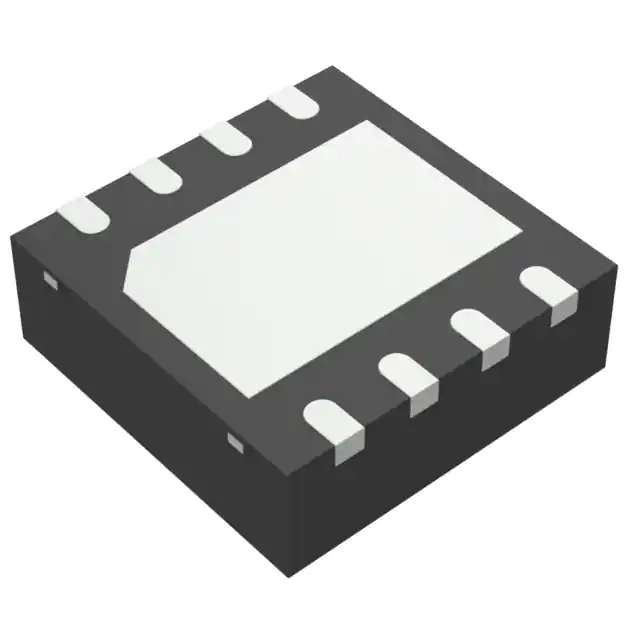
Texas Instruments TPS715A01DRBT-NM
- Part No.:
- TPS715A01DRBT-NM
- Manufacturer:
- Texas Instruments
- Package:
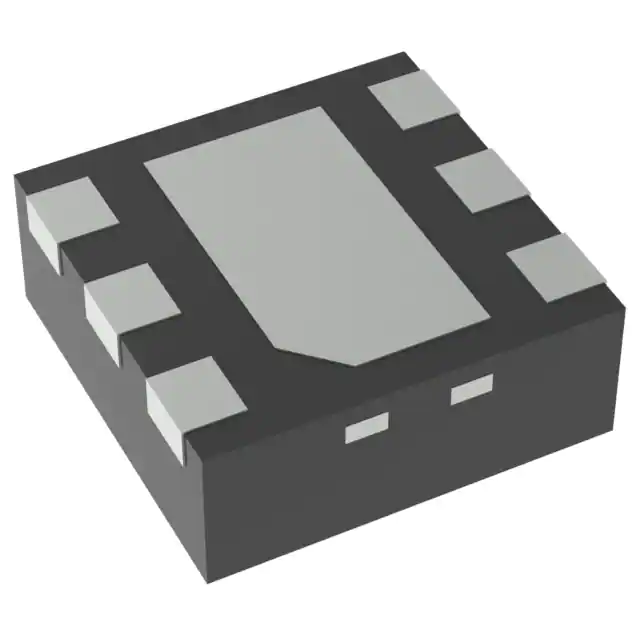
- 8-VDFN Exposed Pad
- Datasheet:
-
 TPS715A01DRBT-NM.pdf
- Description:
- IC REG LINEAR POS ADJ 80MA 8SON
- Quantity:
- Payment:

- Shipping:

Inventory:500
Please send an inquiry. Send us your inquiry, and we will respond immediately.
Product details
Overview
TPS715A01DRBT-NM from Texas Instruments is a 80-mA, adjustable-output low-dropout linear regulator with 3.2 μA quiescent current, 2.5 V to 24 V input range, and 1.205 V to 15 V output voltage capability. It features internal soft-start, overcurrent protection, and operates from –40°C to +125°C - designed for ultra-low-power battery-powered systems including MSP430-based sensor nodes and portable medical devices.
For engineers reviewing the TPS715A01DRBT-NM datasheet, TPS715A01DRBT-NM pinout, TPS715A01DRBT-NM application, or TPS715A01DRBT-NM equivalent, this page delivers verified electrical specs, package mapping to DRB (VSON-8), thermal performance data, and real-world design context for high-reliability, low-IQ power management in constrained environments.
Technical Context
The TPS715A01DRBT-NM implements a CMOS pass transistor architecture with a 1.205-V internal bandgap reference and leakage-null control circuit active under high-VIN/high-temperature light-load conditions. Its brick-wall overcurrent protection triggers at 160–500 mA depending on input voltage, and dropout voltage remains stable at 650 mV (typ) at 80 mA load.
This "new chip" variant includes internal soft-start to limit inrush current into the output capacitor and supports ≥0.47 μF effective COUT (derated 50%) for stability - unlike legacy versions requiring ≥1 μF nominal. Thermal resistance is rated at RθJA = 55.8°C/W for the DRB package on JEDEC 2s2p board.
Key Specifications
| Parameter | Value and Actual Design Meaning |
|---|---|
| Output Current | Up to 80 mA - sufficient to power MSP430 microcontrollers, RF transceivers, and analog sensors without external boost. |
| Quiescent Current | 3.2 μA (typ) across 0–80 mA load - enables >10-year battery life in coin-cell–powered IoT endpoints. |
| Input Voltage Range | 2.5 V to 24 V - accommodates single Li-ion, multi-cell alkaline, or industrial 12/24-V rails without pre-regulation. |
| Output Voltage Range | 1.205 V to 15 V (adjustable via FB pin) - supports core voltages from sub-1.8-V logic to analog front-ends. |
| Dropout Voltage | 650 mV (typ) at 80 mA - allows regulation down to VIN = VOUT + 0.65 V, critical for extending battery runtime. |
| Thermal Resistance | RθJA = 55.8°C/W (DRB package) - enables 1.2 W max power dissipation at 125°C ambient with standard PCB layout. |
| ESD Rating | ±2000 V HBM - meets industrial handling requirements without additional protection circuitry. |
Pinout & Package
TPS715A01DRBT-NM uses the DRB package: 8-pin VSON (3 mm × 3 mm, exposed thermal pad), non-magnetic variant optimized for MRI-compatible medical imaging systems.
| Pin/Terminal | Circuit Role | Design Meaning |
|---|---|---|
| 1 (IN) | Input supply | Accepts 2.5–24 V; requires ≥0.1 μF ceramic capacitor to GND for transient immunity. |
| 2, 3, 5, 6, 7 (NC) | No-connect | Internally unconnected; tie to GND for optimal thermal conduction from exposed pad. |
| 4, Pad (GND) | Ground reference | Primary return path and thermal interface; must be soldered to large copper pour. |
| 8 (OUT) | Regulated output | Delivers 1.205–15 V; requires ≥0.47 μF effective capacitance (50% derated) for stability. |
| - (FB) | Feedback input | Connects to resistor divider for adjustable output; sets VOUT = 1.205 × (1 + R1/R2). |
Key Features
| Feature | Design Value |
|---|---|
| Ultra-low IQ | 3.2 μA typical across full 0–80 mA load range - eliminates efficiency penalty at standby, enabling always-on sensing. |
| Internal soft-start | Controls output ramp rate during power-up - prevents inrush-induced brownout in shared supply rails. |
| Brick-wall current limit | 160–500 mA threshold (VIN-dependent) - protects against short-circuit faults without latch-up or thermal runaway. |
| Non-magnetic DRB package | Zero magnetic interference - certified for use in MRI scanner subsystems and other EMI-sensitive medical equipment. |
| Wide-input stability | Stable with any COUT ≥0.47 μF (50% derated) - simplifies BOM by eliminating need for specific capacitor dielectrics. |
Applications
| Home Automation Sensor Node | Portable Medical Monitor |
|---|---|
|
Use Scenario: Battery-powered Zigbee/Z-Wave temperature/humidity sensor operating for 5+ years on CR2032. IC Role / Device Role / Timing Role: Primary 3.3-V supply for MSP430FR2355 MCU and Si7021 sensor; regulates directly from single Li-ion or two alkaline cells. Use Value: 3.2-μA quiescent current extends battery life beyond 10 years; 24-V tolerance allows compatibility with PoE-powered gateways. |
Use Scenario: Handheld ECG device using rechargeable Li-ion with strict EMI and magnetic field constraints. IC Role / Device Role / Timing Role: Clean 2.8-V rail for analog front-end and ADC; non-magnetic DRB package prevents MRI image distortion. Use Value: 425-μVrms output noise ensures <1-μV baseline drift; soft-start avoids signal corruption during power-on reset. |
| Smart Grid Endpoint | Industrial Lighting Controller |
|
Use Scenario: DIN-rail mounted PLC module powered from 24-V DC industrial bus with ±15% ripple. IC Role / Device Role / Timing Role: Post-regulator for isolated 5-V logic supply; handles line transients up to 24 V with 650-mV dropout. Use Value: 60-dB PSRR at 100 kHz suppresses switching noise from upstream DC/DC converters; –40°C to +125°C rating ensures outdoor cabinet operation. |
Use Scenario: DALI-compliant LED driver with microcontroller-based dimming algorithm and thermal foldback. IC Role / Device Role / Timing Role: Bias supply for DALI transceiver and current-sense amplifier; adjustable output supports 1.8-V logic and 3.3-V analog sections. Use Value: Adjustable 1.205–15 V range eliminates need for multiple fixed LDOs; 80-mA output drives multiple DALI slaves and sense circuitry. |
Equivalent & Alternatives
The following parts are listed as comparable options for similar low-quiescent-current LDO applications.
| Alternative Part | Technical Difference | Application Difference | Selection Advice |
|---|---|---|---|
| TPS7A0533DRVR | 300-mA output, 25-μA IQ, 1.8–6.0 V fixed output only; smaller 2-mm × 2-mm WSON-6 package. | Better for higher-current digital loads but lacks adjustable output and 24-V input support. | Choose when >80 mA is required and output voltage is fixed at 3.3 V - not suitable for TPS715A01DRBT-NM's wide-adjustable or high-VIN use cases. |
| MCP1703T-3302E/MB | 250-mA output, 4-μA IQ, 3.3-V fixed, 16-V max input, SOIC-8 package; no non-magnetic option. | Limited to 16 V input and fixed 3.3 V; lacks soft-start and MRI-grade packaging. | Select for cost-sensitive industrial controls where 24-V tolerance and MRI compliance are unnecessary. |
Compared with TPS7A0533DRVR and MCP1703T-3302E/MB, the TPS715A01DRBT-NM uniquely combines 24-V input tolerance, 1.205–15-V adjustability, 3.2-μA IQ, and non-magnetic DRB packaging - making it irreplaceable in long-life, high-VIN, MRI-safe applications.
Availability
TPS715A01DRBT-NM is available at Aetrix Electronics and suitable for home automation sensor nodes, portable medical monitors, and smart grid endpoints requiring stable component supply with guaranteed long-term availability and traceable sourcing.
Supply support for TPS715A01DRBT-NM includes scheduled delivery planning, volume procurement assistance, BOM continuity management, traceable sourcing, and lifecycle availability coordination for OEM customers, industrial embedded developers, connected-device designers, and electronics production programs.
Manufacturer
Texas Instruments is a global semiconductor leader specializing in analog, embedded processing, and power management ICs, with decades of expertise in high-reliability, low-power system solutions.
The TPS715A product line was engineered specifically for ultra-low-power, wide-input-voltage battery and industrial applications - prioritizing quiescent current minimization, thermal robustness, and medical-grade packaging integrity.
FAQ
What is the maximum input voltage supported by the TPS715A01DRBT-NM?
The TPS715A01DRBT-NM supports a maximum input voltage of 24 V under recommended operating conditions. The "new chip" variant also tolerates up to 30 V under absolute maximum ratings, though sustained operation above 24 V is not advised. This 24-V rating enables direct connection to industrial 24-V rails and multi-cell battery stacks without pre-regulation - a key differentiator from most sub-20-V LDOs.
Does the TPS715A01DRBT-NM require an external feedback resistor network?
Yes - the "01" suffix denotes the adjustable version of the TPS715A, meaning the TPS715A01DRBT-NM requires external R1/R2 resistors connected to the FB pin to set the output voltage within 1.205 V to 15 V. For example, 1.8 V output uses R1 = 1 MΩ and R2 = 1 MΩ. Fixed-output variants (e.g., TPS715A33) omit the FB pin and do not require external resistors.
Is the TPS715A01DRBT-NM compatible with ceramic output capacitors?
Yes - the TPS715A01DRBT-NM is stable with any ceramic output capacitor ≥0.47 μF (50% derated value), including X5R and X7R types. Unlike older LDOs, it does not require ESR tuning or tantalum capacitors. The 0.47-μF minimum applies to effective capacitance at operating bias and temperature - ensuring stability across –40°C to +125°C without additional compensation components.
What does the "-NM" suffix indicate in TPS715A01DRBT-NM?
"-NM" designates the non-magnetic version of the DRB (VSON-8) package. This variant replaces magnetic materials in the leadframe and mold compound to eliminate magnetic field interference - certified for use in MRI environments and other applications where magnetic susceptibility must be minimized. Standard TPS715A01DRBT lacks this qualification.
How does the TPS715A01DRBT-NM handle short-circuit conditions?
The TPS715A01DRBT-NM employs a brick-wall overcurrent protection scheme that limits output current to 160–500 mA depending on input voltage (e.g., 500 mA at VIN ≥ 3.5 V). During a short, the output voltage collapses and the device enters constant-current mode - dissipating power as (VIN – VOUT) × ICL. It does not latch off or auto-recover; normal regulation resumes once the fault is removed and thermal limits are respected.
TPS715A01DRBT-NM Specifications
- Product attributes
- Attribute value
- Manufacturer:
- Texas Instruments
- Series:
- -
- Package/Case:
- 8-VDFN Exposed Pad
- Packaging:
- Tape & Reel (TR)
- Product Status:
- Active
- Output Configuration:
- Positive
- Output Type:
- Adjustable
- Number of Regulators:
- 1
- Voltage - Input (Max):
- 24V
- Voltage - Output (Min/Fixed):
- 1.2V
- Voltage - Output (Max):
- 15V
- Voltage Dropout (Max):
- 1.12V @ 80mA
- Current - Output:
- 80mA
- Current - Quiescent (Iq):
- 4.2 µA
- Current - Supply (Max):
- 5.8 µA
- PSRR:
- 60dB (100kHz)
- Control Features:
- -
- Protection Features:
- Over Current, Reverse Polarity
- Operating Temperature:
- -40°C ~ 125°C
- Grade:
- -
- Qualification:
- -
- Mounting Type:
- Surface Mount
- Supplier Device Package:
- 8-SON (3x3)
TPS715A01DRBT-NM FAQ
1.How can I place an order for TPS715A01DRBT-NM through Aetrix?
Please submit a Request for Quotation (RFQ) for TPS715A01DRBT-NM on Aetrix. Our sales agent will provide a competitive quotation and guide you through the order confirmation once you accept the terms.
2.Are the price and stock information for TPS715A01DRBT-NM reliable?
The price and inventory of TPS715A01DRBT-NM are updated periodically and may fluctuate due to market conditions. Stock and pricing data are typically refreshed every 24 hours. Quotation validity for TPS715A01DRBT-NM is usually 5 days.
3.What payment methods are accepted for TPS715A01DRBT-NM?
We accept Wire Transfer, PayPal, Credit Card, Western Union, MoneyGram, and Escrow for TPS715A01DRBT-NM transactions.
Note: Certain payment methods may incur a processing fee.
4.How is shipping managed for TPS715A01DRBT-NM?
TPS715A01DRBT-NM orders can be shipped via leading logistics carriers, including DHL, UPS, FedEx, TNT, or Registered Mail.
Once your TPS715A01DRBT-NM order is processed, you will receive an email with the shipment details and tracking number.
Note: Tracking information may take up to 24 hours to appear. Express delivery typically takes 3–5 business days.
5.How can I obtain technical support or documentation for TPS715A01DRBT-NM?
For technical support, including TPS715A01DRBT-NM datasheets, pinout diagrams, or application guidance, please contact our engineering support team. They can provide detailed documentation and assistance for your TPS715A01DRBT-NM requirements.
6.How does Aetrix verify that TPS715A01DRBT-NM is sourced from the original manufacturer or authorized distributors?
All TPS715A01DRBT-NM products on Aetrix are procured from qualified distributors and authorized channels. Our dedicated quality assurance team conducts strict verification, including traceability checks and, if necessary, third-party testing. This ensures that TPS715A01DRBT-NM meets industry standards.
7.What is the process for return or replacement of TPS715A01DRBT-NM?
All TPS715A01DRBT-NM units undergo pre-shipment inspection (PSI). If there is an issue with TPS715A01DRBT-NM, returns or replacements are accepted under the following conditions:
1.Quantity discrepancies, incorrect items, or visible external defects (such as breakage or corrosion), acknowledged by Aetrix.
2.The issue is reported within 90 days of delivery.
3.The TPS715A01DRBT-NM part is unused and in its original packaging.
Return procedure for TPS715A01DRBT-NM:
1.Submit a request within 90 days.
2.Obtain a Return Material Authorization (RMA) from Aetrix.
TPS715A01DRBT-NM Tags
-
MIC5504-1.8YM5-TR
Microchip Technology
-
MIC5504-3.3YM5-TR
Microchip Technology
-
MIC5365-3.0YC5-TR
Microchip Technology
-
MIC5365-1.8YC5-TR
Microchip Technology
-
MIC5365-2.5YC5-TR
Microchip Technology
-
MIC5365-3.3YC5-TR
Microchip Technology
-
MIC5365-3.3YD5-TR
Microchip Technology
-
MIC5317-3.3YM5-TR
Microchip Technology
-
TLV1117LV33DCYR
Texas Instruments
-
MIC5317-3.3YMT-TZ
Microchip Technology
-
MIC5528-3.3YMT-TR
Microchip Technology
-
TLV75801PDRVR
Texas Instruments
Tech Hub
A technical comparison of level-sensitive latches and edge-triggered flip-flops, covering timing windows, setup and hold limits, master–slave operation, time borrowing, race-through, HDL inference and…
A D latch stores one bit while Enable controls when data can pass. This reference covers gate-level operation, truth tables, transparency, setup and hold timing, LE versus OE, common ICs and practical …
An SR latch stores one bit through cross-coupled feedback. This engineering reference covers NOR and NAND implementations, truth tables, forbidden-state recovery, gated operation, switch debouncing, fa…

Latch circuits retain one bit through feedback. This technical reference covers SR and D latches, truth tables, transparency, timing limits, latch-versus-flip-flop behavior, applications and common log…

An engineering guide to LED driver operation, constant-current and constant-voltage outputs, linear and switching topologies, dimming, IC selection, calculations, replacement compatibility, and fault c…

Operational amplifier guide covering op amp basics, feedback, ideal vs real op amps, common configurations, buffer circuits, offset, bias current, gain-bandwidth, slew rate, rail-to-rail limits and sel…

Jumper cables guide covering safe connection order, red and black clamp placement, final ground connection, cable gauge, length, clamp quality, copper vs CCA cables, jump starter comparison and battery…

LDO regulator guide covering low dropout voltage, power dissipation, thermal design, PSRR, output noise, capacitor stability, adjustable LDO circuits, LDO vs buck converter and datasheet selection chec…

Conditional Access Module guide covering CAM meaning, CI/CI+ interface, smart card authorization, DVB security workflow, TV and set-top box compatibility, internal electronics, ESD protection, connecto…

Guide to electronic component obsolescence covering EOL risk, PCN/PDN notices, last-time buy planning, replacement options, form-fit-function validation, counterfeit risk and BOM lifecycle management.


