
 My Inquiry
 My Account


STMicroelectronics TS331IYLT
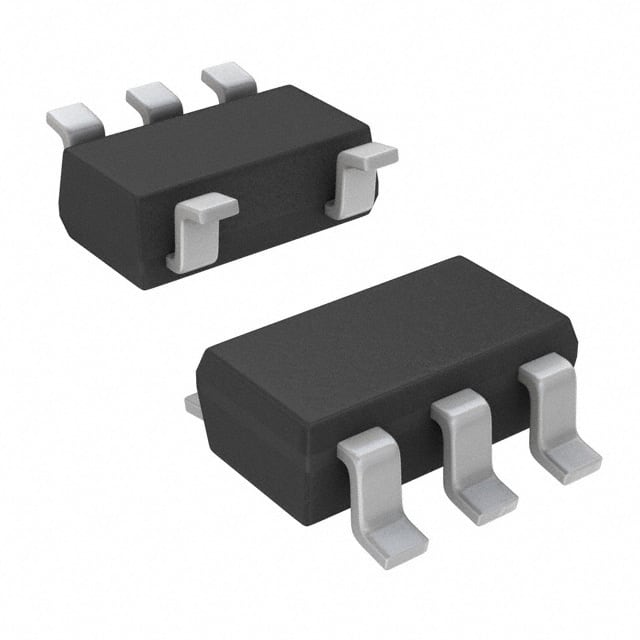
- Part No.:
- TS331IYLT
- Manufacturer:
- STMicroelectronics
- Category:
- Comparators
- Package:
- SC-74A, SOT-753
- Datasheet:
-
 TS331IYLT.pdf
- Description:
- IC COMPARATOR 1 GEN PUR SOT23-5
- Quantity:
- Payment:

- Shipping:

Inventory:2,249
Please send an inquiry. Send us your inquiry, and we will respond immediately.
Product details
Overview
TS331IYLT from STMicroelectronics is a single-channel micropower rail-to-rail input comparator optimized for ultra-low-voltage battery-powered systems. It operates from 1.6 V to 5.0 V, draws only 20 µA typical supply current at 1.8 V, delivers 210 ns propagation delay (TPHL) with 100 mV overdrive, and features open-drain output with 24 mV VOL at 1 mA sink - enabling direct interface with I²C-bus or logic-level microcontrollers in portable power management circuits.
For engineers reviewing the TS331IYLT datasheet, TS331IYLT pinout, TS331IYLT application, or TS331IYLT equivalent, this device is selected for precision voltage monitoring, battery end-of-discharge detection, and low-power window comparators where supply headroom is constrained below 2 V and thermal robustness across -40 °C to +125 °C is required.
Technical Context
The TS331IYLT uses a CMOS input stage with rail-to-rail common-mode range (VCC− −0.2 V to VCC+ +0.2 V at 25 °C), enabling accurate threshold sensing near supply rails. Its open-drain output supports wired-OR configurations and level-shifting without external pull-up constraints.
Propagation delay is tightly specified across voltage (1.6–5.0 V) and temperature (−40 to +125 °C), with TPHL as low as 210 ns and TPLH up to 620 ns at 100 mV overdrive - reflecting asymmetric internal gain-stage design optimized for fast high-to-low transitions in wake-up and fault-detection paths.
Key Specifications
| Parameter | Value and Actual Design Meaning |
|---|---|
| Supply Voltage Range | 1.6 V to 5.0 V - supports single-cell Li-ion, LiFePO₄, and dual-cell alkaline operation without LDO pre-regulation. |
| Quiescent Current | 20 µA typical at 1.8 V - enables >1-year battery life in always-on voltage supervision nodes. |
| Input Offset Voltage | 0.5 mV min / 5 mV typ - ensures ≤10 mV total error budget in 3.3 V reference monitoring with 1% resistive dividers. |
| Propagation Delay (TPHL) | 210 ns typ at 100 mV overdrive - meets sub-µs response requirement for overvoltage latch and brown-out reset generation. |
| Output Sink Current | 22 mA max at VOUT = 1.5 V - drives standard LED indicators or MOSFET gate directly without buffer stage. |
| Input Common-Mode Range | Rail-to-rail (VCC− to VCC+) - allows direct sensing of battery voltage down to 0 V and up to full VCC without attenuation. |
| ESD Rating | 2 kV HBM - provides robustness against handling discharge in handheld assembly lines and field service. |
Pinout & Package
SOT23-5 package: 5-pin surface-mount plastic package with exposed pad option (not electrically connected), footprint compatible with SC70-5; thermal resistance RthJA = 250 °C/W.
| Pin/Terminal | Circuit Role | Design Meaning |
|---|---|---|
| 1 (IN+) | Non-inverting input | Accepts rail-to-rail analog signals; bias current ≤40 nA enables high-impedance divider networks. |
| 2 (IN−) | Inverting input | Differential pair input node; matched with IN+ for <6 mV offset over full temperature range. |
| 3 (VCC−) | Negative supply | Ground reference pin; must be tied to system GND or negative rail; not floating. |
| 4 (OUT) | Open-drain output | Requires external pull-up; sinks up to 22 mA; compatible with 1.8 V, 3.3 V, or 5 V logic domains. |
| 5 (VCC+) | Positive supply | Power input pin; decoupling capacitor (100 nF) recommended within 2 mm of pin for noise immunity. |
Key Features
| Feature | Design Value |
|---|---|
| Rail-to-rail input stage | Enables direct battery voltage monitoring from 0 V to full VCC without signal attenuation or level-shifting circuitry. |
| 20 µA quiescent current | Reduces standby power by >90% vs. legacy comparators, critical for coin-cell and energy-harvesting applications. |
| 210 ns TPHL propagation delay | Supports real-time fault detection in battery protection ICs and fast wake-up triggers for low-power MCUs. |
| −40 °C to +125 °C operating range | Qualified for automotive cabin modules, industrial sensors, and outdoor IoT edge nodes without derating. |
| Open-drain output with 24 mV VOL | Ensures clean logic-low assertion even under heavy capacitive loads and varying pull-up voltages. |
Applications
| Battery Voltage Monitor | Low-Power Wake-Up Detector |
|---|---|
|
Use Scenario: Monitoring Li-ion cell voltage during deep sleep to trigger MCU wake-up before cutoff (e.g., 2.8 V threshold). IC Role / Device Role / Timing Role: Single comparator comparing divided battery voltage against precision reference; open-drain output pulls MCU WAKE pin low. Use Value: 20 µA supply current extends shelf life; rail-to-rail input captures full discharge curve from 4.2 V to 2.5 V without signal loss. |
Use Scenario: Detecting motion-triggered IR sensor output crossing threshold to wake sleeping microcontroller. IC Role / Device Role / Timing Role: Fast-response comparator converting analog sensor output into digital interrupt signal with <300 ns latency. Use Value: 210 ns TPHL ensures sub-millisecond wake latency; 1.6 V minimum supply allows direct connection to sensor's regulated 1.8 V rail. |
| Overvoltage Protection Circuit | Window Comparator for Sensor Diagnostics |
|
Use Scenario: Shutting down USB-C power path when input exceeds 5.5 V to prevent downstream damage. IC Role / Device Role / Timing Role: High-side comparator monitoring VBUS via resistor divider; output drives gate of protection MOSFET. Use Value: 22 mA sink current directly drives MOSFET gate without buffer; 2 kV HBM protects against ESD events on exposed ports. |
Use Scenario: Validating thermistor output stays within ±5% of expected range during sensor self-test. IC Role / Device Role / Timing Role: Dual-comparator configuration (using TS332 variant) forming upper/lower bounds; output flags out-of-range condition. Use Value: 0.5 mV input offset minimizes false alarms; rail-to-rail inputs accommodate full 0–3.3 V ADC readback range. |
Equivalent & Alternatives
The following parts are listed as comparable options for similar micropower rail-to-rail comparator applications.
| Alternative Part | Technical Difference | Application Difference | Selection Advice |
|---|---|---|---|
| TLC3701CDR | Higher supply current (40 µA), slower TPHL (600 ns), no automotive qualification | Not suitable for AEC-Q100-compliant designs; limited to commercial-temperature consumer devices | Select only if cost sensitivity outweighs power/performance requirements and automotive compliance is unnecessary. |
| MAX9021AUT+T | Lower VIO (0.3 mV), but higher ICC (45 µA); no wettable flank package option | Preferred for ultra-precision thresholds, but unsuitable for space-constrained automotive PCBs requiring DFN8 wettable flanks | Choose when offset-critical sensor interfaces dominate over board area and thermal reliability requirements. |
Compared with TLC3701CDR and MAX9021AUT+T, TS331IYLT uniquely balances ultra-low ICC (20 µA), AEC-Q100 qualification, SOT23-5 compactness, and production-ready automotive traceability - making it optimal for battery management and safety-critical wake-up functions.
Availability
TS331IYLT is available at Aetrix Electronics and suitable for battery voltage monitoring, low-power wake-up detection, and overvoltage protection requiring stable component supply across automotive, industrial, and portable electronics programs.
Supply support for TS331IYLT includes scheduled delivery planning, volume procurement assistance, BOM continuity management, traceable sourcing, and lifecycle availability coordination for OEM customers, industrial embedded developers, connected-device designers, and electronics production programs.
Manufacturer
STMicroelectronics is a global semiconductor leader headquartered in Geneva, Switzerland, designing and manufacturing analog, MCU, power, and sensor solutions for automotive, industrial, and consumer markets.
The TS33x series was developed specifically for micropower, rail-to-rail, automotive-qualified comparators - targeting battery-operated systems where supply voltage headroom, thermal resilience, and long-term supply stability are non-negotiable.
FAQ
What is the maximum allowable supply voltage for TS331IYLT?
The absolute maximum supply voltage (VCC) is 5.5 V per Table 1. Operation above 5.0 V is outside the guaranteed specification range and may cause parametric shift or accelerated aging. For reliable 5 V system integration, use 5.0 V nominal with ±5% tolerance - validated across −40 °C to +125 °C.
Can TS331IYLT drive an LED directly?
Yes - its open-drain output can sink up to 22 mA at VOUT = 1.5 V (Table 3, VCC = 2.7 V), sufficient to drive standard 2 mA indicator LEDs with appropriate series resistor. At 1.8 V supply, sink current drops to 20 mA, still adequate for low-current LEDs in portable devices.
Is the TS331IYLT pin-compatible with other TS33x variants?
No - TS331 (single) in SOT23-5 has different pinout than TS332 (dual) in SO8 or TS334 (quad) in TSSOP14. The SOT23-5 pin mapping (IN+, IN−, VCC−, OUT, VCC+) is unique to the single-channel version and not shared across the family.
Does TS331IYLT require input filtering for noisy battery rails?
Yes - while its CMRR is 50 dB minimum, battery rails with switching regulator ripple (>10 mVpp) can couple into the high-impedance inputs. A 100 kΩ/100 pF RC filter on each input (cutoff ~16 kHz) reduces noise-induced false triggering without degrading 210 ns propagation delay performance.
TS331IYLT Specifications
- Product attributes
- Attribute value
- Manufacturer:
- STMicroelectronics
- Package/Case:
- SC-74A, SOT-753
- Series:
- -
- Packaging:
- Tape & Reel (TR)
- Product Status:
- Active
- Type:
- General Purpose
- Number of Elements:
- 1
- Output Type:
- Open-Drain
- Voltage - Supply, Single/Dual (±):
- 1.6V ~ 5V
- :
- 5mV @ 5V
- Voltage - Input Offset (Max):
- 0.04µA @ 5V
- Current - Input Bias (Max):
- 93mA @ 5V
- Current - Output (Typ):
- 26µA
- Current - Quiescent (Max):
- 79dB CMRR
- CMRR, PSRR (Typ):
- 720ns
- Propagation Delay (Max):
- -
- Hysteresis:
- -40°C ~ 125°C
- Operating Temperature:
- Automotive
- Grade:
- AEC-Q100
- Qualification:
- Surface Mount
- :
- SOT-23-5
TS331IYLT FAQ
1.How can I place an order for TS331IYLT through Aetrix?
Please submit a Request for Quotation (RFQ) for TS331IYLT on Aetrix. Our sales agent will provide a competitive quotation and guide you through the order confirmation once you accept the terms.
2.Are the price and stock information for TS331IYLT reliable?
The price and inventory of TS331IYLT are updated periodically and may fluctuate due to market conditions. Stock and pricing data are typically refreshed every 24 hours. Quotation validity for TS331IYLT is usually 5 days.
3.What payment methods are accepted for TS331IYLT?
We accept Wire Transfer, PayPal, Credit Card, Western Union, MoneyGram, and Escrow for TS331IYLT transactions.
Note: Certain payment methods may incur a processing fee.
4.How is shipping managed for TS331IYLT?
TS331IYLT orders can be shipped via leading logistics carriers, including DHL, UPS, FedEx, TNT, or Registered Mail.
Once your TS331IYLT order is processed, you will receive an email with the shipment details and tracking number.
Note: Tracking information may take up to 24 hours to appear. Express delivery typically takes 3–5 business days.
5.How can I obtain technical support or documentation for TS331IYLT?
For technical support, including TS331IYLT datasheets, pinout diagrams, or application guidance, please contact our engineering support team. They can provide detailed documentation and assistance for your TS331IYLT requirements.
6.How does Aetrix verify that TS331IYLT is sourced from the original manufacturer or authorized distributors?
All TS331IYLT products on Aetrix are procured from qualified distributors and authorized channels. Our dedicated quality assurance team conducts strict verification, including traceability checks and, if necessary, third-party testing. This ensures that TS331IYLT meets industry standards.
7.What is the process for return or replacement of TS331IYLT?
All TS331IYLT units undergo pre-shipment inspection (PSI). If there is an issue with TS331IYLT, returns or replacements are accepted under the following conditions:
1.Quantity discrepancies, incorrect items, or visible external defects (such as breakage or corrosion), acknowledged by Aetrix.
2.The issue is reported within 90 days of delivery.
3.The TS331IYLT part is unused and in its original packaging.
Return procedure for TS331IYLT:
1.Submit a request within 90 days.
2.Obtain a Return Material Authorization (RMA) from Aetrix.
TS331IYLT Tags

-
LM2903DR
Texas Instruments
-
LM339DR
Texas Instruments
-
LM339PWR
Texas Instruments
-
LM393DT
STMicroelectronics
-
LM2901PWR
Texas Instruments
-
LM2903DT
STMicroelectronics
-
LM393DR
Texas Instruments
-
LM239DR
Texas Instruments
-
LM339APWR
Texas Instruments
-
LM2903P
Texas Instruments
-
LM393ADR
Texas Instruments
-
NCX2200GMAZ
NXP Semiconductors
Tech Hub

A practical engineering guide to 3.3V and 5V logic compatibility, input thresholds, resistor dividers, translator ICs, MOSFET level shifting, I2C pull-ups, timing limits and power-sequencing risks.

The 74HC595 uses push-pull logic outputs, while the TPIC6B595 uses 50 V open-drain DMOS sinks for higher-power loads. This guide compares timing, current limits, 3.3 V interfacing, load wiring, thermal…

The 74HC595 converts serial data into eight stable parallel outputs. This guide covers pin functions, shift and storage timing, OE and MR behavior, drive-current limits, cascading, voltage compatibilit…

A technical comparison of level-sensitive latches and edge-triggered flip-flops, covering timing windows, setup and hold limits, master–slave operation, time borrowing, race-through, HDL inference and…

A D latch stores one bit while Enable controls when data can pass. This reference covers gate-level operation, truth tables, transparency, setup and hold timing, LE versus OE, common ICs and practical …

An SR latch stores one bit through cross-coupled feedback. This engineering reference covers NOR and NAND implementations, truth tables, forbidden-state recovery, gated operation, switch debouncing, fa…

Latch circuits retain one bit through feedback. This technical reference covers SR and D latches, truth tables, transparency, timing limits, latch-versus-flip-flop behavior, applications and common log…

An engineering guide to LED driver operation, constant-current and constant-voltage outputs, linear and switching topologies, dimming, IC selection, calculations, replacement compatibility, and fault c…

Operational amplifier guide covering op amp basics, feedback, ideal vs real op amps, common configurations, buffer circuits, offset, bias current, gain-bandwidth, slew rate, rail-to-rail limits and sel…

Jumper cables guide covering safe connection order, red and black clamp placement, final ground connection, cable gauge, length, clamp quality, copper vs CCA cables, jump starter comparison and battery…


