
 My Inquiry
 My Account


Texas Instruments TSB12LV01BPZT
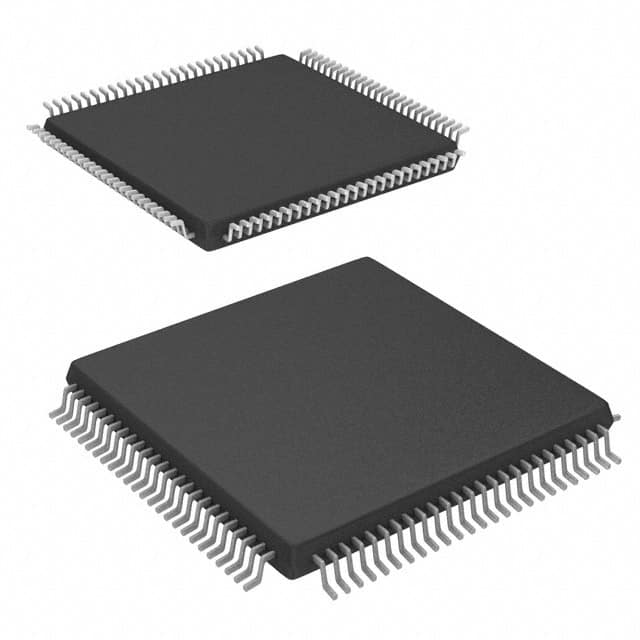
- Part No.:
- TSB12LV01BPZT
- Manufacturer:
- Texas Instruments
- Category:
- Controllers
- Package:
- 100-TQFP
- Datasheet:
-
 TSB12LV01BPZT.pdf
- Description:
- IC HP 3.3V LINK LAYER 100-TQFP
- Quantity:
- Payment:

- Shipping:

Inventory:3,223
Please send an inquiry. Send us your inquiry, and we will respond immediately.
Product details
Overview
TSB12LV01BPZT from Texas Instruments is an IEEE 1394-1995 (FireWire) link-layer controller IC for high-speed serial-bus I/O subsystems. It implements the 1394 link layer, supports 100/200/400 Mbits/s data rates, integrates 2-KB configurable FIFO memory, operates from a 3.3-V supply with 5-V-tolerant inputs, and functions as cycle master in PC or digital video host systems.
For engineers reviewing the TSB12LV01BPZT datasheet, TSB12LV01BPZT pinout, TSB12LV01BPZT application, or TSB12LV01BPZT equivalent, key selection criteria include 32-bit host bus interface compatibility, isochronous dual-channel support, CRC generation/verification, PHY-link timing compliance per IEEE 1394a–2000, and TQFP-100 package thermal and layout constraints.
Technical Context
The TSB12LV01BPZT implements a full IEEE 1394-1995 link-layer protocol stack with dedicated asynchronous, isochronous, and general-receive FIFOs totaling 2 KB. It interfaces directly to TI-compatible PHY devices via a timing-compliant PHY-link interface and performs 32-bit CRC generation and checking on all transmitted and received packets.
It features a generic 32-bit host bus interface supporting both asynchronous and isochronous transfers, interrupt-driven operation to minimize host polling, and software-configurable FIFO partitioning (GRF/ATF/ITF). The device requires a 50-MHz host clock with 45–55% duty cycle and lacks bus holder cells on the PHY-link interface-replacing ISO pin (pin 69) with Vcc.
Key Specifications
| Parameter | Value and Actual Design Meaning |
|---|---|
| IEEE Standard | Complies with IEEE 1394-1995 and IEEE 1394a–2000 timing requirements for link-layer operation. |
| Data Rates | Supports 100, 200, and 400 Mbits/s transfer speeds-enables FireWire 400 connectivity without external rate negotiation logic. |
| FIFO Memory | Integrated 2-KB RAM configurable as GRF, ATF, and ITF-eliminates need for external FIFOs and reduces BOM count. |
| Host Interface | Generic 32-bit synchronous bus with directly addressable registers and interrupt signaling-compatible with x86, PowerPC, and custom host controllers. |
| Supply & I/O | 3.3-V core supply with 5-V-tolerant inputs-simplifies level translation in mixed-voltage system designs. |
| Cycle Master | On-chip cycle master functionality-enables autonomous isochronous bandwidth arbitration without host CPU intervention. |
| CRC Handling | Hardware generation and verification of 32-bit CRC on all packet types-ensures data integrity at link layer without software overhead. |
Pinout & Package
TSB12LV01BPZT is housed in a 100-pin TQFP (PZT) package, 14 mm × 14 mm body, 0.5-mm pitch, JEDEC-standard MS-026 compliant, with moisture sensitivity level (MSL) 4 and peak reflow rating of 260°C.
| Pin/Terminal | Circuit Role | Design Meaning |
|---|---|---|
| BCLK | Host Bus Clock Input | Accepts 50-MHz clock with strict 45–55% duty cycle requirement; critical for synchronous host interface timing. |
| PHYCLK | PHY Link Clock Output | Provides timing reference to connected PHY device; frequency locked to negotiated 1394 link speed (100/200/400 MHz). |
| ISO | Isoc. Channel Select (TSB12LV01A only) | Not present on TSB12LV01BPZT-pin 69 repurposed as Vcc due to removal of PHY-link bus holder cells. |
| INT | Interrupt Output | Active-low, open-drain interrupt signal indicating packet completion, error, or FIFO status-drives host CPU interrupt controller. |
| RESET | Asynchronous Reset Input | Active-low reset clears internal state and FIFO pointers; must be held low ≥100 ns after power stabilization. |
| VCC (Pin 69) | Power Supply | 3.3-V core supply pin added in TSB12LV01B revision to replace ISO function-requires local 0.1-µF decoupling. |
Key Features
| Feature | Design Value |
|---|---|
| Dual isochronous channel support | Enables simultaneous real-time streaming (e.g., audio + video) with guaranteed bandwidth allocation and low-latency delivery. |
| Configurable 2-KB FIFO architecture | Allows runtime partitioning into GRF/ATF/ITF segments-optimizes memory use for asymmetric traffic profiles without hardware change. |
| 32-bit CRC engine | Performs full packet CRC generation and validation in hardware-offloads CPU and ensures bit-level reliability per IEEE 1394 spec. |
| Interrupt-driven host interface | Reduces host polling overhead by >90% versus polling-based drivers-improves CPU utilization in embedded and PC host environments. |
| PHY-link interface compatibility | Guaranteed interoperability with TI's TSB12LV21, TSB12LV22, and TSB12LV23 PHYs-simplifies system-level validation. |
Applications
| Digital Video Capture System | Professional Audio Interface |
|---|---|
Use Scenario: High-fidelity DV camcorder connected to editing workstation via FireWire cable. IC Role / Device Role / Timing Role: Link-layer controller managing packetized isochronous video stream and asynchronous control commands between PHY and host DMA engine. Use Value: Enables sustained 25-MB/s (200-Mbit/s) isochronous throughput with sub-125-µs cycle-start jitter-meets DV format timing constraints. | Use Scenario: Multi-channel studio audio interface synchronizing mic preamps, AD/DA converters, and DAW software. IC Role / Device Role / Timing Role: Cycle master coordinating isochronous sample clocks across two independent channels (e.g., stereo in/out) with precise phase alignment. Use Value: Delivers deterministic latency ≤1.25 ms and jitter <50 ns-preserves sample-accurate timing required for professional audio mixing. |
| Industrial Machine Vision Controller | Legacy Test Equipment Adapter |
Use Scenario: Embedded vision system capturing high-resolution image frames from FireWire cameras in automated inspection lines. IC Role / Device Role / Timing Role: Asynchronous packet handler interfacing camera sensor FIFOs to host processor over 32-bit local bus while maintaining 400-Mbit/s burst capability. Use Value: Supports 12-bit monochrome frame bursts up to 1024×768@60 fps with zero packet loss-enables real-time defect detection. | Use Scenario: Retrofit adapter board connecting legacy IEEE 1394 test instruments (e.g., oscilloscopes, logic analyzers) to modern PCIe-based host platforms. IC Role / Device Role / Timing Role: Protocol bridge translating 1394 link-layer packets to host memory-mapped registers using direct-addressable register set. Use Value: Maintains full backward compatibility with IEEE 1394-1995 instrument firmware-avoids costly instrument replacement or firmware rewrite. |
Equivalent & Alternatives
The following parts are listed as comparable options for similar IEEE 1394 link-layer controller applications.
| Alternative Part | Technical Difference | Application Difference | Selection Advice |
|---|---|---|---|
| TSB12LV01APZT | Pin-compatible predecessor; lacks three GPO pins, no Host Bus Control Register (CFR 40h), no Mux Control Register (CFR 44h), retains ISO pin (pin 69), includes PHY-link bus holder cells. | Supports legacy designs requiring ISO pin or bus holders; not suitable for new designs needing enhanced register control or GPOs. | Select TSB12LV01APZT only for drop-in replacement in existing TSB12LV01A-based systems where errata fixes are not required. |
| TSB41AB2IPFP | Integrated PHY+Link combo in 64-pin HTQFP; no external PHY needed; supports 100/200/400 Mbits/s; includes 1.8-V core, integrated termination, and PLL; no user-configurable FIFOs. | Reduces component count and board space but sacrifices FIFO flexibility and host bus configurability; targets cost-sensitive consumer FireWire peripherals. | Choose TSB41AB2IPFP when minimizing BOM and footprint is prioritized over FIFO customization or legacy PHY reuse. |
Compared with TSB12LV01APZT, TSB12LV01BPZT adds register-level control and GPOs but removes ISO functionality; compared with TSB41AB2IPFP, it offers greater FIFO configurability and PHY independence at the cost of higher component count and board area.
Availability
TSB12LV01BPZT is available at Aetrix Electronics and suitable for digital video capture systems, professional audio interfaces, industrial machine vision controllers, and legacy test equipment adapters requiring stable component supply and long-term lifecycle support.
Supply support for TSB12LV01BPZT includes scheduled delivery planning, volume procurement assistance, BOM continuity management, traceable sourcing, and lifecycle availability coordination for OEM customers, industrial embedded developers, connected-device designers, and electronics production programs.
Manufacturer
Texas Instruments is a global semiconductor company delivering analog and embedded processing solutions, with leadership in interface, power management, and signal chain technologies.
The TSB12LV01B product line delivers IEEE 1394 link-layer control for high-reliability FireWire subsystems in professional media, industrial imaging, and instrumentation-designed for seamless integration with TI PHYs and host processors.
FAQ
What is the primary function of the TSB12LV01BPZT in a FireWire system?
The TSB12LV01BPZT serves as the IEEE 1394-1995 link-layer controller, handling packet formatting, CRC generation/verification, isochronous scheduling, and host-to-PHY data routing. It bridges the 32-bit host bus and the physical layer, enabling full FireWire 400 functionality. TSB12LV01BPZT does not include PHY circuitry-external PHY devices like TSB12LV2x are required for cable connection and signal conditioning.
Does the TSB12LV01BPZT support isochronous streaming on multiple channels simultaneously?
Yes, the TSB12LV01BPZT supports reception of isochronous data on two independent channels, allowing concurrent real-time streams such as stereo audio or dual-video feeds. Its cycle master capability ensures deterministic bandwidth allocation and low-jitter timing. TSB12LV01BPZT implements dedicated isochronous transmit FIFO (ITF) and associated control logic to maintain strict 125-µs cycle boundaries per IEEE 1394.
What are the critical host clock requirements for reliable operation of the TSB12LV01BPZT?
The TSB12LV01BPZT requires a 50-MHz host bus clock (BCLK) with a duty cycle strictly within 45–55%, unlike its predecessor TSB12LV01A which accepted 40–60%. Deviations outside this window risk setup/hold violations and packet corruption. TSB12LV01BPZT also supports lower frequencies (≤47 MHz) with 40–60% duty cycle, but 50 MHz remains the nominal target for maximum throughput.
How does the FIFO architecture of the TSB12LV01BPZT improve system design?
The TSB12LV01BPZT integrates 2 KB of on-chip RAM partitioned into general-receive (GRF), asynchronous-transmit (ATF), and isochronous-transmit (ITF) FIFOs-configurable via register writes. This eliminates external FIFO ICs, reduces PCB complexity, and enables dynamic buffer sizing per traffic profile. TSB12LV01BPZT's FIFO control allows fine-grained tuning of latency vs. throughput trade-offs without hardware changes.
Why was the ISO pin removed in the TSB12LV01BPZT compared to the TSB12LV01A?
The ISO pin (pin 69) was removed in the TSB12LV01BPZT because bus holder cells were eliminated from the PHY-link interface to reduce leakage current and improve noise immunity. To maintain pin count and power integrity, that pin was repurposed as an additional Vcc supply terminal. TSB12LV01BPZT retains full isochronous functionality through software-controlled channel enablement-not hardware pin strapping.
TSB12LV01BPZT Specifications
- Product attributes
- Attribute value
- Manufacturer:
- Texas Instruments
- Package/Case:
- 100-TQFP
- Programmable:
- Not Verified
- Protocol:
- IEEE 1394
- Function:
- Link Layer Controller
- Interface:
- Parallel
- Standards:
- IEEE 1394-1995, 1394a-2000
- Voltage - Supply:
- 3.3V, 5V
- Current - Supply:
- -
- Operating Temperature:
- -
- Supplier Device Package:
- 100-TQFP (14x14)
- Grade:
- -
- Qualification:
- -
TSB12LV01BPZT FAQ
1.How can I place an order for TSB12LV01BPZT through Aetrix?
Please submit a Request for Quotation (RFQ) for TSB12LV01BPZT on Aetrix. Our sales agent will provide a competitive quotation and guide you through the order confirmation once you accept the terms.
2.Are the price and stock information for TSB12LV01BPZT reliable?
The price and inventory of TSB12LV01BPZT are updated periodically and may fluctuate due to market conditions. Stock and pricing data are typically refreshed every 24 hours. Quotation validity for TSB12LV01BPZT is usually 5 days.
3.What payment methods are accepted for TSB12LV01BPZT?
We accept Wire Transfer, PayPal, Credit Card, Western Union, MoneyGram, and Escrow for TSB12LV01BPZT transactions.
Note: Certain payment methods may incur a processing fee.
4.How is shipping managed for TSB12LV01BPZT?
TSB12LV01BPZT orders can be shipped via leading logistics carriers, including DHL, UPS, FedEx, TNT, or Registered Mail.
Once your TSB12LV01BPZT order is processed, you will receive an email with the shipment details and tracking number.
Note: Tracking information may take up to 24 hours to appear. Express delivery typically takes 3–5 business days.
5.How can I obtain technical support or documentation for TSB12LV01BPZT?
For technical support, including TSB12LV01BPZT datasheets, pinout diagrams, or application guidance, please contact our engineering support team. They can provide detailed documentation and assistance for your TSB12LV01BPZT requirements.
6.How does Aetrix verify that TSB12LV01BPZT is sourced from the original manufacturer or authorized distributors?
All TSB12LV01BPZT products on Aetrix are procured from qualified distributors and authorized channels. Our dedicated quality assurance team conducts strict verification, including traceability checks and, if necessary, third-party testing. This ensures that TSB12LV01BPZT meets industry standards.
7.What is the process for return or replacement of TSB12LV01BPZT?
All TSB12LV01BPZT units undergo pre-shipment inspection (PSI). If there is an issue with TSB12LV01BPZT, returns or replacements are accepted under the following conditions:
1.Quantity discrepancies, incorrect items, or visible external defects (such as breakage or corrosion), acknowledged by Aetrix.
2.The issue is reported within 90 days of delivery.
3.The TSB12LV01BPZT part is unused and in its original packaging.
Return procedure for TSB12LV01BPZT:
1.Submit a request within 90 days.
2.Obtain a Return Material Authorization (RMA) from Aetrix.
TSB12LV01BPZT Tags
-
PTN5150AHXMP
NXP Semiconductors
-
USB3740B-AI9-TR
Microchip Technology
-
USB3740B-AI2-TR
Microchip Technology
-
USB3300-EZK-TR
Microchip Technology
-
USB3300-EZK
Microchip Technology
-
FUSB340TMX
onsemi
-
FUSB302BMPX
onsemi
-
DP83826IRHBR
Texas Instruments
-
MCP2518FDT-E/QBB
Microchip Technology
-
FUSB302MPX
onsemi
-
MCP2518FDT-E/SL
Microchip Technology
-
FT260Q-R
FTDI, Future Technology Devices International Ltd
Tech Hub

A practical engineering guide to 3.3V and 5V logic compatibility, input thresholds, resistor dividers, translator ICs, MOSFET level shifting, I2C pull-ups, timing limits and power-sequencing risks.

The 74HC595 uses push-pull logic outputs, while the TPIC6B595 uses 50 V open-drain DMOS sinks for higher-power loads. This guide compares timing, current limits, 3.3 V interfacing, load wiring, thermal…

The 74HC595 converts serial data into eight stable parallel outputs. This guide covers pin functions, shift and storage timing, OE and MR behavior, drive-current limits, cascading, voltage compatibilit…

A technical comparison of level-sensitive latches and edge-triggered flip-flops, covering timing windows, setup and hold limits, master–slave operation, time borrowing, race-through, HDL inference and…

A D latch stores one bit while Enable controls when data can pass. This reference covers gate-level operation, truth tables, transparency, setup and hold timing, LE versus OE, common ICs and practical …

An SR latch stores one bit through cross-coupled feedback. This engineering reference covers NOR and NAND implementations, truth tables, forbidden-state recovery, gated operation, switch debouncing, fa…

Latch circuits retain one bit through feedback. This technical reference covers SR and D latches, truth tables, transparency, timing limits, latch-versus-flip-flop behavior, applications and common log…

An engineering guide to LED driver operation, constant-current and constant-voltage outputs, linear and switching topologies, dimming, IC selection, calculations, replacement compatibility, and fault c…

Operational amplifier guide covering op amp basics, feedback, ideal vs real op amps, common configurations, buffer circuits, offset, bias current, gain-bandwidth, slew rate, rail-to-rail limits and sel…

Jumper cables guide covering safe connection order, red and black clamp placement, final ground connection, cable gauge, length, clamp quality, copper vs CCA cables, jump starter comparison and battery…


