
 My Inquiry
 My Account


Texas Instruments TSB12LV32IPZ
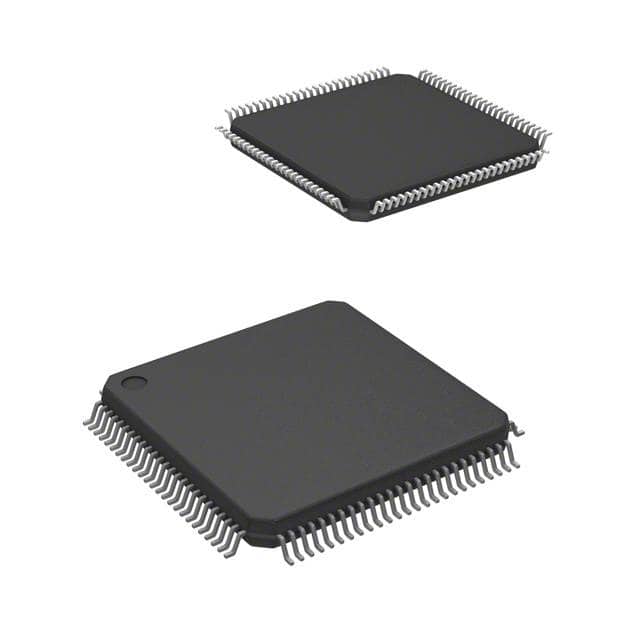
- Part No.:
- TSB12LV32IPZ
- Manufacturer:
- Texas Instruments
- Category:
- Controllers
- Package:
- 100-LQFP
- Datasheet:
-
 TSB12LV32IPZ.pdf
- Description:
- IC GP LINK LAYER CNTRLR 100LQFP
- Quantity:
- Payment:

- Shipping:

Inventory:4,829
Please send an inquiry. Send us your inquiry, and we will respond immediately.
Product details
Overview
TSB12LV32IPZ from Texas Instruments is a IEEE 1394a-2000 compliant link-layer controller (LLC) for high-speed serial bus interfacing in computer peripherals and consumer A/V systems. It supports 400/200/100 Mbps transfer rates, features dual-channel isochronous receive and quad-channel isochronous transmit, integrates 2-Kbyte GRF and 2-Kbyte ATF FIFOs, and operates from a single 3.3-V supply with 5-V tolerant bias terminals.
For engineers reviewing the TSB12LV32IPZ datasheet, TSB12LV32IPZ pinout, TSB12LV32IPZ application, or TSB12LV32IPZ equivalent, this device serves as a glueless, programmable interface between host microcontrollers (e.g., ColdFire, 68000), IEEE 1394 physical layer controllers, and local data-mover buses - critical for real-time audio/video streaming and peripheral interconnect design.
Technical Context
The TSB12LV32IPZ implements full IEEE 1394-1995 and P1394a-2000 link-layer functionality including cycle start packet generation/detection, 32-bit CRC calculation/verification, and transaction layer request forwarding to the PHY. It functions as 1394 cycle master, bus manager, and isochronous resource manager when extended via external host CSR access.
Its data-mover port supports configurable 8-bit or 16-bit burst-mode operation up to 60 MHz, with hardware-accelerated isochronous/asynchronous streaming. The internal FIFO architecture separates asynchronous transmit (ATF) and general receive (GRF) paths, enabling concurrent handling of mixed traffic types while prioritizing ATF during contention.
Key Specifications
| Parameter | Value and Actual Design Meaning |
|---|---|
| IEEE Compliance | Fully compliant with IEEE 1394-1995 and P1394a-2000 standards - ensures interoperability with legacy and high-performance 1394 PHYs and devices. |
| Data Rates | Supports 400/200/100 Mbps - enables scalable bandwidth allocation for audio/video streams and control data on shared bus. |
| FIFO Capacity | 2-Kbyte GRF + 2-Kbyte ATF - provides sufficient buffering for real-time isochronous reception and asynchronous transmission without host CPU saturation. |
| Host Interface | Programmable 8-/16-bit microcontroller interface with ColdFire burst mode support up to 60 MHz - eliminates glue logic for TI and Freescale MCU integration. |
| Supply & Tolerance | Single 3.3-V supply with 5-V tolerant bias terminals - simplifies level translation and allows direct connection to 5-V legacy system rails. |
| Isochronous Channels | 2-channel receive, 4-channel transmit - enables simultaneous multi-stream capture (e.g., stereo audio + video sync) and distribution (e.g., multi-zone playback). |
Pinout & Package
TSB12LV32IPZ uses a 100-pin LQFP package (PZ drawing), JEDEC MS-026 compliant, with 0.5-mm pitch, 14.0–14.2 mm × 13.8–14.2 mm body size, and 1.35–1.60 mm max height. Seating plane tolerance is 0.08 mm, MSL Level-3 (260°C, 168 hr).
| Pin/Terminal | Circuit Role | Design Meaning |
|---|---|---|
| CLKIN | Master clock input | Accepts 25-MHz clock for DM port timing - synchronizes data-mover transfers to host bus without external PLL. |
| PHYCLK | PHY interface clock output | Provides 24.576-MHz clock to compatible 1394 PHY (e.g., TSB12LV21/22) - ensures precise timing alignment for link-layer/physical-layer handshake. |
| DM[15:0] | Data-mover bidirectional bus | Configurable 8-/16-bit parallel interface - directly connects to ColdFire/68K local bus without address latching or bus transceivers. |
| CSn, R/Wn, DSn | Chip select / read-write / data strobe | Standard microcontroller control signals - supports burst, non-multiplexed 68K-style memory-mapped access. |
| RESETn | Active-low asynchronous reset | Resets all internal state machines and FIFO pointers - required before link initialization or error recovery sequences. |
| VDDIO, VDDCORE | Power supply pins | Separate 3.3-V I/O and core supplies - enables independent power sequencing and reduces noise coupling between analog PHY interface and digital logic. |
Key Features
| Feature | Design Value |
|---|---|
| Glueless microcontroller interface | Direct 68000/ColdFire connection at ≤60 MHz - eliminates address decoders, wait-state generators, and bus buffers in embedded 1394 node designs. |
| Hardware isochronous channel management | Dedicated routing logic for 2 RX / 4 TX channels - offloads CPU from time-critical channel arbitration and timestamp synchronization. |
| Backward compatibility with TSB12LV31 | Retains GPLynx data-mover register map and functional behavior - enables drop-in firmware reuse in legacy 1394 peripheral upgrades. |
| Burst-mode DMA acceleration | Supports ColdFire burst transfers on DM port - achieves >90% bus utilization during sustained isochronous streaming vs. byte-by-byte polling. |
| Bus holder galvanic isolation barrier | Integrated isolation between LLC and PHY domains - prevents ground loop noise from degrading signal integrity on 1394 cable interface. |
Applications
| Digital Audio Workstation Interface | Professional Video Capture System |
|---|---|
|
Use Scenario: Multi-track audio recording with low-latency monitoring across FireWire-connected interfaces. IC Role / Device Role / Timing Role: Link-layer controller managing isochronous audio packet transport between DAW host and external converters. Use Value: 2-channel isochronous receive ensures synchronized capture of stereo/multichannel streams; 4-channel transmit enables simultaneous monitor feed, effects return, and metadata channel. |
Use Scenario: Real-time HD video ingest from camcorders or broadcast decks into editing workstations. IC Role / Device Role / Timing Role: High-throughput LLC bridging uncompressed DV/HDV streams between 1394 PHY and host memory via DM port. Use Value: 400-Mbps capability and 2-Kbyte GRF buffer sustain sustained 25-MB/s DV25 throughput without packet loss under CPU load. |
| Gaming Peripheral Hub | Industrial Machine Vision Node |
|
Use Scenario: Aggregating multiple USB-to-FireWire adapters and motion-sensing controllers in console-accessory ecosystems. IC Role / Device Role / Timing Role: Centralized 1394 link controller coordinating asynchronous control packets and isochronous sensor data. Use Value: Dual FIFO architecture isolates control-plane latency (ATF) from time-sensitive sensor streams (GRF), preventing jitter in real-time feedback loops. |
Use Scenario: High-speed image acquisition from line-scan cameras in automated optical inspection systems. IC Role / Device Role / Timing Role: Deterministic isochronous transmitter synchronizing camera trigger pulses and pixel data to host DMA engine. Use Value: Hardware-managed isochronous transmit channels guarantee sub-100-µs jitter for pixel-clock-aligned frame delivery across long FireWire cables. |
Equivalent & Alternatives
The following parts are listed as comparable options for similar IEEE 1394 link-layer controller applications.
| Alternative Part | Technical Difference | Application Difference | Selection Advice |
|---|---|---|---|
| TSB12LV32PZ | Same die, ACTIVE status, RoHS-compliant Green (no Sb/Br), 90-unit tape-and-reel packaging - differs only in lifecycle and eco-plan. | Preferred for new production builds requiring long-term availability and environmental compliance. | Select TSB12LV32PZ over TSB12LV32IPZ when designing for volume manufacturing with RoHS/REACH requirements. |
| TSB12LV22 | PHY-only companion device (no LLC); requires external LLC like TSB12LV32IPZ - not functionally equivalent but commonly paired. | Used only as physical layer interface; cannot replace TSB12LV32IPZ standalone. | TSB12LV22 is a complementary PHY, not a substitute - specify both together for complete 1394 transceiver solutions. |
Compared with TSB12LV32IPZ, the ACTIVE TSB12LV32PZ offers identical electrical and functional performance with certified green packaging and guaranteed supply continuity, while TSB12LV22 serves strictly as a PHY partner-not a functional alternative-requiring co-design with an LLC.
Availability
TSB12LV32IPZ is available at Aetrix Electronics and suitable for digital audio workstations, professional video capture systems, gaming peripheral hubs, and industrial machine vision nodes requiring stable component supply despite its NRND status.
Supply support for TSB12LV32IPZ includes scheduled delivery planning, volume procurement assistance, BOM continuity management, traceable sourcing, and lifecycle availability coordination for OEM customers, industrial embedded developers, connected-device designers, and electronics production programs.
Manufacturer
Texas Instruments is a global semiconductor company headquartered in Dallas, Texas, delivering analog, embedded processing, and connectivity technologies for industrial, automotive, and consumer markets.
The TSB12LV32IPZ belongs to TI's IEEE 1394 interface product line, engineered specifically to enable robust, high-bandwidth serial interconnects for real-time audio/video peripherals and embedded computing systems.
FAQ
What is the functional status of TSB12LV32IPZ per Texas Instruments?
TSB12LV32IPZ is marked NRND (Not Recommended for New Designs) by Texas Instruments, meaning it remains in production to support existing customers but is not approved for inclusion in new product designs. The ACTIVE alternative TSB12LV32PZ shares identical silicon and functionality with enhanced environmental compliance and longer-term supply assurance. TSB12LV32IPZ retains full datasheet-specified performance and pin compatibility with TSB12LV32PZ.
Does TSB12LV32IPZ support both isochronous and asynchronous data transfers simultaneously?
Yes, TSB12LV32IPZ supports concurrent isochronous and asynchronous transfers using separate internal FIFOs: the 2-Kbyte General Receive FIFO (GRF) handles mixed packet types, while the 2-Kbyte Asynchronous Transmit FIFO (ATF) manages outbound control and command traffic. Hardware routing logic directs incoming packets to appropriate buffers, and ATF has priority during transmit contention - ensuring deterministic latency for time-critical operations in TSB12LV32IPZ-based systems.
Which microcontrollers does TSB12LV32IPZ interface with natively?
TSB12LV32IPZ provides native glueless interface support for Motorola/Freescale ColdFire and 68000-series microcontrollers via its programmable 8-/16-bit host bus with burst-mode timing and endian-swapping logic. It also supports generic microprocessor interfaces operating at up to 60 MHz, including custom ASICs and FPGA-based controllers implementing the documented TSB12LV32IPZ register map and timing protocol.
Can TSB12LV32IPZ operate without an external 1394 physical layer device?
No, TSB12LV32IPZ is a link-layer controller only and requires an external IEEE 1394 physical layer device (e.g., TI's TSB12LV21 or TSB12LV22) to drive the differential cable interface. The TSB12LV32IPZ communicates with the PHY via a dedicated parallel bus (PHYDATA, PHYCLK, PHYCTRL), and lacks integrated transceivers or cable drivers - making external PHY pairing mandatory for full 1394 functionality in any TSB12LV32IPZ implementation.
What is the purpose of the bus holder galvanic isolation barrier in TSB12LV32IPZ?
TSB12LV32IPZ integrates a bus holder galvanic isolation barrier between its link-layer logic and the PHY interface domain to suppress ground loop currents and common-mode noise that could corrupt high-speed 1394 signaling. This barrier maintains signal integrity across long cable runs and mixed-power-supply systems without requiring external optocouplers or isolation transformers - a key reliability feature confirmed in TI's SLLA215 datasheet for TSB12LV32IPZ.
TSB12LV32IPZ Specifications
- Product attributes
- Attribute value
- Manufacturer:
- Texas Instruments
- Package/Case:
- 100-LQFP
- Programmable:
- Not Verified
- Protocol:
- IEEE 1394
- Function:
- Link Layer Controller
- Interface:
- Parallel
- Standards:
- IEEE 1394-1995, 1394a-2000
- Voltage - Supply:
- 3.3V
- Current - Supply:
- -
- Operating Temperature:
- -
- Supplier Device Package:
- 100-LQFP (14x14)
- Grade:
- -
- Qualification:
- -
TSB12LV32IPZ FAQ
1.How can I place an order for TSB12LV32IPZ through Aetrix?
Please submit a Request for Quotation (RFQ) for TSB12LV32IPZ on Aetrix. Our sales agent will provide a competitive quotation and guide you through the order confirmation once you accept the terms.
2.Are the price and stock information for TSB12LV32IPZ reliable?
The price and inventory of TSB12LV32IPZ are updated periodically and may fluctuate due to market conditions. Stock and pricing data are typically refreshed every 24 hours. Quotation validity for TSB12LV32IPZ is usually 5 days.
3.What payment methods are accepted for TSB12LV32IPZ?
We accept Wire Transfer, PayPal, Credit Card, Western Union, MoneyGram, and Escrow for TSB12LV32IPZ transactions.
Note: Certain payment methods may incur a processing fee.
4.How is shipping managed for TSB12LV32IPZ?
TSB12LV32IPZ orders can be shipped via leading logistics carriers, including DHL, UPS, FedEx, TNT, or Registered Mail.
Once your TSB12LV32IPZ order is processed, you will receive an email with the shipment details and tracking number.
Note: Tracking information may take up to 24 hours to appear. Express delivery typically takes 3–5 business days.
5.How can I obtain technical support or documentation for TSB12LV32IPZ?
For technical support, including TSB12LV32IPZ datasheets, pinout diagrams, or application guidance, please contact our engineering support team. They can provide detailed documentation and assistance for your TSB12LV32IPZ requirements.
6.How does Aetrix verify that TSB12LV32IPZ is sourced from the original manufacturer or authorized distributors?
All TSB12LV32IPZ products on Aetrix are procured from qualified distributors and authorized channels. Our dedicated quality assurance team conducts strict verification, including traceability checks and, if necessary, third-party testing. This ensures that TSB12LV32IPZ meets industry standards.
7.What is the process for return or replacement of TSB12LV32IPZ?
All TSB12LV32IPZ units undergo pre-shipment inspection (PSI). If there is an issue with TSB12LV32IPZ, returns or replacements are accepted under the following conditions:
1.Quantity discrepancies, incorrect items, or visible external defects (such as breakage or corrosion), acknowledged by Aetrix.
2.The issue is reported within 90 days of delivery.
3.The TSB12LV32IPZ part is unused and in its original packaging.
Return procedure for TSB12LV32IPZ:
1.Submit a request within 90 days.
2.Obtain a Return Material Authorization (RMA) from Aetrix.
TSB12LV32IPZ Tags
-
PTN5150AHXMP
NXP Semiconductors
-
USB3740B-AI9-TR
Microchip Technology
-
USB3740B-AI2-TR
Microchip Technology
-
USB3300-EZK-TR
Microchip Technology
-
USB3300-EZK
Microchip Technology
-
FUSB340TMX
onsemi
-
FUSB302BMPX
onsemi
-
DP83826IRHBR
Texas Instruments
-
MCP2518FDT-E/QBB
Microchip Technology
-
FUSB302MPX
onsemi
-
MCP2518FDT-E/SL
Microchip Technology
-
FT260Q-R
FTDI, Future Technology Devices International Ltd
Tech Hub

A practical engineering guide to 3.3V and 5V logic compatibility, input thresholds, resistor dividers, translator ICs, MOSFET level shifting, I2C pull-ups, timing limits and power-sequencing risks.

The 74HC595 uses push-pull logic outputs, while the TPIC6B595 uses 50 V open-drain DMOS sinks for higher-power loads. This guide compares timing, current limits, 3.3 V interfacing, load wiring, thermal…

The 74HC595 converts serial data into eight stable parallel outputs. This guide covers pin functions, shift and storage timing, OE and MR behavior, drive-current limits, cascading, voltage compatibilit…

A technical comparison of level-sensitive latches and edge-triggered flip-flops, covering timing windows, setup and hold limits, master–slave operation, time borrowing, race-through, HDL inference and…

A D latch stores one bit while Enable controls when data can pass. This reference covers gate-level operation, truth tables, transparency, setup and hold timing, LE versus OE, common ICs and practical …

An SR latch stores one bit through cross-coupled feedback. This engineering reference covers NOR and NAND implementations, truth tables, forbidden-state recovery, gated operation, switch debouncing, fa…

Latch circuits retain one bit through feedback. This technical reference covers SR and D latches, truth tables, transparency, timing limits, latch-versus-flip-flop behavior, applications and common log…

An engineering guide to LED driver operation, constant-current and constant-voltage outputs, linear and switching topologies, dimming, IC selection, calculations, replacement compatibility, and fault c…

Operational amplifier guide covering op amp basics, feedback, ideal vs real op amps, common configurations, buffer circuits, offset, bias current, gain-bandwidth, slew rate, rail-to-rail limits and sel…

Jumper cables guide covering safe connection order, red and black clamp placement, final ground connection, cable gauge, length, clamp quality, copper vs CCA cables, jump starter comparison and battery…


