
 My Inquiry
 My Account


Texas Instruments TSB42AA4PGER
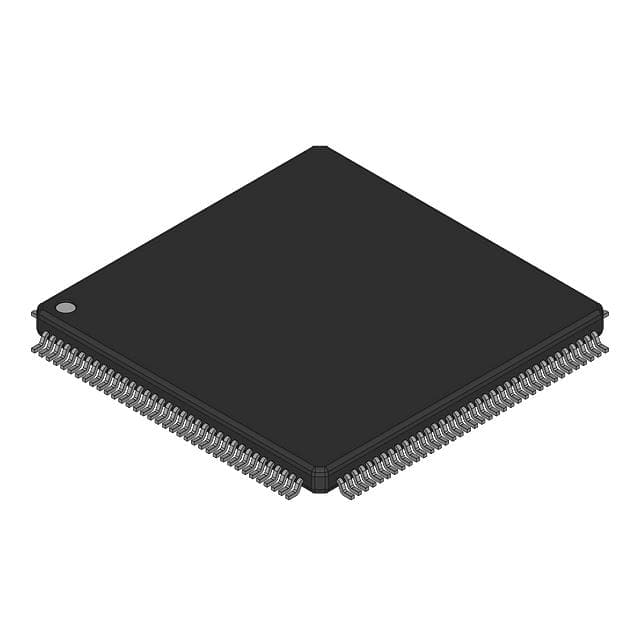
- Part No.:
- TSB42AA4PGER
- Manufacturer:
- Texas Instruments
- Category:
- Controllers
- Package:
- -
- Datasheet:
-
 TSB42AA4PGER.pdf
- Description:
- LINK LAYER CONTROLLER
- Quantity:
- Payment:

- Shipping:

Inventory:12,000
Please send an inquiry. Send us your inquiry, and we will respond immediately.
Product details
Overview
TSB42AA4PGER from Texas Instruments is a IEEE 1394a (FireWire) link-layer controller IC designed for high-speed digital video/audio interconnect in consumer electronics. It supports 100/200/400 Mbps data rates, implements full isochronous and asynchronous protocol handling, features dual High-Speed Data Interfaces (HSDI A/B), and integrates PID filtering, time stamping, and MPEG2/DV/DirecTV data path acceleration. It is used in digital STBs, DVD recorders, and DTVs for real-time AV transport.
For engineers reviewing the TSB42AA4PGER datasheet, TSB42AA4PGER pinout, TSB42AA4PGER application, or TSB42AA4PGER equivalent, key selection considerations include FireWire link-layer compliance (IEEE 1394a-2000), dual HSDI interface timing modes (Sync A/B/C), 1394 PHY-link compatibility, microcontroller interface (68000-style or 8/16-bit parallel), and DV/MPEG2 packet formatting support.
Technical Context
The TSB42AA4PGER implements a complete IEEE 1394a link-layer controller with integrated DMA-capable data buffers, configurable PID filtering, and hardware-accelerated isochronous packet insertion and timestamping. It handles both asynchronous transactions (quadlet/block reads/writes) and isochronous streams (MPEG2, DV, DirecTV) with dedicated header processing logic.
Its dual HSDI interfaces support byte-wide or serial data buses with three synchronization modes per interface, enabling flexible connection to video processors, DSPs, or ASICs. The microcontroller interface supports 8-bit, 16-bit, and 32-bit bus widths with multistrobe mode for high-throughput host access.
Key Specifications
| Parameter | Value and Actual Design Meaning |
|---|---|
| Data Rate Support | IEEE 1394a-compliant 100/200/400 Mbps - enables interoperability with legacy and high-speed FireWire peripherals. |
| HSDI Interfaces | Dual independent High-Speed Data Interfaces (HSDI A & B) - allows simultaneous connection to two video subsystems (e.g., encoder + decoder). |
| Bus Width Options | 8-bit, 16-bit, or 32-bit microcontroller interface - supports legacy 68000-style and modern parallel host processors without glue logic. |
| Video Format Support | Native MPEG2 DVB, DV (IEC 61834), and DirecTV packet formats - eliminates software overhead for AV transport layer framing. |
| Time Stamp Resolution | 1394 cycle-count-based timestamps with aging control - ensures precise synchronization of isochronous streams across FireWire network. |
| Buffer Architecture | Configurable data buffers with overflow/underflow status and flush control - enables deterministic latency management for real-time video TX/RX. |
Pinout & Package
TSB42AA4PGER is housed in a 144-pin Low-Profile Quad Flat Package (LQFP), RoHS-compliant, with 0.5 mm pitch and exposed thermal pad. Package dimensions: 20 mm × 20 mm × 1.4 mm.
| Pin/Terminal | Circuit Role | Design Meaning |
|---|---|---|
| CLKIN | Reference Clock Input | Accepts 24.576 MHz crystal or oscillator input - drives internal PLL for 1394 timing and HSDI synchronization. |
| PHYCLK | PHY Interface Clock Output | Provides 49.152 MHz clock to external 1394 PHY - ensures phase-aligned sampling for reliable physical-layer handshaking. |
| HSDIA[15:0] | HSDI A Data Bus | 16-bit bidirectional parallel interface - connects directly to video encoder or MPEG2 transport stream processor. |
| HSDIB[15:0] | HSDI B Data Bus | 16-bit bidirectional parallel interface - supports independent second video path (e.g., decode engine or graphics overlay unit). |
| MCIF_A[15:0] | Microcontroller Data Bus | 16-bit host interface bus - enables direct register access and buffer management by main system MCU. |
| INT | Interrupt Output | Active-low open-drain interrupt signal - asserts on packet completion, error, or buffer threshold events for low-latency host response. |
Key Features
| Feature | Design Value |
|---|---|
| Dual HSDI with Sync Mode A/B/C | Enables flexible video subsystem interfacing - supports synchronous burst, strobed, or free-running data transfers without CPU intervention. |
| Hardware PID Filtering | Offloads MPEG2 transport stream demultiplexing - reduces host CPU load by filtering up to 32 PID values in real time. |
| DV/MPEG2 Header Insertion & Stripping | Eliminates firmware overhead - performs CIP header generation and removal in hardware for compliant DV and MPEG2 isochronous packets. |
| Time Stamp & Aging Logic | Maintains sub-cycle timestamp accuracy - critical for lip-sync and multi-source AV synchronization in home entertainment systems. |
| Asynchronous Acknowledge Buffer | Stores ACK responses for pending writes - decouples host write operations from 1394 bus arbitration delays. |
Applications
| Digital Set-Top Box (STB) | DVD Recorder with FireWire Input |
|---|---|
Use Scenario: Receives MPEG2 transport stream from satellite tuner and outputs via FireWire to external DTV or recording device. IC Role / Device Role / Timing Role: Link-layer controller managing isochronous transmit of encrypted MPEG2 TS with PID filtering and CIP header insertion. Use Value: Enables certified 1394a-compliant content protection path (e.g., DTCP) without host CPU involvement in packet framing. |
Use Scenario: Captures DV video from camcorder over FireWire and records to internal HDD with real-time encoding. IC Role / Device Role / Timing Role: Handles DV isochronous receive, time stamping, and buffering before passing to MPEG encoder ASIC. Use Value: Guarantees jitter-free DV frame capture at 25/30 fps using hardware timestamping and dedicated RX data path. |
| DTV with Picture-in-Picture (PiP) | Home Theater PC (HTPC) FireWire Bridge |
Use Scenario: Simultaneously displays live broadcast (main screen) and FireWire-sourced video (PiP window) with synchronized audio. IC Role / Device Role / Timing Role: Dual-HSDI operation: HSDI A receives broadcast MPEG2; HSDI B ingests FireWire DV stream for PiP rendering. Use Value: Eliminates frame drops during concurrent decode paths by isolating bandwidth and timing domains per HSDI channel. |
Use Scenario: Bridges PC PCIe-based FireWire host controller to legacy consumer AV equipment lacking native FireWire support. IC Role / Device Role / Timing Role: Acts as protocol translator between PC-side asynchronous control and consumer-device isochronous streaming requirements. Use Value: Provides deterministic latency and guaranteed bandwidth for professional-grade AV editing workflows over FireWire. |
Equivalent & Alternatives
The following parts are listed as comparable options for similar IEEE 1394 link-layer controller applications.
| Alternative Part | Technical Difference | Application Difference | Selection Advice |
|---|---|---|---|
| TSB42AA3PGE | Single HSDI interface; no DirecTV format support; reduced PID filter depth (16 vs. 32 entries) | Suitable only for basic MPEG2/DV applications without dual-video-path or satellite TV requirements | Select when cost sensitivity outweighs need for dual HSDI or DirecTV compatibility |
| TSB42AA5PGER | Enhanced errata coverage; added JTAG boundary scan; improved MCIF_ACK timing robustness | Better suited for new designs requiring production testability and higher reliability in volume manufacturing | Prefer for new designs where long-term supply stability and test infrastructure integration are priorities |
Compared with TSB42AA4PGER, the TSB42AA3PGE sacrifices dual-HSDI flexibility and satellite TV support for lower BOM cost, while the TSB42AA5PGER adds testability and timing margin improvements-making it more suitable for high-volume, factory-tested consumer devices.
Availability
TSB42AA4PGER is available at Aetrix Electronics and suitable for digital television, set-top box, and professional AV recording applications requiring stable component supply, long-lifecycle support, and IEEE 1394a protocol compliance.
Supply support for TSB42AA4PGER includes scheduled delivery planning, volume procurement assistance, BOM continuity management, traceable sourcing, and lifecycle availability coordination for OEM customers, industrial embedded developers, connected-device designers, and electronics production programs.
Manufacturer
Texas Instruments is a global semiconductor company specializing in analog, embedded processing, and connectivity technologies, with leadership in industrial, automotive, and consumer electronics markets.
The TSB42AA4PGER belongs to TI's ceLynx family of IEEE 1394 link-layer controllers, engineered specifically for high-fidelity, low-latency digital video transport in home entertainment systems requiring content protection and multi-format support.
FAQ
What is the primary function of the TSB42AA4PGER in a FireWire-based system?
The TSB42AA4PGER serves as a full IEEE 1394a link-layer controller, handling all protocol-level functions including isochronous and asynchronous packet assembly/disassembly, PID filtering, time stamping, and buffer management. Unlike PHY-only chips, the TSB42AA4PGER does not drive the physical cable but interfaces directly to a separate 1394 PHY chip (e.g., TSB12LV23) to form a complete FireWire port. Its role is strictly link-layer processing.
Does the TSB42AA4PGER support IEEE 1394b (800 Mbps or S800)?
No, the TSB42AA4PGER is compliant only with IEEE 1394a-2000 (100/200/400 Mbps). It lacks the physical layer signaling, arbitration enhancements, and packet format extensions required for 1394b operation. Systems requiring S800 must use a different controller such as the TSB82AA2, which is explicitly designed for 1394b backward-compatible operation.
Can the TSB42AA4PGER operate without an external 1394 PHY device?
No, the TSB42AA4PGER requires an external PHY chip (e.g., TI's TSB12LV23 or equivalent) to handle differential signaling, cable detection, and physical-layer arbitration. The TSB42AA4PGER provides only the link-layer logic and communicates with the PHY via the standardized PHY-Link interface (PHYCLK, PHYDATA[3:0], PHYCTL). Omitting the PHY renders the TSB42AA4PGER nonfunctional on a FireWire bus.
What video formats does the TSB42AA4PGER natively process in hardware?
The TSB42AA4PGER provides dedicated hardware acceleration for three video transport formats: MPEG2 DVB (including transport stream PID filtering and CIP header insertion), DV (IEC 61834 compliant, with DIF block handling and time stamping), and DirecTV (proprietary 130-byte packet format with bandwidth-class support). These functions are implemented in fixed logic-not firmware-ensuring deterministic latency and zero CPU overhead.
Is the TSB42AA4PGER pin-compatible with other ceLynx family members like TSB42AA3 or TSB42AA5?
No, the TSB42AA4PGER is not pin-compatible with TSB42AA3PGE or TSB42AA5PGER. While all share the same 144-pin LQFP package, pin assignments differ significantly-especially for HSDI B signals, interrupt routing, and configuration straps. Migration requires PCB layout revision; refer to Section 2.5 (Pin Assignments) in the SLLS341F datasheet for exact mappings per variant.
TSB42AA4PGER Specifications
- Product attributes
- Attribute value
- Manufacturer:
- Texas Instruments
- Package/Case:
- -
- Programmable:
- Not Verified
- Protocol:
- -
- Function:
- -
- Interface:
- -
- Standards:
- -
- Voltage - Supply:
- -
- Current - Supply:
- -
- Operating Temperature:
- -
- Supplier Device Package:
- -
- Grade:
- -
- Qualification:
- -
TSB42AA4PGER FAQ
1.How can I place an order for TSB42AA4PGER through Aetrix?
Please submit a Request for Quotation (RFQ) for TSB42AA4PGER on Aetrix. Our sales agent will provide a competitive quotation and guide you through the order confirmation once you accept the terms.
2.Are the price and stock information for TSB42AA4PGER reliable?
The price and inventory of TSB42AA4PGER are updated periodically and may fluctuate due to market conditions. Stock and pricing data are typically refreshed every 24 hours. Quotation validity for TSB42AA4PGER is usually 5 days.
3.What payment methods are accepted for TSB42AA4PGER?
We accept Wire Transfer, PayPal, Credit Card, Western Union, MoneyGram, and Escrow for TSB42AA4PGER transactions.
Note: Certain payment methods may incur a processing fee.
4.How is shipping managed for TSB42AA4PGER?
TSB42AA4PGER orders can be shipped via leading logistics carriers, including DHL, UPS, FedEx, TNT, or Registered Mail.
Once your TSB42AA4PGER order is processed, you will receive an email with the shipment details and tracking number.
Note: Tracking information may take up to 24 hours to appear. Express delivery typically takes 3–5 business days.
5.How can I obtain technical support or documentation for TSB42AA4PGER?
For technical support, including TSB42AA4PGER datasheets, pinout diagrams, or application guidance, please contact our engineering support team. They can provide detailed documentation and assistance for your TSB42AA4PGER requirements.
6.How does Aetrix verify that TSB42AA4PGER is sourced from the original manufacturer or authorized distributors?
All TSB42AA4PGER products on Aetrix are procured from qualified distributors and authorized channels. Our dedicated quality assurance team conducts strict verification, including traceability checks and, if necessary, third-party testing. This ensures that TSB42AA4PGER meets industry standards.
7.What is the process for return or replacement of TSB42AA4PGER?
All TSB42AA4PGER units undergo pre-shipment inspection (PSI). If there is an issue with TSB42AA4PGER, returns or replacements are accepted under the following conditions:
1.Quantity discrepancies, incorrect items, or visible external defects (such as breakage or corrosion), acknowledged by Aetrix.
2.The issue is reported within 90 days of delivery.
3.The TSB42AA4PGER part is unused and in its original packaging.
Return procedure for TSB42AA4PGER:
1.Submit a request within 90 days.
2.Obtain a Return Material Authorization (RMA) from Aetrix.
TSB42AA4PGER Tags
-
PTN5150AHXMP
NXP Semiconductors
-
USB3740B-AI9-TR
Microchip Technology
-
USB3740B-AI2-TR
Microchip Technology
-
USB3300-EZK-TR
Microchip Technology
-
USB3300-EZK
Microchip Technology
-
FUSB340TMX
onsemi
-
FUSB302BMPX
onsemi
-
DP83826IRHBR
Texas Instruments
-
MCP2518FDT-E/QBB
Microchip Technology
-
FUSB302MPX
onsemi
-
MCP2518FDT-E/SL
Microchip Technology
-
FT260Q-R
FTDI, Future Technology Devices International Ltd
Tech Hub

A practical engineering guide to 3.3V and 5V logic compatibility, input thresholds, resistor dividers, translator ICs, MOSFET level shifting, I2C pull-ups, timing limits and power-sequencing risks.

The 74HC595 uses push-pull logic outputs, while the TPIC6B595 uses 50 V open-drain DMOS sinks for higher-power loads. This guide compares timing, current limits, 3.3 V interfacing, load wiring, thermal…

The 74HC595 converts serial data into eight stable parallel outputs. This guide covers pin functions, shift and storage timing, OE and MR behavior, drive-current limits, cascading, voltage compatibilit…

A technical comparison of level-sensitive latches and edge-triggered flip-flops, covering timing windows, setup and hold limits, master–slave operation, time borrowing, race-through, HDL inference and…

A D latch stores one bit while Enable controls when data can pass. This reference covers gate-level operation, truth tables, transparency, setup and hold timing, LE versus OE, common ICs and practical …

An SR latch stores one bit through cross-coupled feedback. This engineering reference covers NOR and NAND implementations, truth tables, forbidden-state recovery, gated operation, switch debouncing, fa…

Latch circuits retain one bit through feedback. This technical reference covers SR and D latches, truth tables, transparency, timing limits, latch-versus-flip-flop behavior, applications and common log…

An engineering guide to LED driver operation, constant-current and constant-voltage outputs, linear and switching topologies, dimming, IC selection, calculations, replacement compatibility, and fault c…

Operational amplifier guide covering op amp basics, feedback, ideal vs real op amps, common configurations, buffer circuits, offset, bias current, gain-bandwidth, slew rate, rail-to-rail limits and sel…

Jumper cables guide covering safe connection order, red and black clamp placement, final ground connection, cable gauge, length, clamp quality, copper vs CCA cables, jump starter comparison and battery…


