
 My Inquiry
 My Account


Texas Instruments TSC2003IPWRQ1
- Part No.:
- TSC2003IPWRQ1
- Manufacturer:
- Texas Instruments
- Category:
- Touch Screen Controllers
- Package:
- 16-TSSOP (0.173", 4.40mm Width)
- Datasheet:
-
 TSC2003IPWRQ1.pdf
- Description:
- IC SCREEN CNTRL 12BIT 16TSSOP
- Quantity:
- Payment:

- Shipping:

Inventory:1,926
Please send an inquiry. Send us your inquiry, and we will respond immediately.
Product details
Overview
TSC2003IPWRQ1 from Texas Instruments is an automotive-qualified 4-wire resistive touch screen controller with integrated 12-bit SAR ADC, on-chip 2.5-V reference, dual battery monitor (0.5 V to 6 V), dual auxiliary analog inputs, and on-die temperature sensing. It supports I²C interface in standard/fast/high-speed modes and operates from 2.5 V to 5.25 V supply, targeting touch-enabled human-machine interfaces in automotive infotainment and industrial HMIs.
For engineers reviewing the TSC2003IPWRQ1 datasheet, TSC2003IPWRQ1 pinout, TSC2003IPWRQ1 application, or TSC2003IPWRQ1 equivalent, key selection considerations include its ratiometric differential touch measurement architecture, internal reference drift (±25 ppm/°C), PENIRQ open-drain interrupt timing, 50-ksps throughput, and automotive-grade –40°C to +85°C operation with AEC-Q100 qualification.
Technical Context
The TSC2003IPWRQ1 implements a capacitive redistribution SAR ADC with built-in sample-and-hold, using a differential reference architecture for touch position measurement to reject switch-on-resistance error. Its multiplexer enables simultaneous routing of X+/X–/Y+/Y–, TEMP0/TEMP1, VBAT1/VBAT2, and IN1/IN2 to the ADC core.
Internal clock generation and configurable power-down control (PD0/PD1 bits) support auto-power-down during idle periods. The device uses ratiometric conversion for touch coordinates while supporting single-ended reference mode (via internal or external VREF) for battery, temperature, and auxiliary measurements - with separate gain/offset calibration paths per mode.
Key Specifications
| Parameter | Value and Actual Design Meaning |
|---|---|
| Resolution | 12-bit SAR ADC with no missing codes; enables 4096-step position resolution for precise touch coordinate digitization. |
| Supply Voltage Range | 2.5 V to 5.25 V; supports direct connection to automotive 3.3-V or 5-V rails without LDO. |
| Reference Voltage | Internal 2.50 V ±0.05 V (±25 ppm/°C drift); powers auxiliary, battery, and temperature channels without external reference. |
| I²C Interface Speed | Supports standard (100 kHz), fast (400 kHz), and high-speed (3.4 MHz) modes; reduces host polling latency in responsive UIs. |
| Throughput Rate | 50 ksps maximum; allows sub-20-µs per conversion for rapid multi-point sampling or pressure calculation. |
| Touch Channel On-Resistance | X+/Y+ = 5.5 Ω, X–/Y– = 7.3 Ω at 25°C; minimizes voltage drop and gain error in ratiometric touch measurement. |
| Battery Input Range | 0.5 V to 6.0 V with 10-kΩ input impedance; enables direct monitoring of Li-ion, lead-acid, or backup batteries without scaling resistors. |
Pinout & Package
TSSOP-16 package (PW), 5.0 mm × 4.4 mm × 1.2 mm body, 0.65 mm pitch, exposed thermal pad optional.
| Pin/Terminal | Circuit Role | Design Meaning |
|---|---|---|
| IN1, IN2 | Auxiliary analog inputs | High-impedance (1 GΩ) single-ended inputs for sensor or signal monitoring; compatible with 0.5–6 V range. |
| VDD | Main power supply | Accepts 2.5–5.25 V; powers internal logic, ADC, and switch drivers; requires local 1-µF bypass. |
| X+, X–, Y+, Y– | Touch electrode connections | Low-RON switches route touch panel voltages to ADC; enable 4-wire resistive panel scanning. |
| GND | Analog/digital ground | Common return for all analog and digital circuits; must be star-connected to minimize noise coupling. |
| VBAT1, VBAT2 | Battery monitor inputs | Dedicated 0.5–6 V inputs with 10-kΩ impedance; support independent voltage tracking of primary/secondary cells. |
| VREF | Reference voltage I/O | Accepts external 2–VDD reference or outputs internal 2.5 V; unbuffered, <6 µA load current. |
| PENIRQ | Open-drain interrupt output | Asserts low when touch detected; requires 30–100 kΩ pullup; synchronizes host CPU wake-up. |
| SCL, SDA | I²C serial interface | Compliant with standard/fast/high-speed modes; SDA bidirectional, SCL input only; 10 pF input capacitance. |
| A0, A1 | I²C address select | Set slave address LSBs; support up to four TSC2003IPWRQ1 devices on same bus without conflict. |
| TEMP0, TEMP1 | Temperature diode terminals | Enable two-point junction-based temperature measurement; TEMP0 = 610 mV @ 25°C, TC = –2.1 mV/°C. |
Key Features
| Feature | Design Value |
|---|---|
| Ratiometric differential touch measurement | Eliminates switch RON error by using Y+/Y– as ADC reference; ensures accurate position regardless of panel resistance variation. |
| Integrated 2.5-V reference with power control | Reduces BOM count and layout area; PD0/PD1 bits disable reference during idle to cut quiescent current to 3 µA. |
| Dual battery monitoring with wide range | Direct 0.5–6 V measurement avoids external dividers; supports fuel gauging and health monitoring in automotive battery systems. |
| On-die temperature sensing with dual modes | Mode 1 (single-point, 0.3°C/LSB) and Mode 2 (two-point, 1.6°C/LSB) provide trade-off between calibration effort and absolute accuracy. |
| Auto power-down and interrupt-driven operation | PENIRQ triggers host only on touch event; eliminates continuous polling and reduces system-level power consumption. |
Applications
| Automotive Infotainment Touch Panels | Industrial HMI Touch Interfaces |
|---|---|
Use Scenario: Resistive touch overlay on LCD display in vehicle head unit or center console. IC Role / Device Role / Timing Role: Touch screen controller digitizing X/Y coordinates and pressure via 4-wire panel; generates PENIRQ to wake MCU on touch. Use Value: Automotive qualification (–40°C to +85°C, AEC-Q100) ensures reliability under thermal cycling and vibration; ratiometric measurement rejects panel aging effects. |
Use Scenario: Operator panel on factory automation equipment with glove-compatible touch input. IC Role / Device Role / Timing Role: Primary touch acquisition IC managing panel scan, battery-backed real-time clock supervision, and ambient temperature logging. Use Value: Dual battery monitor inputs track main and backup power sources; on-die temperature sensing enables thermal derating without external sensors. |
| Portable Medical Device Touchscreens | Point-of-Sale (POS) Terminals |
Use Scenario: Handheld diagnostic tool with sealed resistive touchscreen for sterile environments. IC Role / Device Role / Timing Role: Touch controller with integrated temperature compensation and low-noise ADC for reliable gesture detection. Use Value: Internal 2.5-V reference eliminates external precision reference; 12-bit resolution supports fine-grained UI navigation even with thick gloves. |
Use Scenario: Retail kiosk with resistive touch overlay subject to frequent stylus use and environmental dust. IC Role / Device Role / Timing Role: Touch acquisition engine providing coordinate data and touch-pressure estimation over I²C to ARM host. Use Value: High-speed I²C (3.4 MHz) enables <10-ms response time; PENIRQ interrupt minimizes host CPU utilization during idle periods. |
Equivalent & Alternatives
The following parts are listed as comparable options for similar touch screen controller applications.
| Alternative Part | Technical Difference | Application Difference | Selection Advice |
|---|---|---|---|
| TSC2004IPWRQ1 | Same architecture but adds SPI interface alongside I²C; higher quiescent current (1.2 mA vs 750 µA) in active mode. | Preferred where host lacks I²C or requires deterministic SPI timing; not drop-in due to pinout change (SPI signals replace A0/A1). | Select when SPI interface is mandatory and board layout allows rework; verify PENIRQ timing compatibility. |
| ADS7843E | Non-automotive 12-bit touch controller; no internal reference, no battery/temperature functions; requires external 2.5-V reference and I²C-to-serial bridge. | Lower-cost solution for consumer-grade portable devices without automotive requirements or auxiliary monitoring needs. | Choose only for cost-sensitive non-automotive designs; adds BOM and layout complexity for reference and interface translation. |
Compared with TSC2003IPWRQ1, the TSC2004IPWRQ1 offers interface flexibility at the cost of higher power and different pin assignment, while the ADS7843E reduces integration level and automotive compliance - making TSC2003IPWRQ1 optimal for space-constrained, safety-aware automotive HMI designs requiring consolidated functionality.
Availability
TSC2003IPWRQ1 is available at Aetrix Electronics and suitable for automotive infotainment systems, industrial HMIs, and medical touch interfaces requiring stable component supply across extended temperature ranges and long production lifecycles.
Supply support for TSC2003IPWRQ1 includes scheduled delivery planning, volume procurement assistance, BOM continuity management, traceable sourcing, and lifecycle availability coordination for OEM customers, industrial embedded developers, connected-device designers, and electronics production programs.
Manufacturer
Texas Instruments is a global semiconductor leader specializing in analog, embedded processing, and connectivity technologies with decades of automotive-grade product development experience.
The TSC2003-Q1 belongs to TI's automotive-qualified touch controller product line, designed specifically for robust, low-power, integrated touch acquisition in harsh-temperature environments such as vehicle cabins and industrial control panels.
FAQ
What is the operating temperature range for the TSC2003IPWRQ1?
The TSC2003IPWRQ1 is specified for –40°C to +85°C operating free-air temperature, meeting AEC-Q100 Grade 3 requirements for automotive applications. Its internal reference drift is characterized at ±25 ppm/°C, and all electrical parameters-including ADC linearity, on-resistance, and I²C timing-are guaranteed across this full range. This makes the TSC2003IPWRQ1 suitable for under-dash infotainment units and other thermally demanding automotive locations.
Does the TSC2003IPWRQ1 require an external reference voltage?
No, the TSC2003IPWRQ1 includes an internal 2.5-V reference with ±0.05-V tolerance and ±25 ppm/°C drift, sufficient for battery monitoring, temperature sensing, and auxiliary input measurements. For touch coordinate acquisition, the device uses ratiometric differential mode (Y+/Y– as reference), eliminating dependence on VREF entirely. External reference is optional only for enhanced single-ended accuracy in non-touch channels.
How does the TSC2003IPWRQ1 handle touch-pressure measurement?
The TSC2003IPWRQ1 calculates touch pressure by measuring the Z1/Z2 voltages across the resistive panel using the X+/X– and Y+/Y– lines in sequence. It leverages the known relationship between panel resistance and applied force, derived from the ratio of Z1 to Z2 measurements. No dedicated pressure-sensing hardware is required-the same ADC and switch matrix used for position sensing perform pressure estimation with no additional components.
Can the TSC2003IPWRQ1 monitor two independent battery voltages simultaneously?
Yes, the TSC2003IPWRQ1 provides two dedicated analog inputs-VBAT1 and VBAT2-each supporting 0.5 V to 6.0 V measurement with 10-kΩ input impedance. These inputs operate independently and can be sampled sequentially via the internal MUX. This capability enables concurrent monitoring of main and backup batteries in automotive telematics or portable medical devices without external multiplexing circuitry.
What is the function of the PENIRQ pin on the TSC2003IPWRQ1?
The PENIRQ pin on the TSC2003IPWRQ1 is an open-drain interrupt output that asserts low when touch contact is detected on the resistive panel. It requires an external 30–100 kΩ pullup resistor and synchronizes host processor wake-up or polling initiation. The interrupt remains asserted until the host reads the status register or performs a conversion, enabling low-power, event-driven system operation critical for battery-powered automotive HMIs.
TSC2003IPWRQ1 Specifications
- Product attributes
- Attribute value
- Manufacturer:
- Texas Instruments
- Package/Case:
- 16-TSSOP (0.173", 4.40mm Width)
- Touchscreen:
- 4 Wire Resistive
- Resolution (Bits):
- 12 b
- Interface:
- I2C
- Voltage Reference:
- Internal
- Voltage - Supply:
- 2.5V ~ 5.25V
- Current - Supply:
- -
- Operating Temperature:
- -40°C ~ 85°C
- Mounting Type:
- Surface Mount
- Grade:
- Automotive
- Qualification:
- AEC-Q100
- Supplier Device Package:
- 16-TSSOP
TSC2003IPWRQ1 FAQ
1.How can I place an order for TSC2003IPWRQ1 through Aetrix?
Please submit a Request for Quotation (RFQ) for TSC2003IPWRQ1 on Aetrix. Our sales agent will provide a competitive quotation and guide you through the order confirmation once you accept the terms.
2.Are the price and stock information for TSC2003IPWRQ1 reliable?
The price and inventory of TSC2003IPWRQ1 are updated periodically and may fluctuate due to market conditions. Stock and pricing data are typically refreshed every 24 hours. Quotation validity for TSC2003IPWRQ1 is usually 5 days.
3.What payment methods are accepted for TSC2003IPWRQ1?
We accept Wire Transfer, PayPal, Credit Card, Western Union, MoneyGram, and Escrow for TSC2003IPWRQ1 transactions.
Note: Certain payment methods may incur a processing fee.
4.How is shipping managed for TSC2003IPWRQ1?
TSC2003IPWRQ1 orders can be shipped via leading logistics carriers, including DHL, UPS, FedEx, TNT, or Registered Mail.
Once your TSC2003IPWRQ1 order is processed, you will receive an email with the shipment details and tracking number.
Note: Tracking information may take up to 24 hours to appear. Express delivery typically takes 3–5 business days.
5.How can I obtain technical support or documentation for TSC2003IPWRQ1?
For technical support, including TSC2003IPWRQ1 datasheets, pinout diagrams, or application guidance, please contact our engineering support team. They can provide detailed documentation and assistance for your TSC2003IPWRQ1 requirements.
6.How does Aetrix verify that TSC2003IPWRQ1 is sourced from the original manufacturer or authorized distributors?
All TSC2003IPWRQ1 products on Aetrix are procured from qualified distributors and authorized channels. Our dedicated quality assurance team conducts strict verification, including traceability checks and, if necessary, third-party testing. This ensures that TSC2003IPWRQ1 meets industry standards.
7.What is the process for return or replacement of TSC2003IPWRQ1?
All TSC2003IPWRQ1 units undergo pre-shipment inspection (PSI). If there is an issue with TSC2003IPWRQ1, returns or replacements are accepted under the following conditions:
1.Quantity discrepancies, incorrect items, or visible external defects (such as breakage or corrosion), acknowledged by Aetrix.
2.The issue is reported within 90 days of delivery.
3.The TSC2003IPWRQ1 part is unused and in its original packaging.
Return procedure for TSC2003IPWRQ1:
1.Submit a request within 90 days.
2.Obtain a Return Material Authorization (RMA) from Aetrix.
TSC2003IPWRQ1 Tags
-
TSC2046IPWR
Texas Instruments
-
TSC2007IPWR
Texas Instruments
-
TSC2046EIPWR
Texas Instruments
-
AR1021-I/SS
Microchip Technology
-
AR1020-I/SS
Microchip Technology
-
AR1100-I/MQ
Microchip Technology
-
AR1021T-I/ML
Microchip Technology
-
AR1100T-I/SS
Microchip Technology
-
TSC2003IPWR
Texas Instruments
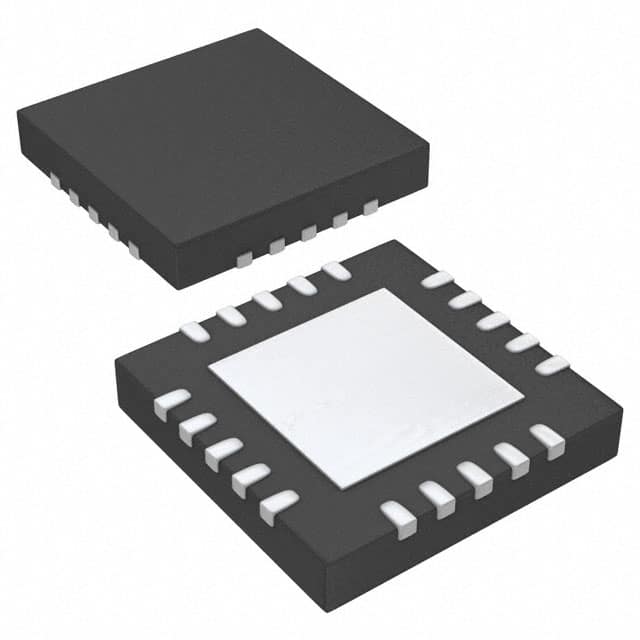
-
TSC2004IRTJR
Texas Instruments
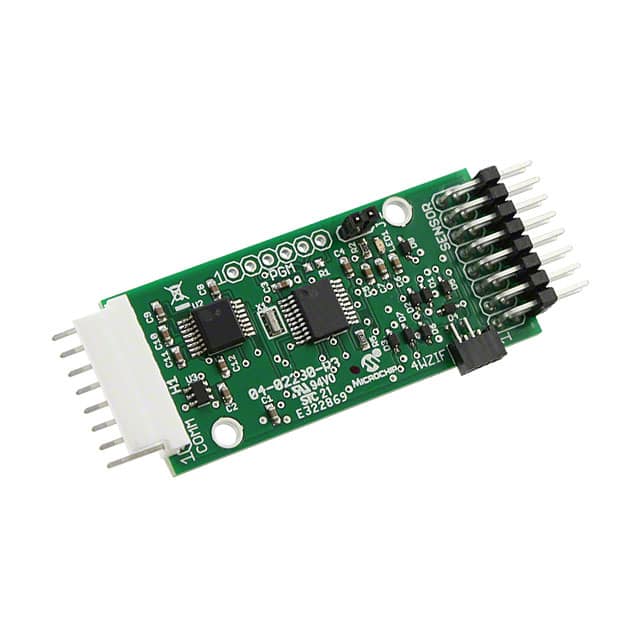
-
AR1100BRD
Microchip Technology
.jpg)
-
TSC2046IRGVR
Texas Instruments
Tech Hub

A practical engineering guide to 3.3V and 5V logic compatibility, input thresholds, resistor dividers, translator ICs, MOSFET level shifting, I2C pull-ups, timing limits and power-sequencing risks.

The 74HC595 uses push-pull logic outputs, while the TPIC6B595 uses 50 V open-drain DMOS sinks for higher-power loads. This guide compares timing, current limits, 3.3 V interfacing, load wiring, thermal…

The 74HC595 converts serial data into eight stable parallel outputs. This guide covers pin functions, shift and storage timing, OE and MR behavior, drive-current limits, cascading, voltage compatibilit…

A technical comparison of level-sensitive latches and edge-triggered flip-flops, covering timing windows, setup and hold limits, master–slave operation, time borrowing, race-through, HDL inference and…

A D latch stores one bit while Enable controls when data can pass. This reference covers gate-level operation, truth tables, transparency, setup and hold timing, LE versus OE, common ICs and practical …

An SR latch stores one bit through cross-coupled feedback. This engineering reference covers NOR and NAND implementations, truth tables, forbidden-state recovery, gated operation, switch debouncing, fa…

Latch circuits retain one bit through feedback. This technical reference covers SR and D latches, truth tables, transparency, timing limits, latch-versus-flip-flop behavior, applications and common log…

An engineering guide to LED driver operation, constant-current and constant-voltage outputs, linear and switching topologies, dimming, IC selection, calculations, replacement compatibility, and fault c…

Operational amplifier guide covering op amp basics, feedback, ideal vs real op amps, common configurations, buffer circuits, offset, bias current, gain-bandwidth, slew rate, rail-to-rail limits and sel…

Jumper cables guide covering safe connection order, red and black clamp placement, final ground connection, cable gauge, length, clamp quality, copper vs CCA cables, jump starter comparison and battery…


