
 My Inquiry
 My Account


STMicroelectronics TSH511CFT
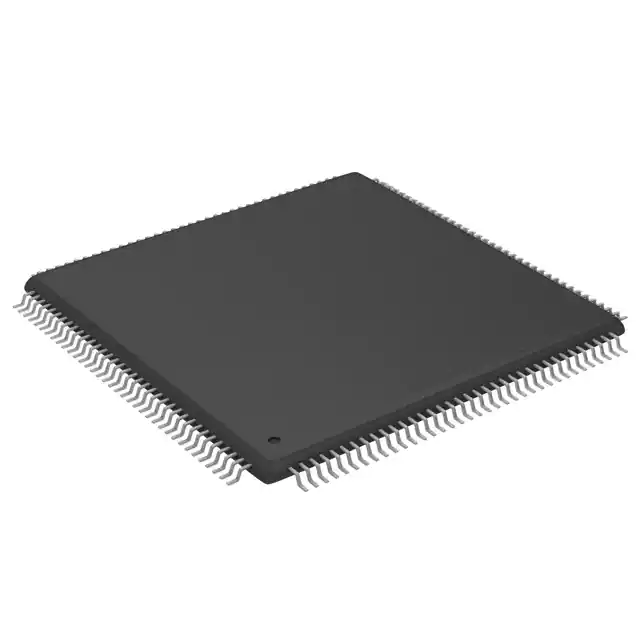
- Part No.:
- TSH511CFT
- Manufacturer:
- STMicroelectronics
- Category:
- RF Receivers
- Package:
- 44-LQFP
- Datasheet:
-
 TSH511CFT.pdf
- Description:
- RF RX FM 2.3MHZ/2.8MHZ 44TQFP
- Quantity:
- Payment:

- Shipping:

Inventory:3,616
Please send an inquiry. Send us your inquiry, and we will respond immediately.
Product details
Overview
TSH511CFT from STMicroelectronics is a dual FM analog infrared receiver IC designed for high-fidelity stereo audio demodulation in 0.4–11 MHz carrier systems. It integrates two independent RF signal chains - each with LNA (22 dB gain), intermediate amplifier, limiter, quadrature FM demodulator, and audio buffer - delivering 20 mW per channel into 16 Ω loads with 4 µV sensitivity at 12 dB SINAD. It enables direct photodiode coupling and supports mono/stereo headset and multimedia IR audio applications.
For engineers reviewing the TSH511CFT datasheet, TSH511CFT pinout, TSH511CFT application, or TSH511CFT equivalent, key selection criteria include dual-channel FM demodulation capability, integrated 20 mW headphone drivers, standby-controlled current reduction (down to 9.5 mA), squelch-controlled mute ramping, and 44-pin TQFP package compatibility with IR stereo receiver PCB layouts.
Technical Context
The TSH511CFT implements two fully independent FM receiver paths sharing a common LNA input stage, with dedicated AMP, limiter, and quadrature demodulator sections per channel. Each path provides 50–60 dB limiter gain and delivers 700–900 mVRMS demodulated audio output into 4 kΩ load.
Its squelch circuit uses an internal noise amplifier and comparator (9 mVRMS threshold, 1 mVRMS hysteresis) to control mute ramping via external capacitor on pin 25, while standby pins SBY1/31 and SBY2/32 allow selective shutdown of RX1, RX2, or both - enabling mono operation with 30% lower supply current.
Key Specifications
| Parameter | Value and Actual Design Meaning |
|---|---|
| Supply voltage | 2.3 V to 5.5 V - supports single-cell Li-ion or dual-AA battery operation without regulation. |
| Carrier frequency range | 0.4 MHz to 11 MHz - covers standard IR stereo carriers (2.3/2.8 MHz) and power-line intercom bands. |
| Audio output power | 20 mW per channel into 16 Ω - drives stereo headphones directly without external amplification. |
| Sensitivity | 4 µV RMS @ 12 dB SINAD - enables reliable reception under low-light IR conditions with minimal preamp noise. |
| LNA voltage gain | 22 dB typical - sufficient to interface directly with photodiodes, eliminating need for external preamplifier. |
| THD+N (16 Ω) | 0.35% typical at 20 mW - meets hi-fi audio fidelity requirements for consumer IR headsets. |
| Standby current reduction | Down to 9.5 mA (RX1 active only) - extends battery life in mono-mode portable applications. |
Pinout & Package
Package: TQFP-44 (10 × 10 mm, 0.8 mm pitch), thermally enhanced with exposed thermal pad (pin 27 GND).
| Pin | Circuit Role | Design Meaning |
|---|---|---|
| 1, 7, 13, 21, 27, 33, 35, 43 | GND | Eight ground connections ensure low-impedance return paths for analog and digital sections, critical for RF stability and THD performance. |
| 3, 5, 9, 19, 29, 37 | VCC | Six supply pins distribute current and reduce IR drop across die; decoupling required at each VCC pin per layout guidelines. |
| 6 | LNA-IN | Common RF input for both receivers; connects directly to photodiode anode in IR applications. |
| 31, 32 | SBY1, SBY2 | Active-low standby controls: SBY1 = 'High' disables RX1; SBY2 = 'High' disables RX2 - enables flexible mono/stereo power management. |
| 25 | MUTE-OUT | Open-drain ramp generator output controlling audio mute timing via external capacitor - sets fade-in/fade-out duration. |
| 26, 30 | BUF-OUT1, BUF-OUT2 | Differential-capable audio outputs driving 16 Ω loads directly; 51 dB crosstalk isolation prevents stereo channel bleed. |
Key Features
| Feature | Design Value |
|---|---|
| Dual independent FM demodulators | Enables simultaneous stereo IR reception at 2.3 MHz and 2.8 MHz without external mixing or filtering. |
| Integrated 20 mW audio buffers | Eliminates need for discrete headphone amplifiers, reducing BOM count and PCB area in compact headset designs. |
| Programmable squelch with ramp control | External capacitor on MUTE-OUT (pin 25) sets precise mute timing - avoids audio click/pop during signal loss. |
| Direct photodiode interface | 22 dB LNA gain + 3.4 nV/√Hz input noise allows sub-µV signal detection without external preamp stage. |
| Flexible standby configuration | Independent SBY1/SBY2 pins support three operating modes: stereo (both RX active), left-only, or right-only - optimizing power vs. functionality. |
Applications
| Infrared Stereo Headphones | Multimedia IR Headset |
|---|---|
|
Use Scenario: Wireless stereo audio transmission from TV or set-top box to lightweight headphones using 2.3/2.8 MHz IR carriers. IC Role / Device Role / Timing Role: Dual FM demodulator and headphone driver - recovers left/right audio channels and powers 16 Ω transducers directly. Use Value: 20 mW/channel output eliminates external amplifiers; 4 µV sensitivity ensures robust link margin even with misaligned emitters. |
Use Scenario: Bidirectional PC-to-headset audio: stereo playback (2.3/2.8 MHz) + mono voice capture (1.7 MHz) over IR. IC Role / Device Role / Timing Role: Dual-receiver front-end with configurable standby - RX1 handles stereo playback; RX2 processes microphone uplink. Use Value: Standby pin control reduces total current to 9.5 mA during mono-only operation, extending USB-powered headset battery life. |
| Stereo Sub-Carrier Demodulator | Power-Line Carrier Intercom |
|
Use Scenario: Extracting stereo audio from composite video signals or broadcast sub-carriers in professional AV equipment. IC Role / Device Role / Timing Role: High-dynamic-range FM demodulator with external filter access - isolates 2.3/2.8 MHz sidebands from baseband video. Use Value: 11 MHz LNA bandwidth and 20 MHz AMP bandwidth support wide IF passbands; 54 dB limiter gain suppresses amplitude noise. |
Use Scenario: Two-way voice communication over AC power lines using 50–500 kHz carrier modulation in building intercom systems. IC Role / Device Role / Timing Role: Low-noise FM receiver front-end - digitized after demodulation for VoIP gateway integration. Use Value: 0.4–11 MHz carrier range covers standard PLC bands; 22 dB LNA gain compensates for line attenuation without external gain stages. |
Equivalent & Alternatives
The following parts are listed as comparable options for similar dual FM receiver applications.
| Alternative Part | Technical Difference | Application Difference | Selection Advice |
|---|---|---|---|
| TS4962IST | Single-channel 100 mW Class D amplifier with no RF front-end - requires external demodulator and LNA. | Only suitable for post-demod audio amplification, not full IR receiver function. | Select only if demodulation is handled upstream; cannot replace TSH511CFT's integrated RF-to-audio chain. |
| MAX9867ETJ+ | Low-power stereo codec with I²S interface and 1.2 V IO - lacks FM demodulator, LNA, or IR carrier support. | Designed for digital audio systems; no analog carrier demodulation capability. | Applicable only in digitally interfaced designs where IR demodulation occurs in FPGA or MCU. |
Compared with TS4962IST and MAX9867ETJ+, the TSH511CFT uniquely integrates complete dual FM receiver signal chains - including LNA, limiter, quadrature demodulator, and 20 mW headphone drivers - making it irreplaceable in analog IR stereo receiver applications requiring minimal external components and direct photodiode interfacing.
Availability
TSH511CFT is available at Aetrix Electronics and suitable for infrared stereo headsets, multimedia IR audio systems, and power-line carrier intercoms requiring stable component supply across extended temperature ranges (−40°C to +85°C) and long-lifecycle production.
Supply support for TSH511CFT includes scheduled delivery planning, volume procurement assistance, BOM continuity management, traceable sourcing, and lifecycle availability coordination for OEM customers, industrial embedded developers, connected-device designers, and electronics production programs.
Manufacturer
STMicroelectronics is a global semiconductor leader headquartered in Geneva, Switzerland, specializing in analog, mixed-signal, and power management ICs for industrial, automotive, and consumer markets.
The TSH511CFT belongs to ST's infrared audio receiver product line, engineered specifically for high-sensitivity, low-power stereo IR demodulation in battery-operated headsets and multimedia peripherals.
FAQ
What is the minimum supply voltage for reliable operation of the TSH511CFT?
The TSH511CFT operates reliably down to 2.3 V, as confirmed by electrical characteristics tables and typical application schematics. At this voltage, it maintains 20 mW output into 16 Ω, 4 µV sensitivity, and functional squelch behavior - validated across −40°C to +85°C ambient temperature.
Can the TSH511CFT drive 32 Ω headphones effectively?
Yes - the audio buffers deliver 15–20 mW into 16 Ω and maintain ≤0.8% THD at 32 Ω loads per Figure 9 and Table 4. Output power drops to ~10 mW at 32 Ω, but SNR remains >58 dB and bandwidth exceeds 35 kHz, preserving hi-fi fidelity for higher-impedance earpieces.
How does the squelch function respond to weak carrier signals?
The squelch circuit monitors RF noise amplitude at the limiter output, comparing it against a 9 mVRMS threshold (adjustable via RMUTE resistor). When carrier level falls below threshold, MUTE-OUT (pin 25) ramps low over ~10 ms (with 100 nF capacitor), muting both audio buffers smoothly to prevent pop/click artifacts.
Is the TSH511CFT pin-compatible with any newer STMicroelectronics receivers?
No - the TSH511CFT has no direct pin-compatible successor. ST discontinued the TSH5xx family after 2010, and newer IR receivers (e.g., STP16DP05) use digital I²S output and lack analog FM demodulation. Migration requires redesigning RF front-end, demodulation, and audio buffering stages.
TSH511CFT Specifications
- Product attributes
- Attribute value
- Manufacturer:
- STMicroelectronics
- Series:
- -
- Package/Case:
- 44-LQFP
- Packaging:
- Tape & Reel (TR)
- Product Status:
- Obsolete
- Frequency:
- 2.3MHz ~ 2.8MHz
- Sensitivity:
- -95dBm
- Data Rate (Max):
- -
- Modulation or Protocol:
- FM
- Applications:
- Infrared Headsets, Infrared Hi-Fi Stereo Transmitters
- Current - Receiving:
- 15mA
- Data Interface:
- PCB, Surface Mount
- Memory Size:
- -
- Antenna Connector:
- PCB, Surface Mount
- Features:
- -
- Voltage - Supply:
- 2.3V ~ 5.5V
- Operating Temperature:
- -40°C ~ 85°C
- Grade:
- -
- Qualification:
- -
- Mounting Type:
- Surface Mount
- Supplier Device Package:
- 44-TQFP (10x10)
TSH511CFT FAQ
1.How can I place an order for TSH511CFT through Aetrix?
Please submit a Request for Quotation (RFQ) for TSH511CFT on Aetrix. Our sales agent will provide a competitive quotation and guide you through the order confirmation once you accept the terms.
2.Are the price and stock information for TSH511CFT reliable?
The price and inventory of TSH511CFT are updated periodically and may fluctuate due to market conditions. Stock and pricing data are typically refreshed every 24 hours. Quotation validity for TSH511CFT is usually 5 days.
3.What payment methods are accepted for TSH511CFT?
We accept Wire Transfer, PayPal, Credit Card, Western Union, MoneyGram, and Escrow for TSH511CFT transactions.
Note: Certain payment methods may incur a processing fee.
4.How is shipping managed for TSH511CFT?
TSH511CFT orders can be shipped via leading logistics carriers, including DHL, UPS, FedEx, TNT, or Registered Mail.
Once your TSH511CFT order is processed, you will receive an email with the shipment details and tracking number.
Note: Tracking information may take up to 24 hours to appear. Express delivery typically takes 3–5 business days.
5.How can I obtain technical support or documentation for TSH511CFT?
For technical support, including TSH511CFT datasheets, pinout diagrams, or application guidance, please contact our engineering support team. They can provide detailed documentation and assistance for your TSH511CFT requirements.
6.How does Aetrix verify that TSH511CFT is sourced from the original manufacturer or authorized distributors?
All TSH511CFT products on Aetrix are procured from qualified distributors and authorized channels. Our dedicated quality assurance team conducts strict verification, including traceability checks and, if necessary, third-party testing. This ensures that TSH511CFT meets industry standards.
7.What is the process for return or replacement of TSH511CFT?
All TSH511CFT units undergo pre-shipment inspection (PSI). If there is an issue with TSH511CFT, returns or replacements are accepted under the following conditions:
1.Quantity discrepancies, incorrect items, or visible external defects (such as breakage or corrosion), acknowledged by Aetrix.
2.The issue is reported within 90 days of delivery.
3.The TSH511CFT part is unused and in its original packaging.
Return procedure for TSH511CFT:
1.Submit a request within 90 days.
2.Obtain a Return Material Authorization (RMA) from Aetrix.
TSH511CFT Tags
-
MICRF220AYQS-TR
Microchip Technology
-
SX1239IMLTRT
Semtech Corporation
-
SI4356-B1A-FMR
Silicon Labs

-
SI4362-C2A-GMR
Silicon Labs

-
MAX1473EUI+T
Analog Devices Inc./Maxim Integrated

-
CMX992Q3
CML Micro

-
CMX994AQ4
CML Micro

-
MAX2112ETI+
Analog Devices Inc./Maxim Integrated
-
MAX2112ETI+T
Analog Devices Inc./Maxim Integrated
-
TESEO-LIV3R
STMicroelectronics
-
M20048-1
Antenova
-
CMX994EQ4
CML Micro
Tech Hub

Operational amplifier guide covering op amp basics, feedback, ideal vs real op amps, common configurations, buffer circuits, offset, bias current, gain-bandwidth, slew rate, rail-to-rail limits and sel…

Jumper cables guide covering safe connection order, red and black clamp placement, final ground connection, cable gauge, length, clamp quality, copper vs CCA cables, jump starter comparison and battery…

LDO regulator guide covering low dropout voltage, power dissipation, thermal design, PSRR, output noise, capacitor stability, adjustable LDO circuits, LDO vs buck converter and datasheet selection chec…

Conditional Access Module guide covering CAM meaning, CI/CI+ interface, smart card authorization, DVB security workflow, TV and set-top box compatibility, internal electronics, ESD protection, connecto…

Guide to electronic component obsolescence covering EOL risk, PCN/PDN notices, last-time buy planning, replacement options, form-fit-function validation, counterfeit risk and BOM lifecycle management.

18650 battery guide covering lithium-ion cell basics, 3.6V/3.7V voltage, 4.2V charging, mAh and Wh capacity, protected cells, chargers, BMS, series-parallel packs, holders, welding and sourcing checks.…

Hall effect sensor guide covering working principle, linear and digital sensors, Arduino circuits, current sensing, speed detection, automotive applications, A3144 examples, signal filtering and datash…

Product Change Notification guide for electronic components, covering PCN meaning, PCN vs PDN/EOL, common change types, risk levels, form-fit-function review, engineering validation, BOM control, LTB/L…

A practical guide to blend door actuators, covering HVAC function, symptoms, location, AC and heater issues, reset and calibration, replacement cost, electrical diagnosis, compatibility checks, and rep…

Engineering guide to Raspberry Pi alternatives, covering chip-level differences, Orange Pi, ROCK, Jetson, Banana Pi, NanoPi, Compute Module, Pico, GPIO, camera, HAT compatibility, and replacement risks…


