
 My Inquiry
 My Account


STMicroelectronics TSH512CF
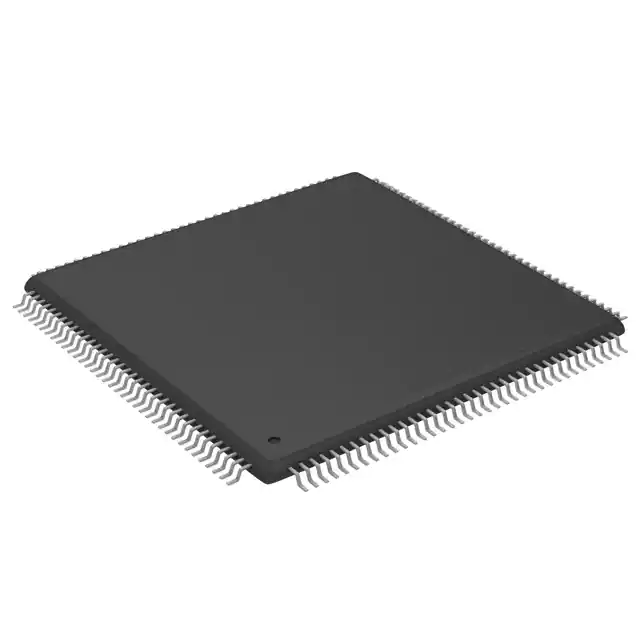
- Part No.:
- TSH512CF
- Manufacturer:
- STMicroelectronics
- Category:
- RF Transmitters
- Package:
- 44-LQFP
- Datasheet:
-
 TSH512CF.pdf
- Description:
- RF TX IC FM 400KHZ-11MHZ 44LQFP
- Quantity:
- Payment:

- Shipping:

Inventory:2,700
Please send an inquiry. Send us your inquiry, and we will respond immediately.
Product details
Overview
TSH512CF from STMicroelectronics is a dual FM infrared transmitter IC integrating two independent stereo-capable FM transmitters, low-noise preamplifiers with ALC, sinusoidal VCOs (0.4–11 MHz), and linear output buffers. It supports hi-fi stereo IR audio transmission using 2.3/2.8 MHz carriers, features VOX for battery-saving voice-activated transmit, and includes mono standby (SBY pin) to cut supply current by ~40%. Used in wireless stereo headphones and IR sub-carrier systems.
For engineers reviewing the TSH512CF datasheet, TSH512CF pinout, TSH512CF application, or TSH512CF equivalent, key selection considerations include carrier frequency tuning range (0.4–11 MHz), dual-channel ALC-PEA-LNA signal chain performance (THD < 0.05% at 1 kHz), VOX-MUTE timing control, TQFP44 package thermal resistance (RthJA = 45 °C/W), and compatibility with external 120 µH VCO inductors (Q = 30).
Technical Context
The TSH512CF implements two fully independent FM transmitter channels (TX1/TX2), each with electret microphone bias (MIC-BIAS1/2), differential LNA (GBW = 7 MHz), ALC with integrator time constant pins (ALC-INT1/2), 50 µs pre-emphasis (PEA), and voltage-controlled oscillator with buffered sinusoidal output (VCO-OUT1/2). Each VCO uses external LC tank (e.g., 120 µH + varactor) and is biased via dedicated VCO-BIAS1/2 outputs (1.47 V typ).
VOX circuitry integrates audio envelope (VOX-INTS), noise threshold (VOX-SENS), timer ramp (VOX-TIMER), and mute logic (VOX-MUTE), enabling automatic TX enable/disable. Standby (SBY pin) disables TX2 while preserving TX1 operation-reducing total ICC from 18.6 mA to 11.5 mA-making it suitable for mono headset or voice-activated camera modes.
Key Specifications
| Parameter | Value and Actual Design Meaning |
|---|---|
| Supply voltage | 2.3–5.5 V: Enables direct Li-ion (3.7 V) or dual-AA (3.0 V) battery operation without LDO. |
| Carrier frequency range | 0.4–11 MHz: Covers standard IR audio bands (2.3/2.8 MHz stereo), video sub-carriers (4.5 MHz), and custom FM IF. |
| Audio input THD | <0.05% at 1 kHz: Ensures high-fidelity preamp stage before modulation-critical for hi-fi IR headphone applications. |
| VCO output level | 580–660 mVPP: Sufficient swing to drive external buffer transistors without clipping at 2.8 MHz. |
| VOX-MUTE output | CMOS-compatible (VH = VCC−0.3 V, VL = 0.2 V): Directly interfaces with MCU GPIO or LED driver enable inputs. |
| Thermal resistance | RthJA = 45 °C/W: Supports continuous operation up to +85°C ambient in compact TQFP44 (10 × 10 mm) packages. |
| Current consumption | 11–18.6 mA (dual TX active): Matches low-power IR headset BOM targets; drops to 7–11.5 mA in mono standby mode. |
Pinout & Package
TQFP44 (10 × 10 mm, 0.8 mm pitch), thermally enhanced with exposed pad (EPAD) connected to GND per datasheet Figure 28. Package meets JEDEC MO-220 standards and supports reflow soldering per IPC/JEDEC J-STD-020.
| Pin | Circuit Role | Design Meaning |
|---|---|---|
| 12, 44 | LNA-INP1 / LNA-INP2 | Differential positive inputs for electret mic preamps-accepts 20–20 kHz audio with 30 kΩ input impedance. |
| 18, 38 | VCO-BIAS1 / VCO-BIAS2 | Stable 1.47 V DC bias outputs for external VCO varactors-enables precise carrier frequency tuning across temperature. |
| 22, 34 | VCO-OUT1 / VCO-OUT2 | Low-distortion sinusoidal FM carriers (580–660 mVPP)-drives external transistor buffer for IR LED modulation. |
| 25, 31 | BUF-OUT1 / BUF-OUT2 | Linear 10 dB gain output buffers-deliver 1.35–1.7 VPP into 2 kΩ load, optimized for IR LED anode drive. |
| 5 | SBY | Active-high standby control: Disables TX2 only-reduces ICC by ~40% for mono operation without affecting TX1 functionality. |
| 27 | VOX-MUTE | Open-drain CMOS output: Asserts low during silence to disable output buffers-saves battery in voice-activated webcams. |
Key Features
| Feature | Design Value |
|---|---|
| Dual independent FM transmitters | Enables true stereo IR transmission (e.g., 2.3 MHz left, 2.8 MHz right) with separate ALC/PEA/VCO tuning per channel. |
| Sinusoidal carrier generation | Reduces harmonic content (H2 = −40 dBc, H3 = −30 dBc) - simplifies bandpass filtering and improves spectral purity. |
| Integrated ALC with external integrator | ALC-INT1/2 pins allow adjustable attack/release (e.g., 470 nF + 470 kΩ = ~220 ms) - prevents overmodulation on dynamic audio peaks. |
| VOX with programmable sensitivity | VOX-SENS pin sets detection threshold; VOX-INTS/VOX-INTN set audio/noise integrator time constants - avoids false triggers in noisy environments. |
| Microphone bias with tempco control | MIC-BIAS1/2 delivers 2.25 V ±100 mV (260 ppm/°C) - maintains consistent electret FET bias across −40°C to +85°C. |
Applications
| IR Stereo Headphones | Voice-Activated Wireless Webcam |
|---|---|
Use Scenario: Consumer-grade wireless stereo headphones transmitting CD-quality audio via infrared LEDs to matched receivers. IC Role / Device Role / Timing Role: Dual FM transmitter generating synchronized 2.3/2.8 MHz carriers modulated by left/right audio channels; VOX enables transmit only during speech. Use Value: Eliminates RF interference concerns while delivering <0.05% THD audio-meets IEC 60268-7 hi-fi headphone requirements. |
Use Scenario: USB-connected webcam with IR audio sub-carrier for voice commentary overlay on video streams. IC Role / Device Role / Timing Role: Sub-carrier generator producing 4.5 MHz FM-modulated voice signal; VOX-MUTE triggers camera mic recording only when user speaks. Use Value: Reduces system power by >60% vs. always-on mic path-extends battery life in portable webcam deployments. |
| Stereo Audio Sub-Carrier Generator | FM IF Transmitter Module |
Use Scenario: Broadcast equipment adding stereo audio to composite video signals using standard 4.5 MHz intercarrier sub-carrier. IC Role / Device Role / Timing Role: High-stability FM modulator with ALC-regulated input and 0.4–11 MHz tunable carrier-generates compliant NTSC/PAL sub-carriers. Use Value: Replaces discrete op-amp + VCO designs-reduces BOM count by 12 components and improves carrier frequency drift (<±356 ppm/°C). |
Use Scenario: Industrial telemetry module transmitting sensor data as FM-modulated audio over legacy analog phone lines or RF links. IC Role / Device Role / Timing Role: Dual-channel FM baseband transmitter-converts digital UART data (via DAC + PEA) into robust 2.8 MHz FM bursts. Use Value: Leverages built-in ALC/PEA to maintain constant deviation ratio across varying supply (2.3–5.5 V)-ensures reliable demodulation at receiver. |
Equivalent & Alternatives
The following parts are listed as comparable options for similar dual FM transmitter applications.
| Alternative Part | Technical Difference | Application Difference | Selection Advice |
|---|---|---|---|
| MAX2112ETJ+ | Single-channel FM transmitter; no integrated ALC or VOX; requires external preamp and bias circuitry. | Limited to mono sub-carrier generation; lacks stereo synchronization and battery-saving VOX. | Select when cost-sensitive mono IF transmission is sufficient and external signal conditioning is acceptable. |
| Si2151-A10-GM | RF tuner IC (not FM transmitter); receives but does not generate FM carriers; no audio processing blocks. | Not functionally substitutable-designed for broadcast reception, not IR audio transmission. | Reject for this application; intended for TV/radio front-end, not transmitter signal chain. |
Compared with MAX2112ETJ+, the TSH512CF integrates full stereo signal chain (LNA+ALC+PEA+VCO+buffer) in one die-reducing PCB area by 45% and eliminating 9 external passive components per channel-while Si2151-A10-GM serves a fundamentally different receive-oriented function.
Availability
TSH512CF is available at Aetrix Electronics and suitable for infrared stereo transmitters, voice-activated wireless webcams, and FM IF transmit systems requiring stable component supply across industrial temperature ranges (−40°C to +85°C) and long-lifecycle production.
Supply support for TSH512CF includes scheduled delivery planning, volume procurement assistance, BOM continuity management, traceable sourcing, and lifecycle availability coordination for OEM customers, industrial embedded developers, connected-device designers, and electronics production programs.
Manufacturer
STMicroelectronics is a global semiconductor leader headquartered in Geneva, Switzerland, designing and manufacturing microcontrollers, analog ICs, power management devices, and sensors for automotive, industrial, and consumer markets.
The TSH512CF belongs to ST's infrared audio transmission product line, engineered specifically for low-power, high-fidelity wireless stereo audio-targeting applications where EMI-free optical transmission, battery longevity, and compact integration are critical.
FAQ
What is the minimum supply voltage required for stable operation of the TSH512CF?
The TSH512CF operates reliably from 2.3 V to 5.5 V. At 2.3 V, all functional blocks-including dual LNAs, ALC, VCOs, and output buffers-meet specifications across −40°C to +85°C. Below 2.3 V, VCO startup fails and ALC regulation degrades; the absolute maximum rating is 7 V, but operation above 5.5 V risks permanent damage.
Can the TSH512CF generate non-standard carrier frequencies outside the 2.3/2.8 MHz stereo pair?
Yes-the TSH512CF supports 0.4–11 MHz carrier tuning via external LC components on VCO-A/B pins. For example, replacing the 120 µH inductor with 47 µH and adjusting varactor capacitance achieves 4.5 MHz for NTSC sub-carrier use. Frequency stability is ±0.05% over temperature when using Q ≥ 30 inductors and low-tempco capacitors.
How does the VOX circuit interact with the ALC section during speech transients?
The VOX circuit monitors the ALC-integrated audio envelope (via VOX-INTS) and activates TX only when amplitude exceeds the VOX-SENS–set threshold. During speech onset, ALC holds output level constant within 20 ms, preventing VOX false triggers from clipping artifacts. VOX-MUTE asserts low after 100 ms of silence-guaranteed by VOX-TIMER's 5 µA monostable current source.
Is the TQFP44 package of the TSH512CF RoHS-compliant and lead-free?
Yes-the TSH512CF (TQFP44) is manufactured per RoHS Directive 2011/65/EU and REACH Regulation EC 1907/2006. All solderable terminations are matte tin (Sn) over nickel (Ni), with lead content < 1000 ppm. The EPAD is electrically and thermally connected to GND, and JEDEC-compliant reflow profiles (peak 260°C) are validated in ST Application Note AN2824.
TSH512CF Specifications
- Product attributes
- Attribute value
- Manufacturer:
- STMicroelectronics
- Series:
- -
- Package/Case:
- 44-LQFP
- Packaging:
- Tray
- Product Status:
- Obsolete
- Programmable:
- Not Verified
- Frequency:
- 400kHz ~ 11MHz
- Applications:
- Infrared Headsets, Infrared Hi-Fi Stereo Transmitters
- Modulation or Protocol:
- FM
- Data Rate (Max):
- -
- Power - Output:
- -
- Current - Transmitting:
- 16mA
- Data Interface:
- PCB, Surface Mount
- Antenna Connector:
- PCB, Surface Mount
- Memory Size:
- -
- Features:
- -
- Voltage - Supply:
- 2.3V ~ 5.5V
- Operating Temperature:
- -40°C ~ 85°C
- Grade:
- -
- Qualification:
- -
- Mounting Type:
- Surface Mount
- Supplier Device Package:
- 44-TQFP (10x10)
TSH512CF FAQ
1.How can I place an order for TSH512CF through Aetrix?
Please submit a Request for Quotation (RFQ) for TSH512CF on Aetrix. Our sales agent will provide a competitive quotation and guide you through the order confirmation once you accept the terms.
2.Are the price and stock information for TSH512CF reliable?
The price and inventory of TSH512CF are updated periodically and may fluctuate due to market conditions. Stock and pricing data are typically refreshed every 24 hours. Quotation validity for TSH512CF is usually 5 days.
3.What payment methods are accepted for TSH512CF?
We accept Wire Transfer, PayPal, Credit Card, Western Union, MoneyGram, and Escrow for TSH512CF transactions.
Note: Certain payment methods may incur a processing fee.
4.How is shipping managed for TSH512CF?
TSH512CF orders can be shipped via leading logistics carriers, including DHL, UPS, FedEx, TNT, or Registered Mail.
Once your TSH512CF order is processed, you will receive an email with the shipment details and tracking number.
Note: Tracking information may take up to 24 hours to appear. Express delivery typically takes 3–5 business days.
5.How can I obtain technical support or documentation for TSH512CF?
For technical support, including TSH512CF datasheets, pinout diagrams, or application guidance, please contact our engineering support team. They can provide detailed documentation and assistance for your TSH512CF requirements.
6.How does Aetrix verify that TSH512CF is sourced from the original manufacturer or authorized distributors?
All TSH512CF products on Aetrix are procured from qualified distributors and authorized channels. Our dedicated quality assurance team conducts strict verification, including traceability checks and, if necessary, third-party testing. This ensures that TSH512CF meets industry standards.
7.What is the process for return or replacement of TSH512CF?
All TSH512CF units undergo pre-shipment inspection (PSI). If there is an issue with TSH512CF, returns or replacements are accepted under the following conditions:
1.Quantity discrepancies, incorrect items, or visible external defects (such as breakage or corrosion), acknowledged by Aetrix.
2.The issue is reported within 90 days of delivery.
3.The TSH512CF part is unused and in its original packaging.
Return procedure for TSH512CF:
1.Submit a request within 90 days.
2.Obtain a Return Material Authorization (RMA) from Aetrix.
TSH512CF Tags

-
MICRF113YM6-TR
Microchip Technology
-
PIC12LF1840T39AT-I/ST
Microchip Technology

-
MAX41460GUB+T
Analog Devices Inc./Maxim Integrated
-
SX1230I066TRT
Semtech Corporation
-
SI4010-C2-GS
Silicon Labs
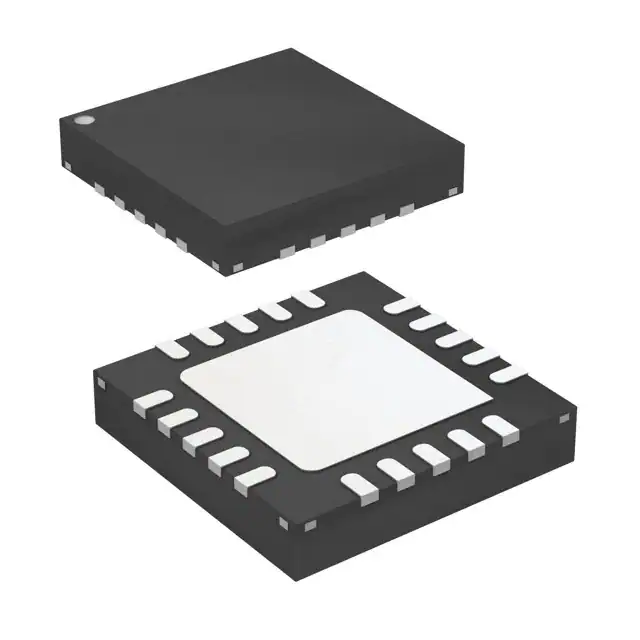
-
CC1070RSQR
Texas Instruments
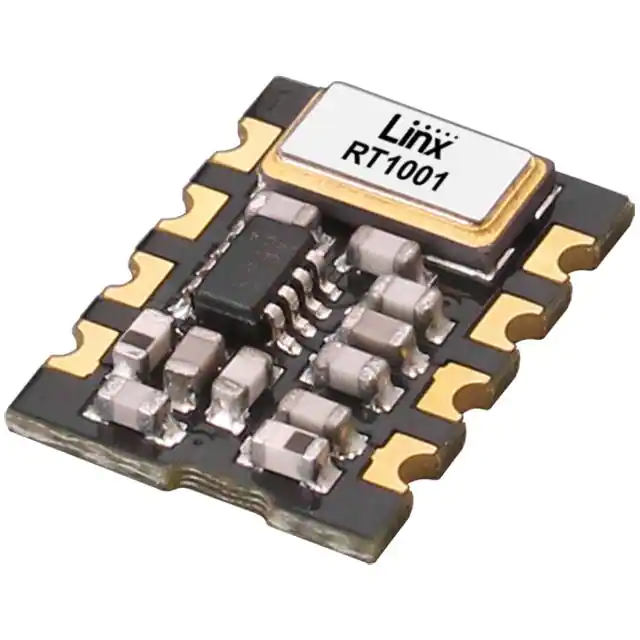
-
TXM-418-LR
TE Connectivity Linx
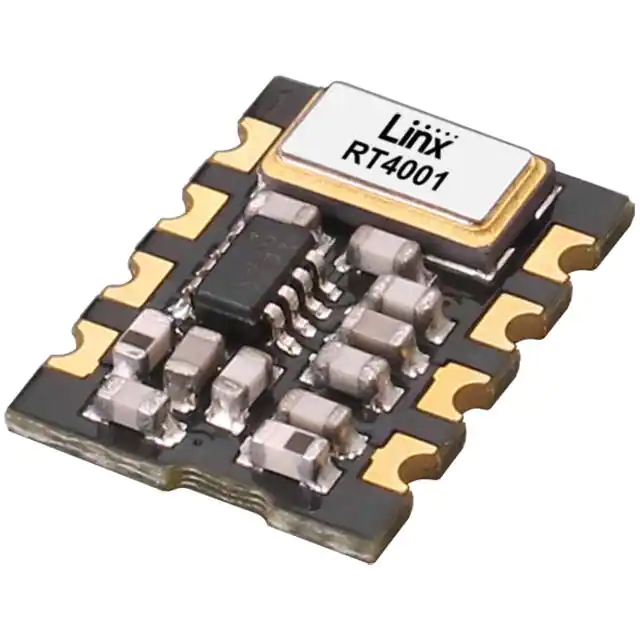
-
TXM-433-LR
TE Connectivity Linx
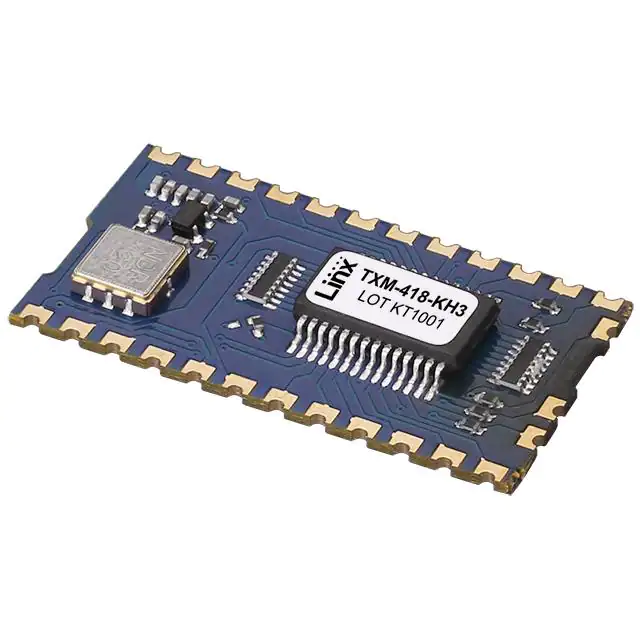
-
TXM-418-KH3
TE Connectivity Linx

-
TX7332ZBX
Texas Instruments
-
MICRF114T-I/OT
Microchip Technology
-
MICRF112YMM-TR
Microchip Technology
Tech Hub

A practical engineering and sourcing framework covering lifecycle verification, lifetime-buy calculations, replacement qualification, supplier checks and counterfeit-risk controls.

TTL and CMOS logic families differ in thresholds, loading, output drive, power and timing. This engineering guide compares 74HC and 74HCT, calculates noise margins and checks 3.3 V/5 V compatibility.

A practical engineering guide to 3.3V and 5V logic compatibility, input thresholds, resistor dividers, translator ICs, MOSFET level shifting, I2C pull-ups, timing limits and power-sequencing risks.

The 74HC595 uses push-pull logic outputs, while the TPIC6B595 uses 50 V open-drain DMOS sinks for higher-power loads. This guide compares timing, current limits, 3.3 V interfacing, load wiring, thermal…

The 74HC595 converts serial data into eight stable parallel outputs. This guide covers pin functions, shift and storage timing, OE and MR behavior, drive-current limits, cascading, voltage compatibilit…

A technical comparison of level-sensitive latches and edge-triggered flip-flops, covering timing windows, setup and hold limits, master–slave operation, time borrowing, race-through, HDL inference and…

A D latch stores one bit while Enable controls when data can pass. This reference covers gate-level operation, truth tables, transparency, setup and hold timing, LE versus OE, common ICs and practical …

An SR latch stores one bit through cross-coupled feedback. This engineering reference covers NOR and NAND implementations, truth tables, forbidden-state recovery, gated operation, switch debouncing, fa…

Latch circuits retain one bit through feedback. This technical reference covers SR and D latches, truth tables, transparency, timing limits, latch-versus-flip-flop behavior, applications and common log…

An engineering guide to LED driver operation, constant-current and constant-voltage outputs, linear and switching topologies, dimming, IC selection, calculations, replacement compatibility, and fault c…


