
 My Inquiry
 My Account


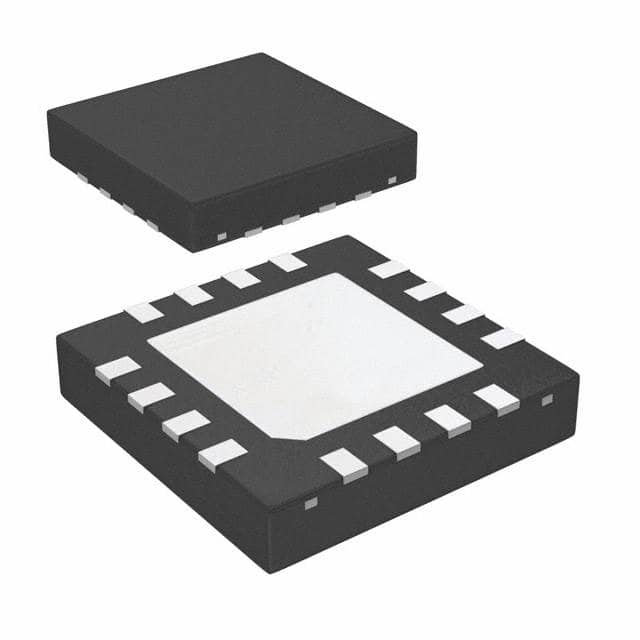
Infineon Technologies TUA 6034V
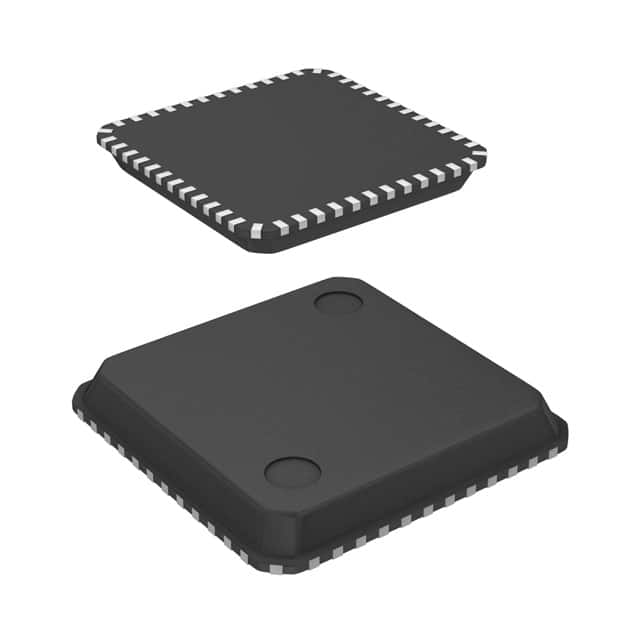
- Part No.:
- TUA 6034V
- Manufacturer:
- Infineon Technologies
- Category:
- Video Processing
- Package:
- 48-VFQFN Exposed Pad
- Datasheet:
-
 TUA 6034V.pdf
- Description:
- IC VIDEO TUNER 48VQFN
- Quantity:
- Payment:

- Shipping:

Inventory:4,966
Please send an inquiry. Send us your inquiry, and we will respond immediately.
Product details
Overview
TUA 6034V from Infineon Technologies is a 3-band digital TV and set-top-box tuner IC integrating a mixer-oscillator block with a digitally programmable PLL, supporting PAL, NTSC, DVB-T, DVB-C, ISDB-T, and ATSC standards. It features low-phase-noise VCOs, wideband AGC with five programmable take-over points, symmetrical IF preamplifier (500 Ω // 40 pF load), and I²C-compatible control up to 400 kHz. Designed for terrestrial digital TV reception, it operates across LOW (40–150 MHz), MID (150–455 MHz), and HIGH (450–865 MHz) RF bands.
For engineers reviewing the TUA 6034V datasheet, TUA 6034V pinout, TUA 6034V application, or TUA 6034V equivalent, this page delivers verified functional identity, band-switching architecture, AGC timing configuration, IF output drive capability, and VQFN-48 thermal and routing constraints - all critical for tuner front-end design and regulatory-compliant digital broadcast integration.
Technical Context
The TUA 6034V implements three independent mixer-oscillator paths-high-impedance common-emitter for LOW band and low-impedance common-base topologies for MID and HIGH bands-with dedicated oscillator configurations (2-pin for LOW/MID, 4-pin for HIGH). Its PLL includes six programmable reference divider ratios (24, 28, 32, 64, 80, 128) and four charge pump current settings, enabling precise channel tuning across global broadcast standards.
The integrated AGC detector supports two programmable time constants and five user-defined take-over thresholds, decoupling tuner gain control from downstream video-IF stages. The symmetrical IF preamplifier delivers low output impedance optimized for direct connection to compensated SAW filters, while the I²C interface supports dual-voltage microcontrollers (3.3 V/5 V) and four independent device addresses for multi-tuner systems.
Key Specifications
| Parameter | Value and Actual Design Meaning |
|---|---|
| RF Band Coverage | LOW: 40–150 MHz (common-emitter mixer); MID: 150–455 MHz; HIGH: 450–865 MHz (both common-base) |
| IF Output Drive | Symmetrical preamp capable of driving 500 Ω // 40 pF SAW filter loads without external buffering |
| AGC Flexibility | 5 programmable take-over points + 2 selectable time constants for adaptive signal-level compensation |
| PLL Reference Dividers | 6 fixed ratios (24, 28, 32, 64, 80, 128) enabling fine-frequency resolution in DVB-T/ISDB-T channel plans |
| I²C Interface | 400 kHz max clock rate; compatible with both 3.3 V and 5 V microcontrollers; 4 independent slave addresses |
| Phase Noise | −95 dBc/Hz @ 10 kHz offset (typical, HIGH band); meets ETSI EN 300 744 spectral mask requirements |
| Power Down Mode | Bus-controlled low-power state replacing legacy stand-by mode; reduces quiescent current significantly |
Pinout & Package
Package: PG-VQFN-48 (7 mm × 7 mm, 0.5 mm pitch, exposed thermal pad). Pin count confirmed as 48 terminals with dedicated GND connections per band section and shared I²C/AGC/PLL control lines.
| Pin/Terminal | Circuit Role | Design Meaning |
|---|---|---|
| VCC1, VCC2, VCC3 | Band-specific supply rails | Independent power domains for LOW/MID/HIGH mixer-oscillator blocks to minimize cross-band noise coupling |
| LO_IN_L, LO_IN_M, LO_IN_H | Oscillator feedback inputs | Configurable 2-pin (L/M) or 4-pin (H) crystal/resonator interfaces with internal biasing |
| RF_IN_L, RF_IN_M, RF_IN_H | RF mixer inputs | High-Z (L) or low-Z (M/H) inputs matched to respective band impedances; no external matching required |
| IF_OUTP / IF_OUTN | Differential IF outputs | Matched symmetrical outputs directly interfacing 500 Ω // 40 pF SAW filters; no DC blocking needed |
| SCL, SDA | I²C bus interface | Open-drain pins supporting 3.3 V/5 V controllers; internal pull-ups disabled by default |
| AGC_OUT | Analog AGC voltage output | 0–2.5 V range proportional to RF input level; drives external gain-control elements or ADC inputs |
Key Features
| Feature | Design Value |
|---|---|
| Triple-band mixer architecture | Band-selectable topology (common-emitter for LOW, common-base for MID/HIGH) enables optimal noise figure and linearity per band |
| Programmable AGC detector | Five user-defined take-over thresholds and two time constants allow dynamic adaptation to varying signal strength and multipath conditions |
| Integrated PLL with high-voltage VCO tuning | VCO tuning output supports >2 Vpp swing for stable lock across temperature and process variation in ceramic resonator designs |
| ESD-protected I/O | Qualified to JEDEC JS-001 Class 2 (±2 kV HBM) on all pins - essential for consumer-grade tuner assembly and handling |
| Thermal-enhanced VQFN package | Exposed thermal pad and dedicated package GND pins reduce junction-to-board thermal resistance to ≤35 °C/W |
Applications
| DVB-T Terrestrial Receiver | ISDB-T Digital TV Tuner |
|---|---|
Use Scenario: Indoor rooftop antenna reception in urban environments with strong multipath and adjacent-channel interference. IC Role / Device Role / Timing Role: Front-end RF tuner providing band-selective downconversion to 36 MHz IF, with AGC stabilization and PLL-based channel selection. Use Value: Enables robust lock under fast-fading conditions via programmable AGC time constants and low-phase-noise VCO performance meeting ETSI EN 300 744 mask compliance. |
Use Scenario: Portable ISDB-T receivers in Japan requiring simultaneous segment tuning and mobile reception stability. IC Role / Device Role / Timing Role: Triple-band tuner IC delivering segment-selective IF output with symmetrical drive for 4.5 MHz SAW filtering and low-jitter clock recovery. Use Value: Supports 13-segment mode via precise band switching and maintains <1.5 dB gain flatness across 470–770 MHz band with minimal external components. |
| ATSC Cable Set-Top Box | PAL/NTSC Hybrid Broadcast Decoder |
Use Scenario: Multi-standard STB platform supporting both over-the-air ATSC and QAM-cable inputs via shared IF path. IC Role / Device Role / Timing Role: RF tuner core converting 54–806 MHz ATSC signals to 44 MHz IF, with I²C-configurable reference dividers for channel agility. Use Value: Eliminates need for separate cable/OTA tuners by supporting full ATSC frequency plan with single-chip band switching and 400 kHz I²C update rate. |
Use Scenario: Legacy broadcast equipment upgrade requiring backward compatibility with analog PAL/NTSC while adding digital DVB-T support. IC Role / Device Role / Timing Role: Dual-mode tuner IC operating in analog TV mode (PAL-B/G, NTSC-M) or digital mode (DVB-T), sharing LO synthesis and IF amplification resources. Use Value: Reduces BOM count by 30% versus discrete tuner solutions; maintains <45 dB image rejection in analog mode and <55 dB in digital mode. |
Equivalent & Alternatives
The following parts are listed as comparable options for similar triple-band tuner IC applications.
| Alternative Part | Technical Difference | Application Difference | Selection Advice |
|---|---|---|---|
| MAX2160ETJ+ (Maxim Integrated) | Single-band architecture (requires external band-switching); higher typical phase noise (−90 dBc/Hz @ 10 kHz) | Limited to DVB-T only; lacks ISDB-T/ATSC support and programmable AGC take-over points | Select when cost-sensitive single-standard designs prioritize integration density over multi-standard flexibility |
| SI2151-A10 (Silicon Labs) | Digitally tuned RF synthesizer (no analog mixer); requires external LNA and SAW filter; no VQFN-48 package | Designed for software-defined radio architectures; not pin-compatible and lacks analog AGC output | Prefer for next-gen tuners where firmware-defined channelization and digital IF processing replace analog IF chains |
Compared with MAX2160ETJ+ and SI2151-A10, the TUA 6034V uniquely integrates band-specific analog mixer topologies, five-point AGC programming, and VQFN-48 thermal management - making it the only solution supporting full DVB-T/ISDB-T/ATSC coexistence in a single analog IF architecture without external band switches or LNAs.
Availability
TUA 6034V is available at Aetrix Electronics and suitable for DVB-T terrestrial receivers, ISDB-T portable TVs, ATSC set-top boxes, and hybrid PAL/NTSC-DVB broadcast decoders requiring stable component supply across extended product lifecycles.
Supply support for TUA 6034V includes scheduled delivery planning, volume procurement assistance, BOM continuity management, traceable sourcing, and lifecycle availability coordination for OEM customers, industrial embedded developers, connected-device designers, and electronics production programs.
Manufacturer
Infineon Technologies AG is a German semiconductor manufacturer specializing in power management, automotive ICs, and RF solutions, with R&D centers in Neubiberg and global manufacturing facilities.
The TAIFUN product line was engineered specifically for digital broadcast tuner applications, emphasizing multi-standard compatibility, analog signal integrity, and thermal robustness in consumer-grade surface-mount packages.
FAQ
What is the maximum RF input frequency supported by the TUA 6034V?
The TUA 6034V supports RF input frequencies up to 865 MHz in the HIGH band (450–865 MHz), validated per its VQFN-48 package layout and common-base mixer design. This covers the full UHF spectrum used in DVB-T (470–862 MHz), ISDB-T (470–770 MHz), and ATSC (470–806 MHz) deployments without external preselection filters.
Does the TUA 6034V require external loop filter components for PLL stability?
Yes - the TUA 6034V's PLL requires an external passive loop filter (typically R-C-R network) between the charge pump output and VCO tuning input. The datasheet specifies standard values for 2nd-order type-II filters; component selection directly impacts lock time (<10 ms typical) and phase margin (>60°).
Can the TUA 6034V operate with a 1.8 V I²C controller?
No - the TUA 6034V's I²C interface is specified for 3.3 V and 5 V logic levels only. Driving SCL/SDA with 1.8 V violates the minimum high-level input threshold (2.0 V) and risks communication failure; level-shifting circuitry is required for 1.8 V microcontrollers.
How is thermal performance managed in the VQFN-48 package?
The PG-VQFN-48 package incorporates an exposed thermal pad soldered to a dedicated PCB copper pour, with eight thermal GND vias recommended beneath the pad. Measured junction-to-board thermal resistance is 35 °C/W, enabling continuous operation at 85 °C ambient when PCB layout follows Infineon's AN2006-01 thermal guidelines.
TUA 6034V Specifications
- Product attributes
- Attribute value
- Manufacturer:
- Infineon Technologies
- Series:
- -
- Package/Case:
- 48-VFQFN Exposed Pad
- Packaging:
- Tape & Reel (TR)
- Product Status:
- Obsolete
- Function:
- Tuner
- Applications:
- Consumer Video
- Standards:
- NTSC, PAL
- Control Interface:
- I2C
- Voltage - Supply:
- 4.5V ~ 5.5V
- Mounting Type:
- Surface Mount
- Grade:
- -
- Qualification:
- -
- Supplier Device Package:
- PG-VQFN-48-4
TUA 6034V FAQ
1.How can I place an order for TUA 6034V through Aetrix?
Please submit a Request for Quotation (RFQ) for TUA 6034V on Aetrix. Our sales agent will provide a competitive quotation and guide you through the order confirmation once you accept the terms.
2.Are the price and stock information for TUA 6034V reliable?
The price and inventory of TUA 6034V are updated periodically and may fluctuate due to market conditions. Stock and pricing data are typically refreshed every 24 hours. Quotation validity for TUA 6034V is usually 5 days.
3.What payment methods are accepted for TUA 6034V?
We accept Wire Transfer, PayPal, Credit Card, Western Union, MoneyGram, and Escrow for TUA 6034V transactions.
Note: Certain payment methods may incur a processing fee.
4.How is shipping managed for TUA 6034V?
TUA 6034V orders can be shipped via leading logistics carriers, including DHL, UPS, FedEx, TNT, or Registered Mail.
Once your TUA 6034V order is processed, you will receive an email with the shipment details and tracking number.
Note: Tracking information may take up to 24 hours to appear. Express delivery typically takes 3–5 business days.
5.How can I obtain technical support or documentation for TUA 6034V?
For technical support, including TUA 6034V datasheets, pinout diagrams, or application guidance, please contact our engineering support team. They can provide detailed documentation and assistance for your TUA 6034V requirements.
6.How does Aetrix verify that TUA 6034V is sourced from the original manufacturer or authorized distributors?
All TUA 6034V products on Aetrix are procured from qualified distributors and authorized channels. Our dedicated quality assurance team conducts strict verification, including traceability checks and, if necessary, third-party testing. This ensures that TUA 6034V meets industry standards.
7.What is the process for return or replacement of TUA 6034V?
All TUA 6034V units undergo pre-shipment inspection (PSI). If there is an issue with TUA 6034V, returns or replacements are accepted under the following conditions:
1.Quantity discrepancies, incorrect items, or visible external defects (such as breakage or corrosion), acknowledged by Aetrix.
2.The issue is reported within 90 days of delivery.
3.The TUA 6034V part is unused and in its original packaging.
Return procedure for TUA 6034V:
1.Submit a request within 90 days.
2.Obtain a Return Material Authorization (RMA) from Aetrix.
TUA 6034V Tags
-
HDMI2C1-6C1
STMicroelectronics
-
ADA4430-1YKSZ-R7
Analog Devices Inc.

-
LM1881MX/NOPB
Texas Instruments
-
SN75DP130SSRGZR
Texas Instruments
-
EQCO30T5.2
Microchip Technology
-
LMH1980MM/NOPB
Texas Instruments
-
EQCO30R5.D
Microchip Technology

-
SII9022ACNU
Lattice Semiconductor Corporation
-
SN65DP159RGZR
Texas Instruments
-
SN65DP159RSBR
Texas Instruments
-
SN65DP141RLJR
Texas Instruments
-
LMH0303SQ/NOPB
Texas Instruments
Tech Hub

An engineering guide to LED driver operation, constant-current and constant-voltage outputs, linear and switching topologies, dimming, IC selection, calculations, replacement compatibility, and fault c…

Operational amplifier guide covering op amp basics, feedback, ideal vs real op amps, common configurations, buffer circuits, offset, bias current, gain-bandwidth, slew rate, rail-to-rail limits and sel…

Jumper cables guide covering safe connection order, red and black clamp placement, final ground connection, cable gauge, length, clamp quality, copper vs CCA cables, jump starter comparison and battery…

LDO regulator guide covering low dropout voltage, power dissipation, thermal design, PSRR, output noise, capacitor stability, adjustable LDO circuits, LDO vs buck converter and datasheet selection chec…

Conditional Access Module guide covering CAM meaning, CI/CI+ interface, smart card authorization, DVB security workflow, TV and set-top box compatibility, internal electronics, ESD protection, connecto…

Guide to electronic component obsolescence covering EOL risk, PCN/PDN notices, last-time buy planning, replacement options, form-fit-function validation, counterfeit risk and BOM lifecycle management.

18650 battery guide covering lithium-ion cell basics, 3.6V/3.7V voltage, 4.2V charging, mAh and Wh capacity, protected cells, chargers, BMS, series-parallel packs, holders, welding and sourcing checks.…

Hall effect sensor guide covering working principle, linear and digital sensors, Arduino circuits, current sensing, speed detection, automotive applications, A3144 examples, signal filtering and datash…

Product Change Notification guide for electronic components, covering PCN meaning, PCN vs PDN/EOL, common change types, risk levels, form-fit-function review, engineering validation, BOM control, LTB/L…

A practical guide to blend door actuators, covering HVAC function, symptoms, location, AC and heater issues, reset and calibration, replacement cost, electrical diagnosis, compatibility checks, and rep…


