
 My Inquiry
 My Account


Texas Instruments TUSB2040N
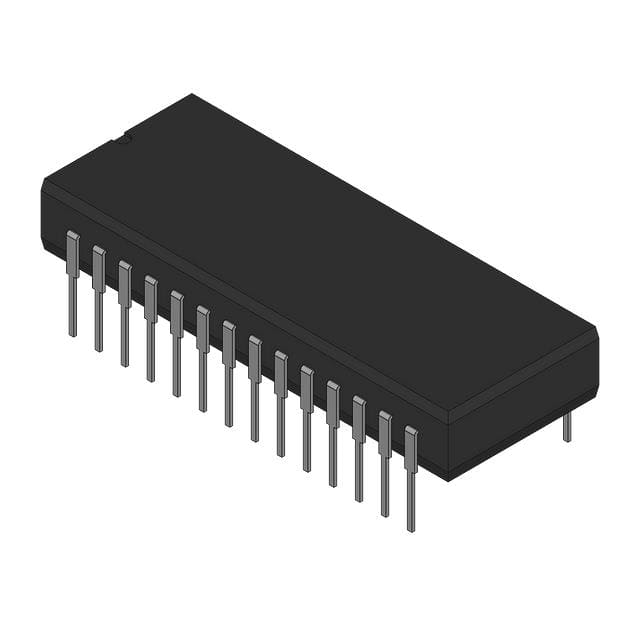
- Part No.:
- TUSB2040N
- Manufacturer:
- Texas Instruments
- Category:
- Controllers
- Package:
- -
- Datasheet:
-
 TUSB2040N.pdf
- Description:
- MICROPROCESSOR CIRCUIT PDIP28
- Quantity:
- Payment:

- Shipping:

Inventory:754
Please send an inquiry. Send us your inquiry, and we will respond immediately.
Product details
Overview
TUSB2040N from Texas Instruments is a 4-port USB 1.0 hub IC with integrated transceivers, 3.3-V operation, 48-MHz crystal/oscillator interface, and per-port or ganged power switching control - used in embedded host systems requiring tiered peripheral expansion such as industrial docking stations and kiosk controllers.
For engineers reviewing the TUSB2040N datasheet, TUSB2040N pinout, TUSB2040N application, or TUSB2040N equivalent, key selection considerations include USB 1.0 compliance, suspend-mode current (1 µA), 28-pin DIP vs. 48-pin TQFP package options, and external power-switching dependency for overcurrent protection.
Technical Context
The TUSB2040N implements a USB 1.0-compliant hub repeater architecture with integrated upstream/downstream transceivers, frame timing logic, and suspend/resume state management. It requires an external 48-MHz clock source (crystal or oscillator) to derive the 12-Mbps full-speed and 1.5-Mbps low-speed USB data rates.
Power management is externally implemented via open-drain PWRON1–PWRON4 outputs and active-low OVRCUR1–OVRCUR4 inputs, supporting both individual-port and ganged configurations selected by the GANGED input. BUSPWR input configures bus-powered or self-powered mode, with all ports sharing the same supply source.
Key Specifications
| Parameter | Value and Actual Design Meaning |
|---|---|
| USB Standard | Compliant with USB Specification v1.0 - ensures interoperability with legacy USB 1.0 hosts and peripherals. |
| Port Count | Four downstream USB ports plus one upstream port - enables tiered peripheral connectivity up to 6 logical layers. |
| Supply Voltage | 3.3 V nominal (3.0–3.6 V range) - requires dedicated LDO regulation; not 5-V tolerant. |
| Suspend Current | 1 µA typical - achieved by powering down internal oscillator; enables low-power system sleep states. |
| Data Rates | Supports both full-speed (12 Mbps) and low-speed (1.5 Mbps) on all downstream ports - auto-slew rate detection per port. |
| Package Options | 28-pin PDIP (N) and 48-pin TQFP (PT) - SUSPND output only available in TQFP package. |
| Clock Input | 48-MHz external crystal or oscillator at XTAL1/XTAL2 - no internal PLL; clock directly drives USB timing engine. |
Pinout & Package
Available in 28-pin plastic dual-in-line (PDIP-N) and 48-pin thin quad flatpack (TQFP-PT) packages. The TUSB2040N variant corresponds to the 28-pin DIP package (N suffix), with SUSPND signal omitted per datasheet note B.
| Pin | Circuit Role | Design Meaning |
|---|---|---|
| DP0 / DM0 | Upstream differential data pair | Connects to host controller's USB root port; requires 1.5-kΩ DP0 pull-up per USB spec. |
| DP1–DP4 / DM1–DM4 | Downstream differential data pairs | Each pair supports full-speed/low-speed devices; requires 15-kΩ pull-down on DM lines. |
| PWRON1–PWRON4 | Open-drain power control outputs | Active-low signals driving external MOSFETs or power switches; ganged when GANGED = high. |
| OVRCUR1–OVRCUR4 | Active-low overcurrent sense inputs | Monitor external current-limiting circuits; tied together in ganged mode per Figure 8. |
| BUSPWR | Power source configuration input | Low = bus-powered (5-V sourced); high = self-powered (local 3.3-V or 5-V supply). |
| GANGED | Power switching mode select | High = ganged control (all PWRON outputs switch simultaneously); low = independent per-port control. |
| RESET | Asynchronous active-low reset | Must be asserted at power-up; includes hysteresis for noise immunity. |
| XTAL1 / XTAL2 | 48-MHz crystal interface | XTAL1 = input; XTAL2 = output; requires external tuning network (e.g., 12-pF cap, 5.6-µH inductor) for stability. |
Key Features
| Feature | Design Value |
|---|---|
| Integrated USB 1.0 transceivers | Eliminates need for external PHY components; supports automatic full/low-speed detection per port. |
| Per-port or ganged power switching | Configurable via GANGED input - enables cost-optimized (ganged) or fault-isolated (per-port) system designs. |
| 1 µA suspend-mode quiescent current | Reduces system standby power; achieved by disabling internal oscillator while retaining suspend-state logic. |
| 3.3-V core operation with TTL/LVCMOS I/O | Compatible with standard 3.3-V logic families; VIH/VIL thresholds meet TTL and LVCMOS levels. |
| External overcurrent reporting interface | Four dedicated OVRCUR inputs allow integration with TI TPS2014/TPS2015 or equivalent power switches. |
Applications
| Industrial Docking Station | Point-of-Sale Kiosk |
|---|---|
Use Scenario: A fixed-mount retail kiosk connects barcode scanners, receipt printers, magnetic stripe readers, and customer PIN pads via USB. IC Role / Device Role / Timing Role: TUSB2040N acts as the central USB hub, managing upstream communication with the host SBC and downstream device enumeration, power sequencing, and suspend/resume coordination. Use Value: Enables single-cable connectivity for multiple peripherals while maintaining USB 1.0 compatibility and supporting bus-powered operation where local 5-V rail is unavailable. |
Use Scenario: An industrial PC-based machine controller interfaces with USB HID devices (keyboards, trackballs), serial-to-USB converters, and firmware update dongles. IC Role / Device Role / Timing Role: TUSB2040N serves as a robust, low-power hub repeater that isolates host-side signal integrity from downstream cable stubs and load variations. Use Value: Provides deterministic suspend/resume behavior and 1 µA quiescent current - critical for fanless, sealed enclosures requiring thermal and energy efficiency. |
| Embedded Test Fixture | Legacy Peripheral Aggregator |
Use Scenario: Automated test equipment aggregates multiple USB 1.0 instruments (oscilloscopes, DMMs, signal generators) into a single host connection. IC Role / Device Role / Timing Role: TUSB2040N functions as a transparent repeater with precise 48-MHz clock synchronization, ensuring stable frame timing across all downstream links. Use Value: Eliminates timing jitter accumulation in multi-tiered USB topologies - essential for synchronized data capture across instruments. |
Use Scenario: A medical device consolidates aging USB 1.0 peripherals (patient monitors, lab analyzers) onto a modern USB 2.0/3.0 host via backward-compatible hub layer. IC Role / Device Role / Timing Role: TUSB2040N provides protocol-transparent bridging between legacy full-speed/low-speed devices and upstream high-speed controllers using transaction translators. Use Value: Extends lifecycle of certified USB 1.0 peripherals without redesign; maintains electrical compliance via integrated 22-Ω driver impedance matching. |
Equivalent & Alternatives
The following parts are listed as comparable options for similar USB 1.0 hub applications.
| Alternative Part | Technical Difference | Application Difference | Selection Advice |
|---|---|---|---|
| TUSB2070P | 7-port USB 1.0 hub in 48-pin TQFP; identical 3.3-V operation and suspend current; adds extra downstream ports. | Used where higher port density is required without changing power or clock architecture. | Select TUSB2070P when expanding beyond four downstream devices while retaining same external power-switching design. |
| TUSB2140IRGZT | I²C-configurable 4-port USB 1.0 hub in 48-pin QFN; supports dynamic port enable/disable and vendor-defined registers. | Required for systems needing runtime reconfiguration (e.g., hot-plug-aware firmware or diagnostics). | Choose TUSB2140IRGZT when I²C programmability and enhanced status reporting outweigh DIP-package convenience. |
Compared with TUSB2040N, TUSB2070P offers greater port count in the same footprint but lacks DIP packaging, while TUSB2140IRGZT adds configurability at the cost of increased software complexity and no DIP option - making TUSB2040N optimal for fixed-function, through-hole, cost-sensitive designs.
Availability
TUSB2040N is available at Aetrix Electronics and suitable for industrial docking stations, point-of-sale kiosks, and embedded test fixtures requiring stable component supply, long-lifecycle support, and RoHS-compliant through-hole assembly.
Supply support for TUSB2040N includes scheduled delivery planning, volume procurement assistance, BOM continuity management, traceable sourcing, and lifecycle availability coordination for OEM customers, industrial embedded developers, connected-device designers, and electronics production programs.
Manufacturer
Texas Instruments is a global semiconductor company headquartered in Dallas, Texas, delivering analog, embedded processing, and connectivity solutions for industrial, automotive, and communications markets.
The TUSB2040N belongs to TI's USB 1.0 hub product line, designed specifically for cost-effective, low-power peripheral expansion in resource-constrained embedded systems where USB 2.0 complexity and cost are unnecessary.
FAQ
What USB specification version does the TUSB2040N support?
The TUSB2040N supports USB Specification Version 1.0 only. It is not compliant with USB 2.0 or later revisions. Its transceivers, timing logic, and descriptor handling are strictly aligned with USB 1.0 requirements, including full-speed (12 Mbps) and low-speed (1.5 Mbps) operation, and it lacks the high-speed (480 Mbps) capability introduced in USB 2.0. Systems requiring USB 2.0 must use a different hub IC such as the TUSB2046 or TUSB2077A.
Does the TUSB2040N include built-in power switches or overcurrent protection?
No, the TUSB2040N does not integrate power switches or overcurrent protection circuitry. It provides open-drain PWRON1–PWRON4 outputs to drive external power switches (e.g., TI TPS2014) and active-low OVRCUR1–OVRCUR4 inputs to monitor external overcurrent detection circuits. This architecture allows designers to select appropriate current ratings and fault-handling strategies per downstream port, as confirmed in the "Power Switching and Overcurrent Reporting" section of the datasheet.
What is the function of the BUSPWR and GANGED pins on the TUSB2040N?
BUSPWR (pin 9) is an active-low input selecting bus-powered (BUSPWR = low) or self-powered (BUSPWR = high) mode, determining whether the hub draws power from the upstream USB cable or a local supply. GANGED (pin 10) is an input selecting ganged (GANGED = high) or per-port (GANGED = low) power switching and overcurrent reporting. Both pins must remain static during operation, as stated in the Terminal Functions table - dynamic changes may cause undefined hub behavior.
Can the TUSB2040N operate with a 5-V supply?
No, the TUSB2040N operates exclusively at 3.3 V. Its absolute maximum supply voltage is 3.8 V, and recommended operating range is 3.0–3.6 V. Applying 5 V to VCC will exceed absolute maximum ratings and risk permanent damage. A dedicated 3.3-V regulator (e.g., TI TPS7133) is required, as shown in Figures 8–10 of the datasheet. The USB VBUS line (5 V) powers external switches only - not the TUSB2040N core.
Is the SUSPND pin available on the TUSB2040N DIP package?
No, the SUSPND pin is not available on the TUSB2040N (28-pin DIP) package. According to the Functional Block Diagram note B and Terminal Functions table, SUSPND is only present on the 48-pin TQFP (PT) variant. The DIP package omits this pin entirely; suspend status must be inferred from other signals (e.g., RESET deassertion timing or host-initiated suspend signaling) in TUSB2040N-based designs.
TUSB2040N Specifications
- Product attributes
- Attribute value
- Manufacturer:
- Texas Instruments
- Package/Case:
- -
- Programmable:
- -
- Protocol:
- -
- Function:
- -
- Interface:
- -
- Standards:
- -
- Voltage - Supply:
- -
- Current - Supply:
- -
- Operating Temperature:
- -
- Supplier Device Package:
- -
- Grade:
- -
- Qualification:
- -
TUSB2040N FAQ
1.How can I place an order for TUSB2040N through Aetrix?
Please submit a Request for Quotation (RFQ) for TUSB2040N on Aetrix. Our sales agent will provide a competitive quotation and guide you through the order confirmation once you accept the terms.
2.Are the price and stock information for TUSB2040N reliable?
The price and inventory of TUSB2040N are updated periodically and may fluctuate due to market conditions. Stock and pricing data are typically refreshed every 24 hours. Quotation validity for TUSB2040N is usually 5 days.
3.What payment methods are accepted for TUSB2040N?
We accept Wire Transfer, PayPal, Credit Card, Western Union, MoneyGram, and Escrow for TUSB2040N transactions.
Note: Certain payment methods may incur a processing fee.
4.How is shipping managed for TUSB2040N?
TUSB2040N orders can be shipped via leading logistics carriers, including DHL, UPS, FedEx, TNT, or Registered Mail.
Once your TUSB2040N order is processed, you will receive an email with the shipment details and tracking number.
Note: Tracking information may take up to 24 hours to appear. Express delivery typically takes 3–5 business days.
5.How can I obtain technical support or documentation for TUSB2040N?
For technical support, including TUSB2040N datasheets, pinout diagrams, or application guidance, please contact our engineering support team. They can provide detailed documentation and assistance for your TUSB2040N requirements.
6.How does Aetrix verify that TUSB2040N is sourced from the original manufacturer or authorized distributors?
All TUSB2040N products on Aetrix are procured from qualified distributors and authorized channels. Our dedicated quality assurance team conducts strict verification, including traceability checks and, if necessary, third-party testing. This ensures that TUSB2040N meets industry standards.
7.What is the process for return or replacement of TUSB2040N?
All TUSB2040N units undergo pre-shipment inspection (PSI). If there is an issue with TUSB2040N, returns or replacements are accepted under the following conditions:
1.Quantity discrepancies, incorrect items, or visible external defects (such as breakage or corrosion), acknowledged by Aetrix.
2.The issue is reported within 90 days of delivery.
3.The TUSB2040N part is unused and in its original packaging.
Return procedure for TUSB2040N:
1.Submit a request within 90 days.
2.Obtain a Return Material Authorization (RMA) from Aetrix.
TUSB2040N Tags
-
PTN5150AHXMP
NXP Semiconductors
-
USB3740B-AI9-TR
Microchip Technology
-
USB3740B-AI2-TR
Microchip Technology
-
USB3300-EZK-TR
Microchip Technology
-
USB3300-EZK
Microchip Technology
-
FUSB340TMX
onsemi
-
FUSB302BMPX
onsemi
-
DP83826IRHBR
Texas Instruments
-
MCP2518FDT-E/QBB
Microchip Technology
-
FUSB302MPX
onsemi
-
MCP2518FDT-E/SL
Microchip Technology
-
FT260Q-R
FTDI, Future Technology Devices International Ltd
Tech Hub

A practical engineering guide to 3.3V and 5V logic compatibility, input thresholds, resistor dividers, translator ICs, MOSFET level shifting, I2C pull-ups, timing limits and power-sequencing risks.

The 74HC595 uses push-pull logic outputs, while the TPIC6B595 uses 50 V open-drain DMOS sinks for higher-power loads. This guide compares timing, current limits, 3.3 V interfacing, load wiring, thermal…

The 74HC595 converts serial data into eight stable parallel outputs. This guide covers pin functions, shift and storage timing, OE and MR behavior, drive-current limits, cascading, voltage compatibilit…

A technical comparison of level-sensitive latches and edge-triggered flip-flops, covering timing windows, setup and hold limits, master–slave operation, time borrowing, race-through, HDL inference and…

A D latch stores one bit while Enable controls when data can pass. This reference covers gate-level operation, truth tables, transparency, setup and hold timing, LE versus OE, common ICs and practical …

An SR latch stores one bit through cross-coupled feedback. This engineering reference covers NOR and NAND implementations, truth tables, forbidden-state recovery, gated operation, switch debouncing, fa…

Latch circuits retain one bit through feedback. This technical reference covers SR and D latches, truth tables, transparency, timing limits, latch-versus-flip-flop behavior, applications and common log…

An engineering guide to LED driver operation, constant-current and constant-voltage outputs, linear and switching topologies, dimming, IC selection, calculations, replacement compatibility, and fault c…

Operational amplifier guide covering op amp basics, feedback, ideal vs real op amps, common configurations, buffer circuits, offset, bias current, gain-bandwidth, slew rate, rail-to-rail limits and sel…

Jumper cables guide covering safe connection order, red and black clamp placement, final ground connection, cable gauge, length, clamp quality, copper vs CCA cables, jump starter comparison and battery…


