
 My Inquiry
 My Account


Texas Instruments TUSB422IYFPR
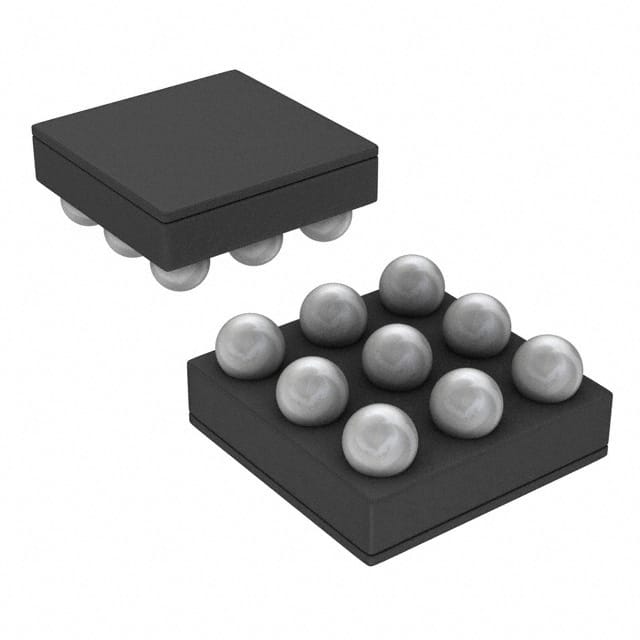
- Part No.:
- TUSB422IYFPR
- Manufacturer:
- Texas Instruments
- Category:
- Specialized
- Package:
- 9-XFBGA, DSBGA
- Datasheet:
-
 TUSB422IYFPR.pdf
- Description:
- IC INTERFACE SPECIALIZED 9DSBGA
- Quantity:
- Payment:

- Shipping:

Inventory:8,481
Please send an inquiry. Send us your inquiry, and we will respond immediately.
Product details
Overview
TUSB422IYFPR from Texas Instruments is a USB Type-C™ Port Controller IC implementing the Configuration Channel (CC) logic and USB Power Delivery (PD) BMC physical layer for 5–24 V power sourcing/sinking, 2.5 W VCONN switching, cable orientation detection, and DRP/DFP/UFP role configuration via I²C interface. It operates from 2.7 V to 5.5 V supply and supports industrial temperature range (–40°C to 85°C), enabling compact portable USB-C implementations in smartphones and power banks.
For engineers reviewing the TUSB422IYFPR datasheet, TUSB422IYFPR pinout, TUSB422IYFPR application, or TUSB422IYFPR equivalent, key selection criteria include CC pin voltage thresholds (e.g., VTH(DFP_CC_HIGH) = 2.46–2.74 V), VCONN current limit (500–850 mA), PD bit rate (270–330 kbps), dead battery support, and TCPCi-compliant I²C slave interface with FM+ (1 MHz) capability.
Technical Context
The TUSB422IYFPR integrates a full USB PD BMC PHY with programmable receiver thresholds dependent on POWER_ROLE register state, supporting PD 2.0 and PD 3.0 (excluding Get Source Capabilities Extended). Its CC1/CC2 pins implement dual-role pull-up (Rp) or pull-down (Rd) resistors - configurable for default (64–96 µA), medium (166–194 µA), or high (304–356 µA) current advertisement - and perform active cable detection using dedicated voltage thresholds (e.g., VTH(AC_CC_HIGH) = 0.76–0.84 V).
It features autonomous VBUS detection and controlled discharge via external bleed resistor (8–12.5 kΩ), integrated over-temperature shutdown at 150°C, and a 2.5 W VCONN switch with 0.4–0.75 Ω RDS(ON), fault detection, and discharge path. All control and status registers are accessed through a 1 Mbps I²C slave interface compliant with Fast Mode Plus timing.
Key Specifications
| Parameter | Value and Actual Design Meaning |
|---|---|
| VDD Range | 2.7 V to 5.5 V - enables direct compatibility with common system rails including 3.3 V and 5 V supplies without LDO overhead. |
| VBUS Input Range | 0 V to 24 V - supports full USB PD power range for both source and sink operation in wall adapters and portable devices. |
| VCONN Output | 2.7 V to 5.5 V, 500–850 mA - powers active cables and accessories; includes overcurrent protection and discharge control. |
| PD Bit Rate | 270–330 kbps - meets USB PD specification timing for reliable BMC-encoded message transmission and reception. |
| I²C Speed | Up to 1 MHz (FM+) - allows fast register access and real-time port status updates required for dynamic role swaps. |
| CC Thresholds | VTH(DFP_CC_HIGH): 2.46–2.74 V - ensures robust UFP detection under varying cable resistance and noise conditions. |
| Standby Current | 10–12 µA (Unattached DRP/DFP/UFP) - minimizes battery drain in always-on USB-C ports of mobile devices. |
| Operating Temp | –40°C to 85°C - qualified for industrial and consumer portable applications including power banks and notebooks. |
Pinout & Package
Package: DSBGA-9 (YFF), 1.335 mm × 1.380 mm, 0.4 mm pitch - ultra-compact wafer-level chip-scale package optimized for space-constrained USB-C implementations in smartphones and wearables.
| Pin/Terminal | Circuit Role | Design Meaning |
|---|---|---|
| CC1 / CC2 | Configuration Channel I/O | Bi-directional BMC data path for USB-C attach/detach, orientation, role negotiation, and PD messaging; requires external 200–450 pF shunt capacitor. |
| VBUSIN | VBUS Input Sense | Direct connection to Type-C connector VBUS; enables detection, measurement, and controlled discharge up to 24 V. |
| VDD | Core Supply | Primary power input (2.7–5.5 V); powers internal logic, PD PHY, and I²C interface. |
| VCONN | VCONN Output | Supplies regulated 2.7–5.5 V to active cables; integrated FET with 0.4–0.75 Ω RDS(ON) and overcurrent protection. |
| INT_N | Interrupt Output | Open-drain active-low interrupt signaling port events (attach/detach, PD message arrival, fault); requires external pull-up. |
| SCL / SDA | I²C Interface | Standard FM+/FM open-drain bus lines (1 MHz / 400 kHz); require external pull-ups to system I²C voltage (1.65–3.6 V). |
| GND | Ground Reference | System ground return for all analog and digital functions; critical for CC signal integrity and VCONN stability. |
Key Features
| Feature | Design Value |
|---|---|
| Dual-role port (DRP) autonomy | Hardware-assisted toggling between UFP/DFP states without host CPU intervention during unattached phase, reducing system wake-up latency. |
| Dead battery mode support | Operates with VDD = 0 V while detecting CC voltages (0.25–2.18 V) from attached DFP, enabling charging initiation before system power-up. |
| VCONN overcurrent protection | Integrated fault detection and automatic switch disable within 20 µs of overcurrent event, preventing damage to active cables and system components. |
| USB PD BMC PHY compliance | Fully implements PD 2.0/3.0 baseband physical layer including CRC generation, 4b5b encoding, and BMC modulation - eliminating need for external PD transceiver. |
| Low-power unattached operation | Consumes only 10–12 µA in Unattached.SNK/DFP/DRP modes, extending battery life in always-connected portable USB-C devices. |
| Industrial temperature qualification | Guaranteed operation from –40°C to 85°C with validated thermal metrics (RΘJA = 114.3 °C/W), suitable for automotive-accessory and ruggedized power bank designs. |
Applications
| Smartphone Charging Port | USB-C Wall Adapter |
|---|---|
Use Scenario: Dual-role USB-C port in flagship smartphone supporting simultaneous charging, data transfer, and DisplayPort Alt Mode. IC Role / Device Role: TUSB422IYFPR acts as autonomous DRP controller managing CC-based orientation detection, VBUS enable/discharge, and PD negotiation with external TCPM. Use Value: Enables seamless flip-to-use connector experience, fast PD power negotiation up to 100 W, and VCONN-powered active cables without increasing host MCU firmware complexity. | Use Scenario: Compact 65 W USB-C PD wall charger with fixed-source role and robust safety monitoring. IC Role / Device Role: TUSB422IYFPR configured as dedicated DFP to present Rp, detect UFP attachment, monitor VBUS, and trigger external power stage enable/disable via GPIO or I²C command. Use Value: Reduces BOM count by integrating CC logic, VBUS sense/discharge, and VCONN switching - eliminating discrete comparators, MOSFET drivers, and PD PHY ICs. |
| Power Bank Hub | Tablet Docking Station |
Use Scenario: Multi-port USB-C power bank supporting simultaneous charging-in and device-out with role swap capability. IC Role / Device Role: TUSB422IYFPR manages independent CC lanes per port, detects cable orientation, controls VCONN for active cables, and signals role change requests to host MCU. Use Value: Supports bidirectional 100 W PD power flow with hardware-accelerated attach/detach detection (<2 ms response), minimizing charge interruption during cable reinsertion. | Use Scenario: Tablet-based docking station providing USB data, DisplayPort Alt Mode, and 45 W charging via single USB-C uplink. IC Role / Device Role: TUSB422IYFPR serves as UFP to negotiate PD contract, enable VCONN for dock's active cable, and assert INT_N upon DP Alt Mode entry request from TCPM. Use Value: Offloads low-level USB-C protocol handling from tablet SoC, enabling deterministic Alt Mode handshaking and guaranteed VCONN delivery before DP link training begins. |
Equivalent & Alternatives
The following parts are listed as comparable options for similar USB Type-C port controller applications.
| Alternative Part | Technical Difference | Application Difference | Selection Advice |
|---|---|---|---|
| NCP81239MNTWG | Lacks integrated PD BMC PHY; requires external PD transceiver; no VCONN switch; supports only DFP role. | Targeted at cost-sensitive fixed-source applications like basic chargers without Alt Mode or active cable support. | Select when PD messaging is handled externally and VCONN is unnecessary - reduces system complexity but increases component count. |
| STUSB4500QTR | Integrated PD 3.0 BMC PHY and VCONN switch; supports same 2.7–5.5 V VDD; slightly higher standby current (15 µA vs 10 µA). | Offers identical feature set with enhanced USB PD 3.0 compliance including Get Source Capabilities Extended message support. | Choose for full PD 3.0 interoperability where extended capabilities negotiation is required, accepting marginally higher quiescent current. |
Compared with NCP81239MNTWG, TUSB422IYFPR delivers complete self-contained USB-C port control with integrated PD PHY and VCONN switching, reducing bill-of-materials and layout area. Against STUSB4500QTR, it trades minor PD 3.0 feature gaps for proven industrial qualification and lower unattached current - ideal for battery-sensitive portable designs prioritizing reliability over extended messaging.
Availability
TUSB422IYFPR is available at Aetrix Electronics and suitable for smartphone charging ports, USB-C wall adapters, and power bank hubs requiring stable component supply, long-term lifecycle support, and guaranteed traceable sourcing.
Supply support for TUSB422IYFPR includes scheduled delivery planning, volume procurement assistance, BOM continuity management, traceable sourcing, and lifecycle availability coordination for OEM customers, industrial embedded developers, connected-device designers, and electronics production programs.
Manufacturer
Texas Instruments is a global semiconductor company specializing in analog, embedded processing, and connectivity solutions with decades of leadership in USB interface ICs and power management.
The TUSB422IYFPR belongs to TI's USB Type-C Port Controller product line, designed specifically to offload low-level USB-C protocol handling-including CC logic, PD BMC PHY, and VCONN management-from host microcontrollers in portable and power-delivery-critical systems.
FAQ
What is the primary function of the TUSB422IYFPR in a USB-C system?
The TUSB422IYFPR serves as a dedicated USB Type-C Port Controller IC that handles Configuration Channel (CC) logic, USB Power Delivery (PD) BMC physical layer communication, VBUS detection and discharge, and VCONN power switching. It operates under control of an external USB Type-C Port Manager (TCPM) via I²C, enabling autonomous port attach/detach, cable orientation detection, and role negotiation without burdening the host MCU. The TUSB422IYFPR is essential for implementing compliant, feature-rich USB-C ports in smartphones, adapters, and power banks.
Does the TUSB422IYFPR support USB PD 3.0 fully?
The TUSB422IYFPR supports all USB PD 2.0 and PD 3.0 messages except the PD 3.0 Get Source Capabilities Extended message. Upon receipt of this specific message, the TUSB422IYFPR does not return GoodCRC and does not set the Rx alert flag, causing the port partner to retry and eventually issue a soft reset. All other PD 3.0 functionality - including structured VDMs, Fast Role Swap, and extended message headers - is fully supported. For full PD 3.0 extended capabilities negotiation, consider alternatives like STUSB4500QTR.
How does the TUSB422IYFPR handle dead battery scenarios?
The TUSB422IYFPR supports dead battery mode by operating with VDD = 0 V while still monitoring CC1 and CC2 for voltage levels from an attached DFP. It detects default (0.25–1.5 V), medium (0.45–1.5 V), and high (0.88–2.18 V) current advertisements on the CC pins, allowing the system to initiate charging before main power rails are established. This capability is critical for car chargers and portable power banks that must begin charging a completely discharged device immediately upon connection.
What are the key design considerations for the CC1 and CC2 pins on the TUSB422IYFPR?
The CC1 and CC2 pins on the TUSB422IYFPR require external 200–450 pF shunt capacitors (CRX(SHUNT)) to meet USB PD timing requirements for rise/fall times (<300 ns) and unit interval (3.03–3.7 µs). These pins implement programmable Rp/Rd resistors for role advertisement and detection, with precise voltage thresholds (e.g., VTH(DFP_CC_HIGH) = 2.46–2.74 V) ensuring reliable UFP detection across temperature and voltage variations. Layout must minimize trace length and avoid coupling to noisy signals to preserve BMC signal integrity.
Can the TUSB422IYFPR be used in a fixed-role DFP application like a wall charger?
Yes, the TUSB422IYFPR can be configured as a fixed-role DFP by writing 0x05 (default), 0x15 (1.5 A), or 0x25 (3.0 A) to the Role Control register, presenting Rp on both CC pins. In this mode, it autonomously detects UFP attachment, asserts INT_N, monitors VBUS, and controls VCONN switching - while external circuitry handles VBUS sourcing. Its low 11 µA unattached current and industrial temperature range make it well-suited for compact, reliable wall charger designs requiring minimal external components.
TUSB422IYFPR Specifications
- Product attributes
- Attribute value
- Manufacturer:
- Texas Instruments
- Series:
- -
- Package/Case:
- 9-XFBGA, DSBGA
- Packaging:
- Tape & Reel (TR)
- Product Status:
- Active
- Applications:
- USB
- Interface:
- I2C
- Voltage - Supply:
- 2.7V ~ 5.5V
- Supplier Device Package:
- 9-DSBGA
- Grade:
- -
- Qualification:
- -
- Mounting Type:
- Surface Mount
TUSB422IYFPR FAQ
1.How can I place an order for TUSB422IYFPR through Aetrix?
Please submit a Request for Quotation (RFQ) for TUSB422IYFPR on Aetrix. Our sales agent will provide a competitive quotation and guide you through the order confirmation once you accept the terms.
2.Are the price and stock information for TUSB422IYFPR reliable?
The price and inventory of TUSB422IYFPR are updated periodically and may fluctuate due to market conditions. Stock and pricing data are typically refreshed every 24 hours. Quotation validity for TUSB422IYFPR is usually 5 days.
3.What payment methods are accepted for TUSB422IYFPR?
We accept Wire Transfer, PayPal, Credit Card, Western Union, MoneyGram, and Escrow for TUSB422IYFPR transactions.
Note: Certain payment methods may incur a processing fee.
4.How is shipping managed for TUSB422IYFPR?
TUSB422IYFPR orders can be shipped via leading logistics carriers, including DHL, UPS, FedEx, TNT, or Registered Mail.
Once your TUSB422IYFPR order is processed, you will receive an email with the shipment details and tracking number.
Note: Tracking information may take up to 24 hours to appear. Express delivery typically takes 3–5 business days.
5.How can I obtain technical support or documentation for TUSB422IYFPR?
For technical support, including TUSB422IYFPR datasheets, pinout diagrams, or application guidance, please contact our engineering support team. They can provide detailed documentation and assistance for your TUSB422IYFPR requirements.
6.How does Aetrix verify that TUSB422IYFPR is sourced from the original manufacturer or authorized distributors?
All TUSB422IYFPR products on Aetrix are procured from qualified distributors and authorized channels. Our dedicated quality assurance team conducts strict verification, including traceability checks and, if necessary, third-party testing. This ensures that TUSB422IYFPR meets industry standards.
7.What is the process for return or replacement of TUSB422IYFPR?
All TUSB422IYFPR units undergo pre-shipment inspection (PSI). If there is an issue with TUSB422IYFPR, returns or replacements are accepted under the following conditions:
1.Quantity discrepancies, incorrect items, or visible external defects (such as breakage or corrosion), acknowledged by Aetrix.
2.The issue is reported within 90 days of delivery.
3.The TUSB422IYFPR part is unused and in its original packaging.
Return procedure for TUSB422IYFPR:
1.Submit a request within 90 days.
2.Obtain a Return Material Authorization (RMA) from Aetrix.
TUSB422IYFPR Tags
-
NVT4857UKAZ
NXP Semiconductors
-
TCA8418RTWR
Texas Instruments
-
PCA9546APWR
Texas Instruments
-
MD0100N8-G
Microchip Technology
-
PCA9548APW,118
NXP Semiconductors
-
PCA9540BDP,118
NXP Semiconductors
-
PCA9548APWR
Texas Instruments
-
PCA9546APW,118
NXP Semiconductors
-
PTN3360DBS,518
NXP Semiconductors
-
PCA9546ABS,118
NXP Semiconductors
-
PCA9518PWR
Texas Instruments
-
PCA9545APW,118
NXP Semiconductors
Tech Hub

A practical engineering guide to 3.3V and 5V logic compatibility, input thresholds, resistor dividers, translator ICs, MOSFET level shifting, I2C pull-ups, timing limits and power-sequencing risks.

The 74HC595 uses push-pull logic outputs, while the TPIC6B595 uses 50 V open-drain DMOS sinks for higher-power loads. This guide compares timing, current limits, 3.3 V interfacing, load wiring, thermal…

The 74HC595 converts serial data into eight stable parallel outputs. This guide covers pin functions, shift and storage timing, OE and MR behavior, drive-current limits, cascading, voltage compatibilit…

A technical comparison of level-sensitive latches and edge-triggered flip-flops, covering timing windows, setup and hold limits, master–slave operation, time borrowing, race-through, HDL inference and…

A D latch stores one bit while Enable controls when data can pass. This reference covers gate-level operation, truth tables, transparency, setup and hold timing, LE versus OE, common ICs and practical …

An SR latch stores one bit through cross-coupled feedback. This engineering reference covers NOR and NAND implementations, truth tables, forbidden-state recovery, gated operation, switch debouncing, fa…

Latch circuits retain one bit through feedback. This technical reference covers SR and D latches, truth tables, transparency, timing limits, latch-versus-flip-flop behavior, applications and common log…

An engineering guide to LED driver operation, constant-current and constant-voltage outputs, linear and switching topologies, dimming, IC selection, calculations, replacement compatibility, and fault c…

Operational amplifier guide covering op amp basics, feedback, ideal vs real op amps, common configurations, buffer circuits, offset, bias current, gain-bandwidth, slew rate, rail-to-rail limits and sel…

Jumper cables guide covering safe connection order, red and black clamp placement, final ground connection, cable gauge, length, clamp quality, copper vs CCA cables, jump starter comparison and battery…


