
 My Inquiry
 My Account


Texas Instruments TUSS4440TRTJT
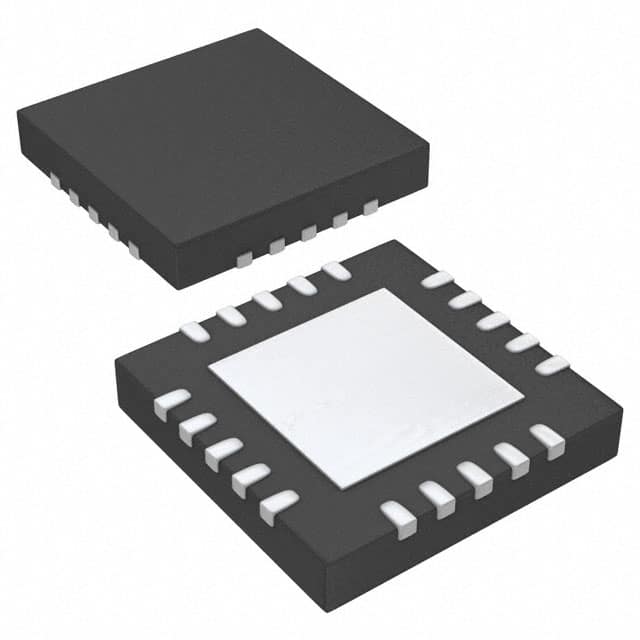
- Part No.:
- TUSS4440TRTJT
- Manufacturer:
- Texas Instruments
- Category:
- Sensor and Detector Interfaces
- Package:
- 20-WFQFN Exposed Pad
- Datasheet:
-
 TUSS4440TRTJT.pdf
- Description:
- ULTRASONIC SENSOR I/F FOR PARK A
- Quantity:
- Payment:

- Shipping:

Inventory:256
Please send an inquiry. Send us your inquiry, and we will respond immediately.
Product details
Overview
TUSS4440 from Texas Instruments is an integrated transformer-driven ultrasonic sensor IC featuring a logarithmic amplifier analog front end, 86-dB input dynamic range, configurable 40–500 kHz bandpass filter, and complementary low-side transducer drivers. It operates from 40 kHz to 400 kHz transducer frequencies with standby current as low as 1.7 mA, enabling precise echo envelope detection in industrial level sensing and proximity measurement systems.
For engineers reviewing the TUSS4440 datasheet, TUSS4440 pinout, TUSS4440 application, or TUSS4440 equivalent, this page delivers verified technical context, SPI-configurable burst control, VOUT demodulated echo output, zero-crossing comparator (OUT3), programmable threshold interrupt (OUT4), and transformer-centered drive architecture - all critical for ultrasound time-of-flight system design.
Technical Context
The TUSS4440 implements a transformer-coupled excitation path using complementary low-side FETs (OUTA/OUTB) with adjustable current clamping (50–500 mA) and programmable VDRV center-tap voltage (4.5–21.4 V). Its receive chain integrates a low-noise amplifier (LNA gain selectable from 9.4–21.8 V/V), digitally tunable bandpass filter (40–500 kHz center frequency, Q = 3–5.2), and wide-band logarithmic amplifier delivering 82–92 dB dynamic range.
SPI-controlled operation enables full configuration of burst patterns, LNA gain, logamp slope (25–46 mV/dB), intercept point (–108 to –70 dBV), and filter trim. The device supports single-transducer (ping-echo) or dual-transducer (split TX/RX) topologies, with real-time monitoring via VOUT analog envelope, OUT3 zero-crossing, and OUT4 threshold-triggered digital interrupt.
Key Specifications
| Parameter | Value and Actual Design Meaning |
|---|---|
| Transducer Drive Frequency | 40 kHz to 400 kHz - externally clocked via IO1/IO2 for precise resonance matching |
| Receiver Dynamic Range | 86 dB (typical) - enables detection of weak echoes from distant or low-reflectivity targets |
| LNA Gain Options | 9.4, 10, 12.5, 15, 20 V/V - selectable via SPI to optimize SNR across target distances |
| VDRV Output Voltage | 4.5–21.4 V (configurable) - stable center-tap supply for consistent transducer sound pressure level |
| Current Clamping Range | 50–500 mA - protects transformer and IC while enabling high-energy bursts |
| Standby Current | 1.7 mA (typical) - supports battery-powered level and proximity sensors with low duty cycle |
| Logamp Slope | 25–46 mV/dB - factory-trimmed and adjustable for accurate amplitude-to-voltage mapping |
| Operating Temperature | –40°C to +105°C - qualified for industrial environments including tank level monitoring |
Pinout & Package
The TUSS4440 is housed in a 20-pin WQFN package (4.00 mm × 4.00 mm) with exposed thermal pad, optimized for compact ultrasonic sensor modules requiring efficient heat dissipation during burst operation.
| Pin/Terminal | Circuit Role | Design Meaning |
|---|---|---|
| OUTA / OUTB | Transducer driver outputs | Complementary low-side FETs driving transformer primary; support burst-mode excitation with current limiting |
| VDRV | Transformer center-tap supply | Internally regulated voltage rail (4.5–21.4 V); enables fixed drive amplitude despite VPWR variation |
| INP / INN | Differential receive inputs | Connect to transformer secondary; feed low-noise amplifier stage with 0.5–1.3 V common-mode range |
| VOUT | Analog echo envelope output | Demodulated logarithmic output (0.3–0.675 V pedestal); directly interfaces with MCU ADC |
| OUT3 | Zero-crossing comparator | Digital output toggling at each receive signal crossing; used for timing-based TOF calculation |
| OUT4 | Programmable threshold interrupt | Asserts when VOUT exceeds user-defined level; triggers MCU wake-up or echo capture |
| SCLK / SDI / SDO / NCS | SPI interface | Full-duplex serial configuration (≤500 kHz); enables runtime adjustment of gain, filter, burst, and logamp settings |
| IO1 / IO2 | Burst clock inputs | Accept external transducer-resonant clock; define burst timing and frequency without MCU intervention |
| VPWR / VDD / GND / SGND / DGND | Power and ground domains | Separate analog (SGND), digital (DGND), and power (GND) grounds minimize noise coupling into sensitive receive path |
Key Features
| Feature | Design Value |
|---|---|
| Transformer-coupled drive architecture | Enables high-voltage transducer excitation (via VDRV) while maintaining safe logic-level control on OUTA/OUTB |
| Configurable logarithmic amplifier | Delivers 86 dB dynamic range with ±3 dB conformance error - critical for detecting both near-field clutter and far-field targets |
| Dual-mode burst generation | Supports either SPI-triggered or GPIO-clock-driven bursting (IO1/IO2), allowing flexible MCU integration or standalone operation |
| Digitally tunable bandpass filter | Center frequency adjustable from 40–500 kHz (via BPF_HPF_FREQ/BPF_FC_TRIM) to match transducer resonance and reject out-of-band noise |
| Multi-output echo processing interface | VOUT (analog envelope), OUT3 (zero-crossing), OUT4 (threshold interrupt) provide parallel timing and amplitude data for robust TOF algorithms |
| Low-power operating modes | Sleep mode (220 µA) and standby mode (1.7 mA) enable multi-year battery life in wireless level sensors and proximity detectors |
Applications
| Industrial Tank Level Sensing | Automotive Parking Assist |
|---|---|
Use Scenario: Continuous non-contact liquid level measurement in stainless steel or plastic tanks containing water, oil, or chemicals. IC Role / Device Role / Timing Role: TUSS4440 drives piezoelectric transducer through step-up transformer, receives echo reflections, and outputs demodulated envelope (VOUT) and zero-crossing (OUT3) for precise time-of-flight calculation. Use Value: 86-dB dynamic range accommodates varying liquid surface reflectivity and foam interference; configurable bandpass filter rejects pump vibration noise at 20–30 kHz. |
Use Scenario: Short-range object detection (<1.5 m) for rear bumper parking assistance in automotive OEM systems. IC Role / Device Role / Timing Role: TUSS4440 executes synchronized burst-and-listen cycles, generating clean 40 kHz bursts and extracting echo amplitude/timing via VOUT and OUT4 interrupt. Use Value: Low 1.7 mA standby current extends ECU power budget; OUT4 threshold interrupt enables immediate MCU wake-up upon obstacle detection - reducing system latency. |
| Material Presence Detection | Conveyor Belt Object Counting |
Use Scenario: Detecting presence/absence of plastic, metal, or cardboard objects on production lines without physical contact. IC Role / Device Role / Timing Role: TUSS4440 operates in single-transducer ping-echo mode, using OUT4 to assert digital presence signal when echo amplitude exceeds calibrated threshold. Use Value: Programmable VOUT threshold (via SPI) allows field calibration for different material reflectivity; 40–500 kHz filter tuning adapts to transducer variants across product SKUs. |
Use Scenario: Counting discrete items passing under overhead ultrasonic sensor on high-speed conveyor belts (0.5–3 m/s). IC Role / Device Role / Timing Role: TUSS4440 delivers fast burst response (10 ms power-up) and precise zero-crossing timing (OUT3) to resolve closely spaced objects with <5 cm resolution. Use Value: 500 kHz SPI interface allows real-time gain and filter reconfiguration between counts; thermal resistance (RθJA = 36.3°C/W) ensures stable performance during continuous operation. |
Equivalent & Alternatives
The following parts are listed as comparable options for similar ultrasonic sensor front-end applications.
| Alternative Part | Technical Difference | Application Difference | Selection Advice |
|---|---|---|---|
| TUSS4470 | Higher 100-dB dynamic range; integrated temperature sensor; supports up to 1 MHz transducers | Better suited for long-range (>5 m) or high-precision TOF applications requiring thermal compensation | Select TUSS4470 when extended range, higher frequency (up to 1 MHz), or on-chip temperature data are required; TUSS4440 remains optimal for cost-sensitive 40–400 kHz industrial sensing. |
| PGA460 | Analog front end only (no integrated drivers); requires external H-bridge; 110-dB dynamic range | Designed for high-voltage transformerless transducer drive; demands more external components and layout complexity | Choose PGA460 for ultra-low-noise, transformerless designs where board space permits external drive circuitry; TUSS4440 offers integrated simplicity for transformer-coupled systems. |
Compared with TUSS4440, TUSS4470 adds temperature sensing and extends frequency support to 1 MHz but increases BOM cost and power; PGA460 provides superior dynamic range but lacks integrated drivers - requiring external gate drivers and increasing design effort for transformer-coupled implementations.
Availability
TUSS4440 is available at Aetrix Electronics and suitable for industrial tank level sensing, automotive parking assist, material presence detection, and conveyor belt object counting requiring stable component supply and long-term production continuity.
Supply support for TUSS4440 includes scheduled delivery planning, volume procurement assistance, BOM continuity management, traceable sourcing, and lifecycle availability coordination for OEM customers, industrial embedded developers, connected-device designers, and electronics production programs.
Manufacturer
Texas Instruments is a global semiconductor leader specializing in analog and embedded processing technologies, with decades of expertise in precision signal chain and power management solutions.
The TUSS4440 belongs to TI's Ultrasonic Sensing portfolio, engineered specifically for industrial and automotive time-of-flight measurement - integrating transducer drive, analog receive, and digital interface in a single WQFN package to simplify ultrasonic sensor module design.
FAQ
What is the maximum transducer frequency supported by the TUSS4440?
The TUSS4440 supports transducer frequencies from 40 kHz to 400 kHz, controlled by an external clock applied to the IO1 or IO2 pins. While the bandpass filter is configurable up to 500 kHz, the device's specified transducer drive range remains 40–400 kHz per datasheet Section 1 and Section 7.1. Operation beyond 400 kHz is not characterized or guaranteed for reliable burst generation or echo reception in the TUSS4440.
How does the TUSS4440 achieve 86-dB input dynamic range?
The TUSS4440 achieves 86-dB input dynamic range through its cascaded analog front end: a low-noise amplifier (LNA) with selectable gain (9.4–21.8 V/V), followed by a digitally configurable bandpass filter (40–500 kHz), and a wide-band logarithmic amplifier. This architecture compresses large echo amplitude variations into a linear voltage scale (VOUT), enabling detection of microvolt-level near-field echoes and millivolt-level far-field returns within the same acquisition window - as confirmed in Section 6.7 DRAFE specification.
Can the TUSS4440 drive a transducer without a transformer?
No - the TUSS4440 is explicitly designed for transformer-coupled transducer excitation. Its OUTA and OUTB pins are complementary low-side drivers intended to switch the primary winding of a step-up transformer; they do not support direct high-voltage transducer connection. The VDRV pin supplies the transformer center tap, and the internal current-limiting architecture assumes transformer impedance matching. Direct transducer drive would violate absolute maximum ratings and invalidate all drive specifications in Section 6.6.
What is the function of the FLT pin on the TUSS4440?
The FLT pin on the TUSS4440 connects to an external RC network (typically R = 6.25 kΩ to ground, C = 15 nF) that sets the cutoff frequency of the final low-pass filter stage before the logarithmic amplifier output. This filter suppresses high-frequency switching noise and harmonics from the receive path, ensuring clean demodulated echo envelopes on VOUT. Its value directly impacts noise floor and bandwidth - as specified in Section 6.7 RLPF and VN_pk_pk parameters.
Does the TUSS4440 support dual-transducer configurations?
Yes - the TUSS4440 supports both single-transducer (ping-echo) and dual-transducer (split TX/RX) configurations. In dual-transducer mode, one transducer is driven via OUTA/OUTB and VDRV, while the second transducer feeds differential signals into INP/INN for dedicated receive-only operation. This topology improves isolation and reduces ring-down interference, and is explicitly documented in Section 3 Description and Figure 7-2 functional block diagram.
TUSS4440TRTJT Specifications
- Product attributes
- Attribute value
- Manufacturer:
- Texas Instruments
- Package/Case:
- 20-WFQFN Exposed Pad
- Series:
- -
- Packaging:
- Tape & Reel (TR)
- Product Status:
- Obsolete
- Programmable:
- Not Verified
- Type:
- Sensor Interface
- Input Type:
- Analog, Digital
- Output Type:
- SPI
- Current - Supply:
- 13 mA
- Operating Temperature:
- -25°C ~ 105°C (TA)
- Grade:
- -
- Qualification:
- -
- Mounting Type:
- Surface Mount
- Supplier Device Package:
- 20-QFN (4x4)
TUSS4440TRTJT FAQ
1.How can I place an order for TUSS4440TRTJT through Aetrix?
Please submit a Request for Quotation (RFQ) for TUSS4440TRTJT on Aetrix. Our sales agent will provide a competitive quotation and guide you through the order confirmation once you accept the terms.
2.Are the price and stock information for TUSS4440TRTJT reliable?
The price and inventory of TUSS4440TRTJT are updated periodically and may fluctuate due to market conditions. Stock and pricing data are typically refreshed every 24 hours. Quotation validity for TUSS4440TRTJT is usually 5 days.
3.What payment methods are accepted for TUSS4440TRTJT?
We accept Wire Transfer, PayPal, Credit Card, Western Union, MoneyGram, and Escrow for TUSS4440TRTJT transactions.
Note: Certain payment methods may incur a processing fee.
4.How is shipping managed for TUSS4440TRTJT?
TUSS4440TRTJT orders can be shipped via leading logistics carriers, including DHL, UPS, FedEx, TNT, or Registered Mail.
Once your TUSS4440TRTJT order is processed, you will receive an email with the shipment details and tracking number.
Note: Tracking information may take up to 24 hours to appear. Express delivery typically takes 3–5 business days.
5.How can I obtain technical support or documentation for TUSS4440TRTJT?
For technical support, including TUSS4440TRTJT datasheets, pinout diagrams, or application guidance, please contact our engineering support team. They can provide detailed documentation and assistance for your TUSS4440TRTJT requirements.
6.How does Aetrix verify that TUSS4440TRTJT is sourced from the original manufacturer or authorized distributors?
All TUSS4440TRTJT products on Aetrix are procured from qualified distributors and authorized channels. Our dedicated quality assurance team conducts strict verification, including traceability checks and, if necessary, third-party testing. This ensures that TUSS4440TRTJT meets industry standards.
7.What is the process for return or replacement of TUSS4440TRTJT?
All TUSS4440TRTJT units undergo pre-shipment inspection (PSI). If there is an issue with TUSS4440TRTJT, returns or replacements are accepted under the following conditions:
1.Quantity discrepancies, incorrect items, or visible external defects (such as breakage or corrosion), acknowledged by Aetrix.
2.The issue is reported within 90 days of delivery.
3.The TUSS4440TRTJT part is unused and in its original packaging.
Return procedure for TUSS4440TRTJT:
1.Submit a request within 90 days.
2.Obtain a Return Material Authorization (RMA) from Aetrix.
TUSS4440TRTJT Tags

-
RE46C100S8TF
Microchip Technology
-
XTR111AIDRCR
Texas Instruments
-
XTR111AIDGQR
Texas Instruments
-
XTR117AIDGKR
Texas Instruments
-
XTR111AIDGQT
Texas Instruments

-
XTR115UA/2K5
Texas Instruments
-
MAX14626ETT+T
Analog Devices Inc./Maxim Integrated
-
XTR116UA/2K5
Texas Instruments
-
XTR115U/2K5
Texas Instruments
-
XTR116U/2K5
Texas Instruments
-
PGA308AIDGSR
Texas Instruments
-
XTR300AIRGWR
Texas Instruments
Tech Hub

A practical engineering guide to 3.3V and 5V logic compatibility, input thresholds, resistor dividers, translator ICs, MOSFET level shifting, I2C pull-ups, timing limits and power-sequencing risks.

The 74HC595 uses push-pull logic outputs, while the TPIC6B595 uses 50 V open-drain DMOS sinks for higher-power loads. This guide compares timing, current limits, 3.3 V interfacing, load wiring, thermal…

The 74HC595 converts serial data into eight stable parallel outputs. This guide covers pin functions, shift and storage timing, OE and MR behavior, drive-current limits, cascading, voltage compatibilit…

A technical comparison of level-sensitive latches and edge-triggered flip-flops, covering timing windows, setup and hold limits, master–slave operation, time borrowing, race-through, HDL inference and…

A D latch stores one bit while Enable controls when data can pass. This reference covers gate-level operation, truth tables, transparency, setup and hold timing, LE versus OE, common ICs and practical …

An SR latch stores one bit through cross-coupled feedback. This engineering reference covers NOR and NAND implementations, truth tables, forbidden-state recovery, gated operation, switch debouncing, fa…

Latch circuits retain one bit through feedback. This technical reference covers SR and D latches, truth tables, transparency, timing limits, latch-versus-flip-flop behavior, applications and common log…

An engineering guide to LED driver operation, constant-current and constant-voltage outputs, linear and switching topologies, dimming, IC selection, calculations, replacement compatibility, and fault c…

Operational amplifier guide covering op amp basics, feedback, ideal vs real op amps, common configurations, buffer circuits, offset, bias current, gain-bandwidth, slew rate, rail-to-rail limits and sel…

Jumper cables guide covering safe connection order, red and black clamp placement, final ground connection, cable gauge, length, clamp quality, copper vs CCA cables, jump starter comparison and battery…


