
 My Inquiry
 My Account


Renesas TW3811-TC1-CRT
- Part No.:
- TW3811-TC1-CRT
- Manufacturer:
- Renesas
- Category:
- Specialized
- Package:
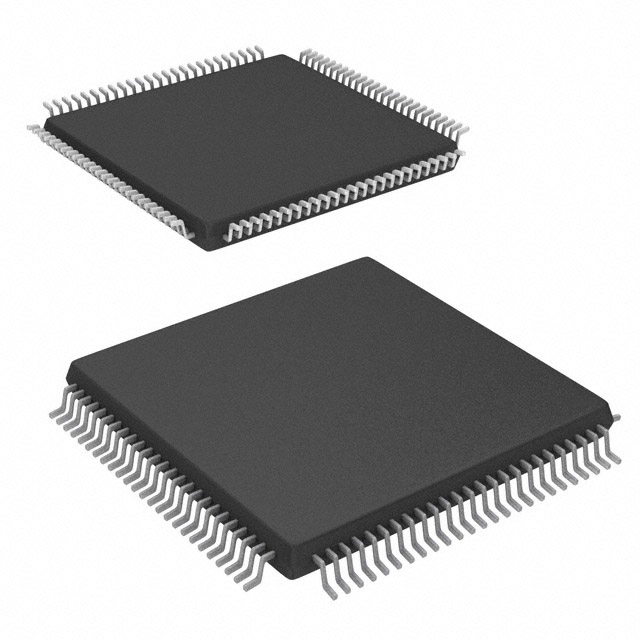
- 100-TQFP
- Datasheet:
-
 TW3811-TC1-CRT.pdf
- Description:
- IC INTERFACE SPECIALIZED 100TQFP
- Quantity:
- Payment:

- Shipping:

Inventory:4,200
Please send an inquiry. Send us your inquiry, and we will respond immediately.
Product details
Overview
TW3811-TC1-CRT from Intersil is a Security Link Over Coax (SLOC) receiver IC that decodes a single coaxial SLOC signal into separate analog CVBS video and 100BASE-T Ethernet digital video data. It integrates an AFE, digital modem, dual MII/RMII interfaces, and proprietary adaptive equalization for CVBS extension up to 500m over RG59 cable. Used in DVR/NVR systems and stand-alone SLOC-to-IP+CVBS converters.
For engineers reviewing the TW3811-TC1-CRT datasheet, TW3811-TC1-CRT pinout, TW3811-TC1-CRT application, or TW3811-TC1-CRT equivalent, key selection criteria include its dual-mode MII/RMII interface configuration, 36Mbps downlink/4Mbps uplink SLOC compliance, integrated PLL with 25MHz crystal support, and CVBS output linearity (≤5% luminance non-linearity) under real coax loading.
Technical Context
The TW3811-TC1-CRT implements a full-duplex SLOC physical layer using proprietary modulation to simultaneously carry IP video and analog CVBS over coax. Its internal architecture includes a band-pass filtered ADC path for CVBS recovery, a DSP-based digital modem for IP packet extraction, and dual configurable Ethernet interfaces (MIIA for MAC emulation, MIIB for PHY emulation).
It supports two operational modes via MODE_S3: Mode A (TW3811 acts as MAC, connects to external PHY) and Mode B (TW3811 acts as PHY, connects to external SoC/MAC). Register-controlled link speed (4Mbps uplink, 36Mbps downlink), Reed-Solomon error correction, and I²C-managed CVBS gain (0x30 register) enable robust deployment in variable-length coax environments.
Key Specifications
| Parameter | Value and Actual Design Meaning |
|---|---|
| Function | SLOC™ receiver IC converting coaxial SLOC signal to analog CVBS + 100BASE-T Ethernet data |
| Downlink Speed | 36Mbps - maximum data rate from TW3801 transmitter to TW3811-TC1-CRT, validated at 500m RG59 |
| Uplink Speed | 4Mbps - SLOC-compliant upstream rate for control and metadata; 3Mbps also acceptable for max reach |
| CVBS Output Linearity | ≤5% luminance non-linearity - measured at 1m coax with TW3801 input, ensuring broadcast-grade analog fidelity |
| Video Bandwidth | 5.4MHz (−3dB) - supports full NTSC/PAL resolution without high-frequency roll-off |
| Supply Voltages | 1.8V core (VDD_D), 3.3V I/O & analog (VDD_IO/VDD_A/VDD_DAC/VDD_PLL) - requires ferrite-bead filtering per pin |
| Crystal Interface | 25MHz ±50ppm - integrated PLL supports stable clock generation for both MII (25MHz) and RMII (50MHz) modes |
Pinout & Package
Package: 100-pin TQFP (12×12 mm, Pb-free, RoHS compliant, Q100.12X12A drawing).
| Pin/Terminal | Circuit Role | Design Meaning |
|---|---|---|
| COAX_IN (78) | Analog Input | High-impedance SLOC signal input; accepts composite modulated waveform from TW3801 over coax |
| COAX_OUT (67) | Analog Output | Current-source CVBS driver output; requires 75Ω termination + 150nH inductor for AC coupling to coax |
| CVBS_OUT (68) | Analog Output | Inverted CVBS baseband output; designed for EL8101 inverting amplifier stage with −2 gain |
| MII/RMII Pins (e.g., RX_D0A–RX_D3A, TX_CLKA, RX_CLKA, etc.) | Digital Interface | Configurable 4-bit MII or 2-bit RMII interface; MODE_S3 selects between MAC-emulation (Mode A) or PHY-emulation (Mode B) |
| I²C Interface (SCLK/SDA, A0/A1) | Control Interface | 2-wire serial bus for register access; A0/A1 set LSBs of MDIO PHY address (0x1E[6:4] sets MSBs) |
| XTAL_IN / XTAL_OUT (84/85) | Clock Input/Output | 25MHz crystal oscillator interface with internal feedback resistor and 22pF load caps; enables jitter-tolerant timing |
Key Features
| Feature | Design Value |
|---|---|
| Proprietary adaptive analog equalizer | Extends usable CVBS transmission distance to 500m over RG59 by compensating for coax frequency-dependent loss |
| SLOC-based IP camera detection | Automatically identifies and establishes link with compliant TW3801 transmitters without manual configuration |
| Dual MII/RMII interface with mode selection | Supports flexible system integration: Mode A (TW3811 as MAC → external PHY) or Mode B (TW3811 as PHY → SoC) |
| Integrated Reed-Solomon error correction | Monitors and reports bit errors in real time via registers 0x40–0x43; enables link health diagnostics and firmware adaptation |
| Configurable CVBS output gain | 7-bit programmable gain (register 0x30, 0x00–0x7F) allows dynamic adjustment to match downstream video processing chain |
Applications
| Single-Channel SLOC Receiver | Multi-Channel DVR Integration |
|---|---|
|
Use Scenario: Stand-alone SLOC-to-IP+CVBS converter module for legacy analog monitor + modern IP recording. IC Role / Device Role / Timing Role: TW3811-TC1-CRT serves as full SLOC physical layer decoder, recovering synchronized CVBS and Ethernet streams from one coax feed. Use Value: Eliminates need for separate coax video and Ethernet cabling-reduces installation cost and simplifies field upgrades of analog cameras. |
Use Scenario: Embedded SLOC receiver in multi-channel DVR supporting 4–16 analog/IP hybrid inputs. IC Role / Device Role / Timing Role: TW3811-TC1-CRT operates as dedicated SLOC channel front-end, interfacing directly to SoC's MII bus (Mode B) for low-latency IP ingestion. Use Value: Enables simultaneous preview (CVBS) and recording (IP) from same camera feed with <5ms end-to-end latency. |
| Coax-Based IP Camera Backhaul | Security System Field Upgrade Kit |
|
Use Scenario: Retrofitting existing RG59 infrastructure with IP cameras using TW3801/TW3811-TC1-CRT pair. IC Role / Device Role / Timing Role: TW3811-TC1-CRT terminates SLOC link at NVR side, providing native 100BASE-T Ethernet to switch fabric and CVBS to local display. Use Value: Achieves 36Mbps downlink bandwidth over legacy coax-exceeds standard 100BASE-T throughput due to SLOC framing efficiency. |
Use Scenario: OEM field kit enabling analog DVRs to accept SLOC-encoded IP video feeds without hardware redesign. IC Role / Device Role / Timing Role: TW3811-TC1-CRT functions as drop-in SLOC bridge, presenting CVBS to legacy DVR video inputs and Ethernet to auxiliary network port. Use Value: Preserves investment in analog DVR chassis while adding IP camera support-no PCB layout changes required. |
Equivalent & Alternatives
The following parts are listed as comparable options for similar SLOC receiver applications.
| Alternative Part | Technical Difference | Application Difference | Selection Advice |
|---|---|---|---|
| Intersil TW3811-TC1-CR | No "T" suffix - bulk/tray packaging vs. tape-and-reel; identical electrical specs and pinout | Same functional behavior; differs only in packaging format and reel compatibility | Select TW3811-TC1-CR for manual assembly or small-batch prototyping where tape-and-reel is unnecessary |
| Intersil TW3811-TC1-CR-EVAL | Evaluation board (not IC); includes reference schematic, layout, and firmware demo for TW3811-TC1-CRT | Used for validation and design-in support-not a drop-in replacement IC | Use TW3811-TC1-CR-EVAL to verify SLOC link performance, CVBS quality, and register configuration before committing to TW3811-TC1-CRT production |
Compared with TW3811-TC1-CR (bulk) and TW3811-TC1-CR-EVAL (board), the TW3811-TC1-CRT offers tape-and-reel packaging optimized for automated SMT placement, while retaining identical thermal, electrical, and functional behavior-making it the preferred choice for volume DVR/NVR manufacturing.
Availability
TW3811-TC1-CRT is available at Aetrix Electronics and suitable for security DVR/NVR development, coax-based IP camera backhaul, and analog-to-IP field upgrade programs requiring stable component supply across extended product lifecycles.
Supply support for TW3811-TC1-CRT includes scheduled delivery planning, volume procurement assistance, BOM continuity management, traceable sourcing, and lifecycle availability coordination for OEM customers, industrial embedded developers, connected-device designers, and electronics production programs.
Manufacturer
Intersil (now part of Renesas Electronics) is a semiconductor company specializing in precision analog, power management, and interface ICs for industrial, communications, and security applications.
The TW3811-TC1-CRT belongs to Intersil's SLOC™ transceiver family, engineered specifically to extend IP video capability over legacy coax infrastructure while preserving analog monitoring paths in professional security systems.
FAQ
What is the primary function of the TW3811-TC1-CRT in a SLOC system?
The TW3811-TC1-CRT is the receiver IC in the SLOC™ protocol stack, responsible for decoding a single coaxial SLOC signal into parallel analog CVBS video and 100BASE-T Ethernet digital video data. It performs analog equalization, digital demodulation, Reed-Solomon error correction, and MII/RMII interface bridging-enabling simultaneous analog preview and IP recording from one coax cable. Its operation is fully defined in the FN8284 Rev.1.00 datasheet.
Does the TW3811-TC1-CRT support both MII and RMII interfaces, and how is the mode selected?
Yes, the TW3811-TC1-CRT supports both MII and RMII interfaces. Mode selection is controlled by register 0x01[5] (Interface Selection) and pin LED_0 / MII_Mode_Select (53). When register 0x01[0] = 0, the pin state at power-on determines mode: >2.0V = MII, <0.8V = RMII. When register 0x01[0] = 1, the setting is software-controlled. The TW3811-TC1-CRT has been validated with Marvell 88E1111 and IC+ IP101A PHYs in both modes.
What is the maximum coaxial cable length supported by the TW3811-TC1-CRT, and what conditions ensure compliance?
The TW3811-TC1-CRT supports up to 500m of RG59 coaxial cable when used with the TW3801 transmitter and configured for 4Mbps uplink (register 0x0A = 0x04). This length is SLOC-compliance certified. Using 3Mbps (0x03) is acceptable for marginal installations. Performance depends on proper COAX_IN termination, LOAD_DRV 75Ω resistor placement, and CVBS equalization tuning-details are specified in the FN8284 Rev.1.00 application schematic.
How does the TW3811-TC1-CRT handle CVBS output quality, and what parameters are guaranteed?
The TW3811-TC1-CRT guarantees CVBS output performance under defined test conditions: ≤5% luminance non-linearity, ≤1.8% chroma gain distortion, ≤2° chroma phase distortion, 5.4MHz (−3dB) bandwidth, and 52.5dB SNR (unweighted). These values are measured with 1m RG59 coax, TW3801 input, and standard 5-step/modulated pedestal test patterns-as documented in the FN8284 Rev.1.00 Electrical Specifications table on page 6.
Can the TW3811-TC1-CRT operate without an external crystal, and what are the clock requirements?
No, the TW3811-TC1-CRT requires a 25MHz ±50ppm crystal connected to XTAL_IN (84) and XTAL_OUT (85) pins. The device integrates a PLL but does not support external clock input in lieu of crystal. The crystal must be paired with two 22pF load capacitors and a 1MΩ feedback resistor as shown in the reference schematic (page 2). Omitting the crystal prevents oscillator startup and renders the TW3811-TC1-CRT non-operational.
TW3811-TC1-CRT Specifications
- Product attributes
- Attribute value
- Manufacturer:
- Renesas
- Series:
- -
- Package/Case:
- 100-TQFP
- Packaging:
- Tape & Reel (TR)
- Product Status:
- Active
- Applications:
- Security Systems
- Interface:
- MII, RMII
- Voltage - Supply:
- 1.8V, 3.3V
- Supplier Device Package:
- 100-TQFP (12x12)
- Grade:
- -
- Qualification:
- -
- Mounting Type:
- Surface Mount
TW3811-TC1-CRT FAQ
1.How can I place an order for TW3811-TC1-CRT through Aetrix?
Please submit a Request for Quotation (RFQ) for TW3811-TC1-CRT on Aetrix. Our sales agent will provide a competitive quotation and guide you through the order confirmation once you accept the terms.
2.Are the price and stock information for TW3811-TC1-CRT reliable?
The price and inventory of TW3811-TC1-CRT are updated periodically and may fluctuate due to market conditions. Stock and pricing data are typically refreshed every 24 hours. Quotation validity for TW3811-TC1-CRT is usually 5 days.
3.What payment methods are accepted for TW3811-TC1-CRT?
We accept Wire Transfer, PayPal, Credit Card, Western Union, MoneyGram, and Escrow for TW3811-TC1-CRT transactions.
Note: Certain payment methods may incur a processing fee.
4.How is shipping managed for TW3811-TC1-CRT?
TW3811-TC1-CRT orders can be shipped via leading logistics carriers, including DHL, UPS, FedEx, TNT, or Registered Mail.
Once your TW3811-TC1-CRT order is processed, you will receive an email with the shipment details and tracking number.
Note: Tracking information may take up to 24 hours to appear. Express delivery typically takes 3–5 business days.
5.How can I obtain technical support or documentation for TW3811-TC1-CRT?
For technical support, including TW3811-TC1-CRT datasheets, pinout diagrams, or application guidance, please contact our engineering support team. They can provide detailed documentation and assistance for your TW3811-TC1-CRT requirements.
6.How does Aetrix verify that TW3811-TC1-CRT is sourced from the original manufacturer or authorized distributors?
All TW3811-TC1-CRT products on Aetrix are procured from qualified distributors and authorized channels. Our dedicated quality assurance team conducts strict verification, including traceability checks and, if necessary, third-party testing. This ensures that TW3811-TC1-CRT meets industry standards.
7.What is the process for return or replacement of TW3811-TC1-CRT?
All TW3811-TC1-CRT units undergo pre-shipment inspection (PSI). If there is an issue with TW3811-TC1-CRT, returns or replacements are accepted under the following conditions:
1.Quantity discrepancies, incorrect items, or visible external defects (such as breakage or corrosion), acknowledged by Aetrix.
2.The issue is reported within 90 days of delivery.
3.The TW3811-TC1-CRT part is unused and in its original packaging.
Return procedure for TW3811-TC1-CRT:
1.Submit a request within 90 days.
2.Obtain a Return Material Authorization (RMA) from Aetrix.
TW3811-TC1-CRT Tags
-
NVT4857UKAZ
NXP Semiconductors
-
TCA8418RTWR
Texas Instruments

-
PCA9546APWR
Texas Instruments

-
MD0100N8-G
Microchip Technology
-
PCA9548APW,118
NXP Semiconductors
-
PCA9540BDP,118
NXP Semiconductors
-
PCA9548APWR
Texas Instruments
-
PCA9546APW,118
NXP Semiconductors
-
PTN3360DBS,518
NXP Semiconductors
-
PCA9546ABS,118
NXP Semiconductors
-
PCA9518PWR
Texas Instruments
-
PCA9545APW,118
NXP Semiconductors
Tech Hub

TTL and CMOS logic families differ in thresholds, loading, output drive, power and timing. This engineering guide compares 74HC and 74HCT, calculates noise margins and checks 3.3 V/5 V compatibility.

A practical engineering guide to 3.3V and 5V logic compatibility, input thresholds, resistor dividers, translator ICs, MOSFET level shifting, I2C pull-ups, timing limits and power-sequencing risks.

The 74HC595 uses push-pull logic outputs, while the TPIC6B595 uses 50 V open-drain DMOS sinks for higher-power loads. This guide compares timing, current limits, 3.3 V interfacing, load wiring, thermal…

The 74HC595 converts serial data into eight stable parallel outputs. This guide covers pin functions, shift and storage timing, OE and MR behavior, drive-current limits, cascading, voltage compatibilit…

A technical comparison of level-sensitive latches and edge-triggered flip-flops, covering timing windows, setup and hold limits, master–slave operation, time borrowing, race-through, HDL inference and…

A D latch stores one bit while Enable controls when data can pass. This reference covers gate-level operation, truth tables, transparency, setup and hold timing, LE versus OE, common ICs and practical …

An SR latch stores one bit through cross-coupled feedback. This engineering reference covers NOR and NAND implementations, truth tables, forbidden-state recovery, gated operation, switch debouncing, fa…

Latch circuits retain one bit through feedback. This technical reference covers SR and D latches, truth tables, transparency, timing limits, latch-versus-flip-flop behavior, applications and common log…

An engineering guide to LED driver operation, constant-current and constant-voltage outputs, linear and switching topologies, dimming, IC selection, calculations, replacement compatibility, and fault c…

Operational amplifier guide covering op amp basics, feedback, ideal vs real op amps, common configurations, buffer circuits, offset, bias current, gain-bandwidth, slew rate, rail-to-rail limits and sel…


