
 My Inquiry
 My Account


Infineon Technologies TX984HTMA1
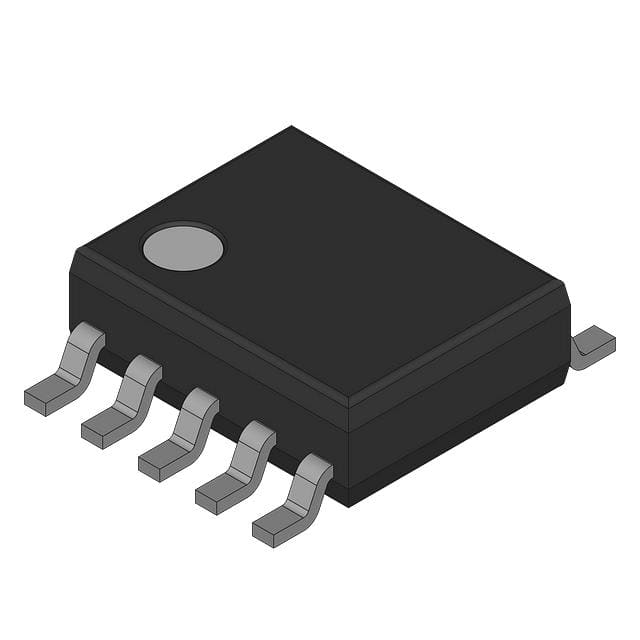
- Part No.:
- TX984HTMA1
- Manufacturer:
- Infineon Technologies
- Category:
- Specialized ICs
- Package:
- -
- Datasheet:
-
 TX984HTMA1.pdf
- Description:
- TX98-4 - ASK TRANSMITTER
- Quantity:
- Payment:

- Shipping:

Inventory:10,832
Please send an inquiry. Send us your inquiry, and we will respond immediately.
Product details
Overview
TX984HTMA1 from Infineon Technologies is a fully integrated ASK transmitter IC operating in the 433–435 MHz ISM band, featuring an on-chip PLL synthesizer, 13.56 MHz crystal oscillator, and high-efficiency power amplifier delivering +10 dBm RF output at 434 MHz. It supports ASK modulation via digital input (ASKDTA), operates from 2.1–4.0 V supply, and draws low quiescent current for battery-powered remote controls.
For engineers reviewing the TX984HTMA1 datasheet, TX984HTMA1 pinout, TX984HTMA1 application, or TX984HTMA1 equivalent, this device serves as a cost-optimized, single-chip RF solution for low-data-rate wireless control where minimal external components, extended battery life, and reliable 434 MHz transmission are critical design requirements.
Technical Context
The TX984HTMA1 implements a fully integrated PLL-based frequency synthesizer with no external VCO components required, locked to a 13.56 MHz fundamental-mode crystal connected at COSC. Its ASK modulation path directly gates the power amplifier using TTL/CMOS-compatible logic levels on ASKDTA, enabling simple microcontroller interfacing without baseband encoding.
Power management includes three defined modes: Power Down (PDWN = low), PLL Enable (PDWN = high, ASKDTA = low), and Transmit (PDWN = high, ASKDTA = high). The CLKOUT pin provides a divided 847.5 kHz clock synchronized to the internal oscillator, usable for µC timing or synchronization.
Key Specifications
| Parameter | Value and Actual Design Meaning |
|---|---|
| Operating Frequency | 433–435 MHz ISM band; fixed 434 MHz center frequency with ±1 MHz tolerance - enables regulatory-compliant unlicensed operation in ETSI EN 300 220-1. |
| RF Output Power | +10 dBm typical at PAOUT; sufficient for >30 m line-of-sight range with loop antenna - eliminates need for external PA stages. |
| Supply Voltage Range | 2.1–4.0 V DC; compatible with single-cell Li-ion (3.0–3.7 V) or two-cell alkaline (2.4–3.2 V) - supports direct battery connection without LDO. |
| Modulation Type | Amplitude Shift Keying (ASK); enabled/disabled via ASKDTA logic level - allows simple OOK-style data transmission without complex modulator circuitry. |
| Crystal Frequency | 13.56 MHz fundamental-mode crystal at COSC; drives integrated oscillator with negative impedance topology - ensures stable PLL reference without load capacitors. |
| CLKOUT Frequency | 847.5 kHz; exact division of 13.56 MHz by 16 - provides synchronous low-frequency clock for µC sleep/wake coordination or baud rate timing. |
| Operating Temperature | −40°C to +85°C; qualified for industrial-grade ambient conditions - suitable for garage door openers and outdoor home automation nodes. |
Pinout & Package
TX984HTMA1 is housed in a PG-TSSOP-10 package (3.0 × 4.4 mm, 0.65 mm pitch), thermally optimized for RF performance with dedicated PAGND and GND pins separated for analog/digital isolation.
| Pin/Terminal | Circuit Role | Design Meaning |
|---|---|---|
| 1 CLKOUT | Clock output driver | Provides 847.5 kHz square wave; requires external pull-up resistor per load - used for µC clock sync or low-speed timing reference. |
| 2 VS | Positive supply rail | 2.1–4.0 V main supply; must be decoupled with RF bypass capacitor directly to GND (pin 3) - minimizes supply noise coupling into RF path. |
| 3 GND | Analog/digital ground reference | Common return for logic and oscillator circuits; electrically isolated from PAGND (pin 8) to prevent PA switching noise injection. |
| 4 N.U.1 | No-connect terminal | Must remain unconnected - floating or tied to GND degrades oscillator stability and PLL phase noise. |
| 5 COSC | Crystal oscillator input | Connects to 13.56 MHz fundamental crystal; presents negative impedance - eliminates need for external load capacitors or bias resistors. |
| 6 ASKDTA | ASK modulation control input | Logic-level gate: >1.5 V or open = PA enabled; <0.5 V = PA disabled - enables direct µC GPIO-driven OOK transmission. |
| 7 N.U.2 | No-connect terminal | Must remain unconnected - routing or soldering compromises RF output matching and harmonic suppression. |
| 8 PAGND | Power amplifier ground | Dedicated RF ground return for PA stage; must be connected to PCB ground plane with shortest possible trace - critical for output power and spectral purity. |
| 9 PAOUT | RF power amplifier output | 434 MHz RF output port; matched to 50 Ω loop antenna via integrated matching network - requires no external matching components. |
| 10 PDWN | Power-down mode control | Active-low enable: low = full shutdown (IDD < 1 µA); high = PLL active - enables ultra-low-power standby between transmissions. |
Key Features
| Feature | Design Value |
|---|---|
| Fully integrated PLL synthesizer | Eliminates external VCO, loop filter, and reference divider - reduces BOM count and layout sensitivity while maintaining ±100 kHz frequency accuracy over temperature. |
| High-efficiency 10 dBm PA | Delivers +10 dBm at 434 MHz with 3.3 V supply and <12 mA average current in transmit mode - extends AA/AAA battery life to >1 year in intermittent remote use. |
| Low-pin-count ASK interface | Single digital input (ASKDTA) enables OOK modulation without Manchester encoding or carrier enable/disable sequencing - simplifies firmware and reduces µC resource usage. |
| Dedicated PAGND and GND separation | Prevents PA switching transients from coupling into oscillator and logic domains - maintains <−60 dBc spurious emission compliance per ETSI limits. |
| Divided clock output (CLKOUT) | 847.5 kHz output derived from 13.56 MHz crystal - provides precise, jitter-free timing source for µC sleep interval timers or low-speed UART baud generation. |
Applications
| Home Automation Lighting Control | Garage Door Opener Remote |
|---|---|
|
Use Scenario: Wireless wall switch controlling LED drivers or relay modules via 434 MHz link. IC Role / Device Role / Timing Role: ASK transmitter generating OOK-modulated command frames at 1–10 kbps; CLKOUT synchronizes µC wake-up intervals. Use Value: Enables compact, battery-operated switches with >2-year lifespan using CR2032 due to <1 µA shutdown current and efficient +10 dBm output. |
Use Scenario: Handheld fob transmitting secure rolling-code commands to garage receiver. IC Role / Device Role / Timing Role: RF front-end transmitter gated by microcontroller ASKDTA signal; PDWN manages deep-sleep between button presses. Use Value: Meets ETSI EN 300 220-1 radiated emission limits without shielding, thanks to integrated PA matching and PAGND isolation. |
| Wireless Curtain Control | Remote Keyless Entry (RKE) |
|
Use Scenario: Battery-powered motorized curtain controller receiving open/close commands from wall-mounted RF remote. IC Role / Device Role / Timing Role: Transmitter IC driving loop antenna; COSC pin accepts 13.56 MHz crystal for stable frequency reference across −40°C to +85°C. Use Value: Ensures consistent 434 MHz operation despite thermal drift, avoiding channel conflict in multi-device residential environments. |
Use Scenario: Compact automotive RKE fob sending encrypted unlock/lock signals to vehicle receiver. IC Role / Device Role / Timing Role: Low-voltage ASK transmitter operating down to 2.1 V - maintains functionality until battery reaches end-of-life voltage. Use Value: Supports wide supply range without external regulator, reducing system cost and board space in space-constrained fob designs. |
Equivalent & Alternatives
The following parts are listed as comparable options for similar ASK transmitter applications.
| Alternative Part | Technical Difference | Application Difference | Selection Advice |
|---|---|---|---|
| AX5043-1-TX | Sub-GHz transceiver (RX+TX), higher integration, SPI interface, 127 dBm sensitivity - requires external crystal and PA matching. | Supports bidirectional communication and packet handling; not a drop-in replacement for pure ASK transmit-only use. | Select when system requires receive capability or embedded packet engine; avoid if only simple OOK transmission is needed. |
| SI4010-C2-GM | Single-chip ASK/OOK transmitter with integrated EEPROM and MCU core; 434 MHz, +13 dBm output; programmable via I²C. | Includes on-chip firmware storage and key management - adds security features but increases BOM cost and firmware complexity. | Choose for secure RKE with rolling codes; prefer TX984HTMA1 for cost-sensitive, fixed-function remotes with minimal µC overhead. |
Compared with AX5043-1-TX and SI4010-C2-GM, TX984HTMA1 offers the lowest component count and simplest firmware interface for unidirectional ASK transmission, trading protocol flexibility and receive capability for minimal bill-of-materials and guaranteed ETSI-compliant output power.
Availability
TX984HTMA1 is available at Aetrix Electronics and suitable for home automation lighting control, garage door opener remotes, and wireless curtain systems requiring stable component supply, long-term lifecycle support, and consistent RF performance across production batches.
Supply support for TX984HTMA1 includes scheduled delivery planning, volume procurement assistance, BOM continuity management, traceable sourcing, and lifecycle availability coordination for OEM customers, industrial embedded developers, connected-device designers, and electronics production programs.
Manufacturer
Infineon Technologies AG is a German semiconductor manufacturer specializing in power management, RF, and automotive ICs, with global manufacturing and quality certification to ISO/TS 16949 and ISO 9001.
TX984HTMA1 belongs to Infineon's legacy Wireless Sense & Control product line, designed specifically for ultra-low-cost, low-power ASK transmitters targeting consumer remote control and industrial telemetry applications.
FAQ
What is the recommended crystal specification for COSC?
The COSC pin requires a 13.56 MHz fundamental-mode AT-cut quartz crystal with load capacitance ≤12.5 pF, series resistance ≤40 Ω, and frequency tolerance ≤±100 ppm. No external load capacitors are needed due to the integrated negative-impedance oscillator topology - only the crystal is connected between COSC and GND.
Can TX984HTMA1 drive a PCB trace antenna instead of a loop antenna?
No - the PAOUT pin is internally matched to a 50 Ω loop antenna configuration. Driving a PCB trace antenna requires external matching network redesign and violates the qualified RF performance envelope. Use only the specified loop antenna or certified ceramic chip antennas with 50 Ω feedpoint impedance.
What is the maximum data rate supported for ASK modulation?
The device supports ASK data rates up to 10 kbps with clean envelope rise/fall times (<2 µs) and minimal overshoot, verified per ETSI EN 300 220-1 mask requirements. Higher rates cause spectral spreading beyond the 200 kHz occupied bandwidth limit and increase bit error rate.
Is TX984HTMA1 RoHS compliant and halogen-free?
Yes - TX984HTMA1 conforms to RoHS Directive 2011/65/EU and is halogen-free per IEC 61249-2-21. The PG-TSSOP-10 package uses lead-free matte tin plating and green molding compound, with full material declarations available under Infineon's Product Change Notification (PCN) #PCN-2009-0042.
TX984HTMA1 Specifications
- Product attributes
- Attribute value
- Manufacturer:
- Infineon Technologies
- Series:
- *
- Package/Case:
- -
- Packaging:
- Bulk
- Product Status:
- Active
- Programmable:
- Not Verified
- Type:
- -
- Applications:
- -
- Mounting Type:
- -
- Supplier Device Package:
- -
- Grade:
- -
- Qualification:
- -
TX984HTMA1 FAQ
1.How can I place an order for TX984HTMA1 through Aetrix?
Please submit a Request for Quotation (RFQ) for TX984HTMA1 on Aetrix. Our sales agent will provide a competitive quotation and guide you through the order confirmation once you accept the terms.
2.Are the price and stock information for TX984HTMA1 reliable?
The price and inventory of TX984HTMA1 are updated periodically and may fluctuate due to market conditions. Stock and pricing data are typically refreshed every 24 hours. Quotation validity for TX984HTMA1 is usually 5 days.
3.What payment methods are accepted for TX984HTMA1?
We accept Wire Transfer, PayPal, Credit Card, Western Union, MoneyGram, and Escrow for TX984HTMA1 transactions.
Note: Certain payment methods may incur a processing fee.
4.How is shipping managed for TX984HTMA1?
TX984HTMA1 orders can be shipped via leading logistics carriers, including DHL, UPS, FedEx, TNT, or Registered Mail.
Once your TX984HTMA1 order is processed, you will receive an email with the shipment details and tracking number.
Note: Tracking information may take up to 24 hours to appear. Express delivery typically takes 3–5 business days.
5.How can I obtain technical support or documentation for TX984HTMA1?
For technical support, including TX984HTMA1 datasheets, pinout diagrams, or application guidance, please contact our engineering support team. They can provide detailed documentation and assistance for your TX984HTMA1 requirements.
6.How does Aetrix verify that TX984HTMA1 is sourced from the original manufacturer or authorized distributors?
All TX984HTMA1 products on Aetrix are procured from qualified distributors and authorized channels. Our dedicated quality assurance team conducts strict verification, including traceability checks and, if necessary, third-party testing. This ensures that TX984HTMA1 meets industry standards.
7.What is the process for return or replacement of TX984HTMA1?
All TX984HTMA1 units undergo pre-shipment inspection (PSI). If there is an issue with TX984HTMA1, returns or replacements are accepted under the following conditions:
1.Quantity discrepancies, incorrect items, or visible external defects (such as breakage or corrosion), acknowledged by Aetrix.
2.The issue is reported within 90 days of delivery.
3.The TX984HTMA1 part is unused and in its original packaging.
Return procedure for TX984HTMA1:
1.Submit a request within 90 days.
2.Obtain a Return Material Authorization (RMA) from Aetrix.
TX984HTMA1 Tags
-
CAP200DG-TL
Power Integrations
-
ATSHA204A-MAHDA-T
Microchip Technology

-
ATSHA204A-SSHDA-T
Microchip Technology
-
ATSHA204A-STUCZ-T
Microchip Technology
-
ATECC608B-MAHDA-T
Microchip Technology
-
ATECC608B-MAHCZ-S
Microchip Technology

-
ATECC608B-SSHDA-T
Microchip Technology
-
ATECC608B-MAHDA-S
Microchip Technology
-
ATECC608A-MAHDA-S
Microchip Technology
-
ATECC608B-MAVDA-T
Microchip Technology

-
ATECC608A-SSHDA-T
Microchip Technology
-
ATECC508A-MAHDA-T
Microchip Technology
Tech Hub

Operational amplifier guide covering op amp basics, feedback, ideal vs real op amps, common configurations, buffer circuits, offset, bias current, gain-bandwidth, slew rate, rail-to-rail limits and sel…

Jumper cables guide covering safe connection order, red and black clamp placement, final ground connection, cable gauge, length, clamp quality, copper vs CCA cables, jump starter comparison and battery…

LDO regulator guide covering low dropout voltage, power dissipation, thermal design, PSRR, output noise, capacitor stability, adjustable LDO circuits, LDO vs buck converter and datasheet selection chec…

Conditional Access Module guide covering CAM meaning, CI/CI+ interface, smart card authorization, DVB security workflow, TV and set-top box compatibility, internal electronics, ESD protection, connecto…

Guide to electronic component obsolescence covering EOL risk, PCN/PDN notices, last-time buy planning, replacement options, form-fit-function validation, counterfeit risk and BOM lifecycle management.

18650 battery guide covering lithium-ion cell basics, 3.6V/3.7V voltage, 4.2V charging, mAh and Wh capacity, protected cells, chargers, BMS, series-parallel packs, holders, welding and sourcing checks.…

Hall effect sensor guide covering working principle, linear and digital sensors, Arduino circuits, current sensing, speed detection, automotive applications, A3144 examples, signal filtering and datash…

Product Change Notification guide for electronic components, covering PCN meaning, PCN vs PDN/EOL, common change types, risk levels, form-fit-function review, engineering validation, BOM control, LTB/L…

A practical guide to blend door actuators, covering HVAC function, symptoms, location, AC and heater issues, reset and calibration, replacement cost, electrical diagnosis, compatibility checks, and rep…

Engineering guide to Raspberry Pi alternatives, covering chip-level differences, Orange Pi, ROCK, Jetson, Banana Pi, NanoPi, Compute Module, Pico, GPIO, camera, HAT compatibility, and replacement risks…


