
 My Inquiry
 My Account


Microchip Technology U4037B-NFLG3Y
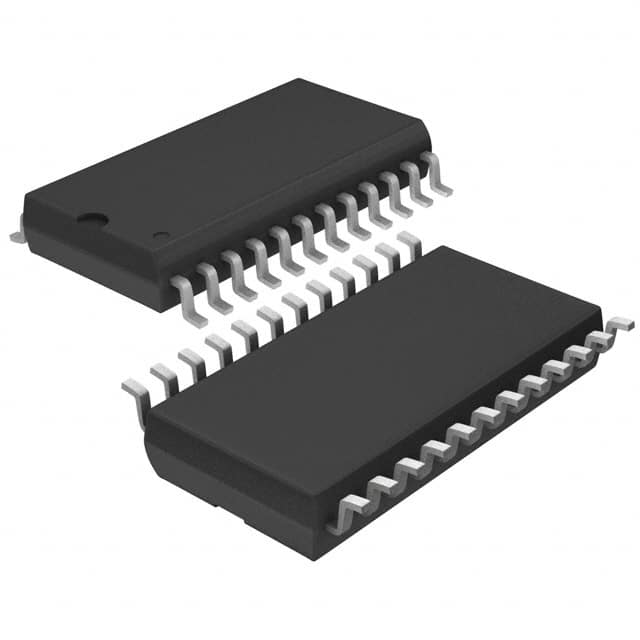
- Part No.:
- U4037B-NFLG3Y
- Manufacturer:
- Microchip Technology
- Category:
- Telecom
- Package:
- 24-SOIC (0.295", 7.50mm Width)
- Datasheet:
-
 U4037B-NFLG3Y.pdf
- Description:
- IC TELECOM INTERFACE 24SO
- Quantity:
- Payment:

- Shipping:

Inventory:3,175
Please send an inquiry. Send us your inquiry, and we will respond immediately.
Product details
Overview
U4037B-NFLG3Y from Atmel (now Microchip) is a line-powered, microcontroller-controlled telephone circuit IC for analog subscriber line interface in wired telephone sets. It integrates speech circuitry, tone-ringer interface, sidetone equivalent, ear-protection rectifiers, and DTMF handling - delivering 48 dB transmit gain, 12 dB receive gain, ±0.5 dB frequency response flatness (300–3400 Hz), and operation from as low as 8 mA line current.
For engineers reviewing the U4037B-NFLG3Y datasheet, U4037B-NFLG3Y pinout, U4037B-NFLG3Y application, or U4037B-NFLG3Y equivalent, key selection considerations include line-current-dependent gain control (AGA pin), symmetrical microphone/receiver amplifier topology, built-in anti-clipping and ear protection, and SO24-packaged integration of all core analog telephony functions without external transformers.
Technical Context
The U4037B-NFLG3Y implements a fully integrated analog front-end for POTS telephone sets, with independent transmit and receive amplification paths, programmable sidetone suppression via ST pin, and automatic line-loss compensation controlled by AGA resistor value. Its dual differential outputs (RECO1/RECO2, OUT1/OUT2) support balanced earpiece and ringer drive.
It features a dedicated DTMF amplifier path (41.7 dB typical gain), MUTE input for microphone disabling during dialing, and power-down mode (PD pin) that shorts VL and reduces quiescent current. All functional blocks - including VMP-regulated 3.4 V supply (4 mA capable) - are powered directly from the telephone line.
Key Specifications
| Parameter | Value and Actual Design Meaning |
|---|---|
| Transmit Gain | 48 dB typical - enables sufficient signal level for line transmission with minimal distortion at 2 mV MIC input |
| Receive Gain | 12 dB typical, adjustable from –8 to +12 dB - supports variable earpiece impedance and volume tuning |
| Frequency Response | ±0.5 dB over 300–3400 Hz - meets ITU-T G.107 loudness rating requirements for voiceband fidelity |
| Line Current Operation | Functional down to 8 mA - allows compatibility with legacy central office battery feed under high-loop-resistance conditions |
| VMP Output | 3.4 V regulated, 4 mA max - powers external microcontrollers or logic without auxiliary supply |
| DTMF Gain | 41.7 dB typical - ensures robust confidence-tone delivery to receiver during dialing |
| CMRR (MIC Amp) | 60–80 dB - rejects common-mode noise on balanced MIC1/MIC2 inputs |
Pinout & Package
U4037B-NFLG3Y is housed in a Pb-free SO24 package (15.55 × 7.5 mm, 1.27 mm pitch, 2.35 mm height), optimized for surface-mount assembly in compact telephone handsets and base units.
| Pin/Terminal | Circuit Role | Design Meaning |
|---|---|---|
| MIC1 / MIC2 | Inverting / non-inverting mic amp inputs | Accepts balanced electret microphone signal; 50 kΩ input resistance enables direct connection without bias network |
| RECO1 / RECO2 | Differential receiver amplifier outputs | Drives 68 nF + 100 Ω earpiece load differentially; 40 Ω output resistance ensures stable termination |
| AGA | Line-current gain adjustment node | Resistor-to-GND here sets automatic gain change range (±6 dB max) to compensate for loop resistance variation |
| ST | Sidetone reduction control input | 25 kΩ input resistance allows simple RC network to adjust local feedback attenuation independently of gain |
| PD | Power-down enable (active high) | Asserting PD shorts VL internally and cuts VB/VMP current - reduces standby consumption to 300 µA |
| VMP | Regulated 3.4 V supply output | Provides clean, low-noise power for MCU or peripheral logic; rated 4 mA in speech mode |
Key Features
| Feature | Design Value |
|---|---|
| Symmetrical microphone input | Enables noise-rejecting differential electret mic interface without external balun or transformer |
| Anti-clipping in transmit path | 0.5 ms attack / 9 ms release time prevents audio saturation during loud speech bursts |
| Built-in ear protection | Clips differential output at 2.2 Vrms to prevent acoustic trauma from high-level ring signals |
| Adjustable sidetone suppression | Independent of send/receive gain settings - maintains natural talker feedback across line conditions |
| Tone-ringer interface with 2-bit volume control | VOL1/MU-VOL2 pins select –24 dB to 0 dB ringer output steps - eliminates external DAC or attenuator |
Applications
| Telephone Handset Audio Processing | Wired Desk Phone Base Unit |
|---|---|
Use Scenario: Full-duplex voice communication in analog corded telephone handsets with electret microphone and dynamic earpiece. IC Role / Device Role / Timing Role: Primary analog signal processor - handles microphone preamplification, line coupling, sidetone generation, receiver amplification, and ear protection. Use Value: Eliminates need for discrete op-amps, transformers, and protection diodes; supports operation from 8 mA line current enabling use in long-loop installations. | Use Scenario: Central audio processing in desktop telephone base units requiring ringer drive, DTMF decoding interface, and mute control. IC Role / Device Role / Timing Role: Integrated speech and ringer controller - provides differential ringer output (OUT1/OUT2), DTMF input (DTMF pin), and mute activation (MU/VOL2 pin). Use Value: Reduces BOM count by integrating tone-ringer driver, DTMF amplifier, and 2-bit ringer volume DAC - no external buzzer driver or DTMF buffer required. |
| Central Office Line Card Interface | Emergency Telephone Station |
Use Scenario: Analog line interface module in telecom line cards where space and component count are constrained. IC Role / Device Role / Timing Role: Subscriber line interface IC (SLIC) analog front-end - manages line voltage sensing (VL), impedance matching (IMP), and line-loss compensation (AGA). Use Value: Supports automatic gain adaptation across 14–100 mA line currents; built-in IMP and IND pins simplify Z-balancing for hybrid echo cancellation. | Use Scenario: Ruggedized emergency phone in public infrastructure (e.g., elevator, tunnel) requiring fail-safe audio and low-power standby. IC Role / Device Role / Timing Role: Low-quiescent-power telephone interface - enables PD-mode sleep (300 µA), ear protection, and reliable DTMF signaling under marginal line conditions. Use Value: Maintains functionality at 8 mA line current and includes built-in anti-clipping and ear protection - critical for safety-compliant voice interfaces. |
Equivalent & Alternatives
The following parts are listed as comparable options for similar telephone line interface applications.
| Alternative Part | Technical Difference | Application Difference | Selection Advice |
|---|---|---|---|
| SLIC3101-IM | Higher integration: includes digital interface (SPI), internal ADC/DAC, and programmable DSP-based echo cancellation | Requires microcontroller firmware; not line-powered - needs external DC supply | Choose SLIC3101-IM when digital control, echo cancellation, or VoIP gateway compatibility is required |
| TP3067CP | Analog-only PCM codec; no line feed, ringer drive, or AGA-based gain control - requires external SLIC and ringer | Used in TDM-based systems with separate line interface; lacks ear protection and anti-clipping | Choose TP3067CP only when interfacing to an existing SLIC and ringer circuit, not as a full subscriber set solution |
Compared with SLIC3101-IM and TP3067CP, the U4037B-NFLG3Y uniquely delivers complete analog telephone set functionality - line power harvesting, ringer drive, DTMF interface, and ear protection - in a single SO24 IC without external transformers or digital control overhead.
Availability
U4037B-NFLG3Y is available at Aetrix Electronics and suitable for telephone handset design, wired desk phone manufacturing, and emergency communication system development requiring stable component supply and long-term lifecycle support.
Supply support for U4037B-NFLG3Y includes scheduled delivery planning, volume procurement assistance, BOM continuity management, traceable sourcing, and lifecycle availability coordination for OEM customers, industrial embedded developers, connected-device designers, and electronics production programs.
Manufacturer
Atmel Corporation - acquired by Microchip Technology in 2016 - specialized in high-reliability mixed-signal ICs for communications, automotive, and industrial applications.
The U4037B-NFLG3Y belongs to Atmel's CORD (Communications, Off-Hook, Ringing, Dialing) product line, designed specifically to replace discrete analog telephony circuits in POTS telephone sets with single-chip integration.
FAQ
What is the minimum line current required for U4037B-NFLG3Y to operate reliably?
The U4037B-NFLG3Y operates reliably down to 8 mA line current, maintaining specified receive gain (10.5–13.5 dB) and functional speech path integrity. Below this threshold, VMP regulation degrades and microphone preamplifier bias may become unstable. This low-current capability enables deployment in high-resistance telephone loops exceeding 3 km.
How does the AGA pin enable automatic line-loss compensation in U4037B-NFLG3Y?
The AGA pin on U4037B-NFLG3Y connects to a resistor-to-GND that sets the reference point for automatic gain adjustment. As line current increases from 14 to 100 mA, the internal circuit reduces transmit and receive gain by up to 6 dB - compensating for reduced line loss and preventing overdriving the central office interface. Measured ∆GTI = –5.8 dB typical at 100 mA confirms this behavior.
Can U4037B-NFLG3Y drive a standard 600 Ω telephone line directly?
No - U4037B-NFLG3Y is not a line driver IC and does not meet full POTS line interface specifications (e.g., -14 dBm output, 600 Ω impedance match, longitudinal balance). It requires external hybrid circuitry or transformer coupling to interface with the tip/ring line. Its VL, IMP, and IND pins support impedance adaptation but do not replace a compliant SLIC.
What is the purpose of the MU/VOL2 pin on U4037B-NFLG3Y, and how is it used?
The MU/VOL2 pin on U4037B-NFLG3Y serves dual function: (1) as 2-bit ringer volume control (codes 00 to 11 yield –24 dB to 0 dB steps), and (2) as microphone mute input - driven high during DTMF transmission to disable the microphone amplifier while routing DTMF tones to the line and receiver as confidence signal.
Does U4037B-NFLG3Y include built-in protection against acoustic feedback or loudspeaker damage?
Yes - U4037B-NFLG3Y includes two protection mechanisms: (1) ear protection limiting differential output (RECO1/RECO2) to 2.2 Vrms to prevent acoustic trauma, and (2) anti-clipping circuitry in the transmit path with 0.5 ms attack time to suppress peak microphone overdrive. These are confirmed in Electrical Characteristics tables (EP = 2.2 Vrms, TXACL timing).
U4037B-NFLG3Y Specifications
- Product attributes
- Attribute value
- Manufacturer:
- Microchip Technology
- Series:
- -
- Package/Case:
- 24-SOIC (0.295", 7.50mm Width)
- Packaging:
- Tape & Reel (TR)
- Product Status:
- Obsolete
- Function:
- Speech and Ringer Circuit
- Interface:
- -
- Number of Circuits:
- 1
- Voltage - Supply:
- 3.1V ~ 3.6V
- Current - Supply:
- -
- Power (Watts):
- 520 W
- Operating Temperature:
- -25°C ~ 75°C
- Grade:
- -
- Qualification:
- -
- Mounting Type:
- Surface Mount
- Supplier Device Package:
- 24-SO
U4037B-NFLG3Y FAQ
1.How can I place an order for U4037B-NFLG3Y through Aetrix?
Please submit a Request for Quotation (RFQ) for U4037B-NFLG3Y on Aetrix. Our sales agent will provide a competitive quotation and guide you through the order confirmation once you accept the terms.
2.Are the price and stock information for U4037B-NFLG3Y reliable?
The price and inventory of U4037B-NFLG3Y are updated periodically and may fluctuate due to market conditions. Stock and pricing data are typically refreshed every 24 hours. Quotation validity for U4037B-NFLG3Y is usually 5 days.
3.What payment methods are accepted for U4037B-NFLG3Y?
We accept Wire Transfer, PayPal, Credit Card, Western Union, MoneyGram, and Escrow for U4037B-NFLG3Y transactions.
Note: Certain payment methods may incur a processing fee.
4.How is shipping managed for U4037B-NFLG3Y?
U4037B-NFLG3Y orders can be shipped via leading logistics carriers, including DHL, UPS, FedEx, TNT, or Registered Mail.
Once your U4037B-NFLG3Y order is processed, you will receive an email with the shipment details and tracking number.
Note: Tracking information may take up to 24 hours to appear. Express delivery typically takes 3–5 business days.
5.How can I obtain technical support or documentation for U4037B-NFLG3Y?
For technical support, including U4037B-NFLG3Y datasheets, pinout diagrams, or application guidance, please contact our engineering support team. They can provide detailed documentation and assistance for your U4037B-NFLG3Y requirements.
6.How does Aetrix verify that U4037B-NFLG3Y is sourced from the original manufacturer or authorized distributors?
All U4037B-NFLG3Y products on Aetrix are procured from qualified distributors and authorized channels. Our dedicated quality assurance team conducts strict verification, including traceability checks and, if necessary, third-party testing. This ensures that U4037B-NFLG3Y meets industry standards.
7.What is the process for return or replacement of U4037B-NFLG3Y?
All U4037B-NFLG3Y units undergo pre-shipment inspection (PSI). If there is an issue with U4037B-NFLG3Y, returns or replacements are accepted under the following conditions:
1.Quantity discrepancies, incorrect items, or visible external defects (such as breakage or corrosion), acknowledged by Aetrix.
2.The issue is reported within 90 days of delivery.
3.The U4037B-NFLG3Y part is unused and in its original packaging.
Return procedure for U4037B-NFLG3Y:
1.Submit a request within 90 days.
2.Obtain a Return Material Authorization (RMA) from Aetrix.
U4037B-NFLG3Y Tags

-
LMC567CMX/NOPB
Texas Instruments
-
LM567CMX/NOPB
Texas Instruments
-
LM567CM/NOPB
Texas Instruments
-
VSC8531XMW-02
Microchip Technology
-
VSC8531XMW-05
Microchip Technology

-
GPY115C0VI
MaxLinear, Inc.
-
SI32185-A-FMR
Skyworks Solutions Inc.
-
VSC8541XMV-05
Microchip Technology
-
SI32178-B-FM1R
Skyworks Solutions Inc.
-
GPY215C0VI
MaxLinear, Inc.
-
CPC7514ZTR
Littelfuse Inc.
-
VSC8502XML-03
Microchip Technology
Tech Hub

TTL and CMOS logic families differ in thresholds, loading, output drive, power and timing. This engineering guide compares 74HC and 74HCT, calculates noise margins and checks 3.3 V/5 V compatibility.

A practical engineering guide to 3.3V and 5V logic compatibility, input thresholds, resistor dividers, translator ICs, MOSFET level shifting, I2C pull-ups, timing limits and power-sequencing risks.

The 74HC595 uses push-pull logic outputs, while the TPIC6B595 uses 50 V open-drain DMOS sinks for higher-power loads. This guide compares timing, current limits, 3.3 V interfacing, load wiring, thermal…

The 74HC595 converts serial data into eight stable parallel outputs. This guide covers pin functions, shift and storage timing, OE and MR behavior, drive-current limits, cascading, voltage compatibilit…

A technical comparison of level-sensitive latches and edge-triggered flip-flops, covering timing windows, setup and hold limits, master–slave operation, time borrowing, race-through, HDL inference and…

A D latch stores one bit while Enable controls when data can pass. This reference covers gate-level operation, truth tables, transparency, setup and hold timing, LE versus OE, common ICs and practical …

An SR latch stores one bit through cross-coupled feedback. This engineering reference covers NOR and NAND implementations, truth tables, forbidden-state recovery, gated operation, switch debouncing, fa…

Latch circuits retain one bit through feedback. This technical reference covers SR and D latches, truth tables, transparency, timing limits, latch-versus-flip-flop behavior, applications and common log…

An engineering guide to LED driver operation, constant-current and constant-voltage outputs, linear and switching topologies, dimming, IC selection, calculations, replacement compatibility, and fault c…

Operational amplifier guide covering op amp basics, feedback, ideal vs real op amps, common configurations, buffer circuits, offset, bias current, gain-bandwidth, slew rate, rail-to-rail limits and sel…


