
 My Inquiry
 My Account


Microchip Technology U4082B-MFLG
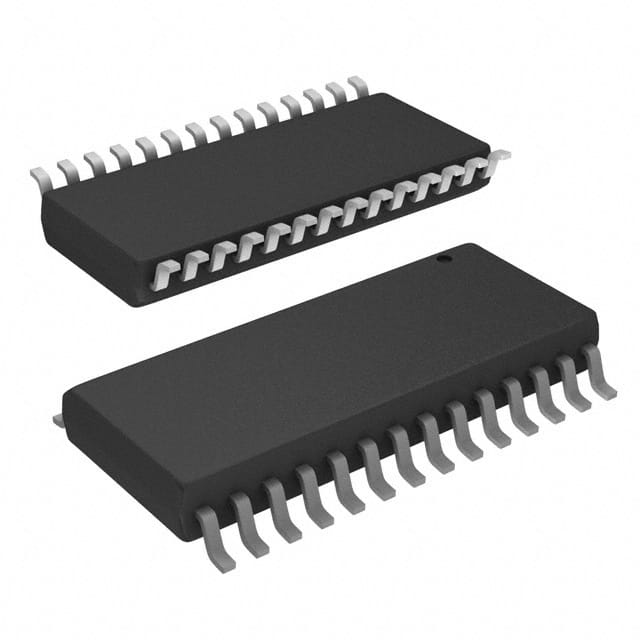
- Part No.:
- U4082B-MFLG
- Manufacturer:
- Microchip Technology
- Category:
- Telecom
- Package:
- 28-SOIC (0.295", 7.50mm Width)
- Datasheet:
-
 U4082B-MFLG.pdf
- Description:
- IC TELECOM INTERFACE 28SO
- Quantity:
- Payment:

- Shipping:

Inventory:1,796
Please send an inquiry. Send us your inquiry, and we will respond immediately.
Product details
Overview
U4082B-MFLG from Microsemi (now Microchip) is a low-voltage, voice-switched speakerphone IC designed for hands-free telephony systems. It integrates transmit/receive attenuators with 52 dB gain range, four-point signal sensing, background noise monitoring, dial tone detection, and on-board filter circuitry. It operates from 3V to 6.5V and supports line-powered or standalone operation via Tip/Ring coupling - ideal for cordless phone base stations and VoIP speakerphones.
For engineers reviewing the U4082B-MFLG datasheet, U4082B-MFLG pinout, U4082B-MFLG application, or U4082B-MFLG equivalent, key selection considerations include its half-duplex switching logic, hybrid amplifier interface capability, CT-controlled mode timing, VB-biased analog architecture, and compatibility with U4083B speaker amplifier in full system design.
Technical Context
The U4082B-MFLG implements a dual-path, level-detector-driven voice switch using two independent receive/transmit detector pairs (RLI1/RLO1 & RLI2/RLO2; TLI1/TLO1 & TLI2/TLO2), each feeding comparators that drive an attenuator control block. Its CT pin (14) voltage relative to VB directly encodes operating mode: +240 mV = receive, –240 mV = transmit, 0 V = idle.
Background noise rejection is achieved via two dedicated monitors (CPR/CPT pins) using slow-charge/fast-decay RC time constants (~4.7 s), while AGC reduces receive gain by up to 25 dB below 3.5 V supply to maintain stability on long telephone lines. The microphone amplifier features all-NPN output stage for reactive-load stability and >1 MHz gain-bandwidth.
Key Specifications
| Parameter | Value and Actual Design Meaning |
|---|---|
| Supply Voltage Range | 3.0 V to 6.5 V - enables direct line-power operation (5.5 mA typical) or battery-powered designs without external regulators. |
| Transmit/Receive Attenuation Range | 52 dB - ensures loop gain remains <1 across acoustic and electrical paths, preventing oscillation in speakerphone configurations. |
| CT Control Voltage Swing | ±240 mV vs VB - provides precise, rail-independent mode control; allows external RC tuning of fast idle (30 ms) and slow idle (1 s) transitions. |
| VB Output | ≈ VS/2 (e.g., 2.4 V at VS = 5.0 V) - serves as system AC ground and bias reference for all amplifiers and level detectors. |
| Dial Tone Detection Threshold | 10–20 mVrms at RI pin - prevents false idle entry during dial tone reception, maintaining full receive gain until speech begins. |
| Microphone Amp Gain Bandwidth | 1.0 MHz - supports wideband audio fidelity and stable operation into capacitive loads (e.g., transformer-coupled mics). |
| Hybrid Amplifier Output Swing | Typ. 1.2 Vpp below VS - delivers sufficient headroom for 2-wire to 4-wire conversion with standard telephone line transformers. |
Pinout & Package
U4082B-MFLG is housed in a 28-pin SOIC (SO28) package with 0.3-inch body width and standard JEDEC MS-012AC footprint. Pin 28 is GND; pin 4 is VS; pin 15 is VB (system AC ground); pin 14 is CT (attenuator control); pins 5/6 are differential HTO+ and HTO– outputs for hybrid transformer interface.
| Pin | Circuit Role | Design Meaning |
|---|---|---|
| 1 (FO) | Filter output | Low-impedance buffer (<50 Ω) driving external high-pass/low-pass/band-pass networks to suppress 60 Hz hum or prevent acoustic feedback. |
| 3 (CD) | Chip disable | Logic input: low = active, high = power-down - disables mic/hybrid amps and level detectors while preserving filter/attenuator bias. |
| 9 (TI) / 21 (RI) | Attenuator inputs | 10 kΩ input impedance; max 350 mVrms signal - accepts mic/speaker and line-side signals for real-time level comparison. |
| 13 (VCI) | Volume control input | Voltage referenced to VB (0.3×VB to VB) - adjusts receive gain only, enabling user volume control without affecting transmit path or idle behavior. |
| 14 (CT) | Attenuator control | Analog control node: ±240 mV vs VB sets transmit/receive mode; internal current sources and 2 kΩ fast-discharge path enable precise timing control. |
| 17–20, 23–26 | Level detector I/O | Four dedicated pairs (TLI1/TLO1, TLI2/TLO2, RLI1/RLO1, RLI2/RLO2) - enable independent sensitivity tuning per path using external RC networks. |
Key Features
| Feature | Design Value |
|---|---|
| Four-point signal sensing | Independent level detection on both line-side (TLI1/RLI1) and speaker/mic-side (TLI2/RLI2) paths - eliminates false triggering from echo or near-end noise. |
| Background noise monitoring | Dual RC-based monitors (CPR/CPT) with ~4.7 s time constant - distinguishes speech bursts from steady-state room/line noise, improving talker detection reliability. |
| AGC for low-voltage operation | Reduces receive gain up to 25 dB when VS < 3.5 V - maintains stable speaker output and prevents supply sag on long telephone lines. |
| Dial tone detector | 15 mV threshold comparator referenced to VB - holds receive path active during dial tone, avoiding premature fade to idle mode. |
| Hybrid amplifier interface | Differential HTO+/HTO– outputs with –1 fixed gain stage - simplifies 2-wire to 4-wire conversion using off-the-shelf coupling transformers. |
Applications
| Cordless Phone Base Station | VoIP Speakerphone Terminal |
|---|---|
Use Scenario: Full-duplex conversation over PSTN or SIP trunk with hands-free operation in home/office environments. IC Role / Device Role / Timing Role: Voice-switched attenuator controller managing half-duplex path selection, hybrid interface, and background noise-adaptive gain control. Use Value: Prevents acoustic howl and line echo via 52 dB attenuation range and fast (30 ms) mode switching, while maintaining intelligibility in ambient noise up to 65 dB SPL. |
Use Scenario: USB or Ethernet-connected speakerphone supporting remote conferencing with local mic/speaker and network audio streaming. IC Role / Device Role / Timing Role: Analog front-end voice switch coordinating mic preamp, line-level receive path, and hybrid-coupled transmit path under software-defined CT control. Use Value: Enables seamless integration with U4083B speaker amplifier and digital codec; VB-referenced architecture simplifies single-supply mixed-signal board layout. |
| Hotel/Multi-line Telephone System | Emergency Intercom Unit |
Use Scenario: Shared speakerphone unit serving multiple room lines with automatic line seizure and talker priority arbitration. IC Role / Device Role / Timing Role: Centralized voice activity detector and path attenuator with dial tone hold and fast idle resolution for multi-talker contention. Use Value: Four-level detector architecture resolves simultaneous talker conflicts (fast idle) and recovers rapidly (30 ms) when one speaker dominates - critical for multi-line call handover. |
Use Scenario: Ruggedized wall-mounted intercom for fire command centers or industrial facilities requiring reliable hands-free communication amid machinery noise. IC Role / Device Role / Timing Role: Noise-immune voice switch with background monitor and adjustable mic gain - operates from 3 V battery or PoE-derived supply. Use Value: CPR/CPT-based noise tracking maintains talker detection accuracy in broadband noise >80 dB(A); low 2.8 V minimum operation extends battery life in backup mode. |
Equivalent & Alternatives
The following parts are listed as comparable options for similar voice-switched speakerphone applications.
| Alternative Part | Technical Difference | Application Difference | Selection Advice |
|---|---|---|---|
| SLAB001A (Silicon Labs) | Digital voice switch with integrated ADC/DAC and I²C control; no analog CT/VB architecture; requires external µC for mode management. | Targets modern VoIP platforms needing firmware-upgradable features; lacks native hybrid amplifier outputs and line-power capability. | Select SLAB001A only when digital control, audio processing, or firmware configurability outweighs analog simplicity and line-power operation. |
| TP3067 (Texas Instruments) | Single-chip PCM codec with built-in speakerphone algorithm; fixed 64 kbps TDM interface; no discrete level detector pins or VB reference. | Suitable for T1/E1 channel banks or digital PBX systems; not designed for analog Tip/Ring interfacing or transformer-coupled hybrids. | Choose TP3067 for time-division multiplexed telephony infrastructure; avoid for analog standalone speakerphone designs requiring CT timing or hybrid amp outputs. |
Compared with SLAB001A and TP3067, U4082B-MFLG offers direct analog control of half-duplex switching via CT voltage, native hybrid amplifier outputs, and true line-powered operation - making it uniquely suited for cost-sensitive, analog-centric speakerphone hardware without embedded processor dependency.
Availability
U4082B-MFLG is available at Aetrix Electronics and suitable for cordless phone base stations, VoIP speakerphone terminals, hotel multi-line systems, emergency intercom units, and analog telephony interface modules requiring stable component supply and long-lifecycle support.
Supply support for U4082B-MFLG includes scheduled delivery planning, volume procurement assistance, BOM continuity management, traceable sourcing, and lifecycle availability coordination for OEM customers, industrial embedded developers, connected-device designers, and electronics production programs.
Manufacturer
Microsemi (acquired by Microchip Technology in 2018) specialized in high-reliability analog and mixed-signal ICs for communications, aerospace, and industrial applications.
The U4082B-MFLG belongs to Microsemi's legacy telephony analog front-end product line, engineered specifically for robust, low-power, transformer-coupled speakerphone systems operating directly from telephone line power or minimal DC supplies.
FAQ
What is the minimum supply voltage required for functional operation of the U4082B-MFLG?
The U4082B-MFLG operates down to 2.8 V, though recommended conditions specify 3.5 V minimum for full performance. At 2.8 V, AGC reduces receive gain by up to 25 dB to maintain stability; supply current remains ~5.5 mA. Below 2.8 V, functionality degrades progressively, and the device may fail to enter transmit mode reliably. Always verify VB output and CT swing under actual low-VS conditions in U4082B-MFLG designs.
How does the U4082B-MFLG handle simultaneous speech from both parties?
The U4082B-MFLG enters "Fast Idle" mode when level detectors disagree - e.g., strong signal at TLI2 but also strong signal at RLI1 - indicating bidirectional speech. This triggers rapid (30 ms) attenuation of both paths to break the acoustic loop. Fast Idle persists until one side dominates by ≥4 dB (set by 36 mV comparator offset), after which normal transmit or receive mode resumes. This behavior is intrinsic to U4082B-MFLG's dual-comparator control architecture.
Can the U4082B-MFLG be used without a coupling transformer?
Yes - the U4082B-MFLG supports transformerless operation via handset speech network interface (as shown in Figure 1-2), using HTI/HTO+ and HTO– pins with external resistive feedback. However, transformer coupling is strongly recommended for PSTN line isolation, common-mode noise rejection, and impedance matching. Transformerless use is limited to isolated, low-noise internal audio buses and requires careful PCB layout to avoid ground loops in U4082B-MFLG implementations.
What is the role of the VB pin in U4082B-MFLG system design?
VB (pin 15) is a buffered mid-supply reference ≈VS/2, serving as AC ground and bias point for all internal amplifiers, level detectors, and attenuators. Its 400 Ω output impedance and requirement for external decoupling (typically 2–10 µF) make it critical for PSRR - achieving 54 dB rejection at 1 kHz. All signal references (e.g., CT, VCI, MUTE) are defined relative to VB, so improper VB decoupling directly degrades U4082B-MFLG switching accuracy and noise immunity.
Is the U4082B-MFLG pin-compatible with earlier U4082 variants like U4082A?
No - U4082B-MFLG is not pin-compatible with U4082A. While both are 28-pin SOIC voice-switched ICs, U4082B introduces revised level detector thresholds, updated AGC behavior below 3.5 V, and modified CT drive characteristics. Pin functions differ at TLI1/TLI2, RLI1/RLI2, and CPR/CPT locations. Migration from U4082A to U4082B-MFLG requires schematic and layout revision; consult Rev. 4743D datasheet for full U4082B-MFLG pin mapping and validation.
U4082B-MFLG Specifications
- Product attributes
- Attribute value
- Manufacturer:
- Microchip Technology
- Series:
- -
- Package/Case:
- 28-SOIC (0.295", 7.50mm Width)
- Packaging:
- Tube
- Product Status:
- Obsolete
- Function:
- Voice-Switched Speakerphone
- Interface:
- -
- Number of Circuits:
- 1
- Voltage - Supply:
- 3.5V ~ 6.5V
- Current - Supply:
- 5.5mA
- Power (Watts):
- 520 W
- Operating Temperature:
- -20°C ~ 60°C
- Grade:
- -
- Qualification:
- -
- Mounting Type:
- Surface Mount
- Supplier Device Package:
- 28-SO
U4082B-MFLG FAQ
1.How can I place an order for U4082B-MFLG through Aetrix?
Please submit a Request for Quotation (RFQ) for U4082B-MFLG on Aetrix. Our sales agent will provide a competitive quotation and guide you through the order confirmation once you accept the terms.
2.Are the price and stock information for U4082B-MFLG reliable?
The price and inventory of U4082B-MFLG are updated periodically and may fluctuate due to market conditions. Stock and pricing data are typically refreshed every 24 hours. Quotation validity for U4082B-MFLG is usually 5 days.
3.What payment methods are accepted for U4082B-MFLG?
We accept Wire Transfer, PayPal, Credit Card, Western Union, MoneyGram, and Escrow for U4082B-MFLG transactions.
Note: Certain payment methods may incur a processing fee.
4.How is shipping managed for U4082B-MFLG?
U4082B-MFLG orders can be shipped via leading logistics carriers, including DHL, UPS, FedEx, TNT, or Registered Mail.
Once your U4082B-MFLG order is processed, you will receive an email with the shipment details and tracking number.
Note: Tracking information may take up to 24 hours to appear. Express delivery typically takes 3–5 business days.
5.How can I obtain technical support or documentation for U4082B-MFLG?
For technical support, including U4082B-MFLG datasheets, pinout diagrams, or application guidance, please contact our engineering support team. They can provide detailed documentation and assistance for your U4082B-MFLG requirements.
6.How does Aetrix verify that U4082B-MFLG is sourced from the original manufacturer or authorized distributors?
All U4082B-MFLG products on Aetrix are procured from qualified distributors and authorized channels. Our dedicated quality assurance team conducts strict verification, including traceability checks and, if necessary, third-party testing. This ensures that U4082B-MFLG meets industry standards.
7.What is the process for return or replacement of U4082B-MFLG?
All U4082B-MFLG units undergo pre-shipment inspection (PSI). If there is an issue with U4082B-MFLG, returns or replacements are accepted under the following conditions:
1.Quantity discrepancies, incorrect items, or visible external defects (such as breakage or corrosion), acknowledged by Aetrix.
2.The issue is reported within 90 days of delivery.
3.The U4082B-MFLG part is unused and in its original packaging.
Return procedure for U4082B-MFLG:
1.Submit a request within 90 days.
2.Obtain a Return Material Authorization (RMA) from Aetrix.
U4082B-MFLG Tags

-
LMC567CMX/NOPB
Texas Instruments
-
LM567CMX/NOPB
Texas Instruments
-
LM567CM/NOPB
Texas Instruments
-
VSC8531XMW-02
Microchip Technology
-
VSC8531XMW-05
Microchip Technology

-
GPY115C0VI
MaxLinear, Inc.
-
SI32185-A-FMR
Skyworks Solutions Inc.
-
VSC8541XMV-05
Microchip Technology
-
SI32178-B-FM1R
Skyworks Solutions Inc.
-
GPY215C0VI
MaxLinear, Inc.
-
CPC7514ZTR
Littelfuse Inc.
-
VSC8502XML-03
Microchip Technology
Tech Hub

TTL and CMOS logic families differ in thresholds, loading, output drive, power and timing. This engineering guide compares 74HC and 74HCT, calculates noise margins and checks 3.3 V/5 V compatibility.

A practical engineering guide to 3.3V and 5V logic compatibility, input thresholds, resistor dividers, translator ICs, MOSFET level shifting, I2C pull-ups, timing limits and power-sequencing risks.

The 74HC595 uses push-pull logic outputs, while the TPIC6B595 uses 50 V open-drain DMOS sinks for higher-power loads. This guide compares timing, current limits, 3.3 V interfacing, load wiring, thermal…

The 74HC595 converts serial data into eight stable parallel outputs. This guide covers pin functions, shift and storage timing, OE and MR behavior, drive-current limits, cascading, voltage compatibilit…

A technical comparison of level-sensitive latches and edge-triggered flip-flops, covering timing windows, setup and hold limits, master–slave operation, time borrowing, race-through, HDL inference and…

A D latch stores one bit while Enable controls when data can pass. This reference covers gate-level operation, truth tables, transparency, setup and hold timing, LE versus OE, common ICs and practical …

An SR latch stores one bit through cross-coupled feedback. This engineering reference covers NOR and NAND implementations, truth tables, forbidden-state recovery, gated operation, switch debouncing, fa…

Latch circuits retain one bit through feedback. This technical reference covers SR and D latches, truth tables, transparency, timing limits, latch-versus-flip-flop behavior, applications and common log…

An engineering guide to LED driver operation, constant-current and constant-voltage outputs, linear and switching topologies, dimming, IC selection, calculations, replacement compatibility, and fault c…

Operational amplifier guide covering op amp basics, feedback, ideal vs real op amps, common configurations, buffer circuits, offset, bias current, gain-bandwidth, slew rate, rail-to-rail limits and sel…


