
 My Inquiry
 My Account


Microchip Technology U4082B-MFLG3G
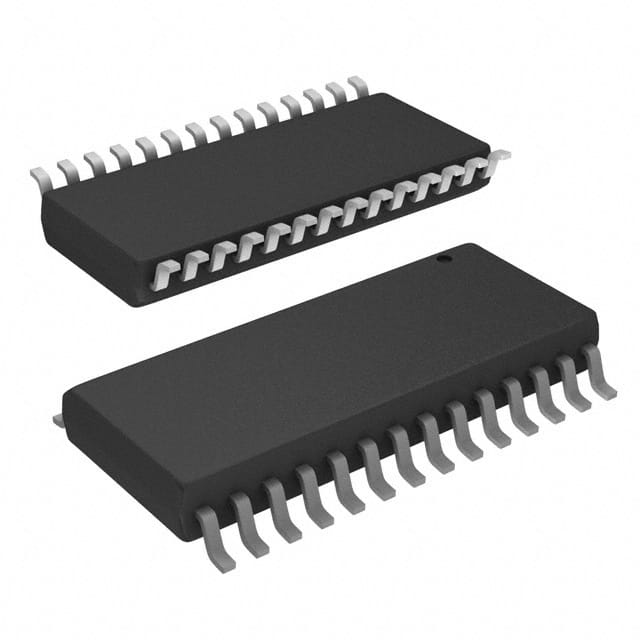
- Part No.:
- U4082B-MFLG3G
- Manufacturer:
- Microchip Technology
- Category:
- Telecom
- Package:
- 28-SOIC (0.295", 7.50mm Width)
- Datasheet:
-
 U4082B-MFLG3G.pdf
- Description:
- IC TELECOM INTERFACE 28SO
- Quantity:
- Payment:

- Shipping:

Inventory:3,664
Please send an inquiry. Send us your inquiry, and we will respond immediately.
Product details
Overview
U4082B-MFLG3G from Microsemi (now Microchip Technology) is a low-voltage voice-switched speakerphone IC designed for hands-free telephony systems. It integrates transmit/receive attenuators with 52 dB gain range, four-point signal sensing, background noise monitoring, dial tone detection, and on-board filter circuitry. It operates from 3V to 6.5V and supports quasi-duplex operation in telephone line–powered or standalone configurations using coupling transformers.
For engineers reviewing the U4082B-MFLG3G datasheet, U4082B-MFLG3G pinout, U4082B-MFLG3G application, or U4082B-MFLG3G equivalent, key selection considerations include its hybrid amplifier interface capability, CT-controlled mode switching timing, volume-controlled receive gain range (0–35 dB), AGC behavior below 3.5V, and compatibility with U4083B speaker amplifier in full speakerphone designs.
Technical Context
The U4082B-MFLG3G implements a dual-path half-duplex control architecture using two independent level detector pairs (TLI1/RLO1 and TLI2/RLO2) feeding comparators that drive an attenuator control block. Its CT pin (14) voltage-ranging from –240 mV to +240 mV relative to VB-directly determines operating mode: transmit (+6 dB TX / –46 dB RX), receive (–46 dB TX / +6 dB RX), or idle (–20 dB each).
Background noise monitoring uses external RC networks at CPT (pin 16) and CPR (pin 27) to distinguish speech bursts from steady-state noise, with a built-in 36 mV comparator offset ensuring ≥4 dB signal-to-noise discrimination. The microphone amplifier (pins 10/11) features all-NPN output stage for stability with reactive loads, 80 dB open-loop gain, and 1 MHz gain-bandwidth product.
Key Specifications
| Parameter | Value and Actual Design Meaning |
|---|---|
| Supply Voltage | 3.5 V to 6.5 V typical; supports line-powered operation down to 2.8 V with AGC activation |
| Attenuator Gain Range | 52 dB between transmit and receive paths; sum of gains held constant within ±0.1 dB |
| CT Control Voltage | –240 mV (TX), 0 mV (idle), +240 mV (RX) relative to VB; defines real-time mode state |
| Volume Control Range | 35 dB adjustment (0.3×VB to VB at VCI pin 13); affects receive gain only |
| Dial Tone Threshold | 15 mV (10 mVrms) at RI pin 21; prevents idle mode engagement during dial tone presence |
| Microphone Amp GBW | 1.0 MHz; ensures stable gain control across audio band with capacitive microphone loads |
| Background Noise Rejection | 4.0 dB minimum speech-over-noise margin via 36 mV comparator offset and slow RC time constants |
Pinout & Package
U4082B-MFLG3G is housed in a 28-pin SOIC (SO28) package with 0.3-inch body width and standard JEDEC MS-012AC footprint. Pin 28 is GND; pin 4 is VS (supply); pin 15 is VB (bias reference ≈ VS/2); pins 5/6/7 form the first hybrid amplifier pair (HTO+/HTO–/HTI); pins 8/9/21/22 constitute the attenuator I/O (TO/TI/RI/RECO).
| Pin/Terminal | Circuit Role | Design Meaning |
|---|---|---|
| VS (4) | Power supply input | 3.5–6.5 V supply; draws 5.5 mA typical; enables AGC below 3.5 V |
| VB (15) | Internal bias reference | ≈ VS/2 AC ground; biases MIC, HTI, and attenuator circuits; requires external capacitor |
| CT (14) | Attenuator control node | Voltage vs. VB sets mode: –240 mV = TX, 0 = idle, +240 mV = RX; controls timing via external RC |
| CD (3) | Chip disable input | Logic low (<0.8 V) = active; logic high (>2 V) = power-down (amplifiers disabled, high-Z outputs) |
| MUTE (12) | Mic amplifier mute control | Logic high (>2 V) mutes MIC path only; leaves attenuators and detectors operational |
| VCI (13) | Volume control input | Analog voltage (0.3×VB to VB) adjusts receive gain only; no effect in TX or idle modes |
| TLI1 (23), RLI1 (26), etc. | Level detector inputs | Four dedicated inputs (TLI1/TLI2/RLI1/RLI2) enable independent acoustic and line-side speech detection |
Key Features
| Feature | Design Value |
|---|---|
| Four-point signal sensing | Independent level detection on both line side (TLI1/RLI1) and speaker/mic side (TLI2/RLI2) enables robust talker discrimination |
| Background noise monitoring | Two RC-based monitors (CPT/CPR) reject steady noise while responding to speech bursts with ≥4 dB SNR margin |
| Hybrid amplifier interface | Integrated HTI/HTO+/HTO– pins support transformer-coupled 2-wire to 4-wire conversion without external op-amps |
| Dial tone detector | 15 mV threshold comparator at RI pin prevents false idle entry during dial tone, maintaining full receive gain |
| AGC for low-voltage operation | Reduces receive gain by up to 25 dB when VS < 3.5 V, preserving loop stability on long telephone lines |
Applications
| Conference Speakerphones | VoIP Desk Phones |
|---|---|
Use Scenario: Multi-person tabletop conferencing in open office environments with ambient HVAC and keyboard noise. IC Role / Device Role / Timing Role: U4082B-MFLG3G performs real-time half-duplex path switching using dual-level detectors and background noise monitors to suppress room noise and prevent echo. Use Value: Enables natural conversation flow without push-to-talk; 52 dB attenuator range and 4 dB noise rejection ensure clear audio even at 3.5 V supply. | Use Scenario: SIP-based desk phone with integrated speaker/mic requiring line-powered operation and acoustic echo cancellation. IC Role / Device Role / Timing Role: U4082B-MFLG3G serves as analog front-end controller, managing TX/RX attenuation, hybrid interface, and dial-tone-aware volume control. Use Value: Eliminates need for external DSP-based AEC; CT pin monitoring allows firmware to log mode transitions for diagnostics. |
| Hotel/Motel Room Phones | Emergency Call Stations |
Use Scenario: Wall-mounted phones in hotel rooms powered solely from POTS line with limited current budget. IC Role / Device Role / Timing Role: U4082B-MFLG3G operates in low-current mode (5.5 mA) with AGC enabling stable performance down to 2.8 V on long loops. Use Value: Maintains full functionality without local power supply; chip disable (CD) enables remote power gating during standby. | Use Scenario: Hands-free emergency intercoms in elevators or stairwells where users cannot hold handset and background noise is high. IC Role / Device Role / Timing Role: U4082B-MFLG3G provides fast (30 ms) mode switching and noise-adaptive sensitivity to ensure call initiation under sirens or alarms. Use Value: Four-point sensing and background monitors prevent false muting; mute function allows privacy without disabling system. |
Equivalent & Alternatives
The following parts are listed as comparable options for similar voice-switched speakerphone applications.
| Alternative Part | Technical Difference | Application Difference | Selection Advice |
|---|---|---|---|
| U4083B | Speaker amplifier companion IC; not a functional substitute-designed to drive speaker load downstream of U4082B-MFLG3G RECO output | Used in same system but at different signal chain position; requires U4082B-MFLG3G for control | Select U4083B only when driving 4–8 Ω speaker directly from U4082B-MFLG3G receive path |
| SLAB001 (Silicon Labs) | Software-defined voice processor; lacks analog hybrid interface, requires external ADC/DAC and microcontroller | Enables advanced AEC/NS but increases BOM cost and firmware complexity; no direct pin or functional replacement | Choose SLAB001 only for programmable feature sets beyond analog switching; not drop-in compatible |
Compared with U4082B-MFLG3G, U4083B serves a complementary role in the same signal chain rather than replacing it, while SLAB001 shifts architecture from analog control to digital signal processing-requiring redesign of power, interface, and firmware layers.
Availability
U4082B-MFLG3G is available at Aetrix Electronics and suitable for conference speakerphones, VoIP desk phones, hotel room telephones, and emergency call stations requiring stable component supply across extended production lifecycles.
Supply support for U4082B-MFLG3G includes scheduled delivery planning, volume procurement assistance, BOM continuity management, traceable sourcing, and lifecycle availability coordination for OEM customers, industrial embedded developers, connected-device designers, and electronics production programs.
Manufacturer
Microsemi (acquired by Microchip Technology in 2018) is a semiconductor company specializing in high-reliability analog and mixed-signal ICs for communications, aerospace, and industrial applications.
The U4082B-MFLG3G belongs to Microsemi's legacy cordless/corded telephony analog front-end product line, engineered specifically for cost-sensitive, low-power, transformer-coupled speakerphone systems requiring zero-latency analog switching.
FAQ
What is the minimum supply voltage for reliable operation of the U4082B-MFLG3G?
The U4082B-MFLG3G operates reliably down to 2.8 V, though AGC activates below 3.5 V to reduce receive gain and maintain loop stability. At 2.8 V, the receive attenuator gain drops by up to 25 dB versus nominal 5 V operation, as specified in the Electrical Characteristics table. Full functionality-including level detection, background monitoring, and CT-controlled switching-remains active across the 2.8–6.5 V range. U4082B-MFLG3G maintains 5.5 mA typical supply current even at minimum voltage.
How does the U4082B-MFLG3G handle dial tones to prevent false idle mode?
The U4082B-MFLG3G incorporates a dedicated dial tone detector at pin 21 (RI) with a 15 mV (10 mVrms) threshold comparator referenced to VB. When the device is in idle mode and detects a signal exceeding this threshold, it disables idle mode entry and holds the receive attenuator at volume-controlled gain. This ensures dial tones remain audible at full level instead of fading due to background noise adaptation. U4082B-MFLG3G does not require external components for this function-the comparator and offset are fully internal.
Can the U4082B-MFLG3G be used without a coupling transformer?
No-the U4082B-MFLG3G requires a coupling transformer for proper telephone line interface. Its hybrid amplifier pins (HTI, HTO+, HTO–) are designed to drive and sense differential signals across a Tip/Ring transformer, enabling 2-wire to 4-wire conversion. Attempting direct line connection risks impedance mismatch, DC feed issues, and failure to meet POTS line requirements. U4082B-MFLG3G supports standalone operation only when paired with a transformer-based speech network, as shown in Figure 1-2 of the datasheet.
What is the purpose of the CT pin (14) on the U4082B-MFLG3G and how is it used?
The CT pin (14) on the U4082B-MFLG3G is the central attenuator control node whose voltage relative to VB directly encodes operating mode: –240 mV = transmit, 0 mV = idle, +240 mV = receive. An external RC network at CT sets switching timing-fast idle uses internal 2 kΩ discharge, slow idle uses external RT × CT. Monitoring CT voltage provides real-time visibility into mode state for diagnostics or host MCU synchronization. U4082B-MFLG3G does not require external drive on CT; it sources/sinks current internally to charge/discharge the capacitor.
Does the U4082B-MFLG3G support simultaneous transmit and receive (full-duplex) operation?
No-the U4082B-MFLG3G is explicitly designed for half-duplex, voice-switched operation to prevent acoustic feedback and oscillation in speakerphone systems. Its architecture forces complementary attenuator action: when transmit gain is +6 dB, receive gain is –46 dB, and vice versa. The sum remains constant at –40 dB ±0.1 dB. Quasi-duplex behavior is achieved only through rapid 30 ms mode switching-not true simultaneous operation. U4082B-MFLG3G lacks echo cancellation circuitry required for full-duplex.
U4082B-MFLG3G Specifications
- Product attributes
- Attribute value
- Manufacturer:
- Microchip Technology
- Series:
- -
- Package/Case:
- 28-SOIC (0.295", 7.50mm Width)
- Packaging:
- Tape & Reel (TR)
- Product Status:
- Obsolete
- Function:
- Voice-Switched Speakerphone
- Interface:
- -
- Number of Circuits:
- 1
- Voltage - Supply:
- 3.5V ~ 6.5V
- Current - Supply:
- 5.5mA
- Power (Watts):
- 520 W
- Operating Temperature:
- -20°C ~ 60°C
- Grade:
- -
- Qualification:
- -
- Mounting Type:
- Surface Mount
- Supplier Device Package:
- 28-SO
U4082B-MFLG3G FAQ
1.How can I place an order for U4082B-MFLG3G through Aetrix?
Please submit a Request for Quotation (RFQ) for U4082B-MFLG3G on Aetrix. Our sales agent will provide a competitive quotation and guide you through the order confirmation once you accept the terms.
2.Are the price and stock information for U4082B-MFLG3G reliable?
The price and inventory of U4082B-MFLG3G are updated periodically and may fluctuate due to market conditions. Stock and pricing data are typically refreshed every 24 hours. Quotation validity for U4082B-MFLG3G is usually 5 days.
3.What payment methods are accepted for U4082B-MFLG3G?
We accept Wire Transfer, PayPal, Credit Card, Western Union, MoneyGram, and Escrow for U4082B-MFLG3G transactions.
Note: Certain payment methods may incur a processing fee.
4.How is shipping managed for U4082B-MFLG3G?
U4082B-MFLG3G orders can be shipped via leading logistics carriers, including DHL, UPS, FedEx, TNT, or Registered Mail.
Once your U4082B-MFLG3G order is processed, you will receive an email with the shipment details and tracking number.
Note: Tracking information may take up to 24 hours to appear. Express delivery typically takes 3–5 business days.
5.How can I obtain technical support or documentation for U4082B-MFLG3G?
For technical support, including U4082B-MFLG3G datasheets, pinout diagrams, or application guidance, please contact our engineering support team. They can provide detailed documentation and assistance for your U4082B-MFLG3G requirements.
6.How does Aetrix verify that U4082B-MFLG3G is sourced from the original manufacturer or authorized distributors?
All U4082B-MFLG3G products on Aetrix are procured from qualified distributors and authorized channels. Our dedicated quality assurance team conducts strict verification, including traceability checks and, if necessary, third-party testing. This ensures that U4082B-MFLG3G meets industry standards.
7.What is the process for return or replacement of U4082B-MFLG3G?
All U4082B-MFLG3G units undergo pre-shipment inspection (PSI). If there is an issue with U4082B-MFLG3G, returns or replacements are accepted under the following conditions:
1.Quantity discrepancies, incorrect items, or visible external defects (such as breakage or corrosion), acknowledged by Aetrix.
2.The issue is reported within 90 days of delivery.
3.The U4082B-MFLG3G part is unused and in its original packaging.
Return procedure for U4082B-MFLG3G:
1.Submit a request within 90 days.
2.Obtain a Return Material Authorization (RMA) from Aetrix.
U4082B-MFLG3G Tags

-
LMC567CMX/NOPB
Texas Instruments
-
LM567CMX/NOPB
Texas Instruments
-
LM567CM/NOPB
Texas Instruments
-
VSC8531XMW-02
Microchip Technology
-
VSC8531XMW-05
Microchip Technology

-
GPY115C0VI
MaxLinear, Inc.
-
SI32185-A-FMR
Skyworks Solutions Inc.
-
VSC8541XMV-05
Microchip Technology
-
SI32178-B-FM1R
Skyworks Solutions Inc.
-
GPY215C0VI
MaxLinear, Inc.
-
CPC7514ZTR
Littelfuse Inc.
-
VSC8502XML-03
Microchip Technology
Tech Hub

TTL and CMOS logic families differ in thresholds, loading, output drive, power and timing. This engineering guide compares 74HC and 74HCT, calculates noise margins and checks 3.3 V/5 V compatibility.

A practical engineering guide to 3.3V and 5V logic compatibility, input thresholds, resistor dividers, translator ICs, MOSFET level shifting, I2C pull-ups, timing limits and power-sequencing risks.

The 74HC595 uses push-pull logic outputs, while the TPIC6B595 uses 50 V open-drain DMOS sinks for higher-power loads. This guide compares timing, current limits, 3.3 V interfacing, load wiring, thermal…

The 74HC595 converts serial data into eight stable parallel outputs. This guide covers pin functions, shift and storage timing, OE and MR behavior, drive-current limits, cascading, voltage compatibilit…

A technical comparison of level-sensitive latches and edge-triggered flip-flops, covering timing windows, setup and hold limits, master–slave operation, time borrowing, race-through, HDL inference and…

A D latch stores one bit while Enable controls when data can pass. This reference covers gate-level operation, truth tables, transparency, setup and hold timing, LE versus OE, common ICs and practical …

An SR latch stores one bit through cross-coupled feedback. This engineering reference covers NOR and NAND implementations, truth tables, forbidden-state recovery, gated operation, switch debouncing, fa…

Latch circuits retain one bit through feedback. This technical reference covers SR and D latches, truth tables, transparency, timing limits, latch-versus-flip-flop behavior, applications and common log…

An engineering guide to LED driver operation, constant-current and constant-voltage outputs, linear and switching topologies, dimming, IC selection, calculations, replacement compatibility, and fault c…

Operational amplifier guide covering op amp basics, feedback, ideal vs real op amps, common configurations, buffer circuits, offset, bias current, gain-bandwidth, slew rate, rail-to-rail limits and sel…


