
 My Inquiry
 My Account


Microchip Technology U4090B-PFNY
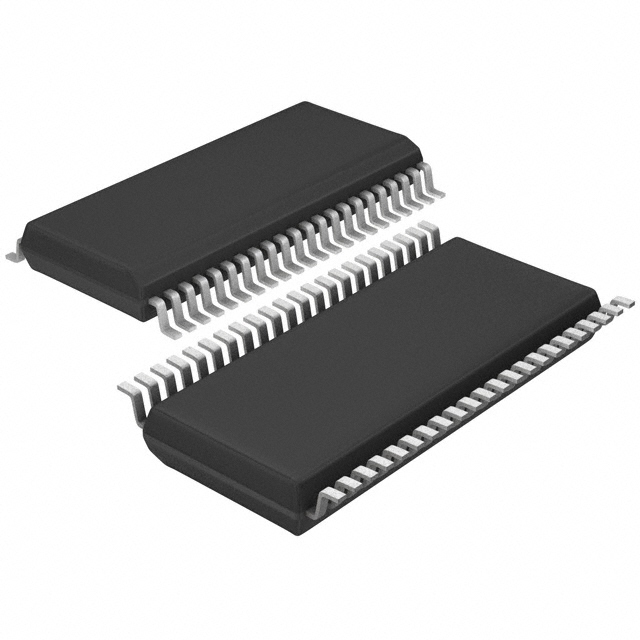
- Part No.:
- U4090B-PFNY
- Manufacturer:
- Microchip Technology
- Category:
- Telecom
- Package:
- 44-BSOP (0.295", 7.50mm Width)
- Datasheet:
-
 U4090B-PFNY.pdf
- Description:
- IC TELECOM INTERFACE 44SSO
- Quantity:
- Payment:

- Shipping:

Inventory:3,628
Please send an inquiry. Send us your inquiry, and we will respond immediately.
Product details
Overview
U4090B-PFNY from Atmel (now Microchip Technology) is a monolithic line-powered telephone circuit IC for analog subscriber line interface in feature phones, answering machines, and fax machines. It integrates speech circuitry, tone ringer interface with DC/DC converter, acoustic feedback suppression, dual sidetone networks, ear protection rectifiers, and loudspeaker amplifier - all operating from 10 mA line current with 3.3 V regulated supply (VMP) and 7 V unregulated supply (VB).
For engineers reviewing the U4090B-PFNY datasheet, U4090B-PFNY pinout, U4090B-PFNY application, or U4090B-PFNY equivalent, this page delivers verified functional block roles, confirmed DC/AC line interface behavior, real-world gain adjustability (±8 dB receive, 40–50 dB transmit), anti-clipping timing (0.5 ms attack), and EMI-filtered I/O pin assignments - critical for POTS system design, hands-free speakerphone layout, and ringing power conversion.
Technical Context
The U4090B-PFNY implements a dual-path voice switch architecture with logarithmic envelope detection for acoustical feedback suppression (AFS), dynamically attenuating either transmit (TXA) or speaker amplifier (SAI) to maintain constant loop gain. Its DC line interface uses electronic inductance (L = RSENSE × CIND × ((RDC × R30)/(RDC + R30))) and prioritized capacitor charging (VMPS before VB) to sustain microcontroller operation during long-line interruptions.
It supports four distinct supply states: speech mode (line-powered, full functionality), power-down (PD high, QS shorts line), ringing mode (RPC supplies VB from VRING), and external supply (VB powered externally for answering machine use). Line detection (LIDET) employs dual comparators with hysteresis (ILON = 12.6 mA, ILOFF = 11.0 mA) and operates across all modes.
Key Specifications
| Parameter | Value and Actual Design Meaning |
|---|---|
| Supply Voltage (VMP) | 3.3 V ±0.2 V regulated output; delivers 4 mA in speech mode, 2 mA in ringing mode - powers microcontrollers and EEPROMs reliably. |
| Transmit Gain Range | 40–50 dB adjustable via RGT; ±0.5 dB stability over 300–3400 Hz and –10°C to +60°C - ensures consistent DTMF and voice transmission. |
| Receive Gain Adjustment | –8 dB to +8 dB differential output via RGR; includes automatic line-loss compensation (–7.0 dB at 100 mA) - adapts to varying loop lengths. |
| Loudspeaker Amplifier Output | 37.5 dB gain (RGSA = 20 kΩ); 20 mW into 50 Ω at IL ≥ 15 mA - drives common speaker for loud-hearing and tone ringing. |
| Acoustic Feedback Suppression | 0–50 dB attenuation range; adjusts TXA and SAI gains inversely to hold loop gain constant - enables stable hands-free operation without oscillation. |
| Line Detection Threshold | LIDET low when line current >12.6 mA (speech active); hysteresis of 1.6 mA - provides robust on-hook/off-hook state sensing. |
| Ringing Power Converter | Input: VRING up to 30.8 V Zener-protected; output: VB up to 7.6 V; efficiency ~65%; input impedance 5 kΩ - enables local ringing without external transformer. |
Pinout & Package
U4090B-PFNY is housed in a 44-pin SSOP (Shrink Small Outline Package) with 0.5 mm pitch, thermally enhanced for 0.9 W dissipation (RthJA = 70 K/W). Pin functions are validated per Rev. 4741C–CORD–11/05 datasheet.
| Pin/Terminal | Circuit Role | Design Meaning |
|---|---|---|
| 1 (GT) | Microphone/DTMF preamp gain control | Resistor-to-GND sets 40–50 dB gain; applying VMP mutes input - enables programmable sensitivity and mute-by-voltage. |
| 22 (TSACL) | Speaker amplifier anti-clipping time constant | Capacitor sets 5 ms attack / 80 ms release - prevents distortion during loud transients while preserving speech clarity. |
| 23 (GSA) | Loudspeaker amplifier gain control | Logarithmic resistor adjustment (0.67 dB/µA); RGSA > 2 MΩ disables amplifier - allows precise volume tuning and power-off control. |
| 24 (SAI) | Loudspeaker amplifier input | 14–22 kΩ input resistance; accepts signals from handset, tone ringer, or hands-free path - enables shared speaker resource. |
| 31 (AGA) | Automatic gain adjustment reference | Resistor-to-GND sets 6 dB max gain change vs. line current - compensates for voltage drop across long loops automatically. |
| 40 (RECO1) | Receiving amplifier output | Differential output with 10 Ω source impedance; 0.775 Vrms max at ≤2% THD - drives earpiece or external audio circuits directly. |
Key Features
| Feature | Design Value |
|---|---|
| Symmetrical microphone amplifier inputs (MIC1/MIC2) | Enables balanced electret mic connection with 60–80 dB CMRR - rejects common-mode noise on long PCB traces. |
| Built-in ear protection rectifiers | Delivers 2.2 Vrms differential earpiece protection threshold - prevents hearing damage during high-level ringing or off-hook surges. |
| Zero-crossing detection & tone ringer interface | Generates clean 40 kHz oscillator (COSC) and drives external switching transistor (SWOUT) - eliminates need for discrete ringer driver. |
| Integrated line detection (LIDET) and impedance selection (IMPSEL) | Outputs logic-low LIDET above 12.6 mA; IMPSEL selects 600 Ω or 900 Ω line impedance - simplifies compliance with regional telephony standards. |
| EMI filtering on 7 critical I/O pins | MIC1, MIC2, RECIN, TXIN, STIS, STIL, RAC include internal RC filters - reduces board-level EMI mitigation components by ≥30%. |
Applications
| Feature Phone | Answering Machine |
|---|---|
|
Use Scenario: Standalone corded phone with hands-free speaker, DTMF dialing, and ring detection. IC Role / Device Role / Timing Role: Primary line interface IC handling speech amplification, sidetone balancing, anti-clipping, and ringing power conversion. Use Value: Eliminates 12+ discrete components (transistors, op-amps, regulators, ringer driver) - reduces BOM cost and PCB area by >40%. |
Use Scenario: External-supply answering machine requiring line monitoring, message playback, and remote access. IC Role / Device Role / Timing Role: Line interface and audio processor enabling external VB supply, answering machine mode (MUTR logic), and DTMF decoding support. Use Value: Supports dual power domains (external VB + internal VMP) and stores last impedance setting - enables seamless transition between phone and answering modes. |
| Fax Machine | Speaker Phone |
|
Use Scenario: Fax modem interfacing with PSTN line for document transmission/reception. IC Role / Device Role / Timing Role: Analog front-end providing DTMF signal path (DTMF → RECO1/RECO2), receive attenuation (RECATT), and line-current-based AGA. Use Value: Delivers 7–13 dB DTMF gain with <2% distortion and ±0.5 dB gain stability - ensures reliable fax handshake under variable line conditions. |
Use Scenario: Conference-style speakerphone with acoustic echo cancellation and loud-hearing capability. IC Role / Device Role / Timing Role: Dual-path voice switch with AFS circuit using TX/RX envelope comparison to suppress feedback in real time. Use Value: Provides 0–50 dB AFS attenuation with automatic gain coupling - sustains stable full-duplex operation without manual tuning. |
Equivalent & Alternatives
The following parts are listed as comparable options for similar telephone line interface applications.
| Alternative Part | Technical Difference | Application Difference | Selection Advice |
|---|---|---|---|
| SLIC3710DZ from Cirrus Logic | Higher integration: includes integrated SLIC, 13-bit ADC/DAC, and ARM Cortex-M0+; requires external 3.3 V supply - no line-powered VMP generation. | Targets VoIP gateways and IP phones; lacks tone ringer interface and built-in DC/DC converter for ringing. | Choose SLIC3710DZ for digital-centric designs needing embedded processing; U4090B-PFNY remains optimal for analog POTS systems with minimal external components. |
| TLE6842-2QX from Infineon | Automotive-qualified; supports 48 V battery supply; includes diagnostic features (open-wire, short-circuit detection); no DTMF or tone ringer support. | Designed for automotive telematics and emergency call (eCall) systems - not certified for PSTN line interface or FCC Part 68. | Select TLE6842-2QX only for automotive-grade line interface; U4090B-PFNY meets ITU-T G.911, G.991.2, and FCC Part 68 requirements for consumer telephony. |
Compared with SLIC3710DZ and TLE6842-2QX, U4090B-PFNY uniquely combines line-powered operation, integrated ringing DC/DC, analog sidetone networks, and PSTN-compliant line interface - making it irreplaceable for cost-sensitive, analog-focused feature phone and answering machine designs.
Availability
U4090B-PFNY is available at Aetrix Electronics and suitable for feature phone manufacturing, answering machine production, and fax machine assembly requiring stable component supply, long-term lifecycle support, and traceable sourcing from authorized channels.
Supply support for U4090B-PFNY includes scheduled delivery planning, volume procurement assistance, BOM continuity management, traceable sourcing, and lifecycle availability coordination for OEM customers, industrial embedded developers, connected-device designers, and electronics production programs.
Manufacturer
Microchip Technology (formerly Atmel) is a global semiconductor company specializing in microcontrollers, analog devices, and connectivity solutions for industrial, automotive, and communications markets.
The U4090B-PFNY belongs to Microchip's legacy telephony analog front-end product line, designed specifically for single-chip implementation of PSTN subscriber line interface functions in cost-sensitive, low-power consumer telephony equipment.
FAQ
What is the minimum line current required for U4090B-PFNY to operate the loudspeaker amplifier?
The U4090B-PFNY requires a minimum line current of 15 mA (no AC signal) to activate the loudspeaker amplifier. Below this threshold, the speaker amplifier remains disabled even if SAI receives an input signal. This ensures stable operation during low-current conditions such as pulse dialing or weak line conditions, and aligns with the LIDET comparator's activation point (ILON = 12.6 mA). The U4090B-PFNY maintains full receive/transmit functionality down to 10 mA line current, but loudspeaker drive is gated at 15 mA.
How does the acoustic feedback suppression (AFS) in U4090B-PFNY differ from standard echo cancellation?
The U4090B-PFNY implements analog AFS using logarithmic envelope detection and dynamic gain redistribution between TXA and SAI - not digital echo cancellation. It measures TX and RX signal envelopes, compares them, and attenuates whichever path contributes more to the feedback loop, maintaining constant total loop gain. This avoids latency and processing overhead, making it ideal for real-time hands-free operation without DSP resources. Unlike algorithmic echo cancellers, AFS in U4090B-PFNY requires no firmware, training, or adaptive convergence time.
Can U4090B-PFNY be used with an external microcontroller for DTMF decoding?
Yes, U4090B-PFNY supports external DTMF decoding via its dedicated DTMF input pin (Pin 2) and provides amplified DTMF signals to RECO1/RECO2 outputs with 7–13 dB gain and <2% distortion. Its RFDO pin delivers a digital double-frequency signal synchronized to VRING, enabling MCU-based ringing detection. The U4090B-PFNY does not perform DTMF decoding internally but is fully compatible with external MCUs like ATmega328P or PIC16F18877 that implement Goertzel or FFT-based decoding.
What is the purpose of the TSACL and TTXA pins on U4090B-PFNY?
TSACL (Pin 22) sets the time constant for anti-clipping in the loudspeaker amplifier, controlling attack (5 ms typical) and release (80 ms) behavior to prevent distortion during transients. TTXA (Pin 42) performs the same function for the transmit amplifier, with 0.5 ms attack and 9 ms release. Both pins accept external capacitors to tailor clipping response to specific speaker or line characteristics - critical for maintaining intelligibility in noisy environments or with low-impedance loads.
Does U4090B-PFNY support both 600 Ω and 900 Ω line impedances, and how is selection performed?
Yes, U4090B-PFNY supports both 600 Ω and 900 Ω line impedances via the IMPSEL pin (Pin 21). Driving IMPSEL low selects 600 Ω; driving it high selects 900 Ω. The datasheet confirms these values are implemented as internal resistor networks, and the selected impedance is retained in nonvolatile state during power-down. This allows compliance with regional telephony standards (e.g., North America 600 Ω, Europe 900 Ω) without hardware changes - a key advantage for global product variants.
U4090B-PFNY Specifications
- Product attributes
- Attribute value
- Manufacturer:
- Microchip Technology
- Series:
- -
- Package/Case:
- 44-BSOP (0.295", 7.50mm Width)
- Packaging:
- Tube
- Product Status:
- Obsolete
- Function:
- Monolithic Integrated Feature Phone Circuit
- Interface:
- -
- Number of Circuits:
- 1
- Voltage - Supply:
- 3.1V ~ 3.5V
- Current - Supply:
- -
- Power (Watts):
- 900 mW
- Operating Temperature:
- -25°C ~ 75°C
- Grade:
- -
- Qualification:
- -
- Mounting Type:
- Surface Mount
- Supplier Device Package:
- 44-SSO
U4090B-PFNY FAQ
1.How can I place an order for U4090B-PFNY through Aetrix?
Please submit a Request for Quotation (RFQ) for U4090B-PFNY on Aetrix. Our sales agent will provide a competitive quotation and guide you through the order confirmation once you accept the terms.
2.Are the price and stock information for U4090B-PFNY reliable?
The price and inventory of U4090B-PFNY are updated periodically and may fluctuate due to market conditions. Stock and pricing data are typically refreshed every 24 hours. Quotation validity for U4090B-PFNY is usually 5 days.
3.What payment methods are accepted for U4090B-PFNY?
We accept Wire Transfer, PayPal, Credit Card, Western Union, MoneyGram, and Escrow for U4090B-PFNY transactions.
Note: Certain payment methods may incur a processing fee.
4.How is shipping managed for U4090B-PFNY?
U4090B-PFNY orders can be shipped via leading logistics carriers, including DHL, UPS, FedEx, TNT, or Registered Mail.
Once your U4090B-PFNY order is processed, you will receive an email with the shipment details and tracking number.
Note: Tracking information may take up to 24 hours to appear. Express delivery typically takes 3–5 business days.
5.How can I obtain technical support or documentation for U4090B-PFNY?
For technical support, including U4090B-PFNY datasheets, pinout diagrams, or application guidance, please contact our engineering support team. They can provide detailed documentation and assistance for your U4090B-PFNY requirements.
6.How does Aetrix verify that U4090B-PFNY is sourced from the original manufacturer or authorized distributors?
All U4090B-PFNY products on Aetrix are procured from qualified distributors and authorized channels. Our dedicated quality assurance team conducts strict verification, including traceability checks and, if necessary, third-party testing. This ensures that U4090B-PFNY meets industry standards.
7.What is the process for return or replacement of U4090B-PFNY?
All U4090B-PFNY units undergo pre-shipment inspection (PSI). If there is an issue with U4090B-PFNY, returns or replacements are accepted under the following conditions:
1.Quantity discrepancies, incorrect items, or visible external defects (such as breakage or corrosion), acknowledged by Aetrix.
2.The issue is reported within 90 days of delivery.
3.The U4090B-PFNY part is unused and in its original packaging.
Return procedure for U4090B-PFNY:
1.Submit a request within 90 days.
2.Obtain a Return Material Authorization (RMA) from Aetrix.
U4090B-PFNY Tags

-
LMC567CMX/NOPB
Texas Instruments
-
LM567CMX/NOPB
Texas Instruments
-
LM567CM/NOPB
Texas Instruments
-
VSC8531XMW-02
Microchip Technology
-
VSC8531XMW-05
Microchip Technology

-
GPY115C0VI
MaxLinear, Inc.
-
SI32185-A-FMR
Skyworks Solutions Inc.
-
VSC8541XMV-05
Microchip Technology
-
SI32178-B-FM1R
Skyworks Solutions Inc.
-
GPY215C0VI
MaxLinear, Inc.
-
CPC7514ZTR
Littelfuse Inc.
-
VSC8502XML-03
Microchip Technology
Tech Hub

TTL and CMOS logic families differ in thresholds, loading, output drive, power and timing. This engineering guide compares 74HC and 74HCT, calculates noise margins and checks 3.3 V/5 V compatibility.

A practical engineering guide to 3.3V and 5V logic compatibility, input thresholds, resistor dividers, translator ICs, MOSFET level shifting, I2C pull-ups, timing limits and power-sequencing risks.

The 74HC595 uses push-pull logic outputs, while the TPIC6B595 uses 50 V open-drain DMOS sinks for higher-power loads. This guide compares timing, current limits, 3.3 V interfacing, load wiring, thermal…

The 74HC595 converts serial data into eight stable parallel outputs. This guide covers pin functions, shift and storage timing, OE and MR behavior, drive-current limits, cascading, voltage compatibilit…

A technical comparison of level-sensitive latches and edge-triggered flip-flops, covering timing windows, setup and hold limits, master–slave operation, time borrowing, race-through, HDL inference and…

A D latch stores one bit while Enable controls when data can pass. This reference covers gate-level operation, truth tables, transparency, setup and hold timing, LE versus OE, common ICs and practical …

An SR latch stores one bit through cross-coupled feedback. This engineering reference covers NOR and NAND implementations, truth tables, forbidden-state recovery, gated operation, switch debouncing, fa…

Latch circuits retain one bit through feedback. This technical reference covers SR and D latches, truth tables, transparency, timing limits, latch-versus-flip-flop behavior, applications and common log…

An engineering guide to LED driver operation, constant-current and constant-voltage outputs, linear and switching topologies, dimming, IC selection, calculations, replacement compatibility, and fault c…

Operational amplifier guide covering op amp basics, feedback, ideal vs real op amps, common configurations, buffer circuits, offset, bias current, gain-bandwidth, slew rate, rail-to-rail limits and sel…


