
 My Inquiry
 My Account


Microchip Technology U4091BMC-RFNG3Y-19
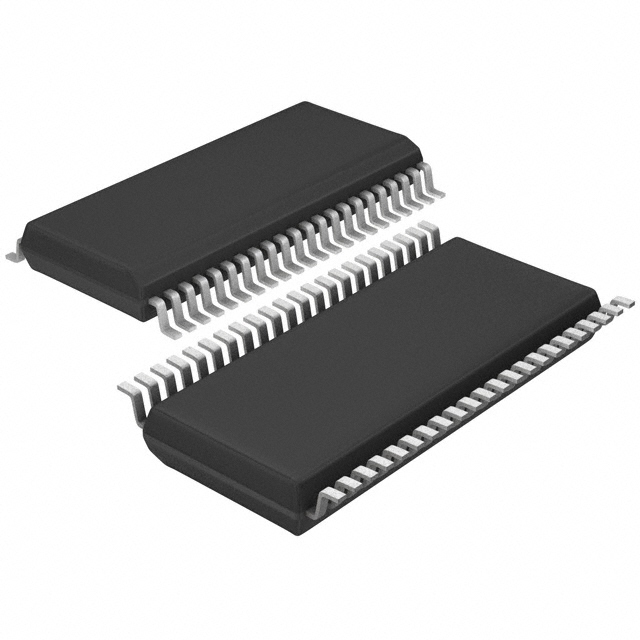
- Part No.:
- U4091BMC-RFNG3Y-19
- Manufacturer:
- Microchip Technology
- Category:
- Telecom
- Package:
- 44-BSOP (0.295", 7.50mm Width)
- Datasheet:
-
 U4091BMC-RFNG3Y-19.pdf
- Description:
- IC TELECOM INTERFACE 44SSO
- Quantity:
- Payment:

- Shipping:

Inventory:2,631
Please send an inquiry. Send us your inquiry, and we will respond immediately.
Product details
Overview
U4091BMC-RFNG3Y-19 from Microchip Technology (formerly Atmel) is a programmable telephone audio processor IC designed for line-powered feature phones, answering machines, and fax systems. It integrates speech circuitry with anti-clipping, tone-ringer interface with DC/DC converter, speaker amplifier with anti-distortion, regulated/unregulated power supply generation (VMP = 3.3 V / 6 mA in speech mode), and voice-switch control for hands-free operation.
For engineers reviewing the U4091BMC-RFNG3Y-19 datasheet, U4091BMC-RFNG3Y-19 pinout, U4091BMC-RFNG3Y-19 application, or U4091BMC-RFNG3Y-19 equivalent, key selection considerations include its SSO44 package, integrated acoustic feedback suppression (AFS), serial bus–controlled DTMF/melody generation, and dual-mode voice switching with 2-point or 4-point signal sensing.
Technical Context
The U4091BMC-RFNG3Y-19 implements a fully programmable analog signal chain for telephony endpoints, featuring a switch matrix enabling flexible routing of microphone, DTMF, receive, and answering machine signals to outputs including earpiece, speaker, and line. Its voice-switch logic uses background-noise monitors (BNMR/BNMT), level detectors (TLDR/TLDT), and CT-controlled current sources to dynamically select transmit, receive, or idle modes with 30 ms fast switching and 1.5 s idle ramp.
Power architecture includes a DC line interface generating VB and VMPS from POTS line voltage, an on-chip ringing power converter (RPC) stepping down VRING (7–22 V) to VB with ~65% efficiency and adjustable input impedance (3–12 kΩ), and dual series regulators delivering VMP (3.3 V) for microcontroller supply - active at 6 mA during speech and 3 mA during ringing.
Key Specifications
| Parameter | Value and Actual Design Meaning |
|---|---|
| VMP Output | 3.3 V regulated supply, delivers 6 mA in speech mode for MCU powering |
| Ringing Input Range | VRING supports 7–22 V input; threshold programmable in 16 steps (e.g., 7 V to 22 V) |
| DTMF Frequencies | Complies with CEPT T/CF 46-03; low-group (697–941 Hz) and high-group (1209–1633 Hz) tones with ≤0.32% error |
| Serial Bus | Bidirectional I²C-compatible interface (SCL/SDA) with 12-bit write and 8-bit normal/fast read cycles |
| Acoustic Feedback Suppression | 4-point or 2-point sensing topology with LOG/CLOG amplifiers and dynamic TX/RX attenuation control |
| Oscillator Support | 3.58 MHz crystal input (OSCIN/OSCOUT); clock divider selectable via serial bus (÷1, ÷8, ÷16, ÷32) |
| Package | SSO44 (Shrink Small Outline, 44-pin, 0.5 mm pitch, 10.2 × 12.8 mm body) |
Pinout & Package
U4091BMC-RFNG3Y-19 is housed in a 44-pin Shrink Small Outline (SSO44) package with 0.5 mm lead pitch and exposed thermal pad. Pin numbering follows standard counter-clockwise layout starting from pin 1 (RECIN) at top-left corner.
| Pin/Terminal | Circuit Role | Design Meaning |
|---|---|---|
| RECIN | Receive amplifier input | Primary line-side audio input; internal protection device disconnected per datasheet note |
| MIC1–MIC3 | Microphone inputs | MIC1/MIC2: symmetrical inputs with high CMRR; MIC3: hands-free microphone input |
| SAO1/SAO2 | Speaker amplifier outputs | SAO1: positive output (single-ended/push-pull); SAO2: negative output (push-pull only) |
| VMP | Regulated MCU supply | 3.3 V output, 6 mA capable in speech mode; powers external microcontroller directly |
| VRING | Ringer power input | Accepts 7–22 V ringing voltage; impedance set by external resistor at IMPA pin |
| SCL/SDA/INT | Serial bus interface | I²C-compatible control interface; INT provides asynchronous event signaling to MCU |
Key Features
| Feature | Design Value |
|---|---|
| Integrated tone-ringer interface | Eliminates need for piezoelectric transducer; enables speaker-based ringing via built-in RPC and melody generator |
| Programmable voice switch | Automatically selects transmit/receive/idle modes using BNMR/BNMT, TLDR/TLDT, and CT-controlled timing |
| Anti-clipping protection | Dedicated TXACL and TSACL pins allow independent time-constant tuning for transmit and speaker amplifier paths |
| Line-powered architecture | Operates directly from POTS line voltage; supports speech, ringing, and external-supply modes without auxiliary power rails |
| DTMF + melody generation | On-chip DTMF generator compliant with CEPT standards; supports confidence tones, ringer melodies (pulse/square), and 32 selectable frequencies |
Applications
| Feature Phone | Answering Machine |
|---|---|
Use Scenario: Full-featured corded/cordless phone with hands-free speaker, DTMF dialing, and ring detection. IC Role / Device Role / Timing Role: Central analog baseband processor handling line interface, speech amplification, sidetone, ringer power conversion, and MCU communication. Use Value: Reduces BOM count by integrating speech circuit, tone ringer, speaker amp, and power management - eliminating discrete op-amps, regulators, and transducers. | Use Scenario: Standalone answering machine with external power supply, recording/playback, and line monitoring. IC Role / Device Role / Timing Role: Audio front-end managing AMREC/AMPB signal routing, AGC-controlled playback, and line voltage sensing via ES/SENSE pins. Use Value: Enables direct connection to answering machine circuits without external level-shifting or gain staging; AGC on AMREC output ensures consistent recording amplitude. |
| Fax Machine | Speaker Phone |
Use Scenario: Fax terminal requiring reliable line interface, DTMF signaling, and echo-tolerant audio path during handshake. IC Role / Device Role / Timing Role: Line-side analog signal conditioner providing DTMF generation, receive filtering, and anti-feedback suppression during speaker monitoring. Use Value: Integrated AFS and background-noise monitoring prevent false hang-up during fax negotiation; DTMF accuracy meets ITU-T Q.23/CEPT requirements. | Use Scenario: Conference-style speakerphone supporting open-listening operation with real-time acoustic echo cancellation. IC Role / Device Role / Timing Role: Voice-switch controller with 4-point sensing topology, dynamically adjusting TX/RX gain to suppress feedback while preserving speech intelligibility. Use Value: Achieves >20 dB acoustic feedback margin without external DSP; CT pin allows precise tuning of mode-switching speed (30 ms fast, 1.5 s idle). |
Equivalent & Alternatives
The following parts are listed as comparable options for similar telephone audio processor applications.
| Alternative Part | Technical Difference | Application Difference | Selection Advice |
|---|---|---|---|
| SLIC3720DZ-13 | Single-chip SLIC + codec; lacks integrated speaker amplifier, tone ringer, and AFS; requires external power conversion | Targeted at VoIP gateways and IP phones; not optimized for POTS line-powered devices | Choose when digital interface (PCM/I²S) and isolation are required over analog line integration |
| Si3217x-B-GM | Highly integrated SLIC with DAA, but no built-in DTMF generator, melody engine, or speaker amplifier; relies on host MCU for audio processing | Designed for carrier-grade VoIP terminals; supports higher line voltage (up to 200 V) and surge immunity | Prefer for new VoIP designs needing regulatory compliance (GR-909, UL60950); not drop-in for legacy POTS audio systems |
Compared with SLIC3720DZ-13 and Si3217x-B-GM, U4091BMC-RFNG3Y-19 uniquely combines line-powered operation, speaker-based ringing, and autonomous voice switching - making it optimal for cost-sensitive, analog-line-connected consumer telephony where minimal external components and self-contained audio processing are critical.
Availability
U4091BMC-RFNG3Y-19 is available at Aetrix Electronics and suitable for feature phone manufacturing, answering machine production, and fax terminal design requiring stable component supply and long-term industrial availability.
Supply support for U4091BMC-RFNG3Y-19 includes scheduled delivery planning, volume procurement assistance, BOM continuity management, traceable sourcing, and lifecycle availability coordination for OEM customers, industrial embedded developers, connected-device designers, and electronics production programs.
Manufacturer
Microchip Technology acquired Atmel in 2016 and maintains full support for legacy Atmel analog telephony products. The company specializes in embedded control and connectivity solutions with broad industrial and automotive qualification.
U4091BMC-RFNG3Y-19 belongs to Microchip's legacy telephone audio processor product line, originally developed for POTS-based consumer telephony systems requiring high integration, low external component count, and line-powered operation without auxiliary supplies.
FAQ
What is the primary function of the U4091BMC-RFNG3Y-19 in a telephone system?
The U4091BMC-RFNG3Y-19 serves as a fully integrated analog baseband processor for POTS telephony. It handles line interface, speech amplification with anti-clipping, tone-ringer generation via DC/DC conversion, speaker-driven hands-free operation with acoustic feedback suppression, and serial bus–controlled DTMF/melody signaling - all within a single SSO44 package. Its design eliminates the need for multiple discrete analog components in feature phones and answering machines.
Does the U4091BMC-RFNG3Y-19 require an external power supply, or can it operate from the telephone line?
The U4091BMC-RFNG3Y-19 is designed for line-powered operation and draws power directly from the POTS line voltage via its DC line interface. It generates internal supplies including VB (unregulated), VMPS (unregulated MCU rail), and VMP (3.3 V regulated, 6 mA). An external supply via VB or ES pin is supported for answering machine use, but is optional - not required for basic telephony functions.
How does the acoustic feedback suppression (AFS) work in the U4091BMC-RFNG3Y-19?
The U4091BMC-RFNG3Y-19 implements AFS using either 2-point or 4-point signal sensing. It continuously monitors transmit (TXA) and receive (SAI) signal envelopes via logarithmic amplifiers (LOGT/LOGR, CLOGT/CLOGR), compares them against background noise levels (BNMT/BNMR), and dynamically adjusts attenuation in the TX or RX path via the AFSCON block. Mode switching is controlled by the CT pin voltage, with 30 ms response for speech onset and 1.5 s ramp to idle.
Can the U4091BMC-RFNG3Y-19 generate custom ringer melodies, or is it limited to standard DTMF tones?
Yes, the U4091BMC-RFNG3Y-19 supports both standard DTMF tones (per CEPT T/CF 46-03) and custom ringer melodies. Its DTMF/melody generator provides 32 selectable frequencies (440 Hz to 2983 Hz), with waveform options including sine, square, and pulsed output. Melody selection is controlled via DTMFM[0:2] and DTMFF[0:4] bits in register R12, enabling confidence tones, ringers, and user-defined audio alerts.
What serial interface protocol does the U4091BMC-RFNG3Y-19 use, and what are its key timing requirements?
The U4091BMC-RFNG3Y-19 uses a bidirectional, I²C-compatible serial bus with dedicated SCL (clock) and SDA (data) lines, plus INT for interrupt signaling. Write cycles require 12-bit words (4-bit address + 8-bit data); normal reads return 8-bit register contents after a 4-bit address + read bit; fast reads return status bits RFDO/LIDET in two clocks. External pull-up resistors are mandatory on SDA/SCL, and bus timing must comply with minimum high/low periods specified in the datasheet's Figure 10-1 through 10-3.
U4091BMC-RFNG3Y-19 Specifications
- Product attributes
- Attribute value
- Manufacturer:
- Microchip Technology
- Series:
- -
- Package/Case:
- 44-BSOP (0.295", 7.50mm Width)
- Packaging:
- Tape & Reel (TR)
- Product Status:
- Obsolete
- Function:
- Audio Processor
- Interface:
- -
- Number of Circuits:
- 1
- Voltage - Supply:
- -
- Current - Supply:
- -
- Power (Watts):
- -
- Operating Temperature:
- -25°C ~ 75°C
- Grade:
- -
- Qualification:
- -
- Mounting Type:
- Surface Mount
- Supplier Device Package:
- 44-SSO
U4091BMC-RFNG3Y-19 FAQ
1.How can I place an order for U4091BMC-RFNG3Y-19 through Aetrix?
Please submit a Request for Quotation (RFQ) for U4091BMC-RFNG3Y-19 on Aetrix. Our sales agent will provide a competitive quotation and guide you through the order confirmation once you accept the terms.
2.Are the price and stock information for U4091BMC-RFNG3Y-19 reliable?
The price and inventory of U4091BMC-RFNG3Y-19 are updated periodically and may fluctuate due to market conditions. Stock and pricing data are typically refreshed every 24 hours. Quotation validity for U4091BMC-RFNG3Y-19 is usually 5 days.
3.What payment methods are accepted for U4091BMC-RFNG3Y-19?
We accept Wire Transfer, PayPal, Credit Card, Western Union, MoneyGram, and Escrow for U4091BMC-RFNG3Y-19 transactions.
Note: Certain payment methods may incur a processing fee.
4.How is shipping managed for U4091BMC-RFNG3Y-19?
U4091BMC-RFNG3Y-19 orders can be shipped via leading logistics carriers, including DHL, UPS, FedEx, TNT, or Registered Mail.
Once your U4091BMC-RFNG3Y-19 order is processed, you will receive an email with the shipment details and tracking number.
Note: Tracking information may take up to 24 hours to appear. Express delivery typically takes 3–5 business days.
5.How can I obtain technical support or documentation for U4091BMC-RFNG3Y-19?
For technical support, including U4091BMC-RFNG3Y-19 datasheets, pinout diagrams, or application guidance, please contact our engineering support team. They can provide detailed documentation and assistance for your U4091BMC-RFNG3Y-19 requirements.
6.How does Aetrix verify that U4091BMC-RFNG3Y-19 is sourced from the original manufacturer or authorized distributors?
All U4091BMC-RFNG3Y-19 products on Aetrix are procured from qualified distributors and authorized channels. Our dedicated quality assurance team conducts strict verification, including traceability checks and, if necessary, third-party testing. This ensures that U4091BMC-RFNG3Y-19 meets industry standards.
7.What is the process for return or replacement of U4091BMC-RFNG3Y-19?
All U4091BMC-RFNG3Y-19 units undergo pre-shipment inspection (PSI). If there is an issue with U4091BMC-RFNG3Y-19, returns or replacements are accepted under the following conditions:
1.Quantity discrepancies, incorrect items, or visible external defects (such as breakage or corrosion), acknowledged by Aetrix.
2.The issue is reported within 90 days of delivery.
3.The U4091BMC-RFNG3Y-19 part is unused and in its original packaging.
Return procedure for U4091BMC-RFNG3Y-19:
1.Submit a request within 90 days.
2.Obtain a Return Material Authorization (RMA) from Aetrix.
U4091BMC-RFNG3Y-19 Tags

-
LMC567CMX/NOPB
Texas Instruments
-
LM567CMX/NOPB
Texas Instruments
-
LM567CM/NOPB
Texas Instruments
-
VSC8531XMW-02
Microchip Technology
-
VSC8531XMW-05
Microchip Technology

-
GPY115C0VI
MaxLinear, Inc.
-
SI32185-A-FMR
Skyworks Solutions Inc.
-
VSC8541XMV-05
Microchip Technology
-
SI32178-B-FM1R
Skyworks Solutions Inc.
-
GPY215C0VI
MaxLinear, Inc.
-
CPC7514ZTR
Littelfuse Inc.
-
VSC8502XML-03
Microchip Technology
Tech Hub

TTL and CMOS logic families differ in thresholds, loading, output drive, power and timing. This engineering guide compares 74HC and 74HCT, calculates noise margins and checks 3.3 V/5 V compatibility.

A practical engineering guide to 3.3V and 5V logic compatibility, input thresholds, resistor dividers, translator ICs, MOSFET level shifting, I2C pull-ups, timing limits and power-sequencing risks.

The 74HC595 uses push-pull logic outputs, while the TPIC6B595 uses 50 V open-drain DMOS sinks for higher-power loads. This guide compares timing, current limits, 3.3 V interfacing, load wiring, thermal…

The 74HC595 converts serial data into eight stable parallel outputs. This guide covers pin functions, shift and storage timing, OE and MR behavior, drive-current limits, cascading, voltage compatibilit…

A technical comparison of level-sensitive latches and edge-triggered flip-flops, covering timing windows, setup and hold limits, master–slave operation, time borrowing, race-through, HDL inference and…

A D latch stores one bit while Enable controls when data can pass. This reference covers gate-level operation, truth tables, transparency, setup and hold timing, LE versus OE, common ICs and practical …

An SR latch stores one bit through cross-coupled feedback. This engineering reference covers NOR and NAND implementations, truth tables, forbidden-state recovery, gated operation, switch debouncing, fa…

Latch circuits retain one bit through feedback. This technical reference covers SR and D latches, truth tables, transparency, timing limits, latch-versus-flip-flop behavior, applications and common log…

An engineering guide to LED driver operation, constant-current and constant-voltage outputs, linear and switching topologies, dimming, IC selection, calculations, replacement compatibility, and fault c…

Operational amplifier guide covering op amp basics, feedback, ideal vs real op amps, common configurations, buffer circuits, offset, bias current, gain-bandwidth, slew rate, rail-to-rail limits and sel…


