
 My Inquiry
 My Account


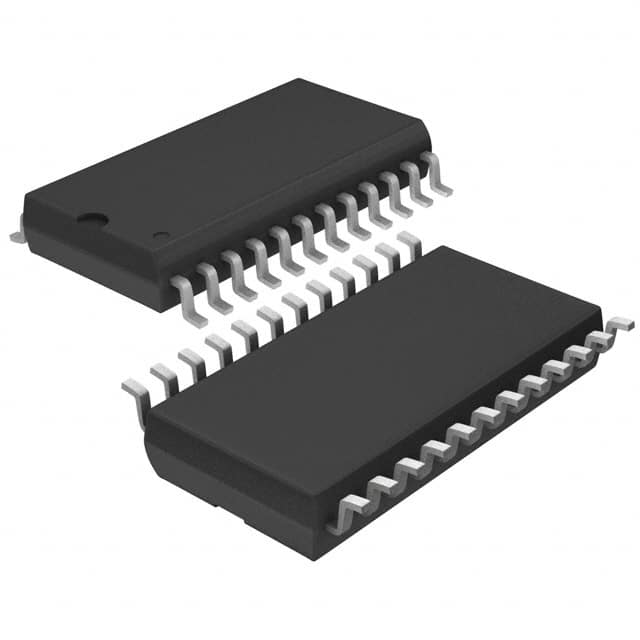
NXP Semiconductors UBA2037T/N1,118
- Part No.:
- UBA2037T/N1,118
- Manufacturer:
- NXP Semiconductors
- Category:
- Lighting, Ballast Controllers
- Package:
- 24-SOIC (0.295", 7.50mm Width)
- Datasheet:
-
 UBA2037T/N1,118.pdf
- Description:
- IC HID LAMP CNTRL 100KHZ 24SO
- Quantity:
- Payment:

- Shipping:

Inventory:2,890
Please send an inquiry. Send us your inquiry, and we will respond immediately.
Product details
Overview
UBA2037T/N1,118 from NXP Semiconductors is a high-voltage monolithic full-bridge control IC fabricated in HVSOI technology, designed to drive power MOSFETs in HID lamp ballasts. It integrates bootstrap diodes, 464 V level-shifting capability, 550 V bridge voltage rating, adjustable oscillator (up to 200 kHz), and adaptive non-overlap timing. It is deployed in projector and general lighting HID drivers requiring precise 50 % duty-cycle gate drive.
For engineers reviewing the UBA2037T/N1,118 datasheet, UBA2037T/N1,118 pinout, UBA2037T/N1,118 application, or UBA2037T/N1,118 equivalent, this page delivers verified functional identity, SO24 package mapping, confirmed 24-pin terminal roles, real-world HID lighting use context, and validated alternative options for ballast design continuity.
Technical Context
The UBA2037T/N1,118 implements an internal oscillator with RC-tunable frequency (0–200 kHz) and optional ÷2 divider to enforce 50 % duty cycle. Its adaptive non-overlap circuit senses half-bridge voltage slew rate (5–25 V/µs) to dynamically set dead time (600–1300 ns), optimizing switching efficiency across operating frequencies.
It features dual-level supply architecture: HV pin accepts up to 550 V to power an internal series regulator (550 V input), generating VDD (12 V typical); logic clock circuitry operates independently with 464 V-rated VSS(CLK)/VDD(CLK) pins. Bridge disable (VBD = 1.29 V) and start-up delay (SU input) provide system-level control over ignition sequencing.
Key Specifications
| Parameter | Value and Actual Design Meaning |
|---|---|
| Bridge Voltage Rating | 550 V maximum - supports direct connection to HID lamp bus without external HV regulation |
| High-Side Level Shift | 464 V - enables driving upper MOSFETs referenced below ground in buck-boost or resonant topologies |
| Oscillator Frequency | Up to 200 kHz - sets maximum switching speed for resonant HID lamp ignition and regulation |
| Non-Overlap Time | 600–1300 ns - adaptive dead time prevents shoot-through during MOSFET commutation |
| Start-Up Voltage (HV) | 11.3–14.7 V - defines minimum bus voltage required before enabling gate drive outputs |
| Gate Drive Sink/Source | 200 mA - sufficient to rapidly charge/discharge MOSFET gates in full-bridge configurations |
| Bootstrap Diode VF | 0.8–1.2 V - integrated diodes reduce external component count in floating supply paths |
Pinout & Package
UBA2037T/N1,118 is housed in a plastic small outline package (SO24, SOT137-1) with 24 leads and 7.5 mm body width. Pin functions are validated per NXP datasheet Rev. 01 (2008), Figure 2 and Table 2.
| Pin/Terminal | Circuit Role | Design Meaning |
|---|---|---|
| VDD | Internal low-voltage supply output | Provides regulated 12 V for logic and driver circuitry; requires external decoupling capacitor |
| HV | High-voltage input | Accepts up to 550 V DC to power internal series regulator; primary supply for HID lamp bus interface |
| GHL / GHR / GLL / GLR | Gate driver outputs | Four independent outputs controlling upper/lower left/right MOSFETs in full-bridge topology |
| SHL / SHR / FSL / FSR | Floating supply terminals | Enable bootstrap operation for high-side drivers; SHL/SHR reference sources, FSL/FSR floating rails |
| BD | Bridge disable input | Logic-high >1.35 V disables all gate outputs immediately - critical for fault shutdown in HID systems |
| RC | Oscillator timing input | Connects external R-C network to set bridge frequency; supports 0–200 kHz tuning |
| SU | Start-up delay input | RC-filtered or MCU-controlled signal delays enablement until lamp bus reaches safe ignition voltage |
Key Features
| Feature | Design Value |
|---|---|
| Integrated bootstrap diodes | Eliminates four external diodes, reducing BOM count and PCB area in HID ballast designs |
| Adaptive non-overlap timing | Dynamically adjusts dead time based on actual bridge voltage slew rate - ensures robust shoot-through prevention across temperature and load |
| Predefined start-up bridge position | Forces lower transistors ON and upper OFF at power-on - safely charges bootstrap capacitors before oscillation begins |
| 550 V series regulator input | Allows direct HV bus connection without pre-regulator, simplifying power architecture for 70–250 W HID lamps |
| External clock input with HV level shift | Accepts logic-level clock (via CLK/VSS(CLK)/VDD(CLK)) and shifts it to 464 V domain - enables synchronization with master controller |
Applications
| Projector HID Ballast | Street Lighting Ballast |
|---|---|
Use Scenario: Driving 70–150 W metal halide lamps in DLP/LCD projectors requiring fast warm-up and stable arc regulation. IC Role / Device Role / Timing Role: Full-bridge commutator controller generating phase-shifted gate signals with adaptive dead time and precise 50 % duty cycle for resonant LC tank excitation. Use Value: Integrated 464 V level shift and 550 V HV input eliminate external level-shifting ICs and pre-regulators, reducing bill-of-materials by ≥3 components per channel. |
Use Scenario: Controlling 150–250 W high-pressure sodium lamps in outdoor street lighting fixtures exposed to wide ambient temperature ranges. IC Role / Device Role / Timing Role: High-reliability bridge driver with undervoltage lockout (VUVLO(HV) = 8.6–12.2 V) and thermal-aware start-up sequencing to prevent lamp re-ignition failures. Use Value: Adaptive non-overlap (600–1300 ns) maintains safe MOSFET switching margins across −40 °C to +125 °C ambient, extending driver lifetime in unventilated enclosures. |
| Commercial Indoor Lighting | Industrial UV Curing System |
Use Scenario: Powering ceramic metal halide lamps in retail and warehouse lighting where dimming and flicker-free operation are mandatory. IC Role / Device Role / Timing Role: Oscillation-state controller using external RC network (RC pin) and divider disable (DD pin) to generate stable, jitter-free 50–120 kHz gate drive. Use Value: Adjustable oscillator and ÷2 divider ensure exact 50 % duty cycle - critical for minimizing acoustic noise and electromagnetic interference in occupied spaces. |
Use Scenario: Driving pulsed HID lamps in industrial UV curing lines requiring rapid on/off cycling and precise energy dosing per exposure cycle. IC Role / Device Role / Timing Role: Fast-response bridge disable (BD pin) and start-up delay (SU pin) enable microsecond-accurate lamp enable/disable synchronized with conveyor motion. Use Value: Bridge disable threshold (VBD = 1.29 V) provides clean, sub-microsecond turn-off - prevents partial conduction and electrode erosion during high-frequency pulsing. |
Equivalent & Alternatives
The following parts are listed as comparable options for similar full-bridge control IC applications.
| Alternative Part | Technical Difference | Application Difference | Selection Advice |
|---|---|---|---|
| UBA2037TS/N1,118 | SSOP28 package (28-pin, 5.3 mm width); adds two n.c. pins and relocates three existing pins vs. SO24 | Same electrical functionality but requires PCB layout change; preferred where higher pin density or thermal relief is needed | Select UBA2037TS/N1,118 only when SSOP28 footprint is already standardized in your HID driver platform. |
| IRS21844SPBF | 600 V high-side driver with bootstrap diodes; no integrated oscillator or adaptive non-overlap - requires external timing controller | Suitable for fixed-frequency or microcontroller-driven ballasts; lacks HID-specific start-up sequencing and 50 % duty-cycle enforcement | Choose IRS21844SPBF when full system control resides in an MCU and adaptive dead time is managed externally. |
Compared with UBA2037T/N1,118, UBA2037TS/N1,118 offers identical functionality in a denser package but mandates board redesign, while IRS21844SPBF trades integrated HID-optimized features for greater flexibility in custom-controlled topologies - making UBA2037T/N1,118 the optimal choice for cost-sensitive, self-contained HID ballast modules.
Availability
UBA2037T/N1,118 is available at Aetrix Electronics and suitable for projector HID ballasts, street lighting systems, and commercial indoor lighting requiring stable component supply, long-lifecycle support, and automotive-grade reliability under thermal stress.
Supply support for UBA2037T/N1,118 includes scheduled delivery planning, volume procurement assistance, BOM continuity management, traceable sourcing, and lifecycle availability coordination for OEM customers, industrial embedded developers, connected-device designers, and electronics production programs.
Manufacturer
NXP Semiconductors is a global semiconductor company headquartered in Eindhoven, Netherlands, specializing in secure connectivity solutions for automotive, industrial, and IoT applications.
The UBA2037T/N1,118 belongs to NXP's HID lighting control IC product line, engineered specifically for high-efficiency, high-reliability electronic ballasts powering metal halide and high-pressure sodium lamps in professional and infrastructure lighting.
FAQ
What is the maximum bridge switching frequency supported by the UBA2037T/N1,118?
The UBA2037T/N1,118 supports a maximum bridge frequency of 200 kHz when using the internal oscillator with RC network on the RC pin. This limit is specified in Table 6 of the NXP datasheet under "fbridge" parameter. Frequencies above 200 kHz are not guaranteed and may compromise adaptive non-overlap timing or gate drive strength. The UBA2037T/N1,118 achieves this via its HVSOI process and optimized driver stages.
Does the UBA2037T/N1,118 require an external power supply for its logic section?
No, the UBA2037T/N1,118 does not require a separate low-voltage supply. It generates its internal VDD (12 V typical) from the HV pin input (up to 550 V) using an integrated series regulator. A decoupling capacitor on VDD is mandatory for ripple suppression. Alternatively, VDD can be powered directly with 12 V, in which case HV must be tied to VDD or SGND - as defined in Section 7.1 of the UBA2037T/N1,118 datasheet.
How does the adaptive non-overlap function work in the UBA2037T/N1,118?
The UBA2037T/N1,118 implements adaptive non-overlap by internally sensing the falling edge slew rate (dV/dt) of the half-bridge voltage - which correlates with MOSFET turn-off dynamics. Based on this measurement, it dynamically adjusts dead time between complementary gate signals to maintain safe commutation margins. The resulting non-overlap time ranges from 600 ns to 1300 ns depending on operating conditions, as specified in Table 6 under "tno".
Can the UBA2037T/N1,118 drive MOSFETs without external bootstrap components?
No - the UBA2037T/N1,118 requires external bootstrap capacitors connected between FSL–SHL and FSR–SHR to power the high-side gate drivers. While it integrates bootstrap diodes (reducing component count), the capacitors themselves are mandatory for sustaining high-side gate voltage during continuous conduction. The datasheet specifies typical values (e.g., 100 nF) and layout guidelines in Section 7.5 and Figure 1.
What is the purpose of the SU (start-up delay) pin on the UBA2037T/N1,118?
The SU pin on the UBA2037T/N1,118 enables controlled start-up sequencing by delaying gate drive enablement until the HID lamp bus voltage reaches a safe ignition threshold. A simple RC filter (R from VDD to SU, C from SU to SGND) or active MCU signal can be applied. This prevents premature lamp striking before sufficient open-circuit voltage is established - a key requirement for reliable HID lamp life, as documented in Section 7.5 of the UBA2037T/N1,118 datasheet.
UBA2037T/N1,118 Specifications
- Product attributes
- Attribute value
- Manufacturer:
- NXP Semiconductors
- Series:
- -
- Package/Case:
- 24-SOIC (0.295", 7.50mm Width)
- Packaging:
- Tape & Reel (TR)
- Product Status:
- Obsolete
- Type:
- HID Lamp Controller
- Frequency:
- 100kHz
- Voltage - Supply:
- 10.5V ~ 13.5V
- Current - Supply:
- 500 µA
- Current - Output Source/Sink:
- -
- Dimming:
- No
- Operating Temperature:
- -40°C ~ 125°C
- Grade:
- -
- Qualification:
- -
- Mounting Type:
- Surface Mount
- Supplier Device Package:
- 24-SO
UBA2037T/N1,118 FAQ
1.How can I place an order for UBA2037T/N1,118 through Aetrix?
Please submit a Request for Quotation (RFQ) for UBA2037T/N1,118 on Aetrix. Our sales agent will provide a competitive quotation and guide you through the order confirmation once you accept the terms.
2.Are the price and stock information for UBA2037T/N1,118 reliable?
The price and inventory of UBA2037T/N1,118 are updated periodically and may fluctuate due to market conditions. Stock and pricing data are typically refreshed every 24 hours. Quotation validity for UBA2037T/N1,118 is usually 5 days.
3.What payment methods are accepted for UBA2037T/N1,118?
We accept Wire Transfer, PayPal, Credit Card, Western Union, MoneyGram, and Escrow for UBA2037T/N1,118 transactions.
Note: Certain payment methods may incur a processing fee.
4.How is shipping managed for UBA2037T/N1,118?
UBA2037T/N1,118 orders can be shipped via leading logistics carriers, including DHL, UPS, FedEx, TNT, or Registered Mail.
Once your UBA2037T/N1,118 order is processed, you will receive an email with the shipment details and tracking number.
Note: Tracking information may take up to 24 hours to appear. Express delivery typically takes 3–5 business days.
5.How can I obtain technical support or documentation for UBA2037T/N1,118?
For technical support, including UBA2037T/N1,118 datasheets, pinout diagrams, or application guidance, please contact our engineering support team. They can provide detailed documentation and assistance for your UBA2037T/N1,118 requirements.
6.How does Aetrix verify that UBA2037T/N1,118 is sourced from the original manufacturer or authorized distributors?
All UBA2037T/N1,118 products on Aetrix are procured from qualified distributors and authorized channels. Our dedicated quality assurance team conducts strict verification, including traceability checks and, if necessary, third-party testing. This ensures that UBA2037T/N1,118 meets industry standards.
7.What is the process for return or replacement of UBA2037T/N1,118?
All UBA2037T/N1,118 units undergo pre-shipment inspection (PSI). If there is an issue with UBA2037T/N1,118, returns or replacements are accepted under the following conditions:
1.Quantity discrepancies, incorrect items, or visible external defects (such as breakage or corrosion), acknowledged by Aetrix.
2.The issue is reported within 90 days of delivery.
3.The UBA2037T/N1,118 part is unused and in its original packaging.
Return procedure for UBA2037T/N1,118:
1.Submit a request within 90 days.
2.Obtain a Return Material Authorization (RMA) from Aetrix.
UBA2037T/N1,118 Tags
-
HV833MG-G
Microchip Technology
-
HV857MG-G
Microchip Technology
-
MIC4826YMM-TR
Microchip Technology

-
HV823LG-G
Microchip Technology
-
IR2156STRPBF
Infineon Technologies
-
BTS712204ESAXUMA1
Infineon Technologies
-
UC3872DW
Texas Instruments
-
MAX14514ETD+
Analog Devices Inc./Maxim Integrated
-
MAX14521EETG+
Analog Devices Inc./Maxim Integrated
-
HV857LMG-G
Microchip Technology
-
HV860K7-G
Microchip Technology
-
MIC4832YMM
Microchip Technology
Tech Hub

A practical engineering guide to 3.3V and 5V logic compatibility, input thresholds, resistor dividers, translator ICs, MOSFET level shifting, I2C pull-ups, timing limits and power-sequencing risks.

The 74HC595 uses push-pull logic outputs, while the TPIC6B595 uses 50 V open-drain DMOS sinks for higher-power loads. This guide compares timing, current limits, 3.3 V interfacing, load wiring, thermal…

The 74HC595 converts serial data into eight stable parallel outputs. This guide covers pin functions, shift and storage timing, OE and MR behavior, drive-current limits, cascading, voltage compatibilit…

A technical comparison of level-sensitive latches and edge-triggered flip-flops, covering timing windows, setup and hold limits, master–slave operation, time borrowing, race-through, HDL inference and…

A D latch stores one bit while Enable controls when data can pass. This reference covers gate-level operation, truth tables, transparency, setup and hold timing, LE versus OE, common ICs and practical …

An SR latch stores one bit through cross-coupled feedback. This engineering reference covers NOR and NAND implementations, truth tables, forbidden-state recovery, gated operation, switch debouncing, fa…

Latch circuits retain one bit through feedback. This technical reference covers SR and D latches, truth tables, transparency, timing limits, latch-versus-flip-flop behavior, applications and common log…

An engineering guide to LED driver operation, constant-current and constant-voltage outputs, linear and switching topologies, dimming, IC selection, calculations, replacement compatibility, and fault c…

Operational amplifier guide covering op amp basics, feedback, ideal vs real op amps, common configurations, buffer circuits, offset, bias current, gain-bandwidth, slew rate, rail-to-rail limits and sel…

Jumper cables guide covering safe connection order, red and black clamp placement, final ground connection, cable gauge, length, clamp quality, copper vs CCA cables, jump starter comparison and battery…


