
 My Inquiry
 My Account


NXP Semiconductors UJA1023T/2R04/C,51
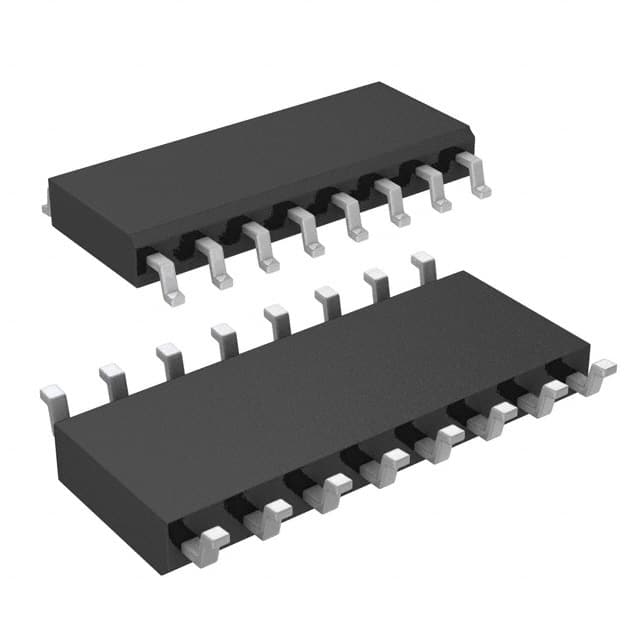
- Part No.:
- UJA1023T/2R04/C,51
- Manufacturer:
- NXP Semiconductors
- Category:
- Controllers
- Package:
- 16-SOIC (0.154", 3.90mm Width)
- Datasheet:
-
 UJA1023T/2R04/C,51.pdf
- Description:
- IC CAN/LIN I/O SLAVE 16-SOIC
- Quantity:
- Payment:

- Shipping:

Inventory:1,939
Please send an inquiry. Send us your inquiry, and we will respond immediately.
Product details
Overview
UJA1023T/2R04/C,51 from NXP Semiconductors is a stand-alone LIN 2.0 / SAE J2602-compliant I/O slave IC with integrated transceiver, on-chip oscillator, 8-bit ADC, and eight bidirectional configurable I/O pins. It autonomously handles LIN protocol, supports automatic bit rate synchronization (1–20 kbit/s), and operates across −40 °C to +125 °C for automotive body electronics applications.
For engineers reviewing the UJA1023T/2R04/C,51 datasheet, UJA1023T/2R04/C,51 pinout, UJA1023T/2R04/C,51 application, or UJA1023T/2R04/C,51 equivalent, this page delivers verified functional scope, validated I/O configuration modes, confirmed low-power behavior (≤65 μA in sleep), LIN transceiver compliance, and exact SO16 package mapping - all directly traceable to NXP's Rev. 5 product data sheet.
Technical Context
The UJA1023T/2R04/C,51 integrates a LIN 2.0 controller with daisy-chain and plug-coding NAD assignment, an embedded LIN transceiver featuring 30 kΩ termination and ISO 7637 bus protection, and automatic bit rate detection that validates sync break and field integrity before message acceptance. Its oscillator provides timing reference for both bit rate adaptation and internal digital functions.
I/O configuration occurs via LIN MasterReq/SlaveResp frames using sequential four-block data dumps; each of the eight P0–P7 pins supports input (edge capture, local wake-up, analog), output (high-side/low-side/push-pull, PWM at ~2.7 kHz, cyclic sense), or switch matrix (4×2/4×3/4×4) roles - all programmable over the LIN bus without external components.
Key Specifications
| Parameter | Value and Actual Design Meaning |
|---|---|
| Supply Voltage (VBAT) | 5.5 V to 27 V - supports direct battery connection in 12 V/24 V automotive systems without external regulator |
| Sleep Current (IBAT) | Typ. 45 μA - enables ultra-low-power operation in vehicle standby modes |
| LIN Bus Voltage Range (VLIN) | −27 V to +40 V - withstands load dump, jump-start, and reverse-battery conditions per ISO 7637 |
| Operating Temperature | −40 °C to +125 °C - qualified for under-hood and cabin-mounted automotive ECUs |
| ADC Resolution | 8-bit - supports analog sensor interfacing via any of the eight I/O pins, one at a time |
| PWM Base Frequency | ~2.7 kHz - suitable for backlight dimming and low-noise LED control without audible whine |
| ESD Robustness | ±8 kV HBM - protects LIN, BAT, C1–C3 pins against handling and assembly discharge events |
Pinout & Package
UJA1023T/2R04/C,51 is housed in a plastic small outline package (SO16) with 16 leads and 3.9 mm body width (SOT109-1), optimized for automated PCB assembly and thermal performance in automotive environments.
| Pin/Terminal | Circuit Role | Design Meaning |
|---|---|---|
| VIO (Pin 1) | Reference input | Defines logic level threshold for I/O pins P0–P7; decouples I/O voltage domain from VBAT |
| INH (Pin 2) | Output | Controls external voltage regulator or enables internal ADC; active-high inhibit signal |
| BAT (Pin 3) | Input | Main power supply input (5.5–27 V); powers internal regulator and LIN transceiver |
| LIN (Pin 4) | Input/Output | Dedicated LIN bus interface with integrated transceiver and 30 kΩ termination resistor |
| GND (Pin 5) | Input | System ground reference for analog and digital blocks; critical for EMI immunity |
| C1–C3 (Pins 6–8) | Input/Input-Output | Configuration pins for NAD assignment via daisy chain or plug coding; internal pull-ups active only during setup |
| P0–P7 (Pins 9–16) | Input/Output | Bidirectional I/O ports supporting input (edge capture, wake-up), output (PWM, high/low-side), and switch matrix modes - all configured via LIN messages |
Key Features
| Feature | Design Value |
|---|---|
| LIN 2.0 / SAE J2602 Transceiver | Fully integrated with 30 kΩ termination, bus fault detection, and automatic limp-home mode entry on LIN short-to-ground |
| Automatic Bit Rate Detection | Adapts to master bit rates from 1 kbit/s to 20 kbit/s without external clock source or configuration |
| Configurable I/O Matrix | Eight pins support simultaneous mixed-mode operation - e.g., P0–P3 as switch inputs, P4–P7 as PWM outputs - via single LIN command |
| Advanced Low-Power Behavior | Retains last output state or switches to user-defined state in Sleep mode; enters Limp Home mode with programmable output on failure |
| EMI-Optimized Design | Extremely low electromagnetic emission and high immunity validated per automotive EMC standards |
Applications
| Body Control Module (BCM) | Seat Control Unit |
|---|---|
Use Scenario: Centralized management of door locks, window lifts, mirror controls, and interior lighting in modern vehicles. IC Role / Device Role / Timing Role: LIN-I/O slave handling distributed sensor inputs and actuator outputs via standardized LIN frames. Use Value: Reduces wiring harness complexity and ECU count by consolidating discrete I/O functions into a single programmable device compliant with LIN 2.0. | Use Scenario: Position and heating control for driver and passenger seats using switches, potentiometers, and resistive heaters. IC Role / Device Role / Timing Role: Configurable I/O node providing analog input (seat position), PWM output (heater duty cycle), and edge-triggered wake-up (switch press). Use Value: Enables precise 8-bit ADC sampling and 2.7 kHz PWM dimming without MCU intervention, lowering host processor load. |
| Roof Module | Climate Control Panel |
Use Scenario: Sunroof, panoramic roof, and ambient lighting control in premium vehicle roof assemblies. IC Role / Device Role / Timing Role: LIN slave managing local wake-up from rain sensor, cyclic sense for sunroof limit switches, and PWM for RGB LED zones. Use Value: Achieves <65 μA sleep current while maintaining responsive wake-up and flicker-free lighting control via integrated oscillator and PWM generator. | Use Scenario: HVAC interface with rotary encoders, push buttons, and display backlighting in dashboard-mounted climate panels. IC Role / Device Role / Timing Role: I/O concentrator supporting switch matrix (4×4) for 16-button arrays and PWM-driven LED backlight with adjustable brightness. Use Value: Eliminates external multiplexers and LED drivers; reduces BOM cost and PCB area while meeting automotive temperature and EMC requirements. |
Equivalent & Alternatives
The following parts are listed as comparable options for similar LIN I/O slave applications.
| Alternative Part | Technical Difference | Application Difference | Selection Advice |
|---|---|---|---|
| UJA1061TK/0Z | Includes CAN physical layer and enhanced diagnostics; no integrated ADC; requires external 30 kΩ termination | Targeted at nodes requiring dual-bus (LIN+CAN) connectivity and higher diagnostic coverage | Select when CAN communication coexistence or ISO 14229 diagnostics are required; not drop-in compatible due to pinout and feature set differences |
| MC33662ELF | Single-channel LIN transceiver only; no I/O, ADC, or oscillator; requires external microcontroller and components | Used where full LIN slave functionality is implemented in software on a separate MCU | Choose for maximum design flexibility and custom I/O logic; adds system-level complexity and component count versus UJA1023T/2R04/C,51's integrated solution |
Compared with UJA1023T/2R04/C,51, the UJA1061TK/0Z adds CAN capability but removes ADC and integrated termination, while the MC33662ELF provides only transceiver functionality - making UJA1023T/2R04/C,51 uniquely suited for cost-sensitive, space-constrained LIN slave nodes needing self-contained I/O, analog sensing, and ultra-low-power sleep.
Availability
UJA1023T/2R04/C,51 is available at Aetrix Electronics and suitable for automotive body electronics, seat control units, roof modules, and climate control panels requiring stable component supply across extended temperature ranges and long production lifecycles.
Supply support for UJA1023T/2R04/C,51 includes scheduled delivery planning, volume procurement assistance, BOM continuity management, traceable sourcing, and lifecycle availability coordination for OEM customers, industrial embedded developers, connected-device designers, and electronics production programs.
Manufacturer
NXP Semiconductors is a global semiconductor leader focused on secure connectivity solutions for automotive, industrial, and IoT applications, with deep expertise in automotive networking and embedded processing.
The UJA1023 series belongs to NXP's LIN slave portfolio designed specifically for replacing discrete I/O components in automotive electronic control units - emphasizing integration, low power, and robustness in harsh electrical environments.
FAQ
What LIN protocol versions does the UJA1023T/2R04/C,51 support?
The UJA1023T/2R04/C,51 natively supports LIN 2.0 and SAE J2602, and maintains backward compatibility with LIN 1.3. It implements the LIN diagnostic and configuration specification Rev. 2.0, enabling standardized NAD assignment, frame ID programming, and I/O configuration via MasterReq/SlaveResp frames - all confirmed in NXP's Rev. 5 datasheet.
How is Node Address (NAD) assigned on the UJA1023T/2R04/C,51?
NAD assignment on the UJA1023T/2R04/C,51 occurs either automatically at power-on based on C1–C3 pin states (defaulting to hex 60–67), or dynamically via LIN 'assign NAD' command using daisy chain or plug ID methods. The assign NAD request uses specific data byte patterns (e.g., D0 = 0x21 for daisy chain, D0 = 0x08–0x0F for plug ID), and the UJA1023T/2R04/C,51 validates configuration pin levels or daisy chain flag status before accepting new NAD values.
Can the UJA1023T/2R04/C,51 perform analog-to-digital conversion?
Yes - the UJA1023T/2R04/C,51 includes an 8-bit ADC function. Any of its eight bidirectional I/O pins (P0–P7) can serve as the analog input channel, selected via configuration register ADCIN[2:0]. Implementation requires three external passive components (two resistors and one capacitor) as specified in Section 7.1.6 of the datasheet, and conversion is initiated and controlled entirely over the LIN bus.
What happens to I/O states during low-power or fault conditions?
During Sleep mode, the UJA1023T/2R04/C,51 can retain the last output state or transition to a user-programmable state. In case of LIN bus faults (e.g., short-to-ground), it automatically enters low-power Limp Home mode and drives outputs to a preconfigured safe state - both behaviors are fully configurable via LIN messages and documented in Sections 7.1.5 and 7.1.8 of the UJA1023T/2R04/C,51 datasheet.
Does the UJA1023T/2R04/C,51 require an external crystal or resonator?
No - the UJA1023T/2R04/C,51 integrates an on-chip oscillator that serves as the timebase for automatic bit rate detection and internal digital functions. This eliminates the need for external timing components, reduces BOM count, and improves board-level reliability - a key differentiator confirmed in the General Description and Block Diagram sections of the official NXP datasheet.
UJA1023T/2R04/C,51 Specifications
- Product attributes
- Attribute value
- Manufacturer:
- NXP Semiconductors
- Package/Case:
- 16-SOIC (0.154", 3.90mm Width)
- Programmable:
- Not Verified
- Protocol:
- LINbus
- Function:
- I/O Slave
- Interface:
- LIN
- Standards:
- LIN 2.0
- Voltage - Supply:
- 6.5V ~ 27V
- Current - Supply:
- 45µA
- Operating Temperature:
- -40°C ~ 125°C
- Supplier Device Package:
- 16-SO
- Grade:
- -
- Qualification:
- -
UJA1023T/2R04/C,51 FAQ
1.How can I place an order for UJA1023T/2R04/C,51 through Aetrix?
Please submit a Request for Quotation (RFQ) for UJA1023T/2R04/C,51 on Aetrix. Our sales agent will provide a competitive quotation and guide you through the order confirmation once you accept the terms.
2.Are the price and stock information for UJA1023T/2R04/C,51 reliable?
The price and inventory of UJA1023T/2R04/C,51 are updated periodically and may fluctuate due to market conditions. Stock and pricing data are typically refreshed every 24 hours. Quotation validity for UJA1023T/2R04/C,51 is usually 5 days.
3.What payment methods are accepted for UJA1023T/2R04/C,51?
We accept Wire Transfer, PayPal, Credit Card, Western Union, MoneyGram, and Escrow for UJA1023T/2R04/C,51 transactions.
Note: Certain payment methods may incur a processing fee.
4.How is shipping managed for UJA1023T/2R04/C,51?
UJA1023T/2R04/C,51 orders can be shipped via leading logistics carriers, including DHL, UPS, FedEx, TNT, or Registered Mail.
Once your UJA1023T/2R04/C,51 order is processed, you will receive an email with the shipment details and tracking number.
Note: Tracking information may take up to 24 hours to appear. Express delivery typically takes 3–5 business days.
5.How can I obtain technical support or documentation for UJA1023T/2R04/C,51?
For technical support, including UJA1023T/2R04/C,51 datasheets, pinout diagrams, or application guidance, please contact our engineering support team. They can provide detailed documentation and assistance for your UJA1023T/2R04/C,51 requirements.
6.How does Aetrix verify that UJA1023T/2R04/C,51 is sourced from the original manufacturer or authorized distributors?
All UJA1023T/2R04/C,51 products on Aetrix are procured from qualified distributors and authorized channels. Our dedicated quality assurance team conducts strict verification, including traceability checks and, if necessary, third-party testing. This ensures that UJA1023T/2R04/C,51 meets industry standards.
7.What is the process for return or replacement of UJA1023T/2R04/C,51?
All UJA1023T/2R04/C,51 units undergo pre-shipment inspection (PSI). If there is an issue with UJA1023T/2R04/C,51, returns or replacements are accepted under the following conditions:
1.Quantity discrepancies, incorrect items, or visible external defects (such as breakage or corrosion), acknowledged by Aetrix.
2.The issue is reported within 90 days of delivery.
3.The UJA1023T/2R04/C,51 part is unused and in its original packaging.
Return procedure for UJA1023T/2R04/C,51:
1.Submit a request within 90 days.
2.Obtain a Return Material Authorization (RMA) from Aetrix.
UJA1023T/2R04/C,51 Tags
-
PTN5150AHXMP
NXP Semiconductors
-
USB3740B-AI9-TR
Microchip Technology
-
USB3740B-AI2-TR
Microchip Technology
-
USB3300-EZK-TR
Microchip Technology
-
USB3300-EZK
Microchip Technology
-
FUSB340TMX
onsemi
-
FUSB302BMPX
onsemi
-
DP83826IRHBR
Texas Instruments
-
MCP2518FDT-E/QBB
Microchip Technology
-
FUSB302MPX
onsemi
-
MCP2518FDT-E/SL
Microchip Technology
-
FT260Q-R
FTDI, Future Technology Devices International Ltd
Tech Hub

A practical engineering guide to 3.3V and 5V logic compatibility, input thresholds, resistor dividers, translator ICs, MOSFET level shifting, I2C pull-ups, timing limits and power-sequencing risks.

The 74HC595 uses push-pull logic outputs, while the TPIC6B595 uses 50 V open-drain DMOS sinks for higher-power loads. This guide compares timing, current limits, 3.3 V interfacing, load wiring, thermal…

The 74HC595 converts serial data into eight stable parallel outputs. This guide covers pin functions, shift and storage timing, OE and MR behavior, drive-current limits, cascading, voltage compatibilit…

A technical comparison of level-sensitive latches and edge-triggered flip-flops, covering timing windows, setup and hold limits, master–slave operation, time borrowing, race-through, HDL inference and…

A D latch stores one bit while Enable controls when data can pass. This reference covers gate-level operation, truth tables, transparency, setup and hold timing, LE versus OE, common ICs and practical …

An SR latch stores one bit through cross-coupled feedback. This engineering reference covers NOR and NAND implementations, truth tables, forbidden-state recovery, gated operation, switch debouncing, fa…

Latch circuits retain one bit through feedback. This technical reference covers SR and D latches, truth tables, transparency, timing limits, latch-versus-flip-flop behavior, applications and common log…

An engineering guide to LED driver operation, constant-current and constant-voltage outputs, linear and switching topologies, dimming, IC selection, calculations, replacement compatibility, and fault c…

Operational amplifier guide covering op amp basics, feedback, ideal vs real op amps, common configurations, buffer circuits, offset, bias current, gain-bandwidth, slew rate, rail-to-rail limits and sel…

Jumper cables guide covering safe connection order, red and black clamp placement, final ground connection, cable gauge, length, clamp quality, copper vs CCA cables, jump starter comparison and battery…


