
 My Inquiry
 My Account


Microchip Technology USB2227-NU-11
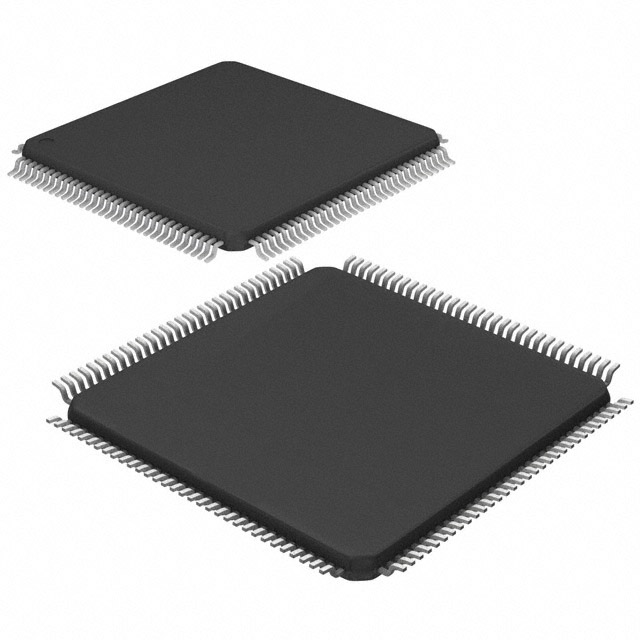
- Part No.:
- USB2227-NU-11
- Manufacturer:
- Microchip Technology
- Category:
- Specialized
- Package:
- 128-TQFP
- Datasheet:
-
 USB2227-NU-11.pdf
- Description:
- IC INTFACE SPECIALIZED 128VTQFP
- Quantity:
- Payment:

- Shipping:

Inventory:2,514
Please send an inquiry. Send us your inquiry, and we will respond immediately.
Product details
Overview
USB2227-NU-11 from Microchip Technology is a USB 2.0 Bulk-Only Mass Storage Class peripheral controller IC integrating flash media interface logic, an 8051 microprocessor core, USB 2.0 transceiver, and on-chip power FETs. It supports CompactFlash (True IDE mode), SmartMedia, Memory Stick PRO, Secure Digital, and MultiMediaCard with hardware ECC, SD security command extensions, and simultaneous multi-LUN operation - deployed in USB-to-flash-card reader modules for industrial data loggers.
For engineers reviewing the USB2227-NU-11 datasheet, USB2227-NU-11 pinout, USB2227-NU-11 application, or USB2227-NU-11 equivalent, key selection criteria include integrated card power control (3.3V @ 100–200mA), 128-pin VTQFP package compatibility, USB 2.0 high-speed (480 Mbps) compliance, dual-buffered bulk endpoint (512-byte), and firmware-upgradable ROM architecture via USB bus.
Technical Context
The USB2227-NU-11 implements a dedicated flash media controller architecture with parallel hardware engines for CF (True IDE), SD/MMC, MS/MS PRO, and SM interfaces - each with independent timing control, status registers, and DMA-capable data paths. Its 8051 CPU runs at 30 MHz (4-cycle/instruction), executing firmware from internal 64 KB ROM or external memory mapped via 16-bit address/data bus (MA[15:3], MD[7:0]).
USB protocol handling is fully offloaded by the integrated Serial Interface Engine (SIE) and PHY, supporting bi-directional control and bulk endpoints with 64-byte EP0 buffers and 512-byte double-buffered EP2. Clock generation includes internal PLL (480 MHz USB sampling), configurable MCU clock, and 24 MHz crystal driver or 48 MHz external clock input.
Key Specifications
| Parameter | Value and Actual Design Meaning |
|---|---|
| USB Compliance | USB 2.0 Bulk-Only Mass Storage Class; includes integrated transceiver and SIE - enables direct connection to host without external PHY. |
| CPU Core | 8051-based microcontroller running at 30 MHz average execution speed; executes firmware from internal 64 KB ROM or external memory. |
| Memory Resources | 12 KB internal SRAM (scratchpad), 768 B program SRAM, and 64 KB internal code space - sufficient for multi-LUN media translation and card initialization sequences. |
| Flash Media Support | Hardware-accelerated controllers for CF (True IDE only), SD/MMC, MS/MS PRO, SM; includes 1-bit ECC correction and SD Security Command Extensions. |
| Power Delivery | Three integrated 3.3 V power FETs: GPIO8/CRD_PWR0 (100 mA), GPIO10/CRD_PWR1 (100 mA), GPIO11/CRD_PWR2 (200 mA) - eliminates external regulators for card power. |
| Package | 128-pin VTQFP, 14 mm × 14 mm footprint, 1.0 mm height, RoHS compliant - compatible with standard surface-mount assembly and thermal management for embedded readers. |
| Operating Voltage | 3.3 V I/O with 5 V tolerance on VBUS/GPIO3; 1.8 V core supply (VDD18/VDD18PLL); 3.3 V analog supply (VDDA33) - supports mixed-signal operation with robust noise immunity. |
Pinout & Package
USB2227-NU-11 is housed in a 128-pin VTQFP package (14 mm × 14 mm, 1.0 mm height) with exposed thermal pad. Pin functions are grouped by interface: CompactFlash (CF_nCS0, CF_D[15:0], CF_IRQ), SmartMedia (SM_nWP, SM_D[7:0], SM_nCD), Memory Stick (MS_BS, MS_SDIO, MS_SCLK), SD/MMC (SD_DAT[3:0], SD_CLK, SD_CMD), USB (USBDP/USBDM), and 15 GPIOs with dual-role capability (e.g., GPIO8/CRD_PWR0).
| Pin/Terminal | Circuit Role | Design Meaning |
|---|---|---|
| CF_nCS0 / CF_nCS1 | CompactFlash chip select | Active-low signals selecting task file registers (nCS0) or device (nCS1) in True IDE mode - required for ATA register access and data transfer separation. |
| SD_DAT[3:0] | SD/MMC bidirectional data bus | Four 3.3 V-tolerant I/O pins with internal weak pull-ups - support 1-bit and 4-bit SD/MMC modes and automatic direction control during command/data phases. |
| GPIO8/CRD_PWR0 | General-purpose I/O or card power output | Configurable as digital I/O or 3.3 V/100 mA power switch for SD/MMC or MS - enables single-pin card power enable/disable with hardware-driven timing. |
| USBDM / USBDP | USB 2.0 differential data pair | Full-speed/high-speed bidirectional analog I/O pins - connect directly to USB connector with minimal external termination (27 Ω series resistors recommended). |
| nRESET | Active-low reset input | Asynchronous system reset requiring ≥1 µs pulse width - latches clock source configuration (crystal vs. external) and ROMEN mode on rising edge. |
Key Features
| Feature | Design Value |
|---|---|
| Integrated card power FETs | Three on-die 3.3 V power switches (100/100/200 mA) eliminate external MOSFETs and reduce BOM count in multi-card readers. |
| Hardware ECC engine | 1-bit error correction performed in real time during NAND/SM read operations - improves reliability without CPU overhead. |
| Multi-LUN support | Firmware-managed logical unit number assignment across CF, SD, and MS simultaneously - enables single USB interface to expose multiple removable drives. |
| Firmware upgrade via USB | Boot-block Flash architecture allows field updates of ROM firmware over USB bus - critical for driver compatibility and security patching. |
| GPIO interrupt capability | 15 GPIOs support edge-sensitive interrupts (rising/falling) - used for card insertion detection (SM_nCD, MS_INS), write-protect sensing (SD_nWP), and activity signaling. |
Applications
| Industrial Data Logger Reader | Medical Device Media Adapter |
|---|---|
Use Scenario: A portable patient monitor records ECG waveforms to removable SD cards and retrieves historical logs via USB host PC. IC Role / Device Role / Timing Role: USB2227-NU-11 acts as USB-to-SD bridge, managing FAT32 file writes, SD clock scaling (up to 25 MHz), and hot-plug detection with SmartDetach. Use Value: Integrated SD controller and 512-byte bulk buffer ensure deterministic 480 Mbps USB throughput during burst logging; CRD_PWR2 powers SD at 200 mA for UHS-I compatibility. | Use Scenario: An ultrasound machine uses CF Ultra II cards for DICOM image storage and requires plug-and-play USB export to PACS workstations. IC Role / Device Role / Timing Role: USB2227-NU-11 operates CF in True IDE mode, translating ATA commands to CF registers while enforcing CF Ultra I/II timing margins. Use Value: Hardware CF controller with CF_nIOW/CF_nIOR strobes and CF_IORDY handshake guarantees cycle-accurate IDE timing - avoids software polling delays. |
| Embedded Point-of-Sale Terminal | Automotive Infotainment SD Slot |
Use Scenario: A retail kiosk accepts loyalty card data via Memory Stick PRO and exports transaction logs via USB mass storage. IC Role / Device Role / Timing Role: USB2227-NU-11 serves as MS PRO host controller, implementing 4-bit parallel MS bus timing and MS_BS state transitions per Sony specification. Use Value: On-chip MS PRO hardware circuitry handles bus state control and CRC generation - reduces firmware size and ensures compliance with Memory Stick PRO v2.0 timing. | Use Scenario: A car audio head unit reads navigation maps from SDHC cards and must survive automotive temperature cycling (−40°C to +85°C). IC Role / Device Role / Timing Role: USB2227-NU-11 provides SD interface with write-protect detection (SD_nWP), card hot-swap handling, and thermal-aware power sequencing via GPIO-controlled CRD_PWR0. Use Value: 128-pin VTQFP package with 1.0 mm height meets automotive board thickness constraints; 0°C to 70°C operating range validated for under-dash deployment. |
Equivalent & Alternatives
The following parts are listed as comparable options for similar USB flash media controller applications.
| Alternative Part | Technical Difference | Application Difference | Selection Advice |
|---|---|---|---|
| USB2241-AEZG | Successor generation with enhanced SD 3.0 support, 128 KB ROM, and extended temperature range (−40°C to +85°C); same 128-pin VTQFP footprint. | Required for SDXC/UHS-I host compliance and extended-temperature automotive use; lacks xD Picture Card support (not applicable to USB2227 per datasheet footnote). | Select USB2241-AEZG when upgrading for SD 3.0 features or industrial temperature operation; pin-compatible but requires firmware migration. |
| GL827L-TR | Single-chip USB 2.0 SD/MMC/MS/CF controller from Genesys Logic; no integrated power FETs; requires external 3.3 V regulators and level shifters. | Suitable for cost-sensitive consumer readers where BOM count is secondary to unit cost; lacks hardware ECC and SmartDetach functionality. | Choose GL827L-TR for high-volume consumer devices accepting added external components; not drop-in due to missing power FETs and different GPIO mapping. |
Compared with USB2227-NU-11, USB2241-AEZG offers higher SD performance and extended temperature support in identical packaging, while GL827L-TR reduces silicon cost at the expense of increased board-level complexity and reduced reliability features like hardware ECC.
Availability
USB2227-NU-11 is available at Aetrix Electronics and suitable for industrial data loggers, medical device media adapters, embedded point-of-sale terminals, and automotive infotainment systems requiring stable component supply and long-term lifecycle continuity.
Supply support for USB2227-NU-11 includes scheduled delivery planning, volume procurement assistance, BOM continuity management, traceable sourcing, and lifecycle availability coordination for OEM customers, industrial embedded developers, connected-device designers, and electronics production programs.
Manufacturer
Microchip Technology Inc. is a leading provider of microcontroller, analog, FPGA, and connectivity solutions, headquartered in Chandler, Arizona, with global design and manufacturing operations.
The USB2227-NU-11 belongs to Microchip's fourth-generation USB 2.0 flash media controller product line, designed specifically for single-chip, low-power, multi-format USB-to-flash-card reader applications in industrial and medical equipment.
FAQ
What flash memory card types does the USB2227-NU-11 support?
The USB2227-NU-11 supports CompactFlash (CF and CF Ultra I/II in True IDE mode only), SmartMedia (SM), Memory Stick (MS), Memory Stick PRO (MSPRO), Secure Digital (SD), Mini-SD, MultiMediaCard (MMC), and RS-MMC. It does not support xD Picture Card - explicitly excluded per DS00002256A footnote 1. Each interface has dedicated hardware controllers with timing compliance verified per respective JEDEC/SD Association specifications.
Does the USB2227-NU-11 require external power FETs for flash card operation?
No, the USB2227-NU-11 integrates three on-die 3.3 V power FETs: GPIO8/CRD_PWR0 (100 mA), GPIO10/CRD_PWR1 (100 mA), and GPIO11/CRD_PWR2 (200 mA). These drive power to SD/MMC, MS/MS PRO, and CF/SM cards respectively, eliminating the need for external MOSFETs and reducing PCB area and BOM count in USB reader designs using USB2227-NU-11.
Can the USB2227-NU-11 firmware be updated in the field?
Yes, the USB2227-NU-11 supports firmware upgrades via USB bus when configured with "boot block" Flash program memory. This allows field updates of ROM-based firmware for driver compatibility, security patches, or new card support - without requiring reprogramming hardware or physical access to the device. The process is initiated through vendor-specific USB requests handled by the internal 8051 core.
What is the role of the 8051 microprocessor inside the USB2227-NU-11?
The 8051 microprocessor in the USB2227-NU-11 executes firmware that manages flash media initialization, command translation (e.g., SCSI-to-ATA/SD), LUN enumeration, error recovery, and GPIO control. Running at 30 MHz with 12 KB scratchpad SRAM and 768 B program SRAM, it handles protocol bridging while offloading USB packet handling to the dedicated SIE and PHY - making USB2227-NU-11 a true single-chip solution.
Is the USB2227-NU-11 compatible with Windows, macOS, and Linux operating systems?
Yes, the USB2227-NU-11 is compatible with Microsoft Windows XP, Windows ME, Windows 2000 SP3, Apple macOS 10.x, Softconnex drivers, and Linux kernel mass storage class drivers. Windows 98/98SE and macOS 8.6/9 drivers are available from Microchip upon request. USB2227-NU-11 enumerates as a standard USB Mass Storage Class device, requiring no custom host drivers in modern OS environments.
USB2227-NU-11 Specifications
- Product attributes
- Attribute value
- Manufacturer:
- Microchip Technology
- Series:
- -
- Package/Case:
- 128-TQFP
- Packaging:
- Tray
- Product Status:
- Active
- Applications:
- Controller
- Interface:
- -
- Voltage - Supply:
- 3.3V
- Supplier Device Package:
- 128-VTQFP (14x14)
- Grade:
- -
- Qualification:
- -
- Mounting Type:
- Surface Mount
USB2227-NU-11 FAQ
1.How can I place an order for USB2227-NU-11 through Aetrix?
Please submit a Request for Quotation (RFQ) for USB2227-NU-11 on Aetrix. Our sales agent will provide a competitive quotation and guide you through the order confirmation once you accept the terms.
2.Are the price and stock information for USB2227-NU-11 reliable?
The price and inventory of USB2227-NU-11 are updated periodically and may fluctuate due to market conditions. Stock and pricing data are typically refreshed every 24 hours. Quotation validity for USB2227-NU-11 is usually 5 days.
3.What payment methods are accepted for USB2227-NU-11?
We accept Wire Transfer, PayPal, Credit Card, Western Union, MoneyGram, and Escrow for USB2227-NU-11 transactions.
Note: Certain payment methods may incur a processing fee.
4.How is shipping managed for USB2227-NU-11?
USB2227-NU-11 orders can be shipped via leading logistics carriers, including DHL, UPS, FedEx, TNT, or Registered Mail.
Once your USB2227-NU-11 order is processed, you will receive an email with the shipment details and tracking number.
Note: Tracking information may take up to 24 hours to appear. Express delivery typically takes 3–5 business days.
5.How can I obtain technical support or documentation for USB2227-NU-11?
For technical support, including USB2227-NU-11 datasheets, pinout diagrams, or application guidance, please contact our engineering support team. They can provide detailed documentation and assistance for your USB2227-NU-11 requirements.
6.How does Aetrix verify that USB2227-NU-11 is sourced from the original manufacturer or authorized distributors?
All USB2227-NU-11 products on Aetrix are procured from qualified distributors and authorized channels. Our dedicated quality assurance team conducts strict verification, including traceability checks and, if necessary, third-party testing. This ensures that USB2227-NU-11 meets industry standards.
7.What is the process for return or replacement of USB2227-NU-11?
All USB2227-NU-11 units undergo pre-shipment inspection (PSI). If there is an issue with USB2227-NU-11, returns or replacements are accepted under the following conditions:
1.Quantity discrepancies, incorrect items, or visible external defects (such as breakage or corrosion), acknowledged by Aetrix.
2.The issue is reported within 90 days of delivery.
3.The USB2227-NU-11 part is unused and in its original packaging.
Return procedure for USB2227-NU-11:
1.Submit a request within 90 days.
2.Obtain a Return Material Authorization (RMA) from Aetrix.
USB2227-NU-11 Tags
-
NVT4857UKAZ
NXP Semiconductors
-
TCA8418RTWR
Texas Instruments

-
PCA9546APWR
Texas Instruments

-
MD0100N8-G
Microchip Technology
-
PCA9548APW,118
NXP Semiconductors
-
PCA9540BDP,118
NXP Semiconductors
-
PCA9548APWR
Texas Instruments
-
PCA9546APW,118
NXP Semiconductors
-
PTN3360DBS,518
NXP Semiconductors
-
PCA9546ABS,118
NXP Semiconductors
-
PCA9518PWR
Texas Instruments
-
PCA9545APW,118
NXP Semiconductors
Tech Hub

TTL and CMOS logic families differ in thresholds, loading, output drive, power and timing. This engineering guide compares 74HC and 74HCT, calculates noise margins and checks 3.3 V/5 V compatibility.

A practical engineering guide to 3.3V and 5V logic compatibility, input thresholds, resistor dividers, translator ICs, MOSFET level shifting, I2C pull-ups, timing limits and power-sequencing risks.

The 74HC595 uses push-pull logic outputs, while the TPIC6B595 uses 50 V open-drain DMOS sinks for higher-power loads. This guide compares timing, current limits, 3.3 V interfacing, load wiring, thermal…

The 74HC595 converts serial data into eight stable parallel outputs. This guide covers pin functions, shift and storage timing, OE and MR behavior, drive-current limits, cascading, voltage compatibilit…

A technical comparison of level-sensitive latches and edge-triggered flip-flops, covering timing windows, setup and hold limits, master–slave operation, time borrowing, race-through, HDL inference and…

A D latch stores one bit while Enable controls when data can pass. This reference covers gate-level operation, truth tables, transparency, setup and hold timing, LE versus OE, common ICs and practical …

An SR latch stores one bit through cross-coupled feedback. This engineering reference covers NOR and NAND implementations, truth tables, forbidden-state recovery, gated operation, switch debouncing, fa…

Latch circuits retain one bit through feedback. This technical reference covers SR and D latches, truth tables, transparency, timing limits, latch-versus-flip-flop behavior, applications and common log…

An engineering guide to LED driver operation, constant-current and constant-voltage outputs, linear and switching topologies, dimming, IC selection, calculations, replacement compatibility, and fault c…

Operational amplifier guide covering op amp basics, feedback, ideal vs real op amps, common configurations, buffer circuits, offset, bias current, gain-bandwidth, slew rate, rail-to-rail limits and sel…


