
 My Inquiry
 My Account


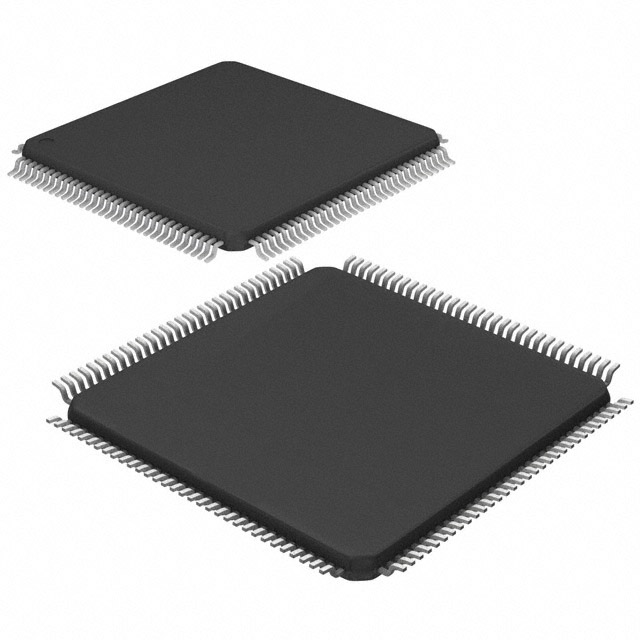
Microchip Technology USB2228-NU-10
- Part No.:
- USB2228-NU-10
- Manufacturer:
- Microchip Technology
- Category:
- Specialized
- Package:
- 128-TQFP
- Datasheet:
-
 USB2228-NU-10.pdf
- Description:
- IC INTFACE SPECIALIZED 128VTQFP
- Quantity:
- Payment:

- Shipping:

Inventory:2,071
Please send an inquiry. Send us your inquiry, and we will respond immediately.
Product details
Overview
USB2228-NU-10 from Microchip Technology is a USB 2.0 Bulk-Only Mass Storage Class peripheral controller IC integrating an 8051 microprocessor, USB 2.0 transceiver, and multi-format flash media controllers (CF/True IDE, SD/MMC, SmartMedia/xD, Memory Stick/PRO). It delivers 480 Mbps USB 2.0 connectivity, on-chip 1.8V core regulation, hardware ECC, and integrated 3.3V power FETs (100–200 mA) for direct card power delivery. It enables single-chip USB-to-flash readers in industrial data loggers and embedded peripherals.
For engineers reviewing the USB2228-NU-10 datasheet, USB2228-NU-10 pinout, USB2228-NU-10 application, or USB2228-NU-10 equivalent, key selection considerations include simultaneous multi-card protocol support (with group arbitration), firmware-upgradable ROM, GPIO-configurable LUN assignment and write-protect polarity, and RoHS-compliant 128-pin VTQFP packaging with 14 mm × 14 mm footprint.
Technical Context
The USB2228-NU-10 implements a dual-bus architecture: a 32-bit 15 MHz internal data bus interconnects the 8051 CPU core, SIE, and Flash Media Controllers (FMC), while a separate MEM/IO bus handles external program memory access. Its USB interface includes a full-speed/low-speed compatible transceiver and supports bi-directional control (64-byte buffers) and bulk endpoints (512-byte double-buffered).
Flash media control is partitioned across dedicated hardware blocks: CF operates exclusively in True IDE mode using MA[12:0]/CF_D[15:0] with nIOW/nIOR strobes; SD/MMC uses SD_CLK/SD_CMD/SD_DAT[3:0] with software-configurable clock; MS/PRO employs MS_SDIO/MS_SCLK/MS_BS with on-chip 4-bit hardware acceleration; SM/xD shares SM_ALE/SM_CLE/SM_nWE with internal weak pull-downs enabled.
Key Specifications
| Parameter | Value and Actual Design Meaning |
|---|---|
| USB Compliance | USB 2.0 Bulk-Only Mass Storage Class; includes integrated PHY and SIE for bus-powered operation without external transceiver |
| CPU Core | 8051-based 8-bit microcontroller running at 30 MHz (4-cycle/instruction); executes firmware from 64 KB internal ROM or external memory |
| Memory Resources | 12 KB internal SRAM scratchpad + 768 B program SRAM; supports external 64 KB Flash/SRAM/EPROM via parallel bus |
| Flash Media Support | CF (True IDE only), SD/Mini-SD/TransFlash, MMC/RS-MMC, SmartMedia/xD, NAND, Memory Stick/PRO/Duo - with group arbitration logic |
| Power Management | On-chip 1.8 V regulator for core; integrated 3.3 V power FETs (GPIO8/10/11) delivering 100 mA ×2 and 200 mA ×1 for card power |
| Crystal/Clock | On-board 24 MHz crystal driver; configurable for 48 MHz external clock input; internal PLL generates 480 MHz USB sampling clock |
| GPIO & Control | 15 GPIOs with edge-sensitive interrupt capability; configurable for LED blink rate, LUN mapping, SmartDetach, SD write-protect, and cover-switch operation |
Pinout & Package
USB2228-NU-10 is housed in a 128-pin VTQFP package (14 mm × 14 mm footprint, 1.0 mm height), RoHS compliant, with exposed thermal pad. Pin functions are grouped by interface: CompactFlash (CF_nCS0/1, CF_D[15:0], CF_IRQ), SmartMedia/xD (SM_nWP, SM_ALE, SM_D[7:0]), Memory Stick (MS_SDIO, MS_SCLK, MS_BS), SD/MMC (SD_DAT[3:0], SD_CLK, SD_CMD), USB (USBDP/USBDM, RBIAS), and GPIO/power (GPIO1–15, VDD33/VDD18/VSS).
| Pin/Terminal | Circuit Role | Design Meaning |
|---|---|---|
| CF_D[15:0] | CompactFlash Data Bus | Bi-directional 16-bit IDE data path; task file registers use D[7:0], bulk transfers use D[15:0]; internal weak pull-downs prevent floating states |
| SD_DAT[3:0] | Secure Digital Data Lines | 4-bit bi-directional SD/MMC data interface with internal weak pull-ups; supports high-speed mode and security command extensions |
| GPIO8/CRD_PWR0 | Card Power Output | Configurable GPIO or 3.3 V @ 100 mA power FET output for SD/MMC or MS card supply; eliminates external MOSFET and gate driver |
| MS_SDIO | Memory Stick Data I/O | Bi-directional serial data line for MS/PRO protocols; MSB-first transmission; internal weak pull-down ensures defined idle state |
| nRESET | Active-Low Reset Input | Asynchronous system reset requiring ≥1 µs pulse width; latches MA[2:0] and SEL[1:0] configuration bits on rising edge |
Key Features
| Feature | Design Value |
|---|---|
| Hardware ECC Engine | 1-bit error correction performed in real time during NAND/SM read operations, reducing host CPU overhead and improving data integrity |
| Multi-Protocol Arbitration | Enables coexistence of CF, SD, and SM/MS families on one board; enforces exclusive access per group (e.g., only one CF or ATA drive active) |
| Firmware Upgradability | Supports in-field USB-based firmware updates when boot-block Flash memory is implemented, enabling field-deployable feature enhancements |
| Integrated Card Power | Three on-chip power FETs (100 mA ×2, 200 mA ×1) eliminate discrete regulators and reduce BOM count and PCB area for multi-card readers |
| GPIO Flexibility | 15 pins support programmable polarity, blink rate, and interrupt edge sensitivity - enabling OEM-specific LED indicators and mechanical switch interfaces without external logic |
Applications
| Industrial Data Logger | Embedded Multi-Card Reader |
|---|---|
Use Scenario: Field-deployed environmental sensor node logging temperature, humidity, and GPS to removable flash cards. IC Role / Device Role / Timing Role: USB2228-NU-10 acts as a bridge between microcontroller UART/SPI and multiple flash media, managing card insertion detection, power sequencing, and USB mass storage enumeration. Use Value: Hardware ECC and SmartDetach ensure reliable long-term writes to NAND/SM cards; GPIO-controlled activity LEDs provide visual status without host intervention. | Use Scenario: Medical device docking station accepting SD, CF, and Memory Stick for patient record transfer. IC Role / Device Role / Timing Role: USB2228-NU-10 serves as the sole USB peripheral controller, handling concurrent LUN enumeration, protocol translation, and card-specific power management. Use Value: On-chip 1.8 V regulator and integrated FETs reduce thermal load and enable compact, fanless enclosure design; SD Security Command support enables encrypted data exchange. |
| USB Bootable Diagnostic Tool | Legacy System Flash Adapter |
Use Scenario: Factory-floor diagnostic tool that boots from USB-connected CF or SD card containing firmware images and test scripts. IC Role / Device Role / Timing Role: USB2228-NU-10 provides USB 2.0 Bulk-Only Mass Storage compliance required by BIOS-level boot loaders, exposing CF/SD as emulated hard disk. Use Value: USB Bulk Only Mass Storage Bootable BIOS support enables direct firmware loading without custom drivers; True IDE CF mode ensures compatibility with legacy x86 boot ROMs. | Use Scenario: Retrofit adapter converting aging RS-232 or parallel port systems to accept modern SD cards via USB. IC Role / Device Role / Timing Role: USB2228-NU-10 translates legacy host commands (e.g., ATA PIO) into SD/MMC native commands, abstracting physical layer differences. Use Value: Firmware-configurable LUN assignment and write-protect polarity allows seamless integration with legacy OS drivers expecting specific card behaviors; no host-side software changes required. |
Equivalent & Alternatives
The following parts are listed as comparable options for similar USB-to-flash media controller applications.
| Alternative Part | Technical Difference | Application Difference | Selection Advice |
|---|---|---|---|
| USB2241-AEZG | Higher integration: adds USB 3.0 support, PCIe interface option, and enhanced SD 4.0 controller; larger 144-pin QFN package | Targets next-gen high-throughput readers requiring >400 MB/s sustained transfer; not pin-compatible with USB2228-NU-10 | Select for future-proofing where USB 3.0 bandwidth and PCIe host interfacing are required; requires PCB redesign and firmware adaptation |
| GL827L-TR | Dual-core ARM-based architecture; supports UHS-I SD, eMMC 4.5, and NVMe over USB; lacks integrated CF/SM controllers | Focused on SD/eMMC-centric designs; no native SmartMedia/xD or True IDE CF support | Choose when prioritizing SD/eMMC performance and modern mobile storage formats over legacy CF/SM compatibility |
Compared with USB2228-NU-10, USB2241-AEZG offers higher bandwidth but demands layout and firmware rework, while GL827L-TR excels in SD/eMMC throughput but omits critical legacy interfaces - making USB2228-NU-10 the optimal choice for cost-sensitive, multi-format, drop-in USB reader designs requiring broad backward compatibility.
Availability
USB2228-NU-10 is available at Aetrix Electronics and suitable for industrial data loggers, embedded multi-card readers, USB-bootable diagnostic tools, and legacy system flash adapters requiring stable component supply and long-lifecycle support.
Supply support for USB2228-NU-10 includes scheduled delivery planning, volume procurement assistance, BOM continuity management, traceable sourcing, and lifecycle availability coordination for OEM customers, industrial embedded developers, connected-device designers, and electronics production programs.
Manufacturer
Microchip Technology Inc. is a leading provider of microcontrollers, analog components, and Flash-IP solutions, headquartered in Chandler, Arizona, with global design and manufacturing operations.
The USB2227/USB2228 product line was engineered specifically for cost-optimized, single-chip USB 2.0 flash media readers targeting industrial, medical, and consumer electronics applications requiring broad legacy card format support.
FAQ
What flash memory card formats does the USB2228-NU-10 support?
The USB2228-NU-10 supports CompactFlash (CF and CF Ultra I/II) in True IDE mode only, SmartMedia (SM) and xD Picture Cards, Memory Stick (MS), Memory Stick Duo (MSDUO), Memory Stick PRO (MSPRO), Secure Digital (SD), Mini-SD, TransFlash (SD), MultiMediaCard (MMC), Reduced Size MMC (RS-MMC), NAND Flash, and CF form-factor ATA hard drives. It implements dedicated hardware controllers for each family and enforces group arbitration to allow only one card per interface group active at a time.
Does the USB2228-NU-10 require external memory to operate?
No, the USB2228-NU-10 contains 64 KB of internal ROM for firmware execution and can operate without external memory. However, it also supports optional external program memory (Flash, SRAM, or EPROM) up to 64 KB via its parallel memory bus - selected by the state of GPIO6/ROMEN at reset. Internal ROM is sufficient for standard multi-LUN reader functionality.
How does the USB2228-NU-10 manage power for different flash cards?
The USB2228-NU-10 integrates three on-chip power FETs controlled by GPIO8/CRD_PWR0 (100 mA), GPIO10/CRD_PWR1 (100 mA), and GPIO11/CRD_PWR2 (200 mA), all rated for 3.3 V output. These drive power to SM/xD, SD/MMC, and MS/PRO cards respectively, eliminating external MOSFETs and reducing BOM count. Each FET is independently controllable via firmware for precise card power sequencing.
Can the USB2228-NU-10 be used in USB bootable applications?
Yes, the USB2228-NU-10 supports USB Bulk Only Mass Storage Compliant Bootable BIOS operation. When configured with CF or SD media, it enumerates as a standard mass storage device recognized by PC BIOSes for booting - enabling diagnostic tools, firmware updaters, and embedded systems to load code directly from removable flash without host driver dependencies.
What is the role of the 8051 microprocessor inside the USB2228-NU-10?
The embedded 8051 microprocessor in the USB2228-NU-10 executes firmware that manages USB protocol stack, flash media command translation (e.g., SCSI-to-CF ATA or SD CMD), card insertion detection, power control, GPIO behavior, and LUN configuration. Running at 30 MHz with 12 KB scratchpad SRAM and 768 B program SRAM, it handles real-time control tasks without requiring an external host processor.
USB2228-NU-10 Specifications
- Product attributes
- Attribute value
- Manufacturer:
- Microchip Technology
- Series:
- -
- Package/Case:
- 128-TQFP
- Packaging:
- Tray
- Product Status:
- Obsolete
- Applications:
- Controller
- Interface:
- -
- Voltage - Supply:
- 3.3V
- Supplier Device Package:
- 128-VTQFP (14x14)
- Grade:
- -
- Qualification:
- -
- Mounting Type:
- Surface Mount
USB2228-NU-10 FAQ
1.How can I place an order for USB2228-NU-10 through Aetrix?
Please submit a Request for Quotation (RFQ) for USB2228-NU-10 on Aetrix. Our sales agent will provide a competitive quotation and guide you through the order confirmation once you accept the terms.
2.Are the price and stock information for USB2228-NU-10 reliable?
The price and inventory of USB2228-NU-10 are updated periodically and may fluctuate due to market conditions. Stock and pricing data are typically refreshed every 24 hours. Quotation validity for USB2228-NU-10 is usually 5 days.
3.What payment methods are accepted for USB2228-NU-10?
We accept Wire Transfer, PayPal, Credit Card, Western Union, MoneyGram, and Escrow for USB2228-NU-10 transactions.
Note: Certain payment methods may incur a processing fee.
4.How is shipping managed for USB2228-NU-10?
USB2228-NU-10 orders can be shipped via leading logistics carriers, including DHL, UPS, FedEx, TNT, or Registered Mail.
Once your USB2228-NU-10 order is processed, you will receive an email with the shipment details and tracking number.
Note: Tracking information may take up to 24 hours to appear. Express delivery typically takes 3–5 business days.
5.How can I obtain technical support or documentation for USB2228-NU-10?
For technical support, including USB2228-NU-10 datasheets, pinout diagrams, or application guidance, please contact our engineering support team. They can provide detailed documentation and assistance for your USB2228-NU-10 requirements.
6.How does Aetrix verify that USB2228-NU-10 is sourced from the original manufacturer or authorized distributors?
All USB2228-NU-10 products on Aetrix are procured from qualified distributors and authorized channels. Our dedicated quality assurance team conducts strict verification, including traceability checks and, if necessary, third-party testing. This ensures that USB2228-NU-10 meets industry standards.
7.What is the process for return or replacement of USB2228-NU-10?
All USB2228-NU-10 units undergo pre-shipment inspection (PSI). If there is an issue with USB2228-NU-10, returns or replacements are accepted under the following conditions:
1.Quantity discrepancies, incorrect items, or visible external defects (such as breakage or corrosion), acknowledged by Aetrix.
2.The issue is reported within 90 days of delivery.
3.The USB2228-NU-10 part is unused and in its original packaging.
Return procedure for USB2228-NU-10:
1.Submit a request within 90 days.
2.Obtain a Return Material Authorization (RMA) from Aetrix.
USB2228-NU-10 Tags
-
NVT4857UKAZ
NXP Semiconductors
-
TCA8418RTWR
Texas Instruments
-
PCA9546APWR
Texas Instruments
-
MD0100N8-G
Microchip Technology
-
PCA9548APW,118
NXP Semiconductors
-
PCA9540BDP,118
NXP Semiconductors
-
PCA9548APWR
Texas Instruments
-
PCA9546APW,118
NXP Semiconductors
-
PTN3360DBS,518
NXP Semiconductors
-
PCA9546ABS,118
NXP Semiconductors
-
PCA9518PWR
Texas Instruments
-
PCA9545APW,118
NXP Semiconductors
Tech Hub

TTL and CMOS logic families differ in thresholds, loading, output drive, power and timing. This engineering guide compares 74HC and 74HCT, calculates noise margins and checks 3.3 V/5 V compatibility.

A practical engineering guide to 3.3V and 5V logic compatibility, input thresholds, resistor dividers, translator ICs, MOSFET level shifting, I2C pull-ups, timing limits and power-sequencing risks.

The 74HC595 uses push-pull logic outputs, while the TPIC6B595 uses 50 V open-drain DMOS sinks for higher-power loads. This guide compares timing, current limits, 3.3 V interfacing, load wiring, thermal…

The 74HC595 converts serial data into eight stable parallel outputs. This guide covers pin functions, shift and storage timing, OE and MR behavior, drive-current limits, cascading, voltage compatibilit…

A technical comparison of level-sensitive latches and edge-triggered flip-flops, covering timing windows, setup and hold limits, master–slave operation, time borrowing, race-through, HDL inference and…

A D latch stores one bit while Enable controls when data can pass. This reference covers gate-level operation, truth tables, transparency, setup and hold timing, LE versus OE, common ICs and practical …

An SR latch stores one bit through cross-coupled feedback. This engineering reference covers NOR and NAND implementations, truth tables, forbidden-state recovery, gated operation, switch debouncing, fa…

Latch circuits retain one bit through feedback. This technical reference covers SR and D latches, truth tables, transparency, timing limits, latch-versus-flip-flop behavior, applications and common log…

An engineering guide to LED driver operation, constant-current and constant-voltage outputs, linear and switching topologies, dimming, IC selection, calculations, replacement compatibility, and fault c…

Operational amplifier guide covering op amp basics, feedback, ideal vs real op amps, common configurations, buffer circuits, offset, bias current, gain-bandwidth, slew rate, rail-to-rail limits and sel…


