
 My Inquiry
 My Account


Microchip Technology USB2660I-JZX-03-TR
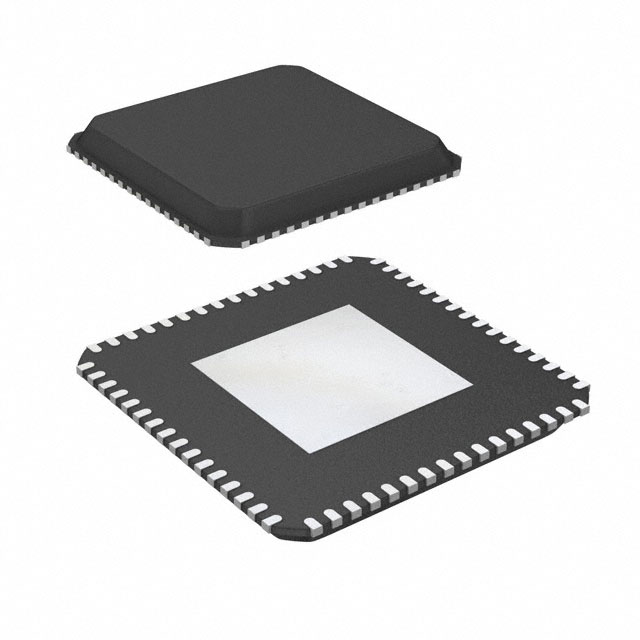
- Part No.:
- USB2660I-JZX-03-TR
- Manufacturer:
- Microchip Technology
- Category:
- Specialized
- Package:
- 64-VFQFN Exposed Pad
- Datasheet:
-
 USB2660I-JZX-03-TR.pdf
- Description:
- IC INTERFACE SPECIALIZED 64QFN
- Quantity:
- Payment:

- Shipping:

Inventory:3,390
Please send an inquiry. Send us your inquiry, and we will respond immediately.
Product details
Overview
USB2660I-JZX-03-TR from Microchip (formerly SMSC) is an industrial-grade USB 2.0 Hi-Speed hub and multi-format flash media controller IC integrating two exposed downstream USB 2.0 ports, dual SD interfaces (SD1/SD2), and support for SD/MMC/MS/xD card families. It operates across –40°C to +85°C, delivers sustained transfer rates >35 MB/s, and embeds a 60 MHz 8051 core with 64 KB ROM and 9 KB RAM.
For engineers reviewing the USB2660I-JZX-03-TR datasheet, USB2660I-JZX-03-TR pinout, USB2660I-JZX-03-TR application, or USB2660I-JZX-03-TR equivalent, key selection criteria include industrial temperature operation, dual SD slot capability (one multiplexed, one dedicated SDIO), programmable PHYBoost drive strength, PortSwap pin reordering, and I²C/SPI-configurable vendor/product IDs.
Technical Context
The USB2660I-JZX-03-TR implements a fully compliant USB 2.0 hub with integrated transaction translator (TT) supporting concurrent Low-Speed, Full-Speed, and Hi-Speed downstream devices. Its flash media controller supports SD 2.0/HS/HC, MMC 4.2, MS 1.43/Pro/Pro-HG/Duo, and xD 1.2 via time-multiplexed and dedicated physical interfaces.
It features three downstream USB ports: two externally accessible (USBDN_DP2/DM2, USBDN_DP3/DM3), and one internally assigned to the compound flash reader. Configuration is performed via external I²C EEPROM or SPI Flash, enabling customizable device descriptors, GPIO mapping, port disable sequencing (PortMap), and differential-pair pin assignment (PortSwap).
Key Specifications
| Parameter | Value and Actual Design Meaning |
|---|---|
| USB Compliance | USB 2.0 Hi-Speed hub with TT; supports LS/FS/HS devices on all enabled ports |
| Operating Temperature | –40°C to +85°C (industrial grade, denoted by "i" suffix) |
| Flash Media Support | SD 2.0/HS/HC, MMC 4.2, MS 1.43/Pro/Pro-HG/Duo, xD 1.2 - via dual SD interfaces |
| Memory Resources | 64 KB on-chip ROM + 9 KB RAM; executes firmware from external I²C EEPROM or SPI Flash |
| Package | 64-pin QFN (9 × 9 mm), lead-free, RoHS-compliant, with exposed thermal pad |
| Data Throughput | Average sustained transfer >35 MB/s (host- and media-dependent, verified in mixed-speed environments) |
| GPIO Count | Up to 20 configurable GPIOs; two support 200 mA drive with fold-back short-circuit protection |
Pinout & Package
USB2660I-JZX-03-TR is housed in a 64-pin QFN package (9 × 9 mm, 0.5 mm pitch) with exposed thermal pad connected to VSS. Pin functions are validated per SMSC USB2660/USB2660i Datasheet Rev 1.1 (2010), Sections 3, 5.1, and 6.1.
| Pin/Terminal | Circuit Role | Design Meaning |
|---|---|---|
| USBDN_DP2 / USBDN_DM2 | Downstream USB Port 2 Differential Pair | Externally accessible Hi-Speed USB 2.0 interface; supports full-speed/low-speed via TT |
| USBDN_DP3 / USBDN_DM3 | Downstream USB Port 3 Differential Pair | Second externally accessible USB 2.0 port; also used internally for compound flash reader attachment |
| SD1_CLK / SD1_D[0:7] / SD1_nCD / SD1_WP | Primary SD Interface Signals | Dedicated non-multiplexed SD/SDIO slot supporting card detection, write protection, and 1/4/8-bit data |
| SD2_D0–D1 / SD2_nCD / SD2_WP / GPIO16–19 | Secondary SD Interface + GPIO | Multiplexed SD interface for xD/MS/SD/MMC; shares pins with GPIOs for flexible board routing |
| XTAL1 (CLKIN) / XTAL2 | Crystal Oscillator Inputs | Supports 24 MHz crystal or 1.8 V external clock; internal driver eliminates need for external buffer |
| nRESET | Active-Low Reset Input | Asynchronous hardware reset; initiates boot sequence from I²C EEPROM or SPI Flash |
Key Features
| Feature | Design Value |
|---|---|
| PortSwap | Per-port programmable USB DP/DM pin assignment enables direct trace alignment to connectors, eliminating differential skew and layer crossing |
| PHYBoost | Four-level programmable transceiver drive strength restores signal integrity in marginally compliant PCB layouts or long traces |
| PortMap | Flexible port disable/reordering allows OEMs to match host controller enumeration without firmware changes or PCB revision |
| Dual SD Interfaces | One dedicated SDIO-capable slot (SD1) + one multiplexed slot (SD2) supporting SD/MMC/MS/xD - enables simultaneous card reader + wireless bridge (e.g., WiFi/Bluetooth) |
| Single-Supply Operation | 3.3 V only; internal 1.8 V regulator powers core logic, reducing BOM count and improving power efficiency |
Applications
| Desktop & Mobile PCs | Industrial GPS Navigation Systems |
|---|---|
Use Scenario: Adding USB expansion and built-in SD card reader to compact desktop motherboards or laptop docking stations. IC Role / Device Role / Timing Role: USB2660I-JZX-03-TR acts as a compound USB hub + flash media controller, presenting two external USB ports and one virtual mass-storage device over USB. Use Value: Eliminates need for separate hub and card reader ICs; reduces component count, PCB area, and system power consumption while maintaining industrial temp reliability. |
Use Scenario: Enabling field-upgradable map storage and wireless connectivity (via SDIO WiFi/Bluetooth) in ruggedized vehicle-mounted GPS units. IC Role / Device Role / Timing Role: USB2660I-JZX-03-TR serves as SDIO bridge host and USB peripheral interface, managing both local SD card access and upstream USB communication. Use Value: Dual SD interfaces allow concurrent use of one slot for map updates and another for real-time wireless telemetry - no arbitration or time-slicing required. |
| Media Players / Set-Top Boxes | Industrial Embedded Controllers |
Use Scenario: Supporting removable media playback (SD, MS, xD) and USB peripheral attachment (keyboards, storage) in consumer A/V equipment. IC Role / Device Role / Timing Role: USB2660I-JZX-03-TR functions as protocol converter and hub controller, translating USB commands into native flash media operations with minimal latency. Use Value: Broad media format support (SD/MMC/MS/xD) extends product lifecycle across evolving memory standards without hardware redesign. |
Use Scenario: Integrating secure, field-serviceable storage and USB diagnostics in programmable logic controllers (PLCs) or HMI panels operating in harsh environments. IC Role / Device Role / Timing Role: USB2660I-JZX-03-TR provides isolated, ESD-hardened USB expansion and robust flash media access under extended temperature and EMI conditions. Use Value: Industrial temperature rating (–40°C to +85°C), enhanced EMI rejection, and configurable GPIOs enable reliable deployment where commercial-grade hubs fail. |
Equivalent & Alternatives
The following parts are listed as comparable options for similar USB hub and flash media controller applications.
| Alternative Part | Technical Difference | Application Difference | Selection Advice |
|---|---|---|---|
| USB2640I-JZX-03-TR | Single downstream USB port; no SD2 interface; 48-pin QFN; lower pin count and cost | Limited to single-slot card readers; insufficient for dual SD/SDIO or simultaneous card + wireless use cases | Select when only one external USB port and one SD slot are required; not suitable for USB2660I-JZX-03-TR's dual-SD or compound-device topology. |
| USB2514B-AEZG | 4-port Hi-Speed hub only; no flash media controller; no SD/MS/xD support; requires external card reader IC | Requires additional components for media support; increases BOM, layout complexity, and power budget | Choose only if flash media functionality is handled separately; USB2660I-JZX-03-TR consolidates hub + reader, reducing integration effort and footprint. |
Compared with USB2640I-JZX-03-TR and USB2514B-AEZG, the USB2660I-JZX-03-TR uniquely integrates dual SD interfaces and a compound USB device architecture - enabling simultaneous external USB expansion and multi-format flash media access within a single 64-pin QFN, without external glue logic or secondary controllers.
Availability
USB2660I-JZX-03-TR is available at Aetrix Electronics and suitable for industrial GPS navigation systems, ruggedized media players, and embedded PLCs requiring stable component supply across extended temperature ranges and long production lifecycles.
Supply support for USB2660I-JZX-03-TR includes scheduled delivery planning, volume procurement assistance, BOM continuity management, traceable sourcing, and lifecycle availability coordination for OEM customers, industrial embedded developers, connected-device designers, and electronics production programs.
Manufacturer
Microchip Technology acquired Standard Microsystems Corporation (SMSC) in 2012 and maintains the USB2660 family as part of its legacy high-integration USB solutions portfolio.
The USB2660I-JZX-03-TR belongs to SMSC's Ultra Fast USB Hub and Multi-Format Flash Media Controller product line, designed specifically for space-constrained, thermally demanding applications requiring consolidated USB expansion and broad flash media interoperability.
FAQ
What is the operating temperature range of the USB2660I-JZX-03-TR?
The USB2660I-JZX-03-TR is rated for industrial operation from –40°C to +85°C. This is confirmed by the "i" suffix in the part number and explicitly stated in Section 1 (Overview) and Hardware Features of the SMSC USB2660/USB2660i Datasheet Rev 1.1. The USB2660 (non-i) variant is limited to 0°C to +70°C.
Does the USB2660I-JZX-03-TR support xD-Picture Card, and what licensing is required?
Yes, the USB2660I-JZX-03-TR supports xD-Picture Card 1.2 per datasheet Section 1 and Feature List. However, SMSC mandates that purchasers hold a valid xD-Picture Card License Agreement with Fuji Photo Film Co., Ltd., Olympus Optical Co., Ltd., and Toshiba Corporation. Use without this license violates intellectual property terms outlined in the datasheet's legal notices.
How is configuration handled for the USB2660I-JZX-03-TR - is external memory required?
Yes, configuration requires external non-volatile memory: either an I²C EEPROM (for descriptor and basic settings) or SPI Flash (for full firmware execution). The USB2660I-JZX-03-TR boots from these sources - no internal configuration storage exists. Default settings apply only after hardware reset if no external memory responds, but full functionality (e.g., custom VID/PID, GPIO mapping) depends on properly programmed external memory.
What are the key differences between the SD1 and SD2 interfaces on the USB2660I-JZX-03-TR?
SD1 is a dedicated, non-multiplexed interface supporting SD/SDIO with full pinout (CLK, CMD, D0–D3, nCD, WP) - ideal for SDIO wireless modules (WiFi/Bluetooth). SD2 is multiplexed across xD, MS, and SD/MMC signals (e.g., SD2_D0 doubles as MS_D4), enabling multi-format compatibility but requiring firmware-controlled mode switching. Both slots operate independently.
Can the USB2660I-JZX-03-TR be used as a standalone USB hub without flash media functionality?
Yes - flash media functionality is optional and disabled by default. The USB2660I-JZX-03-TR operates as a fully functional 3-port USB 2.0 hub (one upstream, two downstream) even with no SD cards inserted or SD interfaces unconnected. All hub features - PortMap, PortSwap, PHYBoost, TT, and power control - remain active and configurable independent of media controller usage.
USB2660I-JZX-03-TR Specifications
- Product attributes
- Attribute value
- Manufacturer:
- Microchip Technology
- Series:
- -
- Package/Case:
- 64-VFQFN Exposed Pad
- Packaging:
- Tape & Reel (TR)
- Product Status:
- Active
- Applications:
- Desktop, Notebook PCs
- Interface:
- -
- Voltage - Supply:
- -
- Supplier Device Package:
- 64-QFN (9x9)
- Grade:
- -
- Qualification:
- -
- Mounting Type:
- Surface Mount
USB2660I-JZX-03-TR FAQ
1.How can I place an order for USB2660I-JZX-03-TR through Aetrix?
Please submit a Request for Quotation (RFQ) for USB2660I-JZX-03-TR on Aetrix. Our sales agent will provide a competitive quotation and guide you through the order confirmation once you accept the terms.
2.Are the price and stock information for USB2660I-JZX-03-TR reliable?
The price and inventory of USB2660I-JZX-03-TR are updated periodically and may fluctuate due to market conditions. Stock and pricing data are typically refreshed every 24 hours. Quotation validity for USB2660I-JZX-03-TR is usually 5 days.
3.What payment methods are accepted for USB2660I-JZX-03-TR?
We accept Wire Transfer, PayPal, Credit Card, Western Union, MoneyGram, and Escrow for USB2660I-JZX-03-TR transactions.
Note: Certain payment methods may incur a processing fee.
4.How is shipping managed for USB2660I-JZX-03-TR?
USB2660I-JZX-03-TR orders can be shipped via leading logistics carriers, including DHL, UPS, FedEx, TNT, or Registered Mail.
Once your USB2660I-JZX-03-TR order is processed, you will receive an email with the shipment details and tracking number.
Note: Tracking information may take up to 24 hours to appear. Express delivery typically takes 3–5 business days.
5.How can I obtain technical support or documentation for USB2660I-JZX-03-TR?
For technical support, including USB2660I-JZX-03-TR datasheets, pinout diagrams, or application guidance, please contact our engineering support team. They can provide detailed documentation and assistance for your USB2660I-JZX-03-TR requirements.
6.How does Aetrix verify that USB2660I-JZX-03-TR is sourced from the original manufacturer or authorized distributors?
All USB2660I-JZX-03-TR products on Aetrix are procured from qualified distributors and authorized channels. Our dedicated quality assurance team conducts strict verification, including traceability checks and, if necessary, third-party testing. This ensures that USB2660I-JZX-03-TR meets industry standards.
7.What is the process for return or replacement of USB2660I-JZX-03-TR?
All USB2660I-JZX-03-TR units undergo pre-shipment inspection (PSI). If there is an issue with USB2660I-JZX-03-TR, returns or replacements are accepted under the following conditions:
1.Quantity discrepancies, incorrect items, or visible external defects (such as breakage or corrosion), acknowledged by Aetrix.
2.The issue is reported within 90 days of delivery.
3.The USB2660I-JZX-03-TR part is unused and in its original packaging.
Return procedure for USB2660I-JZX-03-TR:
1.Submit a request within 90 days.
2.Obtain a Return Material Authorization (RMA) from Aetrix.
USB2660I-JZX-03-TR Tags
-
NVT4857UKAZ
NXP Semiconductors
-
TCA8418RTWR
Texas Instruments

-
PCA9546APWR
Texas Instruments

-
MD0100N8-G
Microchip Technology
-
PCA9548APW,118
NXP Semiconductors
-
PCA9540BDP,118
NXP Semiconductors
-
PCA9548APWR
Texas Instruments
-
PCA9546APW,118
NXP Semiconductors
-
PTN3360DBS,518
NXP Semiconductors
-
PCA9546ABS,118
NXP Semiconductors
-
PCA9518PWR
Texas Instruments
-
PCA9545APW,118
NXP Semiconductors
Tech Hub

TTL and CMOS logic families differ in thresholds, loading, output drive, power and timing. This engineering guide compares 74HC and 74HCT, calculates noise margins and checks 3.3 V/5 V compatibility.

A practical engineering guide to 3.3V and 5V logic compatibility, input thresholds, resistor dividers, translator ICs, MOSFET level shifting, I2C pull-ups, timing limits and power-sequencing risks.

The 74HC595 uses push-pull logic outputs, while the TPIC6B595 uses 50 V open-drain DMOS sinks for higher-power loads. This guide compares timing, current limits, 3.3 V interfacing, load wiring, thermal…

The 74HC595 converts serial data into eight stable parallel outputs. This guide covers pin functions, shift and storage timing, OE and MR behavior, drive-current limits, cascading, voltage compatibilit…

A technical comparison of level-sensitive latches and edge-triggered flip-flops, covering timing windows, setup and hold limits, master–slave operation, time borrowing, race-through, HDL inference and…

A D latch stores one bit while Enable controls when data can pass. This reference covers gate-level operation, truth tables, transparency, setup and hold timing, LE versus OE, common ICs and practical …

An SR latch stores one bit through cross-coupled feedback. This engineering reference covers NOR and NAND implementations, truth tables, forbidden-state recovery, gated operation, switch debouncing, fa…

Latch circuits retain one bit through feedback. This technical reference covers SR and D latches, truth tables, transparency, timing limits, latch-versus-flip-flop behavior, applications and common log…

An engineering guide to LED driver operation, constant-current and constant-voltage outputs, linear and switching topologies, dimming, IC selection, calculations, replacement compatibility, and fault c…

Operational amplifier guide covering op amp basics, feedback, ideal vs real op amps, common configurations, buffer circuits, offset, bias current, gain-bandwidth, slew rate, rail-to-rail limits and sel…


