
 My Inquiry
 My Account


Microchip Technology USBF1600T-I/SNVAO

- Part No.:
- USBF1600T-I/SNVAO
- Manufacturer:
- Microchip Technology
- Category:
- Memory
- Package:
- 8-SOIC (0.154", 3.90mm Width)
- Datasheet:
-
 USBF1600T-I/SNVAO.pdf
- Description:
- IC FLASH 16MBIT SPI/QUAD 8SOIC
- Quantity:
- Payment:

- Shipping:

Inventory:2,755
Please send an inquiry. Send us your inquiry, and we will respond immediately.
Product details
Overview
USBF1600T-I/SNVAO from Microchip Technology is a USB firmware memory IC designed as a dedicated companion to the USB491X family of automotive USB Smart Hub controllers. It provides 2 MByte (16 Mbit) serial flash storage with x1/x2/x4 SPI and SQI interfaces, 104 MHz max clock frequency, industrial temperature range (–40°C to +85°C), and AEC-Q100 Grade 2 qualification for infotainment head units and multi-row USB media hubs.
For engineers reviewing the USBF1600T-I/SNVAO datasheet, USBF1600T-I/SNVAO pinout, USBF1600T-I/SNVAO application, or USBF1600T-I/SNVAO equivalent, this page delivers verified technical context, validated pin functions, real-world use cases in automotive USB hub systems, and confirmed alternative parts with documented functional and application-level differences.
Technical Context
The USBF1600T-I/SNVAO implements a six-wire, 4-bit I/O interface supporting both legacy SPI (Mode 0/3) and high-speed Serial Quad I/O (SQI) protocols - enabling up to 4× bandwidth over standard SPI at identical clock rates. Its SuperFlash technology features split-gate cells and thick-oxide tunneling for enhanced endurance and data retention.
Memory organization includes uniform 4 KByte sectors plus flexible overlay blocks: eight 8 KByte, two 32 KByte, and thirty 64 KByte erasable blocks. Write-suspend, software reset, OTP Security ID (64-bit factory pre-programmed + 2 KByte user-programmable), and granular block protection (with permanent lock-down) are fully supported.
Key Specifications
| Parameter | Value and Actual Design Meaning |
|---|---|
| Memory Size | 2 MByte (16 Mbit) - sufficient for full USB491X firmware image plus configuration and parameter storage |
| Max Clock Frequency | 104 MHz - enables high-throughput firmware loading and runtime updates in USB 2.0 High-Speed systems |
| Endurance | 100,000 program/erase cycles - supports field firmware upgrades across vehicle lifecycle |
| Data Retention | Greater than 100 years - ensures long-term reliability without refresh in automotive infotainment applications |
| Operating Voltage | 2.7–3.6 V - compatible with standard automotive 3.3 V supply rails and robust against voltage transients |
| Temperature Range | Industrial: –40°C to +85°C - certified for under-dash automotive environments per AEC-Q100 Grade 2 |
| Active Read Current | 15 mA typical @ 104 MHz - low power consumption during active firmware execution or verification |
| Standby Current | 15 µA typical - minimizes quiescent draw when USB hub is in low-power suspend mode |
Pinout & Package
USBF1600T-I/SNVAO is packaged in an 8-lead SOIC (3.90 mm body, SN suffix), with lead pitch 1.27 mm and JEDEC-standard pinout. This package supports automated assembly and offers proven thermal and mechanical reliability in automotive PCB environments.
| Pin/Terminal | Circuit Role | Design Meaning |
|---|---|---|
| CE# | Chip Enable | Active-low selection signal; must remain asserted throughout command/data sequences to prevent bus timeout or corruption |
| SIO0/SI | Serial Data Input | Primary input for commands, addresses, and data in SPI mode; default state after power-on reset |
| SIO1/SO | Serial Data Output | Primary output for read data in SPI mode; outputs on falling SCK edge; high-impedance when deselected |
| SIO2/WP# | Write Protect | Hardware-enabled block write protection; functional only in SPI single/dual-bit read modes; requires Configuration Register enable |
| SIO3/HOLD# | Hold Control | Pauses ongoing serial transfers without deselecting device; must be tied high when unused to avoid unintended suspension |
| SCK | Serial Clock | Master-generated timing reference; inputs latched on rising edge, outputs shifted on falling edge; supports Mode 0 and Mode 3 |
| VDD | Power Supply | 2.7–3.6 V core supply; ramp rate >1 V/100 ms required for reliable power-up initialization |
| VSS | Ground | Reference return path for all digital and analog circuitry; requires low-impedance PCB connection to minimize noise coupling |
Key Features
| Feature | Design Value |
|---|---|
| Firmware Memory Companion Role | Factory pre-programmable for USB491X firmware - eliminates boot-time host dependency and reduces system integration effort |
| SQI Protocol Support | Enables 4× throughput vs. SPI at same clock frequency using multiplexed SIO[3:0] - critical for fast firmware load in USB hub enumeration |
| Flexible Erase Architecture | Uniform 4 KByte sectors + parameter overlay blocks (8/32/64 KByte) - allows independent update of firmware, config, and security regions |
| Security ID with OTP Area | 64-bit factory pre-programmed unique ID + 2 KByte user-programmable OTP - supports secure boot authentication and device identity binding |
| Write-Suspend Capability | Allows interruption of erase/program to service urgent read requests - essential for real-time responsiveness in automotive USB hubs |
| AEC-Q100 Grade 2 Qualification | Validated for –40°C to +105°C operation (Grade 3 also available); meets automotive reliability, ESD, and latch-up requirements |
Applications
| Infotainment Head Unit Integration | Multi-Row USB Media Hub |
|---|---|
Use Scenario: Embedded USB controller in automotive head unit requires persistent, authenticated firmware storage with fast boot and field-upgrade capability. IC Role / Device Role / Timing Role: Dedicated firmware memory providing boot-time code fetch and runtime configuration access for USB491X hub controller. Use Value: Reduces boot time by eliminating host-side firmware download; enables secure OTA updates via protected block programming and OTP-based signature validation. |
Use Scenario: Centralized USB hub serving first, second, and third row passenger ports in premium vehicles, requiring robust power delivery coordination and firmware resilience. IC Role / Device Role / Timing Role: Nonvolatile storage for USB491X hub firmware, port mapping tables, and power policy parameters - accessed during enumeration and dynamic reconfiguration. Use Value: Ensures consistent port behavior across temperature extremes; supports hot-plug recovery via fast sector erase and page-program for corrupted parameter blocks. |
| USB Power Delivery Coordination | Automotive Diagnostic Interface |
Use Scenario: USB-C PD negotiation logic in vehicle telematics module relies on stored vendor-defined messages and policy rules that must survive ignition cycles. IC Role / Device Role / Timing Role: Firmware and policy memory co-located with USB491X, storing PD contract parameters, source/sink capabilities, and fault logs. Use Value: Guarantees deterministic PD handshake across cold starts; leverages 100-year data retention and 100k-cycle endurance for frequent log updates. |
Use Scenario: OBD-II diagnostic gateway uses USB491X to bridge vehicle CAN networks to external tools, requiring tamper-resistant firmware and calibration data storage. IC Role / Device Role / Timing Role: Secure firmware repository with locked-down 8 KByte parameter blocks - stores bootloader, cryptographic keys, and vehicle-specific calibration offsets. Use Value: Prevents unauthorized firmware modification via hardware WP#/Configuration Register lock; OTP Security ID enables secure key binding for UDS session authentication. |
Equivalent & Alternatives
The following parts are listed as comparable options for similar USB firmware memory applications.
| Alternative Part | Technical Difference | Application Difference | Selection Advice |
|---|---|---|---|
| AT25DF161-MAHN-T | 16 Mbit SPI-only flash; no SQI support; 85 MHz max clock; no AEC-Q100 qualification | Lacks USB491X-specific firmware optimization, SQI acceleration, and automotive-grade reliability testing | Acceptable for non-automotive USB hubs where cost is prioritized over speed, security, and qualification |
| S25FL132K0XMFI010 | 16 Mbit Quad SPI flash; 133 MHz max; AEC-Q100 Grade 3; no integrated Security ID or USB firmware companion features | Higher speed and broader temp range, but requires external firmware management logic and lacks USB491X-specific block protection schemes | Suitable for new designs needing higher clock rate and extended temperature, but adds firmware abstraction layer complexity |
Compared with AT25DF161-MAHN-T and S25FL132K0XMFI010, USBF1600T-I/SNVAO delivers USB491X-optimized memory architecture, built-in security primitives, and automotive qualification - reducing firmware integration risk and eliminating need for external protection logic or custom bootloaders.
Availability
USBF1600T-I/SNVAO is available at Aetrix Electronics and suitable for automotive infotainment head units, multi-row USB media hubs, and USB power delivery coordination systems requiring stable component supply, long-lifecycle support, and AEC-Q100-compliant sourcing.
Supply support for USBF1600T-I/SNVAO includes scheduled delivery planning, volume procurement assistance, BOM continuity management, traceable sourcing, and lifecycle availability coordination for OEM customers, industrial embedded developers, connected-device designers, and electronics production programs.
Manufacturer
Microchip Technology Inc. is a leading provider of microcontrollers, analog devices, and memory solutions, headquartered in Chandler, Arizona, with global design, manufacturing, and sales operations.
The USBF1600 product line is engineered specifically as firmware memory companions for Microchip's USB491X Smart Hub controllers - targeting automotive infotainment, in-vehicle connectivity, and USB-C power delivery applications with stringent reliability and security requirements.
FAQ
What is the primary function of the USBF1600T-I/SNVAO in a USB491X-based system?
The USBF1600T-I/SNVAO serves as the dedicated firmware memory for Microchip's USB491X USB Smart Hub controllers. It stores boot firmware, configuration parameters, and security credentials required for USB enumeration, port management, and power delivery coordination. Its optimized interface and block structure ensure deterministic startup and field-upgrade capability without host intervention - a core requirement in automotive infotainment systems where USBF1600T-I/SNVAO replaces generic flash with purpose-built functionality.
Does the USBF1600T-I/SNVAO support both SPI and SQI protocols, and how does that affect system design?
Yes, USBF1600T-I/SNVAO supports both standard SPI (x1/x2 modes) and Serial Quad I/O (SQI) protocol. After power-on reset, it defaults to SPI mode for backward compatibility; SQI mode is enabled via the EQIO command. In SQI mode, SIO[3:0] pins operate as bidirectional quad lines, quadrupling effective throughput at the same clock frequency - enabling faster firmware loads and real-time parameter updates. This eliminates the need for wider parallel buses or higher-frequency clocks, simplifying PCB layout while meeting USB 2.0 High-Speed timing budgets in USBF1600T-I/SNVAO-based designs.
How is the Security ID implemented in the USBF1600T-I/SNVAO, and what are its practical uses?
The USBF1600T-I/SNVAO includes a 64-bit factory pre-programmed Security ID and a 2 KByte user-programmable OTP area. The ID is read via the RSID command (88H) and programmed via PSID (A5H); LSID (85H) permanently disables further programming. This enables secure boot chain binding, device authentication during firmware updates, and anti-cloning measures. In production, the USBF1600T-I/SNVAO's OTP area can store cryptographic keys or vehicle-specific calibration data that must remain immutable - directly supporting UDS diagnostics and OEM security policies without external secure elements.
What package type does USBF1600T-I/SNVAO use, and why is it suitable for automotive applications?
USBF1600T-I/SNVAO uses the 8-lead SOIC (3.90 mm body), designated by the "SN" suffix in the part number. This package meets JEDEC MS-012 standards, offers proven thermal performance, and supports automated optical inspection and reflow soldering. Its 1.27 mm pitch and gull-wing leads provide mechanical robustness against vibration and thermal cycling - critical for under-dash automotive environments. The SN package also enables straightforward footprint migration from legacy SPI flash, reducing redesign effort when upgrading to USBF1600T-I/SNVAO in existing USB491X reference designs.
Is the USBF1600T-I/SNVAO qualified for automotive use, and what does AEC-Q100 Grade 2 certification mean for system design?
Yes, USBF1600T-I/SNVAO is AEC-Q100 Grade 2 qualified, certifying operation from –40°C to +105°C ambient temperature with validated reliability for automotive applications. Grade 2 covers most under-dash locations, including head units and center consoles. This qualification includes stress testing for temperature cycling, humidity, ESD (±2 kV HBM), and latch-up immunity - ensuring the USBF1600T-I/SNVAO maintains data integrity and functional safety during vehicle lifetime. Designers can rely on its 100-year data retention and 100,000-cycle endurance without derating or additional shielding, accelerating automotive qualification timelines.
USBF1600T-I/SNVAO Specifications
- Product attributes
- Attribute value
- Manufacturer:
- Microchip Technology
- Series:
- -
- Package/Case:
- 8-SOIC (0.154", 3.90mm Width)
- Packaging:
- Tape & Reel (TR)
- Product Status:
- Active
- Programmable:
- Not Verified
- Memory Type:
- Non-Volatile
- Memory Format:
- FLASH
- Technology:
- FLASH
- Memory Size:
- 16Mbit
- Memory Organization:
- 2M x 8
- Memory Interface:
- SPI - Quad I/O
- Clock Frequency:
- 104 MHz
- Write Cycle Time - Word, Page:
- 1.5ms
- Access Time:
- -
- Voltage - Supply:
- 2.7V ~ 3.6V
- Operating Temperature:
- -40°C ~ 85°C (TA)
- Grade:
- Automotive
- Qualification:
- AEC-Q100
- Mounting Type:
- Surface Mount
- Supplier Device Package:
- 8-SOIC
USBF1600T-I/SNVAO FAQ
1.How can I place an order for USBF1600T-I/SNVAO through Aetrix?
Please submit a Request for Quotation (RFQ) for USBF1600T-I/SNVAO on Aetrix. Our sales agent will provide a competitive quotation and guide you through the order confirmation once you accept the terms.
2.Are the price and stock information for USBF1600T-I/SNVAO reliable?
The price and inventory of USBF1600T-I/SNVAO are updated periodically and may fluctuate due to market conditions. Stock and pricing data are typically refreshed every 24 hours. Quotation validity for USBF1600T-I/SNVAO is usually 5 days.
3.What payment methods are accepted for USBF1600T-I/SNVAO?
We accept Wire Transfer, PayPal, Credit Card, Western Union, MoneyGram, and Escrow for USBF1600T-I/SNVAO transactions.
Note: Certain payment methods may incur a processing fee.
4.How is shipping managed for USBF1600T-I/SNVAO?
USBF1600T-I/SNVAO orders can be shipped via leading logistics carriers, including DHL, UPS, FedEx, TNT, or Registered Mail.
Once your USBF1600T-I/SNVAO order is processed, you will receive an email with the shipment details and tracking number.
Note: Tracking information may take up to 24 hours to appear. Express delivery typically takes 3–5 business days.
5.How can I obtain technical support or documentation for USBF1600T-I/SNVAO?
For technical support, including USBF1600T-I/SNVAO datasheets, pinout diagrams, or application guidance, please contact our engineering support team. They can provide detailed documentation and assistance for your USBF1600T-I/SNVAO requirements.
6.How does Aetrix verify that USBF1600T-I/SNVAO is sourced from the original manufacturer or authorized distributors?
All USBF1600T-I/SNVAO products on Aetrix are procured from qualified distributors and authorized channels. Our dedicated quality assurance team conducts strict verification, including traceability checks and, if necessary, third-party testing. This ensures that USBF1600T-I/SNVAO meets industry standards.
7.What is the process for return or replacement of USBF1600T-I/SNVAO?
All USBF1600T-I/SNVAO units undergo pre-shipment inspection (PSI). If there is an issue with USBF1600T-I/SNVAO, returns or replacements are accepted under the following conditions:
1.Quantity discrepancies, incorrect items, or visible external defects (such as breakage or corrosion), acknowledged by Aetrix.
2.The issue is reported within 90 days of delivery.
3.The USBF1600T-I/SNVAO part is unused and in its original packaging.
Return procedure for USBF1600T-I/SNVAO:
1.Submit a request within 90 days.
2.Obtain a Return Material Authorization (RMA) from Aetrix.
USBF1600T-I/SNVAO Tags
-
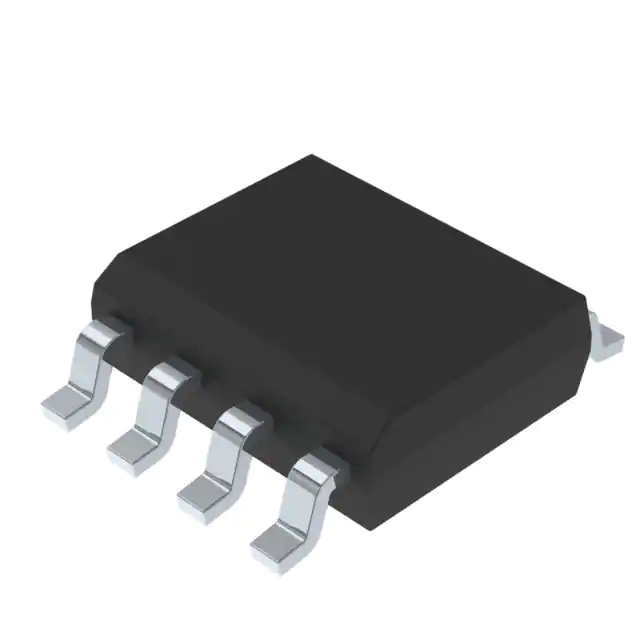
M24C02-WMN6TP
STMicroelectronics
-
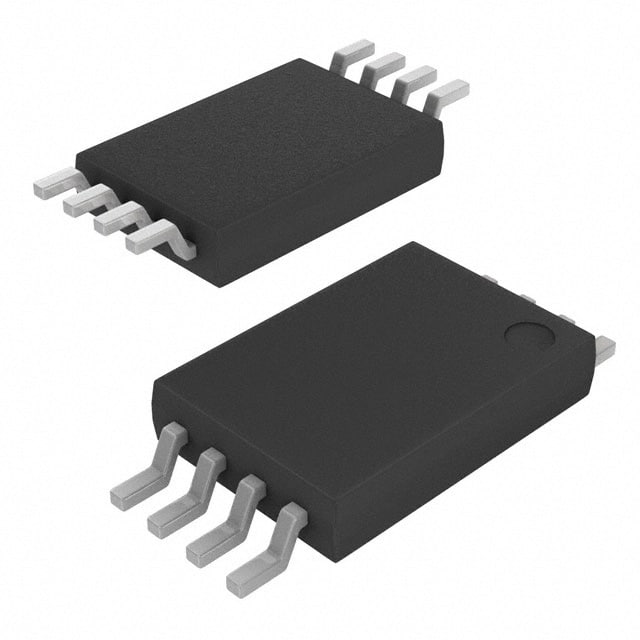
AT24C02C-XHM-T
Microchip Technology
-
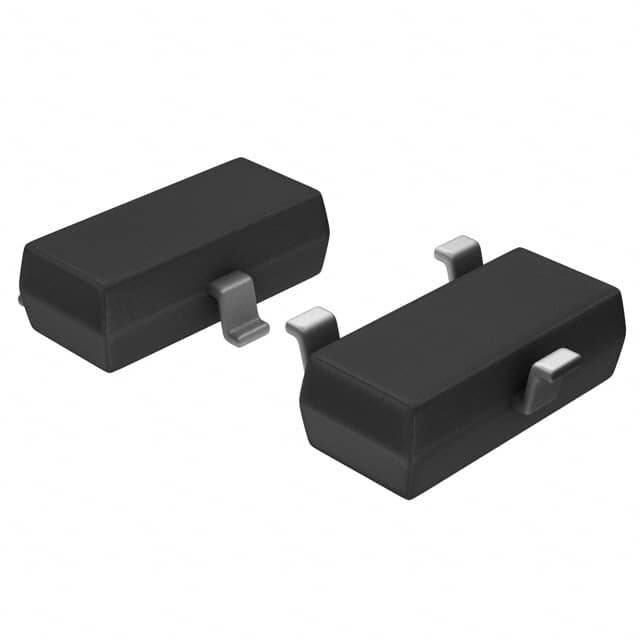
AT21CS01-STUM10-T
Microchip Technology

-
AT24C02C-SSHM-T
Microchip Technology
-
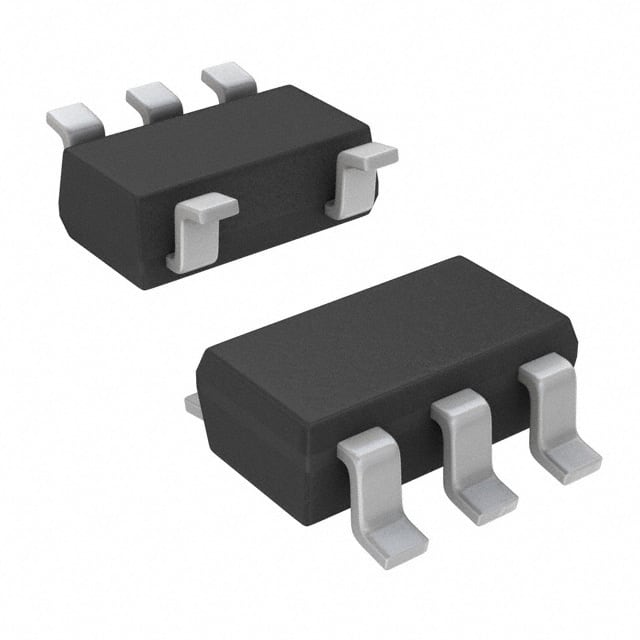
24LC01BT-I/OT
Microchip Technology
-
M24C02-FMC6TG
STMicroelectronics
-
AT24CS02-SSHM-T
Microchip Technology

-
93LC46BT-I/OT
Microchip Technology
-
AT24C04C-SSHM-T
Microchip Technology

-
24LC01BT-I/SN
Microchip Technology
-
24AA02UIDT-I/OT
Microchip Technology
-
AT24C08C-STUM-T
Microchip Technology
Tech Hub

TTL and CMOS logic families differ in thresholds, loading, output drive, power and timing. This engineering guide compares 74HC and 74HCT, calculates noise margins and checks 3.3 V/5 V compatibility.

A practical engineering guide to 3.3V and 5V logic compatibility, input thresholds, resistor dividers, translator ICs, MOSFET level shifting, I2C pull-ups, timing limits and power-sequencing risks.

The 74HC595 uses push-pull logic outputs, while the TPIC6B595 uses 50 V open-drain DMOS sinks for higher-power loads. This guide compares timing, current limits, 3.3 V interfacing, load wiring, thermal…

The 74HC595 converts serial data into eight stable parallel outputs. This guide covers pin functions, shift and storage timing, OE and MR behavior, drive-current limits, cascading, voltage compatibilit…

A technical comparison of level-sensitive latches and edge-triggered flip-flops, covering timing windows, setup and hold limits, master–slave operation, time borrowing, race-through, HDL inference and…

A D latch stores one bit while Enable controls when data can pass. This reference covers gate-level operation, truth tables, transparency, setup and hold timing, LE versus OE, common ICs and practical …

An SR latch stores one bit through cross-coupled feedback. This engineering reference covers NOR and NAND implementations, truth tables, forbidden-state recovery, gated operation, switch debouncing, fa…

Latch circuits retain one bit through feedback. This technical reference covers SR and D latches, truth tables, transparency, timing limits, latch-versus-flip-flop behavior, applications and common log…

An engineering guide to LED driver operation, constant-current and constant-voltage outputs, linear and switching topologies, dimming, IC selection, calculations, replacement compatibility, and fault c…

Operational amplifier guide covering op amp basics, feedback, ideal vs real op amps, common configurations, buffer circuits, offset, bias current, gain-bandwidth, slew rate, rail-to-rail limits and sel…


