Vishay Semiconductor Opto Division VLMD31L2N1-GS08
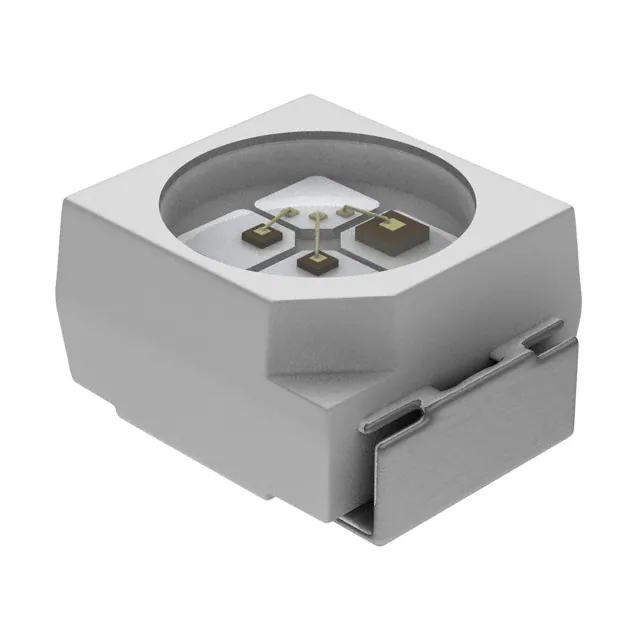
- Part No.:
- VLMD31L2N1-GS08
- Manufacturer:
- Vishay Semiconductor Opto Division
- Category:
- LED Indication - Discrete
- Package:
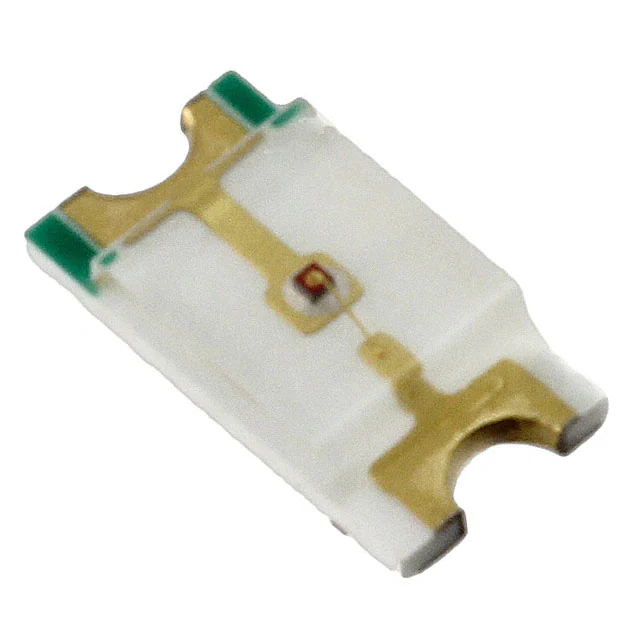
- 2-SMD, J-Lead
- Datasheet:
-
VLMD31L2N1-GS08.pdf
- Description:
- LED RED CLEAR 2PLCC SMD
- Quantity:
- Payment:

- Shipping:

Inventory:1,888
Please send an inquiry. Send us your inquiry, and we will respond immediately.
Product details
Overview
VLMD31L2N1-GS08 from Vishay Semiconductors is a red surface-mount LED in PLCC-2 package, featuring luminous intensity of 14–35.5 mcd at 10 mA, dominant wavelength of 648 nm, and forward voltage of 1.8–2.2 V at 20 mA. It delivers narrow brightness binning (L2/N1 group), ±60° viewing angle, and AEC-Q101 qualification for automotive dashboard backlighting.
For engineers reviewing the VLMD31L2N1-GS08 datasheet, VLMD31L2N1-GS08 pinout, VLMD31L2N1-GS08 application, or VLMD31L2N1-GS08 equivalent, key selection criteria include luminous intensity binning (L2/N1), PLCC-2 thermal resistance (400 K/W), JEDEC level 2a preconditioning, and compatibility with IR reflow per J-STD-020.
Technical Context
This device uses GaAlAs-on-GaAs technology to achieve high-efficiency red emission at 648 nm dominant wavelength with low forward voltage (1.8–2.2 V). Its non-diffused lens enables precise coupling to light pipes and LCD backlight guides, while the white thermoplastic PLCC-2 package provides high reflectivity and thermal stability up to 100 °C junction temperature.
The VLMD31L2N1-GS08 is binned for luminous intensity ratio ≤1.6 within a reel (IVmax/IVmin), ensuring consistent brightness across production units. It supports surge forward current up to 0.5 A (10 μs pulse) and exhibits temperature coefficients of −1.8 mV/K for VF and +0.05 nm/K for λd.
Key Specifications
| Parameter | Value and Actual Design Meaning |
|---|---|
| Luminous intensity | 14–35.5 mcd at 10 mA - defines brightness range for indicator visibility under standard drive conditions |
| Dominant wavelength | 648 nm - ensures consistent red chromaticity for automotive and telecom signaling compliance |
| Forward voltage | 1.8–2.2 V at 20 mA - enables low-power operation with minimal voltage headroom requirements |
| Viewing angle | ±60° - provides wide but controlled illumination suitable for flat-panel backlight uniformity |
| Junction-to-ambient Rth | 400 K/W on >16 mm² PCB pad - determines thermal derating needed for continuous 30 mA operation |
| ESD withstand | 2 kV HBM per JESD22-A114-B - supports handling in standard assembly environments without special ESD controls |
| AEC-Q101 qualified | Validated for automotive underhood and cabin applications - confirms reliability for dashboard and switch backlighting |
Pinout & Package
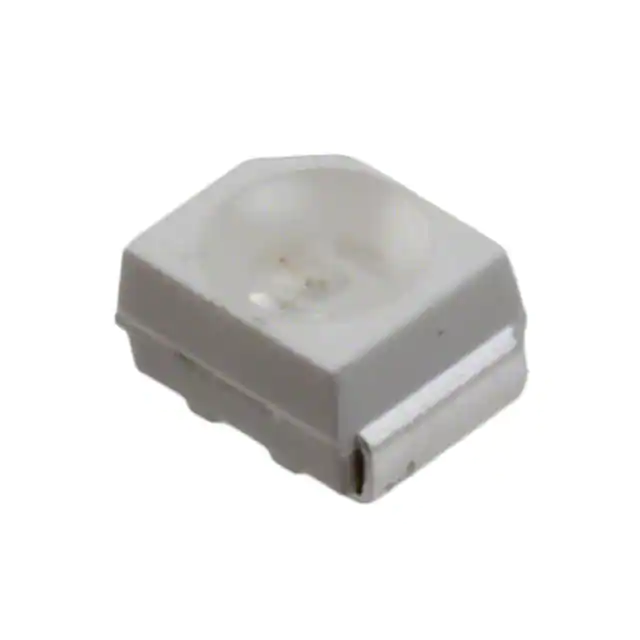
Package: PLCC-2 SMD with white thermoplastic body, non-diffused lens, and lead frame embedded in reflective housing. Dimensions: 2.6 × 1.6 mm footprint, 1.2 mm height (see Vishay drawing 20415).
| Pin/Terminal | Circuit Role | Design Meaning |
|---|---|---|
| Anode | Positive DC input | Connects to current-limiting resistor or constant-current driver output; polarity must be observed to avoid reverse breakdown |
| Cathode | Ground return path | Common reference for LED bias; requires low-impedance PCB trace to minimize voltage drop and thermal rise |
Key Features
| Feature | Design Value |
|---|---|
| Luminous intensity binning (L2/N1) | Ensures ≤1.6 IVmax/IVmin ratio per reel - critical for uniform backlight appearance in multi-LED arrays |
| Non-diffused lens | Enables direct coupling to light pipes and edge-lit LCD guides - improves optical efficiency over diffused alternatives |
| AEC-Q101 qualification | Validates performance across −40 to +100 °C ambient - required for automotive instrument cluster integration |
| JEDEC level 2a preconditioning | Confirms moisture sensitivity level - mandates dry storage or baking before reflow to prevent popcorning |
| PLCC-2 with white thermoplastic | Provides high internal reflectivity (>90%) and thermal stability - maintains luminous output over lifetime |
Applications
| Automotive Dashboard Backlighting | Telecom Indicator Lighting |
|---|---|
Use Scenario: Illuminating segmented symbols and analog gauge markings in vehicle instrument clusters. IC Role / Device Role / Timing Role: Discrete red light source driven by constant-current LED driver ICs (e.g., AS1107, TPS6106x). Use Value: L2/N1 binning ensures uniform symbol brightness; AEC-Q101 qualification guarantees operation at 100 °C under hood conditions. | Use Scenario: Status indication on telephone handsets, fax machines, and VoIP endpoints. IC Role / Device Role / Timing Role: Standalone visual feedback element powered directly from microcontroller GPIO or dedicated LED driver. Use Value: ±60° viewing angle provides clear visibility at oblique angles; low 20 mA drive current minimizes power draw in battery-powered devices. |
| Audio/Video Equipment Indicators | Office Equipment Backlighting |
Use Scenario: Power-on, mute, and input-select indicators on AV receivers, amplifiers, and streaming devices. IC Role / Device Role / Timing Role: Low-voltage DC-coupled emitter in optocoupler-isolated or microcontroller-driven indicator circuits. Use Value: 1.8–2.2 V forward voltage allows direct drive from 3.3 V logic rails with minimal series resistance; RoHS-compliant termination supports green manufacturing. | Use Scenario: Keypad and function-key backlighting in printers, scanners, and multifunction peripherals. IC Role / Device Role / Timing Role: Edge-coupled light source aligned with light-guide channels beneath membrane switches. Use Value: Non-diffused lens maximizes coupling efficiency into acrylic light guides; PLCC-2 low profile (1.2 mm) fits thin bezel designs. |
Equivalent & Alternatives
The following parts are listed as comparable options for similar red SMD LED applications.
| Alternative Part | Technical Difference | Application Difference | Selection Advice |
|---|---|---|---|
| LHT674-L2N1 | Same luminous intensity bin (L2/N1), identical PLCC-2 package, and matching 648 nm dominant wavelength - Osram cross-reference per Vishay crossing table | No AEC-Q101 qualification documented; rated for industrial, not automotive, temperature range | Select when automotive qualification is not required and Osram supply chain preference applies |
| VLMD31M2P1-GS08 | Higher luminous intensity (22.4–56 mcd), same package and wavelength - next brightness bin in same VLMD31 family | Requires higher current or lower series resistance to avoid overdriving; may exceed optical safety limits in confined spaces | Select when greater brightness is needed and thermal margin allows 25 mA continuous operation |
Compared with VLMD31L2N1-GS08, LHT674-L2N1 offers identical photometric specs but lacks automotive qualification, while VLMD31M2P1-GS08 increases brightness at the cost of tighter thermal management and higher drive current - both require validation against board-level optical and thermal constraints.
Availability
VLMD31L2N1-GS08 is available at Aetrix Electronics and suitable for automotive dashboard backlighting, telecom indicator lighting, and office equipment keypad backlighting requiring stable component supply and consistent luminous intensity binning.
Supply support for VLMD31L2N1-GS08 includes scheduled delivery planning, volume procurement assistance, BOM continuity management, traceable sourcing, and lifecycle availability coordination for OEM customers, industrial embedded developers, connected-device designers, and electronics production programs.
Manufacturer
Vishay Intertechnology is a global semiconductor manufacturer specializing in discrete components, sensors, and passive elements, with leadership in optoelectronics and power devices.
The VLMD31 series belongs to Vishay's standard SMD LED product line, engineered for applications demanding narrow brightness and color selection - particularly in automotive, telecom, and consumer interface lighting.
FAQ
What is the luminous intensity range of VLMD31L2N1-GS08 at 10 mA?
The VLMD31L2N1-GS08 has a luminous intensity range of 14–35.5 mcd at 10 mA, corresponding to its L2/N1 bin classification. This range reflects factory-measured values under standardized pulse test conditions (25 ms pulse width, ±11% measurement accuracy), and all units on a given reel fall within this ratio (IVmax/IVmin ≤ 1.6).
Is VLMD31L2N1-GS08 qualified for automotive applications?
Yes, VLMD31L2N1-GS08 is AEC-Q101 qualified, confirming its suitability for automotive applications including dashboard backlighting and switch illumination. It operates across −40 to +100 °C ambient temperature and meets stress-test requirements for humidity, thermal cycling, and mechanical shock defined in the AEC-Q101 standard.
What is the maximum continuous forward current for VLMD31L2N1-GS08?
The maximum DC forward current for VLMD31L2N1-GS08 is 30 mA at ambient temperatures ≤60 °C. At higher ambient temperatures, derating is required - for example, operation drops to ~20 mA at 85 °C ambient, as shown in Figure 1 of the datasheet. Exceeding these limits risks accelerated lumen depreciation or thermal runaway.
Does VLMD31L2N1-GS08 have a diffused or non-diffused lens?
VLMD31L2N1-GS08 features a non-diffused lens, optimized for efficient coupling into light pipes and edge-lit LCD backlights. This design preserves directional output and minimizes lateral scattering, enabling higher optical transfer efficiency compared to diffused variants - critical for space-constrained backlight assemblies.
What tape-and-reel option does VLMD31L2N1-GS08 use?
VLMD31L2N1-GS08 ships in GS08 tape-and-reel packaging: 8 mm antistatic blister tape with 1500 pieces per reel (5 × 1500 per master carton). The tape complies with DIN IEC 40 (CO) 564 and supports automatic placement equipment; polarity is marked with anode/cathode orientation per Figure 10 in the datasheet.
VLMD31L2N1-GS08 Specifications
- Product attributes
- Attribute value
- Manufacturer:
- Vishay Semiconductor Opto Division
- Series:
- VLM.3
- Package/Case:
- 2-SMD, J-Lead
- Packaging:
- Tape & Reel (TR)
- Product Status:
- Active
- Color:
- Red
- Configuration:
- Standard
- Lens Color:
- -
- Lens Transparency:
- Clear
- Millicandela Rating:
- 25mcd
- Lens Style:
- Round with Flat Top
- Lens Size:
- 2.40mm Dia
- Voltage - Forward (Vf) (Typ):
- 1.8V
- Current - Test:
- 10mA
- Viewing Angle:
- 120°
- Mounting Type:
- Surface Mount
- Wavelength - Dominant:
- 648nm
- Wavelength - Peak:
- 650nm
- Features:
- -
- Grade:
- -
- Qualification:
- -
- Supplier Device Package:
- 2-PLCC
- Size / Dimension:
- 3.00mm L x 2.80mm W
VLMD31L2N1-GS08 FAQ
1.How can I place an order for VLMD31L2N1-GS08 through Aetrix?
Please submit a Request for Quotation (RFQ) for VLMD31L2N1-GS08 on Aetrix. Our sales agent will provide a competitive quotation and guide you through the order confirmation once you accept the terms.
2.Are the price and stock information for VLMD31L2N1-GS08 reliable?
The price and inventory of VLMD31L2N1-GS08 are updated periodically and may fluctuate due to market conditions. Stock and pricing data are typically refreshed every 24 hours. Quotation validity for VLMD31L2N1-GS08 is usually 5 days.
3.What payment methods are accepted for VLMD31L2N1-GS08?
We accept Wire Transfer, PayPal, Credit Card, Western Union, MoneyGram, and Escrow for VLMD31L2N1-GS08 transactions.
Note: Certain payment methods may incur a processing fee.
4.How is shipping managed for VLMD31L2N1-GS08?
VLMD31L2N1-GS08 orders can be shipped via leading logistics carriers, including DHL, UPS, FedEx, TNT, or Registered Mail.
Once your VLMD31L2N1-GS08 order is processed, you will receive an email with the shipment details and tracking number.
Note: Tracking information may take up to 24 hours to appear. Express delivery typically takes 3–5 business days.
5.How can I obtain technical support or documentation for VLMD31L2N1-GS08?
For technical support, including VLMD31L2N1-GS08 datasheets, pinout diagrams, or application guidance, please contact our engineering support team. They can provide detailed documentation and assistance for your VLMD31L2N1-GS08 requirements.
6.How does Aetrix verify that VLMD31L2N1-GS08 is sourced from the original manufacturer or authorized distributors?
All VLMD31L2N1-GS08 products on Aetrix are procured from qualified distributors and authorized channels. Our dedicated quality assurance team conducts strict verification, including traceability checks and, if necessary, third-party testing. This ensures that VLMD31L2N1-GS08 meets industry standards.
7.What is the process for return or replacement of VLMD31L2N1-GS08?
All VLMD31L2N1-GS08 units undergo pre-shipment inspection (PSI). If there is an issue with VLMD31L2N1-GS08, returns or replacements are accepted under the following conditions:
1.Quantity discrepancies, incorrect items, or visible external defects (such as breakage or corrosion), acknowledged by Aetrix.
2.The issue is reported within 90 days of delivery.
3.The VLMD31L2N1-GS08 part is unused and in its original packaging.
Return procedure for VLMD31L2N1-GS08:
1.Submit a request within 90 days.
2.Obtain a Return Material Authorization (RMA) from Aetrix.
VLMD31L2N1-GS08 Tags

-
LTST-C281KRKT
Lite-On Inc.
-
150060GS75000
Würth Elektronik

-
150060VS75000
Würth Elektronik

-
150060AS75000
Würth Elektronik

-
150060YS75000
Würth Elektronik

-
150060SS75000
Würth Elektronik

-
150060BS75000
Würth Elektronik
-
151031VS06000
Würth Elektronik
-
151033RS03000
Würth Elektronik
-
150080BS75000
Würth Elektronik
-
150080GS75000
Würth Elektronik
-
150141GS73100
Würth Elektronik
Tech Hub
Schmitt triggers use separate rising and falling thresholds to stabilize slow or noisy signals. This guide covers hysteresis, 74HC14 and 74HCT14 selection, comparator calculations, RC oscillators and p…
Counterfeit components can hide behind convincing markings and passing basic function tests. This engineering reference covers source traceability, external inspection, X-ray, XRF, electrical testing, …
A practical engineering and sourcing framework covering lifecycle verification, lifetime-buy calculations, replacement qualification, supplier checks and counterfeit-risk controls.
TTL and CMOS logic families differ in thresholds, loading, output drive, power and timing. This engineering guide compares 74HC and 74HCT, calculates noise margins and checks 3.3 V/5 V compatibility.
A practical engineering guide to 3.3V and 5V logic compatibility, input thresholds, resistor dividers, translator ICs, MOSFET level shifting, I2C pull-ups, timing limits and power-sequencing risks.
The 74HC595 uses push-pull logic outputs, while the TPIC6B595 uses 50 V open-drain DMOS sinks for higher-power loads. This guide compares timing, current limits, 3.3 V interfacing, load wiring, thermal…
The 74HC595 converts serial data into eight stable parallel outputs. This guide covers pin functions, shift and storage timing, OE and MR behavior, drive-current limits, cascading, voltage compatibilit…
A technical comparison of level-sensitive latches and edge-triggered flip-flops, covering timing windows, setup and hold limits, master–slave operation, time borrowing, race-through, HDL inference and…
A D latch stores one bit while Enable controls when data can pass. This reference covers gate-level operation, truth tables, transparency, setup and hold timing, LE versus OE, common ICs and practical …
An SR latch stores one bit through cross-coupled feedback. This engineering reference covers NOR and NAND implementations, truth tables, forbidden-state recovery, gated operation, switch debouncing, fa…