
 My Inquiry
 My Account


STMicroelectronics VND7012AY-E
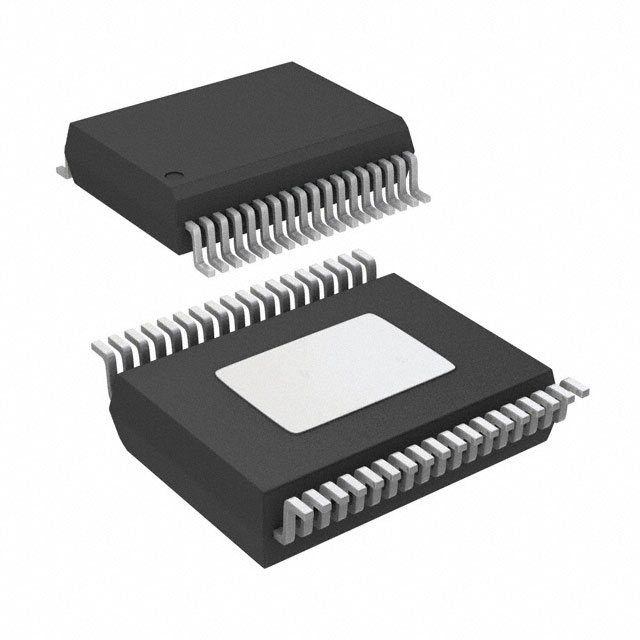
- Part No.:
- VND7012AY-E
- Manufacturer:
- STMicroelectronics
- Package:
- 36-PowerBFSOP (0.295", 7.50mm Width)
- Datasheet:
-
 VND7012AY-E.pdf
- Description:
- IC PWR DRVR N-CHAN 1:1 PWRSSO36
- Quantity:
- Payment:

- Shipping:

Inventory:4,651
Please send an inquiry. Send us your inquiry, and we will respond immediately.
Product details
Overview
VND7012AY-E from STMicroelectronics is a double-channel automotive smart high-side driver in PowerSSO-36 package, featuring MultiSense analog feedback for load current (±5% accuracy), VCC supply voltage, and chip temperature monitoring. It delivers 12 mΩ on-state resistance per channel, 75 A current limitation, and supports 3 V/5 V CMOS logic inputs. Designed for turn indicators and headlamps driving up to 3×P27W bulbs or parallel R5W lamps.
For engineers reviewing the VND7012AY-E datasheet, VND7012AY-E pinout, VND7012AY-E application, or VND7012AY-E equivalent, key selection criteria include diagnostic multiplexing capability, latch-off configurability via FaultRST, reverse-battery protection, ISO 7637-2 transient immunity, and off-state open-load detection - all validated for AEC-Q100 Grade 0 automotive environments.
Technical Context
The device integrates two independent VIPower® M0-7 high-side switches with active power limitation during overload and thermal shutdown with configurable latch-off. Each channel features dedicated input hysteresis (0.2 V), undervoltage lockout (4 V trip, 5 V reset), and overvoltage clamping at 41 V.
MultiSense functionality uses a single analog output pin multiplexed across three diagnostics: proportional load current sense (1:2000 mirror ratio), VCC monitoring (±3% full-scale), and TCHIP sensing (±5°C accuracy). Selection is controlled by SEL0/SEL1, enabled by SEn, with fault status reported via FaultRST pin behavior.
Key Specifications
| Parameter | Value and Actual Design Meaning |
|---|---|
| VCC operating range | 4–28 V DC: supports cold-crank (4 V) and load-dump (28 V) conditions in 12 V automotive systems. |
| RON (per channel) | 12 mΩ typ. at 25°C: enables <1 W conduction loss at 7 A, critical for thermally constrained modules. |
| ILIMH current limit | 75 A typ.: sustains short-circuit events without external fusing while limiting peak junction temperature rise. |
| ISTBY standby current | 0.5 µA max. at 25°C: ensures negligible battery drain during vehicle sleep mode. |
| MultiSense accuracy | ±5% load current, ±3% VCC, ±5°C TCHIP: enables precise closed-loop diagnostics without external ADCs. |
| Transient immunity | ISO 7637-2 Pulse 5b clamped to 40 V (RL = 4 Ω): meets OEM-level surge robustness requirements. |
| FaultRST function | Active-low pin: unlatches outputs after thermal/power faults or enables auto-restart mode when held low. |
Pinout & Package
Package: PowerSSO-36 - thermally enhanced exposed-pad SOIC variant with 36-pin layout optimized for high-current automotive PCB mounting and thermal dissipation (Rthj-board = 4 °C/W).
| Pin/Terminal | Circuit Role | Design Meaning |
|---|---|---|
| VCC | Battery supply input | Primary power rail connection; supports 4–28 V operation and clamps transients to 41 V. |
| OUTPUT0, OUTPUT1 | High-side switched outputs | Drive grounded loads; each rated for 75 A peak with integrated current limitation and thermal foldback. |
| GND | Power ground reference | Low-inductance return path; includes reverse-battery protection via self-turn-on diode structure. |
| INPUT0, INPUT1 | CMOS-compatible control inputs | Accept 3 V/5 V logic; feature 0.2 V hysteresis to reject noise in harsh automotive environments. |
| MultiSense | Multiplexed analog diagnostic output | Delivers proportional current representing load current, VCC, or chip temperature based on SEL0/SEL1 state. |
| SEn | Sense enable control | Active-high signal enabling MultiSense output; allows disabling diagnostics during low-power module sleep. |
| SEL0, SEL1 | Multiplexer address inputs | Select diagnostic source: 00 = load current, 01 = VCC, 10 = TCHIP, 11 = reserved. |
| FaultRST | Fault reset / latch control | Active-low pin: resets latched fault condition or configures auto-restart behavior when held low. |
Key Features
| Feature | Design Value |
|---|---|
| Dual-channel high-side switching | Independent control of two 12 V automotive loads with shared diagnostics and protections. |
| MultiSense analog feedback | Single-pin multiplexed sensing of load current, supply voltage, and die temperature - eliminating need for discrete sensors. |
| Configurable fault latch-off | FaultRST pin determines whether thermal or power-limit faults remain latched or auto-recover. |
| Reverse-battery protection | Self-turn-on MOSFET structure prevents damage during -16 V reverse connection without external components. |
| Off-state open-load detection | Monitors output voltage in OFF state to identify broken filament or disconnected lamp - critical for turn-signal compliance. |
| ISO 7637-2 compliant immunity | Validated against Pulse 1, 2a, 2b, 3a, 3b, and 5b - meets stringent OEM EMC requirements for body electronics. |
Applications
| Automotive Turn Indicators | Automotive Headlamps |
|---|---|
|
Use Scenario: Driving parallel P27W or SAE1156 bulbs (up to 3×) with real-time filament integrity monitoring. IC Role / Device Role / Timing Role: High-side switch with off-state open-load detection and analog current feedback for bulb health reporting. Use Value: Enables ECE R37-compliant failure detection and reduces need for separate bulb-check circuits. |
Use Scenario: Controlling halogen or LED headlamp modules requiring precise current regulation and thermal derating. IC Role / Device Role / Timing Role: Dual-channel load driver with TCHIP sensing and power limitation to prevent thermal runaway during dimming or PWM. Use Value: Eliminates external temperature sensors and provides dynamic current scaling based on die temperature. |
| Body Control Modules (BCM) | Seat/Mirror Control Units |
|
Use Scenario: Managing multiple resistive (heaters), inductive (relays), and capacitive (LED arrays) loads in centralized vehicle nodes. IC Role / Device Role / Timing Role: Smart power switch with integrated diagnostics, protecting MCU I/Os and reducing BOM count. Use Value: Reduces system-level fault diagnosis time by >90% through direct analog feedback instead of polling discrete sensors. |
Use Scenario: Driving seat heater elements and mirror adjustment motors with short-circuit and overtemperature protection. IC Role / Device Role / Timing Role: High-side driver with fast thermal transient suppression and configurable latch-off for safety-critical actuation. Use Value: Meets ASIL-B functional safety requirements via deterministic fault response and diagnostic coverage. |
Equivalent & Alternatives
The following parts are listed as comparable options for similar high-side driver applications.
| Alternative Part | Technical Difference | Application Difference | Selection Advice |
|---|---|---|---|
| TPS4H160-Q1 | Single-channel, 160 mΩ RON, no analog current sense - uses digital SPI diagnostics only. | Lacks MultiSense analog multiplexing; requires external ADC for current/voltage/temperature monitoring. | Preferred when SPI-based diagnostics and lower channel count suffice; not suitable for legacy analog-sensor interfaces. |
| VND7050AJTR-E | Single-channel, 50 mΩ RON, same MultiSense architecture but no FaultRST latch configuration - fixed auto-restart. | Cannot hold outputs latched after fault; unsuitable where manual reset or fail-safe hold is required. | Used where simplified fault handling is acceptable and higher RON is tolerable for lower-current loads. |
Compared with TPS4H160-Q1 and VND7050AJTR-E, the VND7012AY-E uniquely combines dual-channel integration, ultra-low RON, analog multiplexed diagnostics, and user-configurable fault latch behavior - making it optimal for cost-sensitive, space-constrained BCMs requiring full analog diagnostic compatibility.
Availability
VND7012AY-E is available at Aetrix Electronics and suitable for automotive turn indicators, headlamp control, body control modules, and seat/mirror actuation requiring stable component supply across extended temperature ranges and long production lifecycles.
Supply support for VND7012AY-E includes scheduled delivery planning, volume procurement assistance, BOM continuity management, traceable sourcing, and lifecycle availability coordination for OEM customers, industrial embedded developers, connected-device designers, and electronics production programs.
Manufacturer
STMicroelectronics is a global semiconductor leader headquartered in Geneva, Switzerland, specializing in automotive-grade power ICs, microcontrollers, and sensors with AEC-Q100 qualification expertise.
The VND7012AY-E belongs to ST's VIPower® high-side driver family, engineered specifically for intelligent power distribution in 12 V automotive body electronics - emphasizing diagnostic richness, thermal resilience, and system-level integration.
FAQ
What is the maximum continuous output current per channel?
The VND7012AY-E does not specify a continuous current rating due to thermal dependency on PCB layout and ambient conditions. Its 75 A current limitation is a peak short-circuit threshold. Continuous current must be determined from thermal data: with Rthj-board = 4 °C/W and Tjmax = 150°C, sustained 10 A operation is feasible on a 4-layer board with adequate copper area, assuming 13 V VCC and 25°C ambient.
How does the MultiSense pin distinguish between load current, VCC, and chip temperature?
MultiSense output is digitally multiplexed using SEL0 and SEL1 pins: 00 selects proportional load current (1:2000 mirror), 01 selects VCC feedback (scaled to 0–20 mA), and 10 selects TCHIP (linear 10 µA/°C). The SEn pin must be high to enable any mode. No internal ADC is used - all signals are analog current outputs calibrated across temperature.
Can the FaultRST pin be left unconnected?
No. FaultRST is an active-low input with internal pull-up; leaving it floating risks unintended fault unlatching or erratic latch behavior. ST recommends connecting it to MCU GPIO with 10 kΩ pull-up if not actively driven, or directly to GND for permanent auto-restart mode. Table 2 specifies "Through 15 kΩ resistor to GND" for unused configurations.
Is reverse-battery protection implemented without external components?
Yes. The VND7012AY-E integrates a self-turn-on protection structure that conducts during reverse-battery events (down to –16 V), safely shunting current away from sensitive circuitry. This eliminates the need for external Schottky diodes or MOSFETs typically required in conventional high-side drivers, reducing BOM cost and PCB footprint.
VND7012AY-E Specifications
- Product attributes
- Attribute value
- Manufacturer:
- STMicroelectronics
- Package/Case:
- 36-PowerBFSOP (0.295", 7.50mm Width)
- Series:
- -
- Packaging:
- Tube
- Product Status:
- Discontinued at Digi-Key
- Switch Type:
- General Purpose
- Number of Outputs:
- 2
- Ratio - Input:Output:
- 1:1
- Output Configuration:
- High Side
- Output Type:
- N-Channel
- Interface:
- On/Off
- Voltage - Load:
- 4V ~ 28V
- Voltage - Supply (Vcc/Vdd):
- Not Required
- Current - Output (Max):
- 60A
- Rds On (Typ):
- 12mOhm
- Input Type:
- Non-Inverting
- Features:
- Status Flag
- Fault Protection:
- Current Limiting (Fixed), Open Load Detect, Over Temperature, Over Voltage, UVLO
- Operating Temperature:
- -40°C ~ 150°C (TJ)
- Grade:
- -
- Qualification:
- -
- Mounting Type:
- Surface Mount
- Supplier Device Package:
- PowerSSO-36 EPD
VND7012AY-E FAQ
1.How can I place an order for VND7012AY-E through Aetrix?
Please submit a Request for Quotation (RFQ) for VND7012AY-E on Aetrix. Our sales agent will provide a competitive quotation and guide you through the order confirmation once you accept the terms.
2.Are the price and stock information for VND7012AY-E reliable?
The price and inventory of VND7012AY-E are updated periodically and may fluctuate due to market conditions. Stock and pricing data are typically refreshed every 24 hours. Quotation validity for VND7012AY-E is usually 5 days.
3.What payment methods are accepted for VND7012AY-E?
We accept Wire Transfer, PayPal, Credit Card, Western Union, MoneyGram, and Escrow for VND7012AY-E transactions.
Note: Certain payment methods may incur a processing fee.
4.How is shipping managed for VND7012AY-E?
VND7012AY-E orders can be shipped via leading logistics carriers, including DHL, UPS, FedEx, TNT, or Registered Mail.
Once your VND7012AY-E order is processed, you will receive an email with the shipment details and tracking number.
Note: Tracking information may take up to 24 hours to appear. Express delivery typically takes 3–5 business days.
5.How can I obtain technical support or documentation for VND7012AY-E?
For technical support, including VND7012AY-E datasheets, pinout diagrams, or application guidance, please contact our engineering support team. They can provide detailed documentation and assistance for your VND7012AY-E requirements.
6.How does Aetrix verify that VND7012AY-E is sourced from the original manufacturer or authorized distributors?
All VND7012AY-E products on Aetrix are procured from qualified distributors and authorized channels. Our dedicated quality assurance team conducts strict verification, including traceability checks and, if necessary, third-party testing. This ensures that VND7012AY-E meets industry standards.
7.What is the process for return or replacement of VND7012AY-E?
All VND7012AY-E units undergo pre-shipment inspection (PSI). If there is an issue with VND7012AY-E, returns or replacements are accepted under the following conditions:
1.Quantity discrepancies, incorrect items, or visible external defects (such as breakage or corrosion), acknowledged by Aetrix.
2.The issue is reported within 90 days of delivery.
3.The VND7012AY-E part is unused and in its original packaging.
Return procedure for VND7012AY-E:
1.Submit a request within 90 days.
2.Obtain a Return Material Authorization (RMA) from Aetrix.
VND7012AY-E Tags
-
TPS22919DCKR
Texas Instruments
-
MIC2091-1YM5-TR
Microchip Technology
-
MIC2090-1YM5-TR
Microchip Technology

-
TPS22995RZFR
Texas Instruments
-
TPS22975DSGR
Texas Instruments
-
SIP32510DT-T1-GE3
Vishay Siliconix
-
ULN2003D1013TR
STMicroelectronics
-
MIC2005A-1YM5-TR
Microchip Technology

-
MIC2005A-1YM6-TR
Microchip Technology
-
TPS22916BYFPR
Texas Instruments

-
TPS22917DBVR
Texas Instruments
-
ULN2003APWR
Texas Instruments
Tech Hub

A practical engineering and sourcing framework covering lifecycle verification, lifetime-buy calculations, replacement qualification, supplier checks and counterfeit-risk controls.

TTL and CMOS logic families differ in thresholds, loading, output drive, power and timing. This engineering guide compares 74HC and 74HCT, calculates noise margins and checks 3.3 V/5 V compatibility.

A practical engineering guide to 3.3V and 5V logic compatibility, input thresholds, resistor dividers, translator ICs, MOSFET level shifting, I2C pull-ups, timing limits and power-sequencing risks.

The 74HC595 uses push-pull logic outputs, while the TPIC6B595 uses 50 V open-drain DMOS sinks for higher-power loads. This guide compares timing, current limits, 3.3 V interfacing, load wiring, thermal…

The 74HC595 converts serial data into eight stable parallel outputs. This guide covers pin functions, shift and storage timing, OE and MR behavior, drive-current limits, cascading, voltage compatibilit…

A technical comparison of level-sensitive latches and edge-triggered flip-flops, covering timing windows, setup and hold limits, master–slave operation, time borrowing, race-through, HDL inference and…

A D latch stores one bit while Enable controls when data can pass. This reference covers gate-level operation, truth tables, transparency, setup and hold timing, LE versus OE, common ICs and practical …

An SR latch stores one bit through cross-coupled feedback. This engineering reference covers NOR and NAND implementations, truth tables, forbidden-state recovery, gated operation, switch debouncing, fa…

Latch circuits retain one bit through feedback. This technical reference covers SR and D latches, truth tables, transparency, timing limits, latch-versus-flip-flop behavior, applications and common log…

An engineering guide to LED driver operation, constant-current and constant-voltage outputs, linear and switching topologies, dimming, IC selection, calculations, replacement compatibility, and fault c…


