
 My Inquiry
 My Account


STMicroelectronics VNH7100BASTR
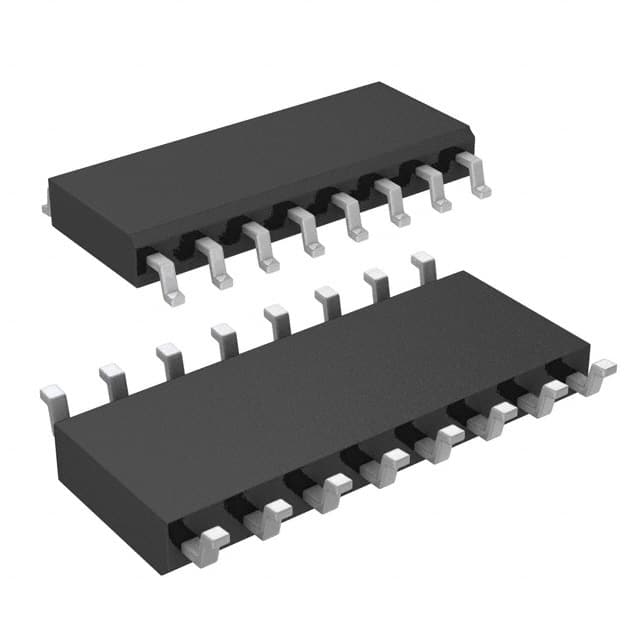
- Part No.:
- VNH7100BASTR
- Manufacturer:
- STMicroelectronics
- Category:
- Motor Drivers, Controllers
- Package:
- 16-SOIC (0.154", 3.90mm Width)
- Datasheet:
-
 VNH7100BASTR.pdf
- Description:
- IC MOTOR DRIVER 4V-28V 16SO
- Quantity:
- Payment:

- Shipping:

Inventory:2,167
Please send an inquiry. Send us your inquiry, and we will respond immediately.
Product details
Overview
VNH7100BASTR from STMicroelectronics is an AEC-Q100 qualified automotive H-bridge motor driver with integrated high-side and low-side VIPower® M0 switches, 12 A continuous output current, 100 mΩ typical RDS(on) per leg, and PWM speed control up to 20 kHz. It delivers analog current feedback via MultiSense (CS pin), supports half-bridge operation, and enables bidirectional DC motor control in power seats, HVAC actuators, and window lift systems.
For engineers reviewing the VNH7100BASTR datasheet, VNH7100BASTR pinout, VNH7100BASTR application, or VNH7100BASTR equivalent, this page provides verified technical context, validated pin functions, real-world diagnostic behavior, and confirmed alternatives for automotive motor control design.
Technical Context
The device integrates two monolithic high-side drivers and two low-side switches in a single SO-16N package using ST's VIPower® M0 technology, enabling true power MOSFET integration with embedded protection logic on each die. Its symmetrical leadframe design ensures balanced thermal distribution and manufacturable PCB assembly.
Logic inputs (INA/INB/PWM) are CMOS-compatible (3 V–5 V), with hysteresis and clamp protection; SEL0 selects diagnostic channel addressing for the multiplexed CS pin, which outputs current proportional to motor current. Fault detection includes OFF-state open-load, short-to-VCC, short-to-ground, and thermal shutdown with latched/unlatch timing specified at microsecond resolution.
Key Specifications
| Parameter | Value and Actual Design Meaning |
|---|---|
| Output Current | 12 A continuous (15 A peak); enables driving 12 V automotive DC motors up to ~150 W under sustained load. |
| RDS(on) (per leg) | 100 mΩ typical (120 mΩ max at Tj = 150°C); defines conduction loss and thermal rise during full-load operation. |
| PWM Frequency | Up to 20 kHz; avoids audible noise in motor applications while maintaining efficient switching and gate drive stability. |
| Supply Voltage Range | 4 V to 28 V (absolute max 38 V); supports cold-crank (4.5 V) and load-dump (38 V transient) conditions per ISO 16750-2. |
| Diagnostic Functions | MultiSense analog current feedback + short-to-GND/VCC detection + thermal shutdown indication + OFF-state open-load sensing. |
| Protections | Undervoltage shutdown (4 V), overvoltage clamp (46 V), cross-conduction prevention, and loss-of-ground/VCC detection. |
| Thermal Shutdown | 150–200 °C (HS/LS), with 135 °C reset and 7 °C hysteresis; prevents irreversible die damage during overload events. |
Pinout & Package
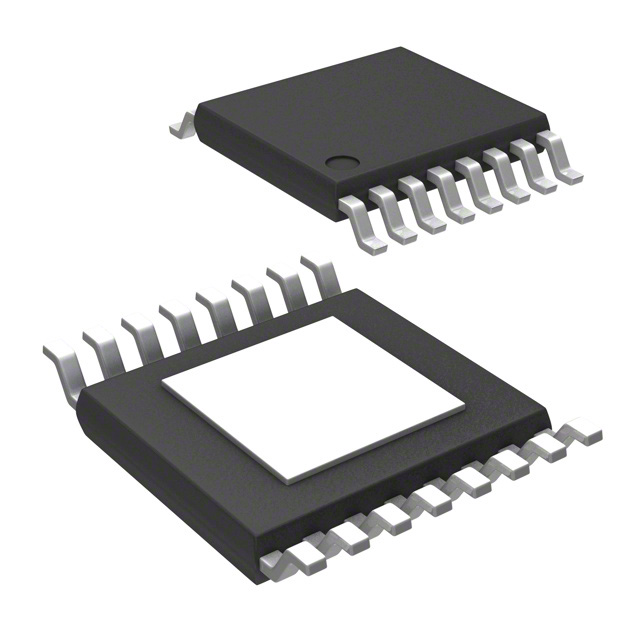
Package: SO-16N (ECOPACK®), surface-mount, electrically isolated leadframes, 16-pin wide-body SOIC with enhanced thermal performance and automotive-grade creepage/clearance.
| Pin/Terminal | Circuit Role | Design Meaning |
|---|---|---|
| 1, 16 GNDA | Low-side switch A source | Power ground return path for channel A; must be routed with low-inductance, high-current PCB trace. |
| 2, 15 OUTA | High-side switch A source / low-side switch A drain | H-bridge output node for channel A; connects directly to motor terminal; carries full load current and flyback energy. |
| 3 INA | Direction control input A | CMOS-compatible logic input; high = clockwise motor rotation when INB = low and PWM active. |
| 4, 5, 12 VCC | Main supply voltage input | Connects to 12 V battery rail; requires local 100 nF + 10 µF decoupling near pins 4/5/12 to suppress transients. |
| 6 INB | Direction control input B | CMOS-compatible logic input; high = counter-clockwise rotation when INA = low and PWM active. |
| 7, 10 OUTB | High-side switch B source / low-side switch B drain | H-bridge output node for channel B; independent of OUTA; enables dual-motor or half-bridge configurations. |
| 8, 9 GNDB | Low-side switch B source | Power ground return path for channel B; separate from GNDA to support differential current sensing if needed. |
| 11 PWM | Speed control input | Active-high CMOS input with hysteresis; modulates low-side FET gates during ON phase to regulate motor speed. |
| 13 CS | Multiplexed analog sense output | Delivers current proportional to motor current (ISENSE ≈ 1/200 × IMOTOR); used for closed-loop current monitoring. |
| 14 SEL0 | Diagnostic channel selector | Active-high logic input; selects whether CS reports channel A or B current/condition based on truth table state. |
Key Features
| Feature | Design Value |
|---|---|
| AEC-Q100 qualification | Qualified for automotive Grade 0 (-40°C to +150°C junction), including stress testing for temperature cycling, humidity, and ESD. |
| MultiSense diagnostics | Single-pin analog current feedback + fault flags (short-to-VCC/GND, thermal shutdown, open-load) reduce MCU GPIO count and simplify firmware. |
| Standby mode | 1 μA quiescent current at 13 V and 25°C; meets automotive "always-on" module requirements without draining battery. |
| Reverse battery protection | Integrated circuitry prevents damage during incorrect battery connection; no external diode required in main power path. |
| Half-bridge flexibility | Supports independent high-side or low-side operation (e.g., single-channel actuator control) without reconfiguration. |
Applications
| Power Seat Actuators | HVAC Blend Door Actuators |
|---|---|
|
Use Scenario: Bidirectional control of 12 V DC gearmotor moving seat fore/aft, recline, or lumbar position. IC Role / Device Role / Timing Role: Full H-bridge driver executing direction (INA/INB) and speed (PWM) commands from body controller MCU; MultiSense provides stall detection. Use Value: Eliminates need for discrete MOSFETs and external current sense; thermal shutdown prevents motor burnout during mechanical jam. |
Use Scenario: Precise positioning of HVAC damper vanes using small 12 V DC motor with limited torque and duty cycle. IC Role / Device Role / Timing Role: Half-bridge configured for unidirectional control with PWM speed modulation; SEL0+CS enables current-based end-stop detection. Use Value: Standby current <1 μA extends vehicle "sleep" battery life; OFF-state open-load detection confirms vane movement completion. |
| Window Lift Systems | Steering Column Adjusters |
|
Use Scenario: Anti-pinch compliant window lift using current-sensing to detect obstruction during upward travel. IC Role / Device Role / Timing Role: Full bridge with real-time analog current feedback (CS pin) sampled by MCU at ≥10 kHz to compute dI/dt for pinch detection. Use Value: Integrated short-to-ground/VCC protection prevents latch-up during cable chafing; 20 kHz PWM avoids audible whine in cabin. |
Use Scenario: Motorized vertical/horizontal adjustment of steering column with position feedback and soft-stop behavior. IC Role / Device Role / Timing Role: Dual-channel operation (OUTA/OUTB) driving separate motors; SEL0 toggles CS between channels for shared analog ADC input. Use Value: Loss-of-ground protection maintains safe fail-safe state during harness disconnect; thermal hysteresis prevents oscillation near shutdown threshold. |
Equivalent & Alternatives
The following parts are listed as comparable options for similar H-bridge motor driver applications.
| Alternative Part | Technical Difference | Application Difference | Selection Advice |
|---|---|---|---|
| TB9051FTG | 40 V max VCC, 3.5 A continuous, integrated current sense amplifier (not multiplexed), no SEL0 pin. | Lacks multi-channel diagnostic multiplexing; suited for single-motor systems with dedicated sense path. | Choose when analog current sensing is required without channel selection overhead and lower current rating suffices. |
| BTS71620 | 40 V max VCC, 7 A continuous, SPI interface for diagnostics, no analog CS output. | Replaces analog feedback with digital register reads; requires SPI host and additional firmware parsing. | Prefer when system already uses SPI peripherals and diagnostic granularity (e.g., per-FET fault flags) outweighs analog simplicity. |
Compared with TB9051FTG and BTS71620, VNH7100BASTR uniquely combines analog MultiSense multiplexing, 12 A capability, and minimal GPIO footprint-making it optimal for cost-sensitive, multi-actuator automotive modules where MCU resources are constrained.
Availability
VNH7100BASTR is available at Aetrix Electronics and suitable for automotive power seat actuators, HVAC blend door control, and window lift systems requiring stable component supply across extended temperature ranges and long production lifecycles.
Supply support for VNH7100BASTR includes scheduled delivery planning, volume procurement assistance, BOM continuity management, traceable sourcing, and lifecycle availability coordination for OEM customers, industrial embedded developers, connected-device designers, and electronics production programs.
Manufacturer
STMicroelectronics is a global semiconductor leader headquartered in Geneva, Switzerland, specializing in automotive, industrial, and power management ICs with broad manufacturing scale and AEC-Q100 validation infrastructure.
The VNH7100BASTR belongs to ST's VIPower® family of intelligent power switches, designed specifically for robust, integrated motor control in harsh automotive environments with minimal external components.
FAQ
What is the maximum allowable PWM frequency for reliable operation?
The VNH7100BASTR supports PWM frequencies up to 20 kHz with guaranteed timing parameters (td(on), td(off), tr, tf) measured at VCC = 13 V and RLOAD = 5.2 Ω. Operation above 20 kHz risks increased switching losses, reduced gate drive margin, and potential violation of minimum off-time requirements for cross-conduction protection.
How does the MultiSense (CS) pin deliver motor current information?
The CS pin outputs a current proportional to the motor current (ISENSE ≈ IMOTOR/200), selectable per channel via SEL0. It operates in analog mode only-no digital encoding-and requires an external shunt resistor and op-amp or ADC input to convert to voltage for MCU sampling.
Can VNH7100BASTR operate in single-channel (half-bridge) mode?
Yes. The device supports half-bridge operation by configuring one H-bridge leg (e.g., OUTA/GNDA) as active while holding the other leg (OUTB/GNDB) in high-impedance or disabled state. Truth tables in Section 11 of the datasheet define valid control combinations for half-bridge use.
What thermal derating applies when using the SO-16N package on a 2-layer PCB?
On a 2-layer PCB per JEDEC JESD51-2, Rthj-amb is 40.7 °C/W (HSD) and 55.4 °C/W (LSD). At 12 A and 100 mΩ RDS(on), power dissipation reaches ~14.4 W per leg, limiting continuous operation to ≤85°C ambient unless heatsinking or forced airflow is added.
VNH7100BASTR Specifications
- Product attributes
- Attribute value
- Manufacturer:
- STMicroelectronics
- Series:
- VIPOWER™
- Package/Case:
- 16-SOIC (0.154", 3.90mm Width)
- Packaging:
- Tape & Reel (TR)
- Product Status:
- Active
- Motor Type - Stepper:
- -
- Motor Type - AC, DC:
- Brushed DC
- Function:
- Driver - Fully Integrated, Control and Power Stage
- Output Configuration:
- Half Bridge (2)
- Interface:
- PWM
- Technology:
- Power MOSFET
- Step Resolution:
- -
- Applications:
- -
- Current - Output:
- 15A
- Voltage - Supply:
- 4V ~ 28V
- Voltage - Load:
- 4V ~ 28V
- Operating Temperature:
- -40°C ~ 150°C (TJ)
- Grade:
- Automotive
- Qualification:
- AEC-Q100
- Mounting Type:
- Surface Mount
- Supplier Device Package:
- 16-SO
VNH7100BASTR FAQ
1.How can I place an order for VNH7100BASTR through Aetrix?
Please submit a Request for Quotation (RFQ) for VNH7100BASTR on Aetrix. Our sales agent will provide a competitive quotation and guide you through the order confirmation once you accept the terms.
2.Are the price and stock information for VNH7100BASTR reliable?
The price and inventory of VNH7100BASTR are updated periodically and may fluctuate due to market conditions. Stock and pricing data are typically refreshed every 24 hours. Quotation validity for VNH7100BASTR is usually 5 days.
3.What payment methods are accepted for VNH7100BASTR?
We accept Wire Transfer, PayPal, Credit Card, Western Union, MoneyGram, and Escrow for VNH7100BASTR transactions.
Note: Certain payment methods may incur a processing fee.
4.How is shipping managed for VNH7100BASTR?
VNH7100BASTR orders can be shipped via leading logistics carriers, including DHL, UPS, FedEx, TNT, or Registered Mail.
Once your VNH7100BASTR order is processed, you will receive an email with the shipment details and tracking number.
Note: Tracking information may take up to 24 hours to appear. Express delivery typically takes 3–5 business days.
5.How can I obtain technical support or documentation for VNH7100BASTR?
For technical support, including VNH7100BASTR datasheets, pinout diagrams, or application guidance, please contact our engineering support team. They can provide detailed documentation and assistance for your VNH7100BASTR requirements.
6.How does Aetrix verify that VNH7100BASTR is sourced from the original manufacturer or authorized distributors?
All VNH7100BASTR products on Aetrix are procured from qualified distributors and authorized channels. Our dedicated quality assurance team conducts strict verification, including traceability checks and, if necessary, third-party testing. This ensures that VNH7100BASTR meets industry standards.
7.What is the process for return or replacement of VNH7100BASTR?
All VNH7100BASTR units undergo pre-shipment inspection (PSI). If there is an issue with VNH7100BASTR, returns or replacements are accepted under the following conditions:
1.Quantity discrepancies, incorrect items, or visible external defects (such as breakage or corrosion), acknowledged by Aetrix.
2.The issue is reported within 90 days of delivery.
3.The VNH7100BASTR part is unused and in its original packaging.
Return procedure for VNH7100BASTR:
1.Submit a request within 90 days.
2.Obtain a Return Material Authorization (RMA) from Aetrix.
VNH7100BASTR Tags
-
DRV2603RUNR
Texas Instruments
-
DRV8837CDSGR
Texas Instruments
-
DRV8837DSGR
Texas Instruments
-
DRV8838DSGR
Texas Instruments
-
DRV8839DSSR
Texas Instruments
-
EMC2301-1-ACZL-TR
Microchip Technology
-
DRV8231ADSGR
Texas Instruments
-
EMC2302-2-AIZL-TR
Microchip Technology
-
DRV8800PWPR
Texas Instruments
-
DRV8835DSSR
Texas Instruments
-
EMC2303-1-KP-TR
Microchip Technology
-
DRV8876PWPR
Texas Instruments
Tech Hub

An engineering guide to LED driver operation, constant-current and constant-voltage outputs, linear and switching topologies, dimming, IC selection, calculations, replacement compatibility, and fault c…

Operational amplifier guide covering op amp basics, feedback, ideal vs real op amps, common configurations, buffer circuits, offset, bias current, gain-bandwidth, slew rate, rail-to-rail limits and sel…

Jumper cables guide covering safe connection order, red and black clamp placement, final ground connection, cable gauge, length, clamp quality, copper vs CCA cables, jump starter comparison and battery…

LDO regulator guide covering low dropout voltage, power dissipation, thermal design, PSRR, output noise, capacitor stability, adjustable LDO circuits, LDO vs buck converter and datasheet selection chec…

Conditional Access Module guide covering CAM meaning, CI/CI+ interface, smart card authorization, DVB security workflow, TV and set-top box compatibility, internal electronics, ESD protection, connecto…

Guide to electronic component obsolescence covering EOL risk, PCN/PDN notices, last-time buy planning, replacement options, form-fit-function validation, counterfeit risk and BOM lifecycle management.

18650 battery guide covering lithium-ion cell basics, 3.6V/3.7V voltage, 4.2V charging, mAh and Wh capacity, protected cells, chargers, BMS, series-parallel packs, holders, welding and sourcing checks.…

Hall effect sensor guide covering working principle, linear and digital sensors, Arduino circuits, current sensing, speed detection, automotive applications, A3144 examples, signal filtering and datash…

Product Change Notification guide for electronic components, covering PCN meaning, PCN vs PDN/EOL, common change types, risk levels, form-fit-function review, engineering validation, BOM control, LTB/L…

A practical guide to blend door actuators, covering HVAC function, symptoms, location, AC and heater issues, reset and calibration, replacement cost, electrical diagnosis, compatibility checks, and rep…


