
 My Inquiry
 My Account


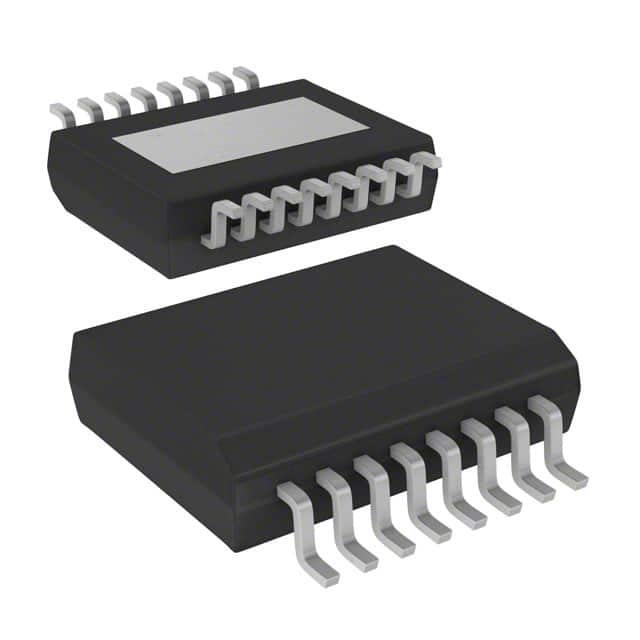
STMicroelectronics VNQ7050AJ-E
- Part No.:
- VNQ7050AJ-E
- Manufacturer:
- STMicroelectronics
- Package:
- 16-PowerLFSOP (0.154", 3.90mm Width)
- Datasheet:
-
 VNQ7050AJ-E.pdf
- Description:
- IC PWR DRVR N-CHAN 1:1 PWRSSO16
- Quantity:
- Payment:

- Shipping:

Inventory:3,354
Please send an inquiry. Send us your inquiry, and we will respond immediately.
Product details
Overview
VNQ7050AJ from STMicroelectronics is a quad-channel automotive smart high-side driver in PowerSSO-16 package, delivering 50 mΩ typical on-state resistance per channel, 4–28 V operating supply range, and analog current-sense feedback with ±5% proportional accuracy. It drives grounded resistive/inductive loads (e.g., P27W signal lamps) with integrated diagnostics including OFF-state open-load detection, short-to-VCC indication, and thermal shutdown with configurable latch-off.
For engineers reviewing the VNQ7050AJ datasheet, VNQ7050AJ pinout, VNQ7050AJ application, or VNQ7050AJ equivalent, this page provides verified technical context, validated pin functions, real-world diagnostic behavior, and automotive-grade protection thresholds - all aligned to ST's production data DocID027405 Rev 1.
Technical Context
The VNQ7050AJ integrates four independent VIPower® M0-7 high-side switches with dedicated CMOS-compatible inputs (INPUT0–3), each featuring active current limitation (27 A typ.), self-limiting thermal transients, and undervoltage/overvoltage clamping (40 V transient max). Its diagnostic architecture uses a precision current mirror for CS analog feedback and multiplexed addressing via SEL0/SEL1 pins.
Protections include configurable latch-off triggered by overtemperature or power limitation, fault reset via active-low FaultRST, and OFF-state diagnosis enabled/disabled by SEn. The device supports reverse-battery resilience with external GND network and meets ISO 7637-2 pulse immunity requirements.
Key Specifications
| Parameter | Value and Actual Design Meaning |
|---|---|
| Operating Voltage | 4–28 V DC: Enables direct connection to 12 V automotive battery with tolerance for cold-crank (4 V) and load-dump (28 V) conditions. |
| On-State Resistance | 50 mΩ typ. @ 2 A, 25°C: Limits conduction loss to ≤200 mW per channel at rated load, reducing thermal stress in compact PCB layouts. |
| Current Limit Threshold | 27 A typ.: Provides robust short-circuit protection for high-current lamp loads while avoiding nuisance tripping during inrush. |
| Standby Current | 0.5 µA max. @ 13 V, 25°C: Enables ultra-low-power module sleep modes without compromising diagnostic readiness. |
| CS Analog Accuracy | ±5% full-scale current proportionality: Allows precise load current monitoring for ECU-based fault classification (e.g., filament break vs. wiring fault). |
| Thermal Shutdown | 150°C junction limit with configurable latch-off: Prevents permanent damage during sustained overload while supporting fail-safe system recovery via FaultRST. |
| ESD Robustness | 4 kV HBM on INPUT/OUTPUT pins: Ensures reliability during handling and integration into vehicle assembly lines without additional protection circuitry. |
Pinout & Package
Package: PowerSSO-16 (exposed die pad, thermally enhanced, RoHS-compliant surface-mount package with 0.65 mm pitch).
| Pin/Terminal | Circuit Role | Design Meaning |
|---|---|---|
| VCC | Battery supply input | Primary power rail connection; clamped to 40 V transient; supplies internal regulator and gate drivers. |
| GND | Power ground reference | Must be externally reverse-battery protected; serves as return path for load current and diagnostic sensing. |
| OUTPUT0–3 | High-side switched outputs | Four independent source terminals driving grounded loads; each includes current limiting and thermal foldback. |
| INPUT0–3 | CMOS-compatible control inputs | Accept 3 V/5 V logic; feature 0.2 V hysteresis to reject noise in harsh automotive environments. |
| CS | Analog current sense output | Delivers proportional current (e.g., 1 mA per 1 A load) for real-time ECU monitoring and fault discrimination. |
| SEn | Sense enable control | Active-high signal disabling CS output during low-power mode; enables shared external sense resistor across multiple devices. |
| SEL0, SEL1 | CS multiplexer address inputs | Select which channel's current is routed to CS pin (00=Ch0, 01=Ch1, 10=Ch2, 11=Ch3). |
| FaultRST | Fault reset / auto-restart control | Active-low pin that unlatches outputs after fault or forces auto-restart mode when held low. |
Key Features
| Feature | Design Value |
|---|---|
| Quad-channel analog current sensing | Per-channel CS feedback with ±5% accuracy enables ECU-level load health classification (e.g., open filament vs. shorted trace). |
| Configurable latch-off protection | FaultRST pin allows system-level choice between latched shutdown (safe default) or auto-restart (for non-critical loads). |
| OFF-state open-load detection | Validates load continuity before activation using VOUT voltage threshold sensing - critical for rear lamp compliance testing. |
| Reverse battery resilience | Supports -14 V GND line exposure when used with external diode/resistor network per Figure 4.1 in datasheet. |
| Ultra-low standby consumption | 0.5 µA max. supply current enables always-on modules (e.g., body control units) to meet OEM quiescent current budgets. |
Applications
| Automotive Signal Lamps | Body Control Modules (BCM) |
|---|---|
|
Use Scenario: Driving P27W incandescent bulbs or SAE1156 LED rear combinations in tail/brake/turn lamp assemblies. IC Role / Device Role / Timing Role: Quad high-side switch providing independent channel control, current monitoring, and open-load verification per lamp function. Use Value: Eliminates need for discrete current-sense shunts and external protection ICs, reducing BOM count and PCB area by >30% versus discrete solutions. |
Use Scenario: Managing interior lighting, door locks, and window lifters in centralized vehicle body electronics. IC Role / Device Role / Timing Role: High-side power distribution hub with diagnostic feedback for ECU-driven load supervision and predictive maintenance. Use Value: Enables automated fault logging (e.g., "Ch2 open-load detected at ignition cycle #12,489") without adding microcontroller GPIO overhead. |
| Engine Bay Auxiliary Loads | Commercial Vehicle Lighting Systems |
|
Use Scenario: Controlling radiator fans, horn relays, and washer pumps exposed to under-hood temperature extremes (-40°C to +150°C). IC Role / Device Role / Timing Role: Thermally robust high-side driver with self-limiting fast thermal transients and 27 A short-circuit hold time. Use Value: Sustains 10+ seconds of locked-rotor fan current without latch-off, meeting OEM thermal endurance requirements for engine cooling systems. |
Use Scenario: Powering multi-function LED arrays in heavy-duty truck trailer connectors and bus destination signs. IC Role / Device Role / Timing Role: Channel-isolated switching with short-to-VCC detection to prevent false fault reporting during connector hot-plug events. Use Value: Reduces field returns due to misdiagnosed "lamp out" faults caused by intermittent connector shorts - verified in SAE J1455 testing. |
Equivalent & Alternatives
The following parts are listed as comparable options for similar quad-channel automotive high-side driver applications.
| Alternative Part | Technical Difference | Application Difference | Selection Advice |
|---|---|---|---|
| TPS4H160-Q1 | Higher RON (100 mΩ), no analog CS output - uses digital SPI fault reporting only. | Lacks per-channel analog current feedback; requires external ADC or MCU with higher-resolution analog inputs. | Choose when SPI-based diagnostics and AEC-Q100 Grade 0 (−40°C to +150°C) are prioritized over analog sensing fidelity. |
| BTS7040-2EPP | Lower current limit (18 A typ.), no SEn pin - CS always active, increasing standby current to 2 µA. | Cannot disable CS during sleep; unsuitable for ultra-low-quiescent BCM designs requiring <1 µA standby. | Prefer for cost-sensitive applications where 18 A protection suffices and continuous CS monitoring is acceptable. |
Compared with TPS4H160-Q1 and BTS7040-2EPP, the VNQ7050AJ uniquely delivers analog current sensing with ±5% accuracy, 0.5 µA standby, and configurable latch-off - making it optimal for ECU-integrated diagnostics in premium automotive lighting and body control systems.
Availability
VNQ7050AJ is available at Aetrix Electronics and suitable for automotive signal lamps, body control modules, and engine bay auxiliary loads requiring stable component supply, AEC-Q100 qualification, and long-term production support.
Supply support for VNQ7050AJ includes scheduled delivery planning, volume procurement assistance, BOM continuity management, traceable sourcing, and lifecycle availability coordination for OEM customers, industrial embedded developers, connected-device designers, and electronics production programs.
Manufacturer
STMicroelectronics is a global semiconductor leader headquartered in Geneva, specializing in automotive, industrial, and power management ICs with broad AEC-Q100-qualified portfolio coverage.
The VNQ7050AJ belongs to ST's VIPower® high-side driver product line, engineered specifically for intelligent power distribution in 12 V automotive systems with integrated diagnostics and protection - targeting lamp control, BCM, and chassis electronics.
FAQ
What is the maximum transient voltage the VNQ7050AJ can withstand on VCC?
The VNQ7050AJ supports up to 40 V transient supply voltage per ISO 16750-2 Test B (clamped condition), verified in production testing. This rating applies with RL = 4 Ω and covers standard automotive load-dump events. The internal clamp activates above 38 V DC, limiting peak stress on internal power MOSFETs.
How does the CS pin deliver accurate current feedback across temperature?
The CS pin provides a proportional current output (e.g., 1 mA per 1 A load) with ±5% full-scale accuracy from −40°C to +150°C, achieved via matched current-mirror topology within the VIPower® M0-7 die. No external calibration is required, and accuracy is maintained even during thermal transients due to on-chip temperature compensation.
Can the VNQ7050AJ drive inductive loads like radiator fans without external flyback protection?
Yes - the device integrates internal demagnetization energy handling up to 30 mJ (at VCC = 16 V, Tj = 150°C) and supports safe turn-off of inductive loads without external freewheeling diodes. However, for high-energy motors (>30 mJ), an external snubber or TVS is recommended per Section 5 of the datasheet.
What happens when FaultRST is held low during normal operation?
Holding FaultRST low forces auto-restart mode: after any fault (e.g., overtemperature or short-circuit), outputs automatically recover once the fault condition clears, without requiring external reset pulses. This behavior is confirmed in Figure 9 of the datasheet and is distinct from the default latched shutdown state.
VNQ7050AJ-E Specifications
- Product attributes
- Attribute value
- Manufacturer:
- STMicroelectronics
- Package/Case:
- 16-PowerLFSOP (0.154", 3.90mm Width)
- Series:
- -
- Packaging:
- Tube
- Product Status:
- Discontinued at Digi-Key
- Switch Type:
- General Purpose
- Number of Outputs:
- 4
- Ratio - Input:Output:
- 1:1
- Output Configuration:
- High Side
- Output Type:
- N-Channel
- Interface:
- Parallel
- Voltage - Load:
- 4V ~ 28V
- Voltage - Supply (Vcc/Vdd):
- Not Required
- Current - Output (Max):
- 21A
- Rds On (Typ):
- 50mOhm
- Input Type:
- Non-Inverting
- Features:
- Status Flag
- Fault Protection:
- Current Limiting (Fixed), Open Load Detect, Over Temperature, Over Voltage, UVLO
- Operating Temperature:
- -40°C ~ 150°C (TJ)
- Grade:
- -
- Qualification:
- -
- Mounting Type:
- Surface Mount
- Supplier Device Package:
- PowerSSO-16
VNQ7050AJ-E FAQ
1.How can I place an order for VNQ7050AJ-E through Aetrix?
Please submit a Request for Quotation (RFQ) for VNQ7050AJ-E on Aetrix. Our sales agent will provide a competitive quotation and guide you through the order confirmation once you accept the terms.
2.Are the price and stock information for VNQ7050AJ-E reliable?
The price and inventory of VNQ7050AJ-E are updated periodically and may fluctuate due to market conditions. Stock and pricing data are typically refreshed every 24 hours. Quotation validity for VNQ7050AJ-E is usually 5 days.
3.What payment methods are accepted for VNQ7050AJ-E?
We accept Wire Transfer, PayPal, Credit Card, Western Union, MoneyGram, and Escrow for VNQ7050AJ-E transactions.
Note: Certain payment methods may incur a processing fee.
4.How is shipping managed for VNQ7050AJ-E?
VNQ7050AJ-E orders can be shipped via leading logistics carriers, including DHL, UPS, FedEx, TNT, or Registered Mail.
Once your VNQ7050AJ-E order is processed, you will receive an email with the shipment details and tracking number.
Note: Tracking information may take up to 24 hours to appear. Express delivery typically takes 3–5 business days.
5.How can I obtain technical support or documentation for VNQ7050AJ-E?
For technical support, including VNQ7050AJ-E datasheets, pinout diagrams, or application guidance, please contact our engineering support team. They can provide detailed documentation and assistance for your VNQ7050AJ-E requirements.
6.How does Aetrix verify that VNQ7050AJ-E is sourced from the original manufacturer or authorized distributors?
All VNQ7050AJ-E products on Aetrix are procured from qualified distributors and authorized channels. Our dedicated quality assurance team conducts strict verification, including traceability checks and, if necessary, third-party testing. This ensures that VNQ7050AJ-E meets industry standards.
7.What is the process for return or replacement of VNQ7050AJ-E?
All VNQ7050AJ-E units undergo pre-shipment inspection (PSI). If there is an issue with VNQ7050AJ-E, returns or replacements are accepted under the following conditions:
1.Quantity discrepancies, incorrect items, or visible external defects (such as breakage or corrosion), acknowledged by Aetrix.
2.The issue is reported within 90 days of delivery.
3.The VNQ7050AJ-E part is unused and in its original packaging.
Return procedure for VNQ7050AJ-E:
1.Submit a request within 90 days.
2.Obtain a Return Material Authorization (RMA) from Aetrix.
VNQ7050AJ-E Tags
-
TPS22919DCKR
Texas Instruments
-
MIC2091-1YM5-TR
Microchip Technology
-
MIC2090-1YM5-TR
Microchip Technology

-
TPS22995RZFR
Texas Instruments
-
TPS22975DSGR
Texas Instruments
-
SIP32510DT-T1-GE3
Vishay Siliconix
-
ULN2003D1013TR
STMicroelectronics
-
MIC2005A-1YM5-TR
Microchip Technology

-
MIC2005A-1YM6-TR
Microchip Technology
-
TPS22916BYFPR
Texas Instruments

-
TPS22917DBVR
Texas Instruments
-
ULN2003APWR
Texas Instruments
Tech Hub

A practical engineering and sourcing framework covering lifecycle verification, lifetime-buy calculations, replacement qualification, supplier checks and counterfeit-risk controls.

TTL and CMOS logic families differ in thresholds, loading, output drive, power and timing. This engineering guide compares 74HC and 74HCT, calculates noise margins and checks 3.3 V/5 V compatibility.

A practical engineering guide to 3.3V and 5V logic compatibility, input thresholds, resistor dividers, translator ICs, MOSFET level shifting, I2C pull-ups, timing limits and power-sequencing risks.

The 74HC595 uses push-pull logic outputs, while the TPIC6B595 uses 50 V open-drain DMOS sinks for higher-power loads. This guide compares timing, current limits, 3.3 V interfacing, load wiring, thermal…

The 74HC595 converts serial data into eight stable parallel outputs. This guide covers pin functions, shift and storage timing, OE and MR behavior, drive-current limits, cascading, voltage compatibilit…

A technical comparison of level-sensitive latches and edge-triggered flip-flops, covering timing windows, setup and hold limits, master–slave operation, time borrowing, race-through, HDL inference and…

A D latch stores one bit while Enable controls when data can pass. This reference covers gate-level operation, truth tables, transparency, setup and hold timing, LE versus OE, common ICs and practical …

An SR latch stores one bit through cross-coupled feedback. This engineering reference covers NOR and NAND implementations, truth tables, forbidden-state recovery, gated operation, switch debouncing, fa…

Latch circuits retain one bit through feedback. This technical reference covers SR and D latches, truth tables, transparency, timing limits, latch-versus-flip-flop behavior, applications and common log…

An engineering guide to LED driver operation, constant-current and constant-voltage outputs, linear and switching topologies, dimming, IC selection, calculations, replacement compatibility, and fault c…


