
 My Inquiry
 My Account


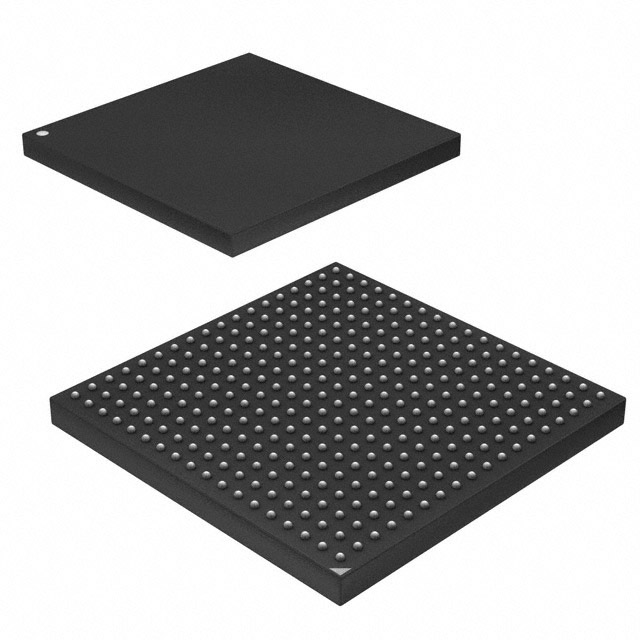
Microchip Technology VSC7430XMT
- Part No.:
- VSC7430XMT
- Manufacturer:
- Microchip Technology
- Category:
- Telecom
- Package:
- 324-BGA
- Datasheet:
-
 VSC7430XMT.pdf
- Description:
- IC TELECOM INTERFACE 324BGA
- Quantity:
- Payment:

- Shipping:

Inventory:4,570
Please send an inquiry. Send us your inquiry, and we will respond immediately.
Product details
Overview
VSC7430XMT from Microsemi (now Microchip) is a 6-port Carrier Ethernet switch IC with integrated Gigabit Ethernet PHYs, ViSAA™ virtualized service architecture, VeriTime™ precision timing, and full MPLS-TP OAM support. It delivers Layer 2/3 forwarding, IEEE 1588-2008 PTP v2 timing, Synchronous Ethernet (SyncE), and hardware-accelerated Ethernet OAM for carrier-grade network interface devices and wireless backhaul.
For engineers reviewing the VSC7430XMT datasheet, VSC7430XMT pinout, VSC7430XMT application, or VSC7430XMT equivalent, this device is selected for deterministic low-latency switching in time-sensitive Carrier Ethernet deployments requiring hardware-based continuity check, delay measurement, and service-aware classification - especially where IEEE 802.1ag/Y.1731 and G.8113.1 compliance is mandatory.
Technical Context
The VSC7430XMT integrates a multi-stage packet processing pipeline including VCAP (Versatile Content-Aware Processor) for deep packet inspection, VOP (Versatile OAM Processor) for hardware-accelerated Y.1731 and MPLS-TP OAM, and an Analyzer subsystem supporting sFlow sampling, mirroring, and hierarchical QoS scheduling. Its SERDES1G and SERDES6G interfaces enable flexible media connectivity across copper and fiber.
It implements dual-mode PHY operation (10/100/1000BASE-T with ActiPHY™ power management and VeriPHY™ cable diagnostics), supports up to 16K MAC entries, and features a shared queue system with per-queue congestion control, strict priority, and weighted round-robin scheduling - all configurable via register-level access without host CPU intervention.
Key Specifications
| Parameter | Value and Actual Design Meaning |
|---|---|
| Port Count | 6 integrated Gigabit Ethernet ports with PHYs - enables compact single-chip NID or small cell aggregation without external transceivers. |
| Timing Compliance | IEEE 1588-2008 PTP v2 boundary clock + ITU-T G.8262 SyncE - meets telecom-grade frequency and phase stability requirements for mobile fronthaul/backhaul. |
| OAM Support | Hardware-accelerated Y.1731 (CCM, LMM, DMM, LTM), MPLS-TP BFD, and G.8113.1 - offloads >95% of OAM frame generation/processing from host CPU. |
| Forwarding Capacity | 12 Gbps non-blocking switching fabric - sustains line-rate 6×1 GbE traffic with zero packet loss under full load and QoS policy enforcement. |
| MAC Table Size | 16,384 entries with automated aging and source learning - supports large-scale VLAN and service multiplexing in metro access networks. |
| VCAP Rules | Up to 2,048 ingress classification rules (IS2) + 1,024 LPM IPv4/IPv6 routes - enables granular per-service QoS, ACL, and routing in Carrier Ethernet edge nodes. |
| Power Management | ActiPHY™ dynamic link-state power scaling - reduces idle-port power by up to 70% versus fixed-power PHYs, critical for outdoor NID thermal design. |
Pinout & Package
Package: 484-pin FC-BGA (23 mm × 23 mm, 0.8 mm pitch), RoHS-compliant, lead-free, moisture sensitivity level 3.
| Pin/Terminal | Circuit Role | Design Meaning |
|---|---|---|
| REFCLK_IN | Reference Clock Input | Accepts 25 MHz crystal or LVDS clock for SERDES and timing subsystem synchronization - required for PTP timestamp accuracy & SyncE recovery. |
| MDIO / MDC | Management Data I/O Interface | IEEE 802.3-compliant serial bus for configuring PHY registers, VCAP, and OAM engines - supports daisy-chained management of all 6 ports. |
| CPU_PORT[3:0] | CPU Interface Bus | 4-bit parallel interface for host processor communication - used for control plane access, statistics readout, and firmware updates; not a high-speed data path. |
| TXD[7:0] / RXD[7:0] | Parallel Data Interface | 8-bit wide synchronous interface for packet ingress/egress to external CPU or FPGA - supports up to 100 MB/s throughput for control-plane traffic. |
| GPIO[15:0] | General-Purpose I/O | Configurable as interrupt outputs (e.g., OAM event flags), status indicators, or reset controls - enables autonomous fault signaling without host polling. |
Key Features
| Feature | Design Value |
|---|---|
| ViSAA™ Architecture | Enables per-service isolation and SLA enforcement via hardware-scheduled queues and dedicated VCAP rule sets - eliminates software-based service contention in multi-tenant NIDs. |
| VeriTime™ Precision Timing | Sub-50 ns PTP timestamp resolution with hardware timestamp insertion/removal at PHY boundary - meets ITU-T G.8273.2 Class C requirement for phase error <±100 ns. |
| VeriPHY™ Cable Diagnostics | Detects open/short faults, split pairs, and cable length (up to 150 m) on Cat5e/6 links - replaces external TDR tools during field deployment and maintenance. |
| Hardware OAM Acceleration | Full Y.1731 CCM, LMM, DMM, and LTM processing in dedicated VOP block - achieves <100 µs OAM response latency vs. >1 ms in software-based implementations. |
| ActiPHY™ Power Scaling | Reduces 1000BASE-T port power from 420 mW (active) to 110 mW (low-power idle) - cuts total chip power by ~28% in partial-link scenarios common in rural backhaul. |
Applications
| Wireless Backhaul Aggregation | Network Interface Device (NID) |
|---|---|
Use Scenario: Aggregating fronthaul traffic from multiple LTE/5G small cells into a fiber-fed macro base station. IC Role / Device Role / Timing Role: Carrier Ethernet switch with precise PTP timing distribution and SyncE recovery - serves as timing-aware aggregation point for CPRI/eCPRI transport. Use Value: Hardware timestamping ensures sub-microsecond phase alignment across distributed radios, meeting 3GPP TR 38.801 fronthaul jitter requirements. |
Use Scenario: Deployed in telco-managed customer premises for triple-play service delivery (voice, video, data) over GPON/EPON. IC Role / Device Role / Timing Role: Edge switch with embedded OAM, VLAN stacking, and QoS policing - acts as demarcation point with SLA monitoring capability. Use Value: Y.1731 continuity checks and synthetic delay measurement provide real-time service health reporting to OSS/BSS systems without external probes. |
| Carrier Ethernet Switch with MPLS-TP | Small Cell Fronthaul Node |
Use Scenario: Metro access node providing E-LINE/E-LAN services over MPLS-TP tunnels with guaranteed bandwidth and protection switching. IC Role / Device Role / Timing Role: MPLS-TP aware switch with hardware BFD and LSP ping acceleration - terminates pseudowires and enforces service-level performance SLAs. Use Value: Sub-50 ms BFD detection and fast reroute (FRR) execution meet ITU-T G.8031 protection timing requirements for mission-critical enterprise circuits. |
Use Scenario: Compact outdoor unit connecting remote radio heads (RRHs) to centralized BBU via point-to-point Ethernet. IC Role / Device Role / Timing Role: Timing-transparent bridge with PTP transparent clock and SyncE pass-through - preserves master clock integrity across fronthaul hops. Use Value: Eliminates need for separate timing ICs or GPS modules at RRH sites, reducing BOM cost and size while maintaining ±50 ns phase accuracy. |
Equivalent & Alternatives
The following parts are listed as comparable options for similar Carrier Ethernet switch applications.
| Alternative Part | Technical Difference | Application Difference | Selection Advice |
|---|---|---|---|
| Marvell 88E6393X | Lacks integrated PHYs; requires external 1000BASE-T transceivers; no hardware Y.1731 or MPLS-TP BFD acceleration. | Suitable for enterprise L2 switches but not certified for telecom-grade OAM or timing SLAs. | Select when cost-sensitive designs can tolerate higher BOM count and software-based OAM. |
| Intel Ethernet Switch FM6000 | Higher port count (12+), supports 2.5G/5G/10G, but no integrated Gigabit PHYs or VeriTime™-grade PTP timestamping. | Targeted at data center leaf-spine; lacks carrier-specific features like G.8113.1 or Y.1731 hardware offload. | Select for scalable core/aggregation layers where timing precision and telecom OAM are secondary to bandwidth density. |
Compared with Marvell 88E6393X and Intel FM6000, the VSC7430XMT uniquely combines integrated PHYs, hardware-accelerated telecom OAM, and sub-50 ns PTP timing in a single 6-port package - enabling smaller footprint, lower power, and faster time-to-certification for Carrier Ethernet edge deployments.
Availability
VSC7430XMT is available at Aetrix Electronics and suitable for wireless backhaul aggregation, Network Interface Devices (NIDs), and small cell fronthaul nodes requiring stable component supply, long-term lifecycle support, and compliance with ITU-T G.8031/G.8113.1 standards.
Supply support for VSC7430XMT includes scheduled delivery planning, volume procurement assistance, BOM continuity management, traceable sourcing, and lifecycle availability coordination for OEM customers, industrial embedded developers, connected-device designers, and electronics production programs.
Manufacturer
Microsemi, now part of Microchip Technology Inc., is a leader in high-reliability semiconductor solutions for aerospace, defense, communications, and industrial markets - specializing in timing, security, and robust Ethernet infrastructure ICs.
The VSC7430XMT belongs to Microsemi's Carrier Ethernet Switch family, designed specifically for telecom edge applications demanding hardware-enforced SLAs, deterministic OAM, and precise time synchronization - not general-purpose switching.
FAQ
What is the primary function of the VSC7430XMT in a Carrier Ethernet network?
The VSC7430XMT functions as a fully integrated 6-port Carrier Ethernet switch with hardware-accelerated OAM, precise timing, and Layer 2/3 forwarding. In production networks, the VSC7430XMT serves as a timing-aware demarcation point in NIDs or aggregation node in wireless backhaul - delivering Y.1731 continuity checks, PTP timestamping, and MPLS-TP BFD without host CPU involvement. Its ViSAA™ architecture ensures strict service isolation for multi-tenant deployments.
Does the VSC7430XMT include built-in Ethernet PHYs?
Yes, the VSC7430XMT integrates six full Gigabit Ethernet PHYs compliant with IEEE 802.3ab/802.3u standards. Each supports 10/100/1000BASE-T operation with VeriPHY™ cable diagnostics, ActiPHY™ adaptive power management, and Wake-on-LAN. No external PHYs are required for copper interface - simplifying board layout and reducing BOM cost compared to switch-only alternatives like the VSC7429.
How does the VSC7430XMT achieve telecom-grade timing accuracy?
The VSC7430XMT achieves telecom-grade timing through VeriTime™ - a hardware timestamping engine with sub-50 ns resolution and hardware-assisted PTP v2 (IEEE 1588-2008) processing. It supports both boundary clock and transparent clock modes, complies with ITU-T G.8262 SyncE, and meets G.8273.2 Class C phase error limits (<±100 ns). The VSC7430XMT uses dedicated timestamp registers synchronized to REFCLK_IN, eliminating software-induced jitter.
What OAM protocols does the VSC7430XMT support in hardware?
The VSC7430XMT supports Y.1731 Ethernet OAM (CCM, LMM, DMM, LTM, LT), MPLS-TP BFD, and G.8113.1 messaging entirely in hardware via its Versatile OAM Processor (VOP). All frame generation, parsing, and counter updates occur without CPU intervention - enabling <100 µs OAM response latency and deterministic behavior under full line-rate traffic. It does not rely on software stacks or host-driven timers.
Is the VSC7430XMT pin-compatible with other members of the VSC74xx family?
No, the VSC7430XMT is not pin-compatible with other VSC74xx devices such as the VSC7429 or VSC7448. It uses a unique 484-pin FC-BGA package optimized for its integrated PHY count and timing I/O requirements. Pin mappings for REFCLK_IN, MDIO, CPU_PORT, and GPIO differ significantly across the family - PCB redesign is required when migrating between VSC74xx variants.
VSC7430XMT Specifications
- Product attributes
- Attribute value
- Manufacturer:
- Microchip Technology
- Series:
- Serval™-TE
- Package/Case:
- 324-BGA
- Packaging:
- Tray
- Product Status:
- Active
- Function:
- Ethernet Switch
- Interface:
- Ethernet, SerDes, SGMII
- Number of Circuits:
- 6
- Voltage - Supply:
- 0.95V ~ 1.05V
- Current - Supply:
- 3.3A
- Power (Watts):
- -
- Operating Temperature:
- -40°C ~ 125°C
- Grade:
- -
- Qualification:
- -
- Mounting Type:
- Surface Mount
- Supplier Device Package:
- 324-PBGA (19x19)
VSC7430XMT FAQ
1.How can I place an order for VSC7430XMT through Aetrix?
Please submit a Request for Quotation (RFQ) for VSC7430XMT on Aetrix. Our sales agent will provide a competitive quotation and guide you through the order confirmation once you accept the terms.
2.Are the price and stock information for VSC7430XMT reliable?
The price and inventory of VSC7430XMT are updated periodically and may fluctuate due to market conditions. Stock and pricing data are typically refreshed every 24 hours. Quotation validity for VSC7430XMT is usually 5 days.
3.What payment methods are accepted for VSC7430XMT?
We accept Wire Transfer, PayPal, Credit Card, Western Union, MoneyGram, and Escrow for VSC7430XMT transactions.
Note: Certain payment methods may incur a processing fee.
4.How is shipping managed for VSC7430XMT?
VSC7430XMT orders can be shipped via leading logistics carriers, including DHL, UPS, FedEx, TNT, or Registered Mail.
Once your VSC7430XMT order is processed, you will receive an email with the shipment details and tracking number.
Note: Tracking information may take up to 24 hours to appear. Express delivery typically takes 3–5 business days.
5.How can I obtain technical support or documentation for VSC7430XMT?
For technical support, including VSC7430XMT datasheets, pinout diagrams, or application guidance, please contact our engineering support team. They can provide detailed documentation and assistance for your VSC7430XMT requirements.
6.How does Aetrix verify that VSC7430XMT is sourced from the original manufacturer or authorized distributors?
All VSC7430XMT products on Aetrix are procured from qualified distributors and authorized channels. Our dedicated quality assurance team conducts strict verification, including traceability checks and, if necessary, third-party testing. This ensures that VSC7430XMT meets industry standards.
7.What is the process for return or replacement of VSC7430XMT?
All VSC7430XMT units undergo pre-shipment inspection (PSI). If there is an issue with VSC7430XMT, returns or replacements are accepted under the following conditions:
1.Quantity discrepancies, incorrect items, or visible external defects (such as breakage or corrosion), acknowledged by Aetrix.
2.The issue is reported within 90 days of delivery.
3.The VSC7430XMT part is unused and in its original packaging.
Return procedure for VSC7430XMT:
1.Submit a request within 90 days.
2.Obtain a Return Material Authorization (RMA) from Aetrix.
VSC7430XMT Tags

-
LMC567CMX/NOPB
Texas Instruments
-
LM567CMX/NOPB
Texas Instruments
-
LM567CM/NOPB
Texas Instruments
-
VSC8531XMW-02
Microchip Technology
-
VSC8531XMW-05
Microchip Technology

-
GPY115C0VI
MaxLinear, Inc.
-
SI32185-A-FMR
Skyworks Solutions Inc.
-
VSC8541XMV-05
Microchip Technology
-
SI32178-B-FM1R
Skyworks Solutions Inc.
-
GPY215C0VI
MaxLinear, Inc.
-
CPC7514ZTR
Littelfuse Inc.
-
VSC8502XML-03
Microchip Technology
Tech Hub

TTL and CMOS logic families differ in thresholds, loading, output drive, power and timing. This engineering guide compares 74HC and 74HCT, calculates noise margins and checks 3.3 V/5 V compatibility.

A practical engineering guide to 3.3V and 5V logic compatibility, input thresholds, resistor dividers, translator ICs, MOSFET level shifting, I2C pull-ups, timing limits and power-sequencing risks.

The 74HC595 uses push-pull logic outputs, while the TPIC6B595 uses 50 V open-drain DMOS sinks for higher-power loads. This guide compares timing, current limits, 3.3 V interfacing, load wiring, thermal…

The 74HC595 converts serial data into eight stable parallel outputs. This guide covers pin functions, shift and storage timing, OE and MR behavior, drive-current limits, cascading, voltage compatibilit…

A technical comparison of level-sensitive latches and edge-triggered flip-flops, covering timing windows, setup and hold limits, master–slave operation, time borrowing, race-through, HDL inference and…

A D latch stores one bit while Enable controls when data can pass. This reference covers gate-level operation, truth tables, transparency, setup and hold timing, LE versus OE, common ICs and practical …

An SR latch stores one bit through cross-coupled feedback. This engineering reference covers NOR and NAND implementations, truth tables, forbidden-state recovery, gated operation, switch debouncing, fa…

Latch circuits retain one bit through feedback. This technical reference covers SR and D latches, truth tables, transparency, timing limits, latch-versus-flip-flop behavior, applications and common log…

An engineering guide to LED driver operation, constant-current and constant-voltage outputs, linear and switching topologies, dimming, IC selection, calculations, replacement compatibility, and fault c…

Operational amplifier guide covering op amp basics, feedback, ideal vs real op amps, common configurations, buffer circuits, offset, bias current, gain-bandwidth, slew rate, rail-to-rail limits and sel…


