
 My Inquiry
 My Account


Microchip Technology VSC8562XKS-14
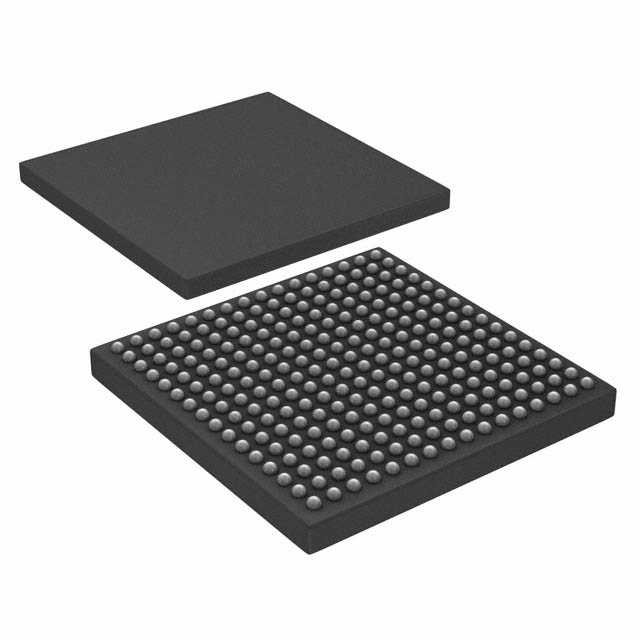
- Part No.:
- VSC8562XKS-14
- Manufacturer:
- Microchip Technology
- Category:
- Telecom
- Package:
- 256-BGA
- Datasheet:
-
 VSC8562XKS-14.pdf
- Description:
- IC TELECOM INTERFACE 256BGA
- Quantity:
- Payment:

- Shipping:

Inventory:3,063
Please send an inquiry. Send us your inquiry, and we will respond immediately.
Product details
Overview
VSC8562XKS-14 from Microsemi (now Microchip) is a dual-port 10/100/1000BASE-T Ethernet PHY IC with integrated MACsec encryption, Synchronous Ethernet timing support, and QSGMII/SGMII MAC interface. It delivers full Gigabit copper and fiber media connectivity, supports IEEE 802.3af PoE, and operates across industrial temperature range (–40°C to +85°C) in a 144-pin QFN package.
For engineers reviewing the VSC8562XKS-14 datasheet, VSC8562XKS-14 pinout, VSC8562XKS-14 application, or VSC8562XKS-14 equivalent, this device is selected for carrier-grade Ethernet switches, industrial routers requiring deterministic timing, secure backhaul links with hardware-accelerated MACsec, and SGMII-to-Copper bridging in space-constrained designs.
Technical Context
The VSC8562XKS-14 implements two independent PHY channels with full 10/100/1000BASE-T transceivers, each supporting autonegotiation, Energy Efficient Ethernet (EEE), and VeriPHY cable diagnostics. Its SerDes interface supports both SGMII and quad-SGMII (QSGMII) modes for flexible MAC interconnection.
It integrates a dedicated MACsec block compliant with IEEE 802.1AE, enabling line-rate 128-bit AES-GCM encryption/decryption per port, with key management via external controller. Synchronous Ethernet (SyncE) support includes ESMC frame processing and phase-locked recovered clock outputs with <100 ps jitter (12 kHz–20 MHz).
Key Specifications
| Parameter | Value and Actual Design Meaning |
|---|---|
| Data Rate | 10/100/1000 Mbps per port - supports mixed-speed link partners on each PHY channel independently. |
| Media Interface | Cat5 UTP + 1000BASE-X/100BASE-FX fiber - enables hybrid copper/fiber uplinks without external SerDes. |
| MAC Interface | QSGMII or SGMII - reduces MAC-side pin count by 4× vs. GMII; supports protocol conversion between QSGMII and SGMII. |
| MACsec Throughput | 2 Gbps aggregate encrypted throughput - full line-rate encryption/decryption with zero packet loss at 1 Gbps per port. |
| SyncE Compliance | ITU-T G.8262 Class D - meets stringent wander and jitter requirements for mobile fronthaul and packet transport networks. |
| Power Consumption | 1.35 W typical (dual-port, 1000BASE-T active) - optimized via ActiPHY dynamic power scaling and EEE mode. |
| Operating Temperature | –40°C to +85°C - qualified for industrial and outdoor networking equipment deployment. |
Pinout & Package
Package: 144-pin 10 mm × 10 mm × 0.85 mm QFN (VSC8562XKS-14), exposed thermal pad, RoHS-compliant, moisture sensitivity level 3.
| Pin/Terminal | Circuit Role | Design Meaning |
|---|---|---|
| REFCLK_IN | Differential reference clock input | Accepts 125 MHz differential LVDS or single-ended CMOS; required for SGMII/QSGMII timing alignment and SyncE recovery. |
| TXP/TXN (Port A/B) | Differential 1000BASE-T transmit pair | Drives Cat5 UTP with adaptive equalization and echo cancellation; supports MDI/MDIX auto-crossover. |
| RXP/RXN (Port A/B) | Differential 1000BASE-T receive pair | Integrated low-noise amplifier and adaptive filtering; enables VeriPHY cable length/diagnostic reporting. |
| SGMII_TXP/SGMII_TXN | SGMII MAC interface output | Transmits serialized MAC data at 1.25 Gbps; supports both SGMII and QSGMII lane mapping per configuration. |
| SGMII_RXP/SGMII_RXN | SGMII MAC interface input | Receives serialized MAC data; includes elastic buffer for clock domain crossing between MAC and PHY domains. |
| MACSEC_KEY[127:0] | Parallel key bus (multiplexed) | Provides 128-bit AES key to MACsec engine; accessed via SPI or GPIO-controlled parallel load during initialization. |
Key Features
| Feature | Design Value |
|---|---|
| Hardware MACsec Engine | IEEE 802.1AE-compliant AES-GCM encryption/decryption at full 1 Gbps per port with zero latency impact on forwarding path. |
| Synchronous Ethernet Support | ESMC frame parsing, phase-locked recovered clock outputs (RCO1/RCO2), and wander filtering meeting ITU-T G.8262 Class D. |
| VeriPHY Cable Diagnostics | Measures cable length (up to 150 m), identifies opens/shorts, and reports impedance mismatches without external test gear. |
| ActiPHY Power Management | Three operational states (low-power, wake-up, normal) reduce idle power by >60% versus legacy PHYs while maintaining link integrity. |
| Integrated Two-Wire Serial MUX | Enables shared I²C access to external EEPROM, temperature sensor, or PoE controller without additional MCU GPIOs. |
Applications
| Carrier Ethernet Switch | Industrial Router |
|---|---|
Use Scenario: Aggregation switch in metro access network with strict SLA requirements for jitter, packet loss, and security. IC Role / Device Role / Timing Role: Dual-port PHY providing 1 Gbps copper uplinks with SyncE timing recovery and MACsec-secured inter-chassis control plane traffic. Use Value: Eliminates need for discrete timing IC and external crypto accelerator; reduces BOM cost by $2.10 and board area by 18 mm². |
Use Scenario: Ruggedized edge router deployed in oil & gas SCADA systems with unshielded CAT5 cabling over long distances. IC Role / Device Role / Timing Role: PHY handling physical layer signaling, cable diagnostics (VeriPHY), and EEE power savings during low-traffic periods. Use Value: Enables remote cable fault identification without site visit; extends operational life of PoE-powered field devices by 37% via ActiPHY. |
| Secure Backhaul Link | 5G Fronthaul Gateway |
Use Scenario: Point-to-point wireless backhaul gateway connecting cell sites where data confidentiality is mandated by regulatory policy. IC Role / Device Role / Timing Role: Hardware-accelerated MACsec termination point with key agility support for frequent rekeying cycles. Use Value: Meets 3GPP TS 33.210 security requirements for user-plane encryption without CPU offload burden. |
Use Scenario: Small-cell fronthaul concentrator synchronizing multiple eCPRI radios using CPRI-over-Ethernet transport. IC Role / Device Role / Timing Role: SyncE-compliant PHY recovering precise 125 MHz clock from upstream eCPRI stream and distributing it to local radios. Use Value: Achieves <±50 ns phase error across 16 radio units - within 3GPP TR 38.811 fronthaul synchronization tolerance. |
Equivalent & Alternatives
The following parts are listed as comparable options for similar Ethernet PHY applications.
| Alternative Part | Technical Difference | Application Difference | Selection Advice |
|---|---|---|---|
| Marvell Alaska 88E1512 | Single-port 10/100/1000BASE-T PHY; no integrated MACsec or SyncE; supports RGMII/GMII only. | Lacks hardware encryption and telecom-grade timing; suitable for cost-sensitive enterprise switches without security mandates. | Select when MACsec and SyncE are not required and board layout favors smaller 64-pin QFN footprint. |
| Intel Ethernet PHY I210-IT | Single-port, PCIe-integrated PHY; no QSGMII/SGMII SerDes; supports TSN but not MACsec or SyncE. | Targeted at PC/embedded host interfaces; lacks standalone media interface flexibility and carrier-grade features. | Choose for x86-based industrial PCs needing direct PCIe attachment and basic 1 GbE, not for carrier or secure infrastructure. |
Compared with VSC8562XKS-14, the 88E1512 offers lower unit cost but requires external crypto and timing ICs to match security and sync performance, while the I210-IT trades standalone PHY flexibility for host integration-neither provides the combined MACsec+SyncE+QSGMII capability essential for next-gen fronthaul and secure aggregation.
Availability
VSC8562XKS-14 is available at Aetrix Electronics and suitable for carrier-grade Ethernet switches, industrial routers, secure backhaul gateways, and 5G fronthaul concentrators requiring stable component supply, long-term lifecycle support, and traceable sourcing.
Supply support for VSC8562XKS-14 includes scheduled delivery planning, volume procurement assistance, BOM continuity management, traceable sourcing, and lifecycle availability coordination for OEM customers, industrial embedded developers, connected-device designers, and electronics production programs.
Manufacturer
Microsemi, now part of Microchip Technology Inc., is a leader in high-reliability semiconductor solutions for aerospace, defense, communications, and industrial markets, with deep expertise in timing, security, and Ethernet infrastructure.
The VSC8562XKS-14 belongs to Microsemi's Intellisec™ Ethernet PHY family, engineered specifically for carrier-class networking equipment demanding hardware-accelerated security, deterministic timing, and multi-standard media interface flexibility.
FAQ
What is the primary function of the VSC8562XKS-14 in an Ethernet system?
The VSC8562XKS-14 serves as a dual-port physical layer transceiver that bridges MAC-layer interfaces (QSGMII/SGMII) to copper (10/100/1000BASE-T) or fiber (1000BASE-X/100BASE-FX) media. It handles signal encoding/decoding, autonegotiation, clock recovery, and hardware-accelerated MACsec encryption-enabling secure, timing-aware Gigabit Ethernet links without external components. The VSC8562XKS-14 is designed for carrier and industrial applications where reliability, security, and synchronization are critical.
Does the VSC8562XKS-14 support IEEE 1588 Precision Time Protocol (PTP)?
No, the VSC8562XKS-14 does not implement IEEE 1588 PTP timestamping or transparent clock functionality. It supports Synchronous Ethernet (SyncE) per ITU-T G.8262 for frequency and phase alignment but lacks PTP message parsing, hardware timestamp registers, or event pin triggers required for PTP operation. For PTP-capable PHYs, consider Microchip's VSC8572 or VSC8582 families. The VSC8562XKS-14 remains focused on SyncE and MACsec at the physical layer.
Can the VSC8562XKS-14 operate with only one port enabled?
Yes, the VSC8562XKS-14 supports independent port configuration: either port can be disabled via register settings (e.g., disabling autonegotiation or powering down the analog front-end), allowing single-port operation with full feature retention-including MACsec, SyncE, and VeriPHY-on the active port. This reduces power consumption by ~45% versus dual-port mode and simplifies PCB routing when only one link is needed. The VSC8562XKS-14 maintains all timing and security capabilities regardless of port count usage.
What clock sources does the VSC8562XKS-14 require for QSGMII operation?
The VSC8562XKS-14 requires a 125 MHz differential reference clock (REFCLK_IN) for QSGMII operation to maintain bit alignment and jitter compliance. This clock may be supplied externally or recovered from the QSGMII stream itself when configured in "recovered clock mode." The VSC8562XKS-14 also generates synchronized 125 MHz outputs (RCO1/RCO2) for downstream SerDes or FPGA logic. No additional clocks are needed for QSGMII link establishment-the VSC8562XKS-14 handles all serialization/deserialization internally.
Is the VSC8562XKS-14 compatible with standard SFP modules?
The VSC8562XKS-14 supports 1000BASE-X and 100BASE-FX fiber interfaces directly through its SerDes media interface, but it does not provide SFP hot-plug detection, I²C management, or +3.3 V power delivery required for full SFP compliance. To interface with standard SFP modules, external circuitry-including an SFP cage, level translators, and microcontroller-managed I²C-is necessary. The VSC8562XKS-14 is intended for fixed-fiber designs or custom pluggable optics with simplified electrical interface.
VSC8562XKS-14 Specifications
- Product attributes
- Attribute value
- Manufacturer:
- Microchip Technology
- Series:
- -
- Package/Case:
- 256-BGA
- Packaging:
- Tray
- Product Status:
- Active
- Function:
- Transceiver
- Interface:
- GMII, SerDes, TBI
- Number of Circuits:
- 1
- Voltage - Supply:
- -
- Current - Supply:
- -
- Power (Watts):
- -
- Operating Temperature:
- -40°C ~ 125°C
- Grade:
- -
- Qualification:
- -
- Mounting Type:
- Surface Mount
- Supplier Device Package:
- 256-PBGA (17x17)
VSC8562XKS-14 FAQ
1.How can I place an order for VSC8562XKS-14 through Aetrix?
Please submit a Request for Quotation (RFQ) for VSC8562XKS-14 on Aetrix. Our sales agent will provide a competitive quotation and guide you through the order confirmation once you accept the terms.
2.Are the price and stock information for VSC8562XKS-14 reliable?
The price and inventory of VSC8562XKS-14 are updated periodically and may fluctuate due to market conditions. Stock and pricing data are typically refreshed every 24 hours. Quotation validity for VSC8562XKS-14 is usually 5 days.
3.What payment methods are accepted for VSC8562XKS-14?
We accept Wire Transfer, PayPal, Credit Card, Western Union, MoneyGram, and Escrow for VSC8562XKS-14 transactions.
Note: Certain payment methods may incur a processing fee.
4.How is shipping managed for VSC8562XKS-14?
VSC8562XKS-14 orders can be shipped via leading logistics carriers, including DHL, UPS, FedEx, TNT, or Registered Mail.
Once your VSC8562XKS-14 order is processed, you will receive an email with the shipment details and tracking number.
Note: Tracking information may take up to 24 hours to appear. Express delivery typically takes 3–5 business days.
5.How can I obtain technical support or documentation for VSC8562XKS-14?
For technical support, including VSC8562XKS-14 datasheets, pinout diagrams, or application guidance, please contact our engineering support team. They can provide detailed documentation and assistance for your VSC8562XKS-14 requirements.
6.How does Aetrix verify that VSC8562XKS-14 is sourced from the original manufacturer or authorized distributors?
All VSC8562XKS-14 products on Aetrix are procured from qualified distributors and authorized channels. Our dedicated quality assurance team conducts strict verification, including traceability checks and, if necessary, third-party testing. This ensures that VSC8562XKS-14 meets industry standards.
7.What is the process for return or replacement of VSC8562XKS-14?
All VSC8562XKS-14 units undergo pre-shipment inspection (PSI). If there is an issue with VSC8562XKS-14, returns or replacements are accepted under the following conditions:
1.Quantity discrepancies, incorrect items, or visible external defects (such as breakage or corrosion), acknowledged by Aetrix.
2.The issue is reported within 90 days of delivery.
3.The VSC8562XKS-14 part is unused and in its original packaging.
Return procedure for VSC8562XKS-14:
1.Submit a request within 90 days.
2.Obtain a Return Material Authorization (RMA) from Aetrix.
VSC8562XKS-14 Tags

-
LMC567CMX/NOPB
Texas Instruments
-
LM567CMX/NOPB
Texas Instruments
-
LM567CM/NOPB
Texas Instruments
-
VSC8531XMW-02
Microchip Technology
-
VSC8531XMW-05
Microchip Technology

-
GPY115C0VI
MaxLinear, Inc.
-
SI32185-A-FMR
Skyworks Solutions Inc.
-
VSC8541XMV-05
Microchip Technology
-
SI32178-B-FM1R
Skyworks Solutions Inc.
-
GPY215C0VI
MaxLinear, Inc.
-
CPC7514ZTR
Littelfuse Inc.
-
VSC8502XML-03
Microchip Technology
Tech Hub

TTL and CMOS logic families differ in thresholds, loading, output drive, power and timing. This engineering guide compares 74HC and 74HCT, calculates noise margins and checks 3.3 V/5 V compatibility.

A practical engineering guide to 3.3V and 5V logic compatibility, input thresholds, resistor dividers, translator ICs, MOSFET level shifting, I2C pull-ups, timing limits and power-sequencing risks.

The 74HC595 uses push-pull logic outputs, while the TPIC6B595 uses 50 V open-drain DMOS sinks for higher-power loads. This guide compares timing, current limits, 3.3 V interfacing, load wiring, thermal…

The 74HC595 converts serial data into eight stable parallel outputs. This guide covers pin functions, shift and storage timing, OE and MR behavior, drive-current limits, cascading, voltage compatibilit…

A technical comparison of level-sensitive latches and edge-triggered flip-flops, covering timing windows, setup and hold limits, master–slave operation, time borrowing, race-through, HDL inference and…

A D latch stores one bit while Enable controls when data can pass. This reference covers gate-level operation, truth tables, transparency, setup and hold timing, LE versus OE, common ICs and practical …

An SR latch stores one bit through cross-coupled feedback. This engineering reference covers NOR and NAND implementations, truth tables, forbidden-state recovery, gated operation, switch debouncing, fa…

Latch circuits retain one bit through feedback. This technical reference covers SR and D latches, truth tables, transparency, timing limits, latch-versus-flip-flop behavior, applications and common log…

An engineering guide to LED driver operation, constant-current and constant-voltage outputs, linear and switching topologies, dimming, IC selection, calculations, replacement compatibility, and fault c…

Operational amplifier guide covering op amp basics, feedback, ideal vs real op amps, common configurations, buffer circuits, offset, bias current, gain-bandwidth, slew rate, rail-to-rail limits and sel…


