
 My Inquiry
 My Account


Microchip Technology VSC8574XKS-10
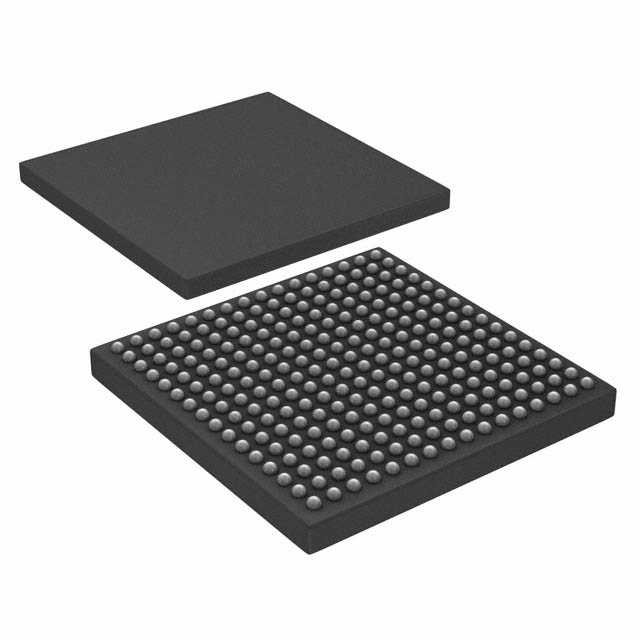
- Part No.:
- VSC8574XKS-10
- Manufacturer:
- Microchip Technology
- Category:
- Telecom
- Package:
- 256-BGA
- Datasheet:
-
 VSC8574XKS-10.pdf
- Description:
- IC TELECOM INTERFACE
- Quantity:
- Payment:

- Shipping:

Inventory:2,389
Please send an inquiry. Send us your inquiry, and we will respond immediately.
Product details
Overview
VSC8574XKS-10 from Microsemi is a quad-port Gigabit Ethernet PHY transceiver supporting IEEE 1588v2 timestamping over MPLS, PBB, and IPv4/6 encapsulated links, with SGMII/QSGMII MAC interfaces, dual recovered clock outputs for SyncE, and EcoEthernet™ 2.0 power management - deployed in carrier-grade wireless backhaul and cellular base station line cards.
For engineers reviewing the VSC8574XKS-10 datasheet, VSC8574XKS-10 pinout, VSC8574XKS-10 application, or VSC8574XKS-10 equivalent, key selection criteria include IEEE 1588v2 packet engine integration, dual-media (copper/fiber) port support per channel, ring resiliency for master/slave timing handover without link interruption, and compliance with G.8261 Synchronous Ethernet timing requirements.
Technical Context
The VSC8574XKS-10 implements four independent 10/100/1000BASE-T transceivers compliant with IEEE 802.3ab, each supporting VeriPHY™ cable diagnostics and HP Auto-MDIX. It integrates a dedicated IEEE 1588v2 timestamp engine capable of single- and two-step correction on encapsulated traffic including MPLS-TP and MAC-in-MAC.
It delivers dual recovered clock outputs with programmable squelch control for primary/secondary SyncE references, supports QSGMII v1.3 and SGMII v1.9 SerDes interfaces, and includes integrated quad I²C mux for external SFP/PoE module coordination - all within a single 17 mm × 17 mm BGA package.
Key Specifications
| Parameter | Value and Actual Design Meaning |
|---|---|
| Port Count | 4 independent dual-media (copper/fiber) GbE ports |
| MAC Interface | QSGMII v1.3 and SGMII v1.9 SerDes - enables compact 4×1G aggregation to single MAC |
| IEEE 1588 Support | Hardware-accelerated timestamp engine for single/two-step PTP over MPLS, IPv4/6, QinQ, and MAC-in-MAC |
| SyncE Clock Outputs | Dual recovered clocks with programmable squelch - satisfies G.8261 primary/backup timing reference requirement |
| Power Supply | 1.0 V core / 2.5 V I/O with 3.3 V-tolerant inputs - enables direct interfacing with common FPGA I/O banks |
| Package | 17 mm × 17 mm BGA (289-ball) - standard footprint for high-density carrier line card layouts |
| Standards Compliance | IEEE 802.3ab (1000BASE-T), 802.3ah (EFM), 802.3az (EEE), 802.3bf, 1149.1/1149.6 JTAG |
Pinout & Package
Package: 17 mm × 17 mm, 289-ball BGA (VSC8574XKS-10). Pinout validated per Microsemi VSC8574 Datasheet Rev. 1.0 (VPPD-02790).
| Pin/Terminal | Circuit Role | Design Meaning |
|---|---|---|
| REFCLK_IN | Reference clock input | Accepts 125 MHz differential reference for internal PLL synchronization |
| CLK_OUT[0:1] | Recovered clock outputs | Dual SyncE-compliant clocks for primary/secondary timing distribution |
| SGMII_RX[0:3]+/- | SGMII receive differential pairs | Each pair connects to corresponding MAC SGMII TX - supports 4 independent 1G links |
| QSGMII_RX+/- | QSGMII receive differential pair | Single 4-lane interface aggregating all 4 PHYs to one MAC - reduces PCB routing complexity |
| I2C_SCL/SDA | I²C bus interface | Shared quad I²C mux control for SFP modules, PoE controllers, or temperature sensors |
| MDIO/MDC | Management Data Input/Output | IEEE 802.3-compliant MDIO interface for register-level configuration and status monitoring |
Key Features
| Feature | Design Value |
|---|---|
| Ring Resiliency | Enables seamless master/slave timing role switching per port without 1000BASE-T link interruption - critical for redundant timing architectures |
| EcoEthernet™ 2.0 | Combines ActiPHY™ link power-down, PerfectReach™ cable-length-adaptive power scaling, and IEEE 802.3az EEE - reduces idle power by >40% vs. legacy PHYs |
| VeriPHY™ Diagnostics | On-chip time-domain reflectometry for real-time copper cable fault detection and distance-to-fault measurement - eliminates need for external TDR tools |
| Integrated AC Coupling | On-die 100 Ω AC-coupling capacitors for SGMII lanes - saves 8 external components per port and improves signal integrity |
| Jumbo Frame Support | Programmable synchronization FIFOs enabling up to 16 kB frame handling - essential for carrier-grade OAM and control plane traffic |
Applications
| Wireless Backhaul Line Cards | Carrier Ethernet Base Stations |
|---|---|
Use Scenario: Aggregating fronthaul/midhaul traffic across microwave or fiber links in 4G/LTE and 5G RAN deployments. IC Role / Device Role / Timing Role: GbE PHY providing IEEE 1588v2 timestamping and SyncE clock recovery for precise fronthaul timing alignment. Use Value: Enables sub-100 ns phase error over multi-hop networks via hardware timestamping and dual-clock redundancy - meeting ITU-T G.8273.2 Class C boundary clock requirements. | Use Scenario: Serving as front-panel PHY on distributed unit (DU) or centralized unit (CU) line cards in Open RAN infrastructure. IC Role / Device Role / Timing Role: Dual-media PHY bridging copper/fiber uplinks while delivering traceable timing to RU synchronization subsystems. Use Value: Supports ring resiliency to maintain 1000BASE-T link integrity during master/slave timing transitions - eliminating service disruption during failover events. |
| Industrial Time-Sensitive Networking | Smart Grid Substation Automation |
Use Scenario: Connecting IEC 61850-9-3 compliant protection relays and merging units in factory-floor TSN networks. IC Role / Device Role / Timing Role: IEEE 1588v2-aware PHY performing hardware timestamping on PTP event messages at physical layer. Use Value: Achieves <150 ns timestamp accuracy under variable load - satisfying IEC 62439-3 Annex A precision requirements for PRP/HSR redundancy protocols. | Use Scenario: Interfacing phasor measurement units (PMUs) and intelligent electronic devices (IEDs) in substations requiring µs-level time correlation. IC Role / Device Role / Timing Role: Carrier-class PHY delivering G.8261-compliant SyncE clocks and IEEE 1588v2 timestamps over hardened Ethernet links. Use Value: Integrated temperature monitoring enables stable timing performance across –40°C to +85°C ambient - certified for IEC 61850-3 substation environments. |
Equivalent & Alternatives
The following parts are listed as comparable options for similar Gigabit Ethernet PHY applications.
| Alternative Part | Technical Difference | Application Difference | Selection Advice |
|---|---|---|---|
| Marvell Alaska 88E1512 | Lacks integrated IEEE 1588v2 timestamp engine; requires external PTP processing; no dual recovered clock outputs | Suitable for non-timing-critical enterprise switches but not G.8261 SyncE or ITU-T G.8273.2 boundary clock designs | Select only when IEEE 1588v2 hardware timestamping and dual-clock redundancy are not required |
| Intel Ethernet PHY I210-IT | Single-port device; no QSGMII support; limited to PCIe host interface; no MPLS/Y.1731 OAM acceleration | Targeted at embedded PC platforms and industrial controllers - not scalable for quad-port carrier line cards | Choose only for low-channel-count, host-processor-integrated applications where SGMII-to-PCIe bridging is needed |
Compared with Marvell 88E1512 and Intel I210-IT, the VSC8574XKS-10 uniquely combines quad-port density, hardware IEEE 1588v2 timestamping, dual SyncE clock outputs, and MPLS-aware OAM - making it the only option qualified for carrier-grade timing-critical line cards requiring full G.8261/G.8273.2 compliance.
Availability
VSC8574XKS-10 is available at Aetrix Electronics and suitable for wireless backhaul systems, carrier Ethernet cellular base stations, and industrial automation systems requiring stable component supply, long-term lifecycle assurance, and traceable sourcing.
Supply support for VSC8574XKS-10 includes scheduled delivery planning, volume procurement assistance, BOM continuity management, traceable sourcing, and lifecycle availability coordination for OEM customers, industrial embedded developers, connected-device designers, and electronics production programs.
Manufacturer
Microsemi Corporation (now part of Microchip Technology) designs high-reliability semiconductor solutions for communications, aerospace, defense, and industrial markets, with expertise in timing, synchronization, and Ethernet infrastructure ICs.
The VSC8574XKS-10 belongs to Microsemi's Carrier Ethernet PHY product line, engineered specifically to meet ITU-T G.8261/G.8273.2 timing accuracy, IEEE 1588v2 hardware timestamping, and multi-encapsulation OAM requirements in telecom infrastructure.
FAQ
What is the primary timing capability of the VSC8574XKS-10?
The VSC8574XKS-10 integrates a hardware IEEE 1588v2 timestamp engine supporting both single- and two-step PTP correction on encapsulated traffic including MPLS, IPv4/6, and MAC-in-MAC. It also provides dual recovered clock outputs compliant with ITU-T G.8261 for Synchronous Ethernet applications - enabling precise, traceable timing in carrier-grade backhaul systems.
Does the VSC8574XKS-10 support both copper and fiber media per port?
Yes, the VSC8574XKS-10 supports dual-media operation on all four ports - each port can be configured for either 1000BASE-T copper or 1000BASE-X fiber via configurable SerDes settings. It includes unidirectional IEEE 802.3ah EFM support for fiber link monitoring and fault detection.
What MAC interfaces does the VSC8574XKS-10 support?
The VSC8574XKS-10 supports both QSGMII v1.3 and SGMII v1.9 SerDes interfaces. QSGMII enables 4×1G aggregation over a single 4-lane interface to reduce MAC pin count and PCB routing complexity, while individual SGMII lanes provide flexibility for discrete MAC connections.
How does the VSC8574XKS-10 implement energy efficiency?
The VSC8574XKS-10 implements EcoEthernet™ 2.0, combining ActiPHY™ automatic link power-down, PerfectReach™ cable-length-adaptive power scaling, and IEEE 802.3az Energy Efficient Ethernet. This reduces dynamic and idle power across all link speeds - achieving industry-lowest quad-port GbE PHY power consumption.
Is ring resiliency supported on the VSC8574XKS-10, and how does it function?
Yes, the VSC8574XKS-10 supports ring resiliency, allowing each 1000BASE-T port to switch between master and slave timing roles without interrupting the physical link. This maintains continuous data flow during timing source failover - a critical feature for redundant carrier Ethernet timing architectures.
What package type and ball count does the VSC8574XKS-10 use?
The VSC8574XKS-10 uses a 17 mm × 17 mm, 289-ball BGA package (VSC8574XKS-10). This standardized footprint supports high-density carrier line card layouts and is compatible with standard reflow profiles and automated optical inspection processes.
VSC8574XKS-10 Specifications
- Product attributes
- Attribute value
- Manufacturer:
- Microchip Technology
- Series:
- -
- Package/Case:
- 256-BGA
- Packaging:
- Bulk
- Product Status:
- Active
- Function:
- Ethernet
- Interface:
- GMII, SerDes, TBI
- Number of Circuits:
- 4
- Voltage - Supply:
- 1V, 2.5V
- Current - Supply:
- -
- Power (Watts):
- -
- Operating Temperature:
- -
- Grade:
- -
- Qualification:
- -
- Mounting Type:
- Surface Mount
- Supplier Device Package:
- 256-PBGA (17x17)
VSC8574XKS-10 FAQ
1.How can I place an order for VSC8574XKS-10 through Aetrix?
Please submit a Request for Quotation (RFQ) for VSC8574XKS-10 on Aetrix. Our sales agent will provide a competitive quotation and guide you through the order confirmation once you accept the terms.
2.Are the price and stock information for VSC8574XKS-10 reliable?
The price and inventory of VSC8574XKS-10 are updated periodically and may fluctuate due to market conditions. Stock and pricing data are typically refreshed every 24 hours. Quotation validity for VSC8574XKS-10 is usually 5 days.
3.What payment methods are accepted for VSC8574XKS-10?
We accept Wire Transfer, PayPal, Credit Card, Western Union, MoneyGram, and Escrow for VSC8574XKS-10 transactions.
Note: Certain payment methods may incur a processing fee.
4.How is shipping managed for VSC8574XKS-10?
VSC8574XKS-10 orders can be shipped via leading logistics carriers, including DHL, UPS, FedEx, TNT, or Registered Mail.
Once your VSC8574XKS-10 order is processed, you will receive an email with the shipment details and tracking number.
Note: Tracking information may take up to 24 hours to appear. Express delivery typically takes 3–5 business days.
5.How can I obtain technical support or documentation for VSC8574XKS-10?
For technical support, including VSC8574XKS-10 datasheets, pinout diagrams, or application guidance, please contact our engineering support team. They can provide detailed documentation and assistance for your VSC8574XKS-10 requirements.
6.How does Aetrix verify that VSC8574XKS-10 is sourced from the original manufacturer or authorized distributors?
All VSC8574XKS-10 products on Aetrix are procured from qualified distributors and authorized channels. Our dedicated quality assurance team conducts strict verification, including traceability checks and, if necessary, third-party testing. This ensures that VSC8574XKS-10 meets industry standards.
7.What is the process for return or replacement of VSC8574XKS-10?
All VSC8574XKS-10 units undergo pre-shipment inspection (PSI). If there is an issue with VSC8574XKS-10, returns or replacements are accepted under the following conditions:
1.Quantity discrepancies, incorrect items, or visible external defects (such as breakage or corrosion), acknowledged by Aetrix.
2.The issue is reported within 90 days of delivery.
3.The VSC8574XKS-10 part is unused and in its original packaging.
Return procedure for VSC8574XKS-10:
1.Submit a request within 90 days.
2.Obtain a Return Material Authorization (RMA) from Aetrix.
VSC8574XKS-10 Tags

-
LMC567CMX/NOPB
Texas Instruments
-
LM567CMX/NOPB
Texas Instruments
-
LM567CM/NOPB
Texas Instruments
-
VSC8531XMW-02
Microchip Technology
-
VSC8531XMW-05
Microchip Technology

-
GPY115C0VI
MaxLinear, Inc.
-
SI32185-A-FMR
Skyworks Solutions Inc.
-
VSC8541XMV-05
Microchip Technology
-
SI32178-B-FM1R
Skyworks Solutions Inc.
-
GPY215C0VI
MaxLinear, Inc.
-
CPC7514ZTR
Littelfuse Inc.
-
VSC8502XML-03
Microchip Technology
Tech Hub

TTL and CMOS logic families differ in thresholds, loading, output drive, power and timing. This engineering guide compares 74HC and 74HCT, calculates noise margins and checks 3.3 V/5 V compatibility.

A practical engineering guide to 3.3V and 5V logic compatibility, input thresholds, resistor dividers, translator ICs, MOSFET level shifting, I2C pull-ups, timing limits and power-sequencing risks.

The 74HC595 uses push-pull logic outputs, while the TPIC6B595 uses 50 V open-drain DMOS sinks for higher-power loads. This guide compares timing, current limits, 3.3 V interfacing, load wiring, thermal…

The 74HC595 converts serial data into eight stable parallel outputs. This guide covers pin functions, shift and storage timing, OE and MR behavior, drive-current limits, cascading, voltage compatibilit…

A technical comparison of level-sensitive latches and edge-triggered flip-flops, covering timing windows, setup and hold limits, master–slave operation, time borrowing, race-through, HDL inference and…

A D latch stores one bit while Enable controls when data can pass. This reference covers gate-level operation, truth tables, transparency, setup and hold timing, LE versus OE, common ICs and practical …

An SR latch stores one bit through cross-coupled feedback. This engineering reference covers NOR and NAND implementations, truth tables, forbidden-state recovery, gated operation, switch debouncing, fa…

Latch circuits retain one bit through feedback. This technical reference covers SR and D latches, truth tables, transparency, timing limits, latch-versus-flip-flop behavior, applications and common log…

An engineering guide to LED driver operation, constant-current and constant-voltage outputs, linear and switching topologies, dimming, IC selection, calculations, replacement compatibility, and fault c…

Operational amplifier guide covering op amp basics, feedback, ideal vs real op amps, common configurations, buffer circuits, offset, bias current, gain-bandwidth, slew rate, rail-to-rail limits and sel…


