
 My Inquiry
 My Account


Microchip Technology VSC8582XKS-14
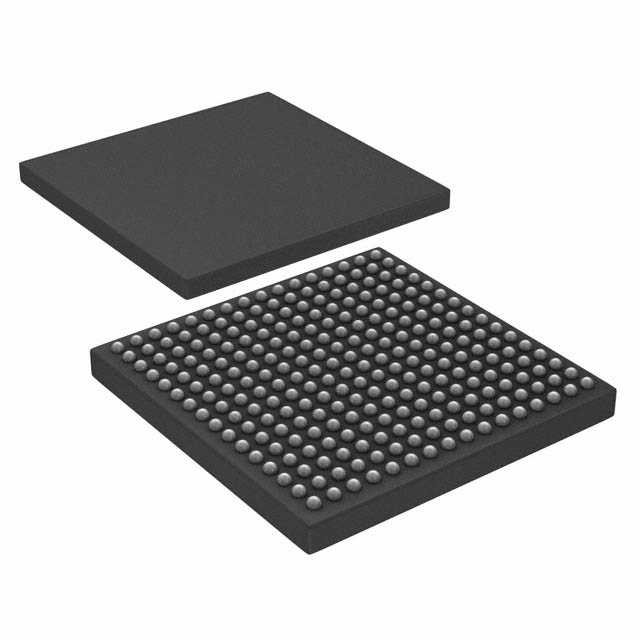
- Part No.:
- VSC8582XKS-14
- Manufacturer:
- Microchip Technology
- Category:
- Telecom
- Package:
- 256-BGA
- Datasheet:
-
 VSC8582XKS-14.pdf
- Description:
- IC TELECOM INTERFACE 256BGA
- Quantity:
- Payment:

- Shipping:

Inventory:4,435
Please send an inquiry. Send us your inquiry, and we will respond immediately.
Product details
Overview
VSC8582XKS-14 from Microsemi (now Microchip) is a dual-port 10/100/1000BASE-T Ethernet PHY IC with integrated IEEE 1588v2 precision timing, MACsec encryption, Synchronous Ethernet, VeriTime™ timestamping, and QSGMII/SGMII MAC interface. It supports Cat5 copper and 1000BASE-X/100BASE-FX fiber media, operates at 1.2V core voltage, and delivers <1.3W typical power consumption per port in active mode. It is deployed in carrier-grade Ethernet switches, time-sensitive industrial controllers, and telecom infrastructure requiring sub-100ns timestamp accuracy.
For engineers reviewing the VSC8582XKS-14 datasheet, VSC8582XKS-14 pinout, VSC8582XKS-14 application, or VSC8582XKS-14 equivalent, key selection criteria include IEEE 1588v2 one-step transparent clock support, hardware-accelerated MACsec AES-128, dual-port daisy-chainable SPI timestamping, and compliance with ITU-T G.8262 SyncE EEC Option 2.
Technical Context
The VSC8582XKS-14 implements a fully integrated PHY layer with independent SerDes for copper (1000BASE-T) and optical/fiber (1000BASE-X/100BASE-FX) media paths, plus configurable QSGMII/SGMII MAC-side interfaces. Its IEEE 1588v2 block includes hardware timestamp insertion/removal, PPS output, local time counter (LTC), and serial time-of-day interface - all synchronized to recovered media clocks or external reference inputs.
MACsec operates inline at line rate with zero latency impact, supporting 128-bit AES-GCM encryption/decryption and secure channel establishment via MKA. The device uses ActiPHY™ dynamic power management, enabling low-power link-down states while retaining full IEEE 1588 synchronization context across sleep/wake cycles.
Key Specifications
| Parameter | Value and Actual Design Meaning |
|---|---|
| Data Rate | 10/100/1000 Mbps per port - supports auto-negotiation and forced mode on copper; 1.25 Gbps on SGMII/QSGMII and 1000BASE-X links. |
| IEEE 1588 Accuracy | ±50 ns typical one-way timestamp uncertainty - enables sub-microsecond time distribution in telecom PTP networks without software correction. |
| MACsec Throughput | Full-line-rate 1 Gbps encryption/decryption - no packet buffering or latency penalty; AES-128-GCM with replay protection and secure association key management. |
| Power Consumption | 1.28 W typical (dual-port active, 1000BASE-T) - reduced to 350 mW in ActiPHY low-power state with retained 1588 sync context. |
| Synchronization | ITU-T G.8262 compliant SyncE EEC Option 2 - provides phase-aligned, jitter-cleaned clock outputs for downstream PLLs or SERDES. |
| Interface Support | QSGMII (4-lane), SGMII (1-lane), and 1000BASE-X/100BASE-FX SerDes - enables flexible MAC-to-PHY connectivity in multi-chip switch designs. |
| Operating Voltage | 1.2 V core / 2.5 V I/O / 3.3 V analog - requires separate LDOs; supports AVDD/IOVDD sequencing per datasheet Section 7.2. |
Pinout & Package
The VSC8582XKS-14 is housed in a 256-pin 17 mm × 17 mm × 1.4 mm RoHS-compliant PBGA package with 0.8 mm pitch and thermal pad. Pin assignment follows the VSC8582-11 datasheet Revision 4.2, Table 2-1 (Pin Descriptions), and supports daisy-chained SPI for multi-device timestamp coordination.
| Pin/Terminal | Circuit Role | Design Meaning |
|---|---|---|
| REFCLK_IN_P/N | Differential reference clock input | Accepts 25 MHz or 125 MHz LVDS clock for PHY timing recovery and 1588 reference; required for SyncE and precise timestamp alignment. |
| MDIO/MDC | Serial Management Interface | IEEE 802.3-compliant MDIO bus for register configuration, status readback, and interrupt handling; supports up to 32 PHY addresses. |
| QSGMII_TX[3:0]/RX[3:0] | Quad-SGMII MAC interface | 4-lane 1.25 Gbps SerDes lanes for connecting to multi-port switch MACs; supports lane reversal and polarity swap per lane. |
| SGMII_TX/SGMII_RX | Single-lane SGMII interface | Alternative MAC-side interface for single-port configurations; shares same SerDes resources as QSGMII but used exclusively. |
| PPS_OUT | Pulse-per-second output | Programmable 1 Hz output synchronized to UTC or local time counter; used for external time calibration and system-level PTP slave alignment. |
| TS_SPI_CLK/TS_SPI_MOSI/TS_SPI_MISO/TS_SPI_CS | Daisy-chain SPI timestamp interface | Enables hardware timestamp forwarding across multiple VSC8582 devices without CPU intervention; critical for multi-port boundary clock designs. |
Key Features
| Feature | Design Value |
|---|---|
| VeriTime™ Hardware Timestamping | Sub-50 ns timestamp resolution with hardware insertion at ingress/egress - eliminates software stack delay and jitter in PTP applications. |
| IntelliSec™ MACsec Acceleration | Dedicated AES-GCM engine processes encrypted frames at full 1 Gbps line rate - no packet loss or latency variation under encryption load. |
| ActiPHY™ Power Management | Three-tier power state control (normal/low-power/wake-up) retains 1588 time context during sleep - enables energy-efficient always-on timing in edge nodes. |
| SyncE EEC Option 2 Compliance | Meets ITU-T G.8262 phase noise and wander requirements for telecom-grade frequency distribution - supports migration from SONET/SDH to packet-based transport. |
| Dual-Port Daisy-Chained SPI | Single SPI master can configure and collect timestamps from up to 8 VSC8582 devices in series - simplifies PCB routing and reduces MCU GPIO count in multi-port systems. |
Applications
| 5G Fronthaul Timing Gateway | Carrier Ethernet Switch |
|---|---|
Use Scenario: Aggregating CPRI/eCPRI fronthaul traffic across multiple RU units with strict ±100 ns phase alignment to central unit. IC Role / Device Role / Timing Role: Dual-port IEEE 1588v2 boundary clock with hardware timestamping and SyncE output - synchronizes RU PHY layers to centralized time source. Use Value: Enables deterministic fronthaul latency and eliminates need for external timing modules, reducing BOM cost by $12–$18 per node. | Use Scenario: Metro aggregation switch supporting MPLS-TP OAM and Y.1731 delay measurement across 16+ ports. IC Role / Device Role / Timing Role: Line-card PHY providing per-port 1588 timestamping, MACsec encryption, and recovered clock outputs for SERDES retiming. Use Value: Delivers hardware-accelerated Y.1731 one-way/two-way delay measurements with ±120 ns accuracy - meets ITU-T G.8113.1 conformance. |
| Industrial TSN Bridge | Secure Enterprise Router |
Use Scenario: Time-Sensitive Networking bridge connecting legacy EtherCAT and PROFINET fieldbus segments to converged IP backbone. IC Role / Device Role / Timing Role: Dual-port TSN-aware PHY with IEEE 802.1AS-2020 gPTP support, frame preemption, and hardware timestamping. Use Value: Achieves sub-250 ns time synchronization across heterogeneous industrial protocols - enables deterministic motion control loop closure. | Use Scenario: Next-generation enterprise router requiring MAC-layer encryption for WAN-facing Gigabit Ethernet interfaces. IC Role / Device Role / Timing Role: Secure PHY performing inline MACsec encryption/decryption with zero-latency pipeline and MKA key negotiation offload. Use Value: Provides FIPS 140-2 Level 2–compliant data confidentiality without impacting forwarding performance - eliminates need for external crypto ASICs. |
Equivalent & Alternatives
The following parts are listed as comparable options for similar dual-port Gigabit Ethernet PHY applications.
| Alternative Part | Technical Difference | Application Difference | Selection Advice |
|---|---|---|---|
| Marvell Alaska 88E1512 | Lacks integrated IEEE 1588v2 hardware timestamping and MACsec acceleration; supports only software-assisted PTP and external crypto. | Suitable for cost-sensitive enterprise switches where timing accuracy >1 µs is acceptable and encryption is handled upstream. | Select when budget constraints outweigh need for hardware timestamping or line-rate MACsec. |
| Intel Ethernet PHY I210-IT | Single-port only; no QSGMII support; limited 1588 features (no one-step TC, no PPS output, no LTC). | Targeted at embedded x86 platforms with PCIe MAC interface; not suitable for multi-port carrier or TSN deployments. | Choose only for compact single-port designs requiring industrial temperature range and PCIe host integration. |
Compared with the Marvell 88E1512 and Intel I210-IT, the VSC8582XKS-14 uniquely combines dual-port 1588v2 boundary clock functionality, hardware MACsec, and daisy-chainable SPI timestamping - making it the only solution capable of meeting ITU-T G.8275.1 profile A requirements in a single chip.
Availability
VSC8582XKS-14 is available at Aetrix Electronics and suitable for 5G fronthaul gateways, carrier Ethernet switches, and industrial TSN bridges requiring stable component supply, long-term lifecycle support, and traceable sourcing from authorized channels.
Supply support for VSC8582XKS-14 includes scheduled delivery planning, volume procurement assistance, BOM continuity management, traceable sourcing, and lifecycle availability coordination for OEM customers, industrial embedded developers, connected-device designers, and electronics production programs.
Manufacturer
Microsemi, now part of Microchip Technology Inc., is a leader in high-reliability semiconductor solutions for aerospace, defense, communications, and industrial markets.
The VSC8582XKS-14 belongs to Microsemi's VeriTime™ Ethernet PHY product line, engineered specifically for carrier-grade timing-critical infrastructure requiring IEEE 1588v2, SyncE, and MACsec in a single device.
FAQ
What is the primary function of the VSC8582XKS-14 in a network system?
The VSC8582XKS-14 serves as a dual-port Gigabit Ethernet physical layer transceiver with integrated IEEE 1588v2 precision timing, MACsec encryption, and Synchronous Ethernet capabilities. It bridges MAC-layer interfaces (QSGMII/SGMII) to copper (1000BASE-T) or fiber (1000BASE-X/100BASE-FX) media while delivering hardware-accelerated timestamping and line-rate security. In systems like 5G fronthaul gateways, the VSC8582XKS-14 acts as a boundary clock ensuring sub-100 ns time alignment across distributed radio units.
Does the VSC8582XKS-14 support IEEE 1588v2 one-step transparent clock operation?
Yes, the VSC8582XKS-14 fully supports IEEE 1588v2 one-step end-to-end transparent clock (E2E TC) operation as defined in Section 3.13.8 of the datasheet. It performs hardware timestamp modification on PTP event messages in real time, eliminating software-induced delays. The VSC8582XKS-14 also supports one-step boundary clock (BC), ordinary clock (OC), and peer-to-peer TC modes - all configurable via its extended register set. This capability makes the VSC8582XKS-14 suitable for ITU-T G.8275.1 profile A-compliant timing architectures.
How does MACsec implementation in the VSC8582XKS-14 differ from software-based encryption?
The VSC8582XKS-14 implements MACsec using a dedicated hardware AES-GCM engine that processes frames at full 1 Gbps line rate with zero added latency or packet loss. Unlike software-based MACsec, which consumes CPU cycles and introduces variable jitter, the VSC8582XKS-14 performs encryption/decryption inline within the PHY datapath. It supports secure channel establishment via MKA, replay protection, and 128-bit key management - all without host processor involvement. This ensures deterministic performance in time-critical applications such as financial trading networks or secure industrial control.
What reference clock configurations does the VSC8582XKS-14 support for SyncE compliance?
The VSC8582XKS-14 supports both single-ended and differential REFCLK inputs (25 MHz or 125 MHz) for SyncE operation, as specified in Section 3.8 of the datasheet. It meets ITU-T G.8262 EEC Option 2 requirements for phase noise and wander, generating jitter-cleaned clock outputs (REFCLK_OUT, TX_CLK, RX_CLK) locked to the recovered media clock or external reference. The device allows dynamic switching between reference sources and supports holdover mode during reference loss - essential for resilient telecom timing distribution. These features ensure the VSC8582XKS-14 maintains SyncE compliance across temperature and voltage variations.
Can the VSC8582XKS-14 operate in a daisy-chained SPI topology for multi-device timestamp coordination?
Yes, the VSC8582XKS-14 includes dedicated TS_SPI_CLK, TS_SPI_MOSI, TS_SPI_MISO, and TS_SPI_CS pins enabling true daisy-chained SPI for timestamp forwarding across up to eight devices. As described in Section 3.14, this architecture allows a single microcontroller to configure and collect hardware timestamps from multiple VSC8582XKS-14 instances without additional level-shifting or multiplexing. Each device forwards timestamp data through its MISO pin to the next in chain, preserving nanosecond-level correlation - a critical capability for multi-port boundary clocks in carrier Ethernet switches.
VSC8582XKS-14 Specifications
- Product attributes
- Attribute value
- Manufacturer:
- Microchip Technology
- Series:
- -
- Package/Case:
- 256-BGA
- Packaging:
- Tray
- Product Status:
- Active
- Function:
- Ethernet
- Interface:
- GMII, SerDes, SPI, TBI
- Number of Circuits:
- 1
- Voltage - Supply:
- 1V
- Current - Supply:
- -
- Power (Watts):
- -
- Operating Temperature:
- -40°C ~ 125°C
- Grade:
- -
- Qualification:
- -
- Mounting Type:
- Surface Mount
- Supplier Device Package:
- 256-PBGA (17x17)
VSC8582XKS-14 FAQ
1.How can I place an order for VSC8582XKS-14 through Aetrix?
Please submit a Request for Quotation (RFQ) for VSC8582XKS-14 on Aetrix. Our sales agent will provide a competitive quotation and guide you through the order confirmation once you accept the terms.
2.Are the price and stock information for VSC8582XKS-14 reliable?
The price and inventory of VSC8582XKS-14 are updated periodically and may fluctuate due to market conditions. Stock and pricing data are typically refreshed every 24 hours. Quotation validity for VSC8582XKS-14 is usually 5 days.
3.What payment methods are accepted for VSC8582XKS-14?
We accept Wire Transfer, PayPal, Credit Card, Western Union, MoneyGram, and Escrow for VSC8582XKS-14 transactions.
Note: Certain payment methods may incur a processing fee.
4.How is shipping managed for VSC8582XKS-14?
VSC8582XKS-14 orders can be shipped via leading logistics carriers, including DHL, UPS, FedEx, TNT, or Registered Mail.
Once your VSC8582XKS-14 order is processed, you will receive an email with the shipment details and tracking number.
Note: Tracking information may take up to 24 hours to appear. Express delivery typically takes 3–5 business days.
5.How can I obtain technical support or documentation for VSC8582XKS-14?
For technical support, including VSC8582XKS-14 datasheets, pinout diagrams, or application guidance, please contact our engineering support team. They can provide detailed documentation and assistance for your VSC8582XKS-14 requirements.
6.How does Aetrix verify that VSC8582XKS-14 is sourced from the original manufacturer or authorized distributors?
All VSC8582XKS-14 products on Aetrix are procured from qualified distributors and authorized channels. Our dedicated quality assurance team conducts strict verification, including traceability checks and, if necessary, third-party testing. This ensures that VSC8582XKS-14 meets industry standards.
7.What is the process for return or replacement of VSC8582XKS-14?
All VSC8582XKS-14 units undergo pre-shipment inspection (PSI). If there is an issue with VSC8582XKS-14, returns or replacements are accepted under the following conditions:
1.Quantity discrepancies, incorrect items, or visible external defects (such as breakage or corrosion), acknowledged by Aetrix.
2.The issue is reported within 90 days of delivery.
3.The VSC8582XKS-14 part is unused and in its original packaging.
Return procedure for VSC8582XKS-14:
1.Submit a request within 90 days.
2.Obtain a Return Material Authorization (RMA) from Aetrix.
VSC8582XKS-14 Tags

-
LMC567CMX/NOPB
Texas Instruments
-
LM567CMX/NOPB
Texas Instruments
-
LM567CM/NOPB
Texas Instruments
-
VSC8531XMW-02
Microchip Technology
-
VSC8531XMW-05
Microchip Technology

-
GPY115C0VI
MaxLinear, Inc.
-
SI32185-A-FMR
Skyworks Solutions Inc.
-
VSC8541XMV-05
Microchip Technology
-
SI32178-B-FM1R
Skyworks Solutions Inc.
-
GPY215C0VI
MaxLinear, Inc.
-
CPC7514ZTR
Littelfuse Inc.
-
VSC8502XML-03
Microchip Technology
Tech Hub

TTL and CMOS logic families differ in thresholds, loading, output drive, power and timing. This engineering guide compares 74HC and 74HCT, calculates noise margins and checks 3.3 V/5 V compatibility.

A practical engineering guide to 3.3V and 5V logic compatibility, input thresholds, resistor dividers, translator ICs, MOSFET level shifting, I2C pull-ups, timing limits and power-sequencing risks.

The 74HC595 uses push-pull logic outputs, while the TPIC6B595 uses 50 V open-drain DMOS sinks for higher-power loads. This guide compares timing, current limits, 3.3 V interfacing, load wiring, thermal…

The 74HC595 converts serial data into eight stable parallel outputs. This guide covers pin functions, shift and storage timing, OE and MR behavior, drive-current limits, cascading, voltage compatibilit…

A technical comparison of level-sensitive latches and edge-triggered flip-flops, covering timing windows, setup and hold limits, master–slave operation, time borrowing, race-through, HDL inference and…

A D latch stores one bit while Enable controls when data can pass. This reference covers gate-level operation, truth tables, transparency, setup and hold timing, LE versus OE, common ICs and practical …

An SR latch stores one bit through cross-coupled feedback. This engineering reference covers NOR and NAND implementations, truth tables, forbidden-state recovery, gated operation, switch debouncing, fa…

Latch circuits retain one bit through feedback. This technical reference covers SR and D latches, truth tables, transparency, timing limits, latch-versus-flip-flop behavior, applications and common log…

An engineering guide to LED driver operation, constant-current and constant-voltage outputs, linear and switching topologies, dimming, IC selection, calculations, replacement compatibility, and fault c…

Operational amplifier guide covering op amp basics, feedback, ideal vs real op amps, common configurations, buffer circuits, offset, bias current, gain-bandwidth, slew rate, rail-to-rail limits and sel…


