
 My Inquiry
 My Account


Renesas X9C102PIZ
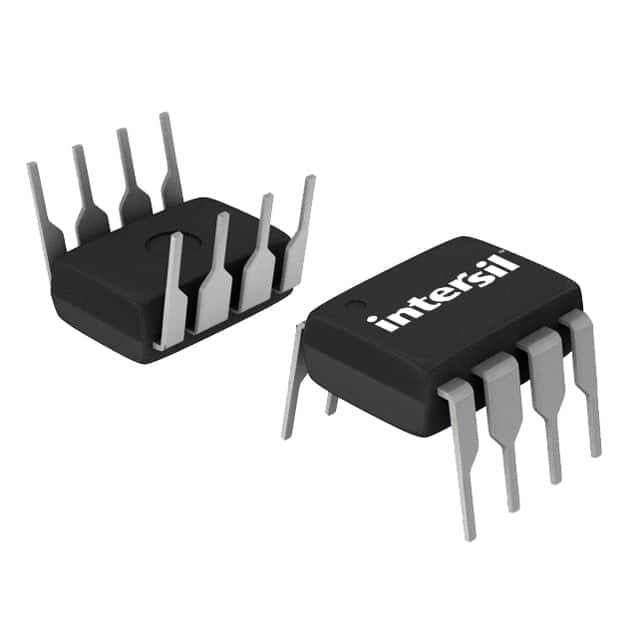
- Part No.:
- X9C102PIZ
- Manufacturer:
- Renesas
- Category:
- Digital Potentiometers
- Package:
- 8-DIP (0.300", 7.62mm)
- Datasheet:
-
 X9C102PIZ.pdf
- Description:
- IC DGTL POT 1KOHM 100TAP 8DIP
- Quantity:
- Payment:

- Shipping:

Inventory:3,235
Please send an inquiry. Send us your inquiry, and we will respond immediately.
Product details
Overview
X9C102PIZ from Renesas Electronics is a digitally controlled potentiometer (XDCP™) with 1 kΩ end-to-end resistance, 100 wiper tap points, ±20% resistance tolerance, and nonvolatile wiper position storage. It operates from a single 5 V supply, supports -40°C to +85°C industrial temperature range, and functions as a three-terminal voltage divider or two-terminal variable resistor in analog signal conditioning circuits.
For engineers reviewing the X9C102PIZ datasheet, X9C102PIZ pinout, X9C102PIZ application, or X9C102PIZ equivalent, this page delivers verified specifications, validated pin functions, confirmed industrial-temperature operation, and real-world use cases for precision trimming, offset adjustment, and programmable gain control without mechanical wear.
Technical Context
The X9C102PIZ implements a 99-element resistor array with make-before-break wiper switching, controlled via a three-wire CS/U/D/INC interface. Its 7-bit up/down counter drives a decoder selecting one of 100 tap points, and stores position in nonvolatile memory upon CS↑ with INC HIGH.
It features on-chip charge pump enabling ±5 V terminal voltage swing with only a 5 V supply, 40 Ω typical wiper resistance, and temperature-compensated resistor array with ±600 ppm/°C RTOTAL drift. Power-up recalls last stored wiper position within 500 µs.
Key Specifications
| Parameter | Value and Actual Design Meaning |
|---|---|
| End-to-End Resistance | 1 kΩ ±20% - defines full-scale analog range and load interaction in voltage divider configurations |
| Wiper Resolution | 100 tap points (1% step size) - enables fine-grained digital trimming with 9.9 Ω per step |
| Supply Voltage | 5 V ±10% - single-rail compatibility with standard logic and microcontroller I/O |
| Operating Temperature | -40°C to +85°C - qualified for industrial environments without derating |
| Nonvolatile Storage | 100-year data retention, 100,000 write cycles - eliminates need for external EEPROM or startup calibration |
| Terminal Voltage Range | ±5 V on VH/RH and VL/RL - supports bipolar signal conditioning without level-shifting circuitry |
| Wiper Resistance | 40 Ω typical - minimizes insertion error in low-impedance feedback paths |
Pinout & Package
Package: 8-lead PDIP (Plastic Dual-In-Line Package), RoHS-compliant, through-hole mount, MDP0031 outline, -40°C to +85°C industrial grade.
| Pin/Terminal | Circuit Role | Design Meaning |
|---|---|---|
| 1 INC | Increment clock input | Negative-edge-triggered control line; toggling moves wiper one tap in U/D direction |
| 2 U/D | Up/Down direction control | Logic level sets wiper movement direction: HIGH = increment, LOW = decrement |
| 3 VH/RH | High-side fixed terminal | One end of resistor array; accepts -5 V to +5 V; polarity relative to wiper motion, not voltage potential |
| 4 VSS | Ground reference | System ground return for logic and analog sections; must be connected before power-up |
| 5 VW/RW | Wiper output terminal | Movable contact point; series resistance ≤100 Ω; settles within 100 µs after INC edge |
| 6 VL/RL | Low-side fixed terminal | Opposite end of resistor array; symmetric voltage rating and functional role to VH/RH |
| 7 CS | Chip select | Active-low enable; HIGH with INC HIGH initiates nonvolatile store; HIGH with INC LOW enters standby (750 µA) |
| 8 VCC | Power supply | +5 V ±10% input; powers internal logic, charge pump, and resistor array biasing |
Key Features
| Feature | Design Value |
|---|---|
| Solid-state construction | No mechanical wear, infinite resolution life, immune to vibration and dust-ideal for sealed or high-reliability enclosures |
| Three-wire serial interface | Minimal GPIO usage (CS/U/D/INC); no clock or data lines required-reduces MCU pin count and firmware overhead |
| Nonvolatile wiper storage | Automatic recall at power-up eliminates boot-time initialization code and ensures repeatable startup behavior |
| Charge pump architecture | Enables ±5 V analog signal swing across terminals using only +5 V supply-removes need for dual-rail supplies |
| Temperature-compensated array | ±600 ppm/°C RTOTAL drift-maintains stable ratio accuracy over industrial temperature range without external compensation |
Applications
| Audio Signal Level Control | DC Offset Calibration |
|---|---|
Use Scenario: Programmable volume control in professional audio mixers where manual pots are prone to wear and calibration drift. IC Role / Device Role / Timing Role: Three-terminal voltage divider setting gain attenuation in op-amp feedback path. Use Value: 100-step resolution enables precise dB-per-step control; nonvolatile storage preserves user-set levels across power cycles. |
Use Scenario: Real-time correction of sensor amplifier DC offset in industrial temperature transmitters operating from -40°C to +85°C. IC Role / Device Role / Timing Role: Two-terminal variable resistor in summing junction to inject compensating current. Use Value: ±600 ppm/°C tempco ensures <0.1% offset drift over full range; 1 kΩ value matches typical op-amp input impedance requirements. |
| Programmable Gain Amplifier | Power Supply Feedback Trim |
Use Scenario: Digitally adjustable gain stage in automated test equipment requiring factory-trimmed, field-updatable transfer functions. IC Role / Device Role / Timing Role: Variable resistor in noninverting amplifier feedback network (Rf configuration). Use Value: 1 kΩ nominal resistance provides optimal noise/gain trade-off; 40 Ω wiper resistance avoids gain error >0.5% at 10× gain. |
Use Scenario: Fine-tuning output voltage of isolated DC-DC converters in telecom power modules where ±1% initial accuracy is insufficient. IC Role / Device Role / Timing Role: Two-terminal variable resistor replacing fixed resistor in TL431 or LM317 feedback divider. Use Value: ±20% end-to-end tolerance accommodates manufacturing spread; nonvolatile store retains final calibrated value post-burn-in. |
Equivalent & Alternatives
The following parts are listed as comparable options for similar digitally controlled potentiometer applications.
| Alternative Part | Technical Difference | Application Difference | Selection Advice |
|---|---|---|---|
| AD5241BRMZ10 | 10 kΩ end-to-end resistance, I²C interface, 64-tap resolution, 200 kΩ wiper resistance | Requires I²C host; higher wiper resistance limits use in low-impedance feedback loops | Select when I²C bus availability and higher resistance range outweigh resolution and wiper R trade-offs |
| MCP41010-I/P | 10 kΩ end-to-end resistance, SPI interface, 257-tap resolution, 120 Ω wiper resistance, 5.5 V max supply | Higher resolution but incompatible 3-wire protocol; no ±5 V terminal swing capability | Prefer for SPI-based systems needing finer steps; avoid where bipolar signal handling or 5 V-only supply is mandatory |
Compared with AD5241BRMZ10 and MCP41010-I/P, the X9C102PIZ uniquely combines 1 kΩ resistance, true ±5 V analog operation from 5 V supply, and simple 3-wire control-making it optimal for cost-sensitive, space-constrained industrial trim applications where minimal MCU GPIO and bipolar signal support are essential.
Availability
X9C102PIZ is available at Aetrix Electronics and suitable for industrial sensor calibration, programmable power supply feedback, and audio level control requiring stable component supply, long-term obsolescence management, and RoHS-compliant through-hole packaging.
Supply support for X9C102PIZ includes scheduled delivery planning, volume procurement assistance, BOM continuity management, traceable sourcing, and lifecycle availability coordination for OEM customers, industrial embedded developers, connected-device designers, and electronics production programs.
Manufacturer
Renesas Electronics is a global semiconductor leader delivering high-performance, reliable microcontrollers, analog, and power solutions for industrial, automotive, and infrastructure markets.
The X9C102PIZ belongs to Renesas' XDCP™ family of digitally controlled potentiometers, designed specifically for replacing mechanical trimmers in industrial-grade analog signal conditioning where reliability, nonvolatility, and temperature stability are critical.
FAQ
What is the maximum voltage that can be applied across the VH/RH and VL/RL terminals of the X9C102PIZ?
The X9C102PIZ allows ±5 V on VH/RH and VL/RL terminals referenced to VSS, with an absolute maximum ΔV of 4 V between them. This specification is strictly defined for the X9C102 variant per the FN8222 datasheet Absolute Maximum Ratings table. Exceeding ±5 V risks permanent damage to the internal resistor array and switches. The X9C102PIZ achieves this bipolar range using an internal charge pump powered solely by the 5 V VCC supply.
Does the X9C102PIZ retain its wiper position after power cycling?
Yes, the X9C102PIZ automatically recalls its last stored wiper position from nonvolatile memory upon power-up. This occurs once VCC reaches its final value, typically within 500 µs. The position is stored by asserting CS HIGH while INC is also HIGH-a hardware-controlled operation requiring no software intervention. Data retention is rated for 100 years, and endurance is specified at 100,000 store cycles per bit.
What is the wiper resistance of the X9C102PIZ and how does it affect circuit performance?
The X9C102PIZ has a typical wiper resistance of 40 Ω, with a maximum of 100 Ω. This series resistance directly impacts accuracy in low-impedance applications-for example, introducing ~1% gain error in a 1 kΩ feedback network at unity gain. It also contributes thermal noise and limits maximum wiper current to ±4.4 mA. Designers must account for this resistance when calculating total system error budgets, especially in precision instrumentation amplifiers.
Can the X9C102PIZ be used in a two-terminal variable resistor configuration?
Yes, the X9C102PIZ supports two-terminal operation by connecting either VH/RH or VL/RL to VW/RW and using the remaining fixed terminal with the wiper as a programmable resistor. In this mode, the effective resistance ranges from near 0 Ω (wiper at shorted terminal) to 1 kΩ (wiper at opposite end). The datasheet explicitly confirms this use case on page 1, noting suitability for "control to signal processing to parameter adjustment" including two-terminal variable resistor applications.
What package type and temperature grade does the X9C102PIZ carry?
The X9C102PIZ uses an 8-lead PDIP (Plastic Dual-In-Line Package) per ordering information in the FN8222 datasheet, with package drawing MDP0031. It is rated for the industrial temperature range of -40°C to +85°C, as indicated by the "I" suffix in the part number (X9C102PIZ). This grade is validated per the Recommended Operating Conditions table on page 4 and qualifies the device for deployment in harsh ambient environments without derating.
X9C102PIZ Specifications
- Product attributes
- Attribute value
- Manufacturer:
- Renesas
- Series:
- XDCP™
- Package/Case:
- 8-DIP (0.300", 7.62mm)
- Packaging:
- Tube
- Product Status:
- Obsolete
- Programmable:
- Not Verified
- Taper:
- Linear
- Configuration:
- Potentiometer
- Number of Circuits:
- 1
- Number of Taps:
- 100
- Resistance (Ohms):
- 1k
- Interface:
- Up/Down (U/D, INC, CS)
- Memory Type:
- Non-Volatile
- Voltage - Supply:
- 5V
- Features:
- -
- Tolerance:
- ±20%
- Temperature Coefficient (Typ):
- ±600ppm/°C
- Mounting Type:
- Through Hole
- Grade:
- -
- Qualification:
- -
- Supplier Device Package:
- 8-PDIP
- Operating Temperature:
- -40°C ~ 85°C
- Resistance - Wiper (Ohms) (Typ):
- 40
X9C102PIZ FAQ
1.How can I place an order for X9C102PIZ through Aetrix?
Please submit a Request for Quotation (RFQ) for X9C102PIZ on Aetrix. Our sales agent will provide a competitive quotation and guide you through the order confirmation once you accept the terms.
2.Are the price and stock information for X9C102PIZ reliable?
The price and inventory of X9C102PIZ are updated periodically and may fluctuate due to market conditions. Stock and pricing data are typically refreshed every 24 hours. Quotation validity for X9C102PIZ is usually 5 days.
3.What payment methods are accepted for X9C102PIZ?
We accept Wire Transfer, PayPal, Credit Card, Western Union, MoneyGram, and Escrow for X9C102PIZ transactions.
Note: Certain payment methods may incur a processing fee.
4.How is shipping managed for X9C102PIZ?
X9C102PIZ orders can be shipped via leading logistics carriers, including DHL, UPS, FedEx, TNT, or Registered Mail.
Once your X9C102PIZ order is processed, you will receive an email with the shipment details and tracking number.
Note: Tracking information may take up to 24 hours to appear. Express delivery typically takes 3–5 business days.
5.How can I obtain technical support or documentation for X9C102PIZ?
For technical support, including X9C102PIZ datasheets, pinout diagrams, or application guidance, please contact our engineering support team. They can provide detailed documentation and assistance for your X9C102PIZ requirements.
6.How does Aetrix verify that X9C102PIZ is sourced from the original manufacturer or authorized distributors?
All X9C102PIZ products on Aetrix are procured from qualified distributors and authorized channels. Our dedicated quality assurance team conducts strict verification, including traceability checks and, if necessary, third-party testing. This ensures that X9C102PIZ meets industry standards.
7.What is the process for return or replacement of X9C102PIZ?
All X9C102PIZ units undergo pre-shipment inspection (PSI). If there is an issue with X9C102PIZ, returns or replacements are accepted under the following conditions:
1.Quantity discrepancies, incorrect items, or visible external defects (such as breakage or corrosion), acknowledged by Aetrix.
2.The issue is reported within 90 days of delivery.
3.The X9C102PIZ part is unused and in its original packaging.
Return procedure for X9C102PIZ:
1.Submit a request within 90 days.
2.Obtain a Return Material Authorization (RMA) from Aetrix.
X9C102PIZ Tags
-
MCP4018T-103E/LT
Microchip Technology
-
MCP4018T-503E/LT
Microchip Technology

-
MCP4011T-103E/SN
Microchip Technology
-
MCP4018T-104E/LT
Microchip Technology
-
MCP4017T-503E/LT
Microchip Technology
-
MCP4018T-502E/LT
Microchip Technology
-
MCP4017T-103E/LT
Microchip Technology
-
MCP4531T-103E/MF
Microchip Technology
-
MCP4021T-202E/SN
Microchip Technology

-
MCP4023T-103E/CH
Microchip Technology
-
MCP4022T-503E/CH
Microchip Technology
-
MCP4551T-502E/MS
Microchip Technology
Tech Hub

TTL and CMOS logic families differ in thresholds, loading, output drive, power and timing. This engineering guide compares 74HC and 74HCT, calculates noise margins and checks 3.3 V/5 V compatibility.

A practical engineering guide to 3.3V and 5V logic compatibility, input thresholds, resistor dividers, translator ICs, MOSFET level shifting, I2C pull-ups, timing limits and power-sequencing risks.

The 74HC595 uses push-pull logic outputs, while the TPIC6B595 uses 50 V open-drain DMOS sinks for higher-power loads. This guide compares timing, current limits, 3.3 V interfacing, load wiring, thermal…

The 74HC595 converts serial data into eight stable parallel outputs. This guide covers pin functions, shift and storage timing, OE and MR behavior, drive-current limits, cascading, voltage compatibilit…

A technical comparison of level-sensitive latches and edge-triggered flip-flops, covering timing windows, setup and hold limits, master–slave operation, time borrowing, race-through, HDL inference and…

A D latch stores one bit while Enable controls when data can pass. This reference covers gate-level operation, truth tables, transparency, setup and hold timing, LE versus OE, common ICs and practical …

An SR latch stores one bit through cross-coupled feedback. This engineering reference covers NOR and NAND implementations, truth tables, forbidden-state recovery, gated operation, switch debouncing, fa…

Latch circuits retain one bit through feedback. This technical reference covers SR and D latches, truth tables, transparency, timing limits, latch-versus-flip-flop behavior, applications and common log…

An engineering guide to LED driver operation, constant-current and constant-voltage outputs, linear and switching topologies, dimming, IC selection, calculations, replacement compatibility, and fault c…

Operational amplifier guide covering op amp basics, feedback, ideal vs real op amps, common configurations, buffer circuits, offset, bias current, gain-bandwidth, slew rate, rail-to-rail limits and sel…


