
 My Inquiry
 My Account


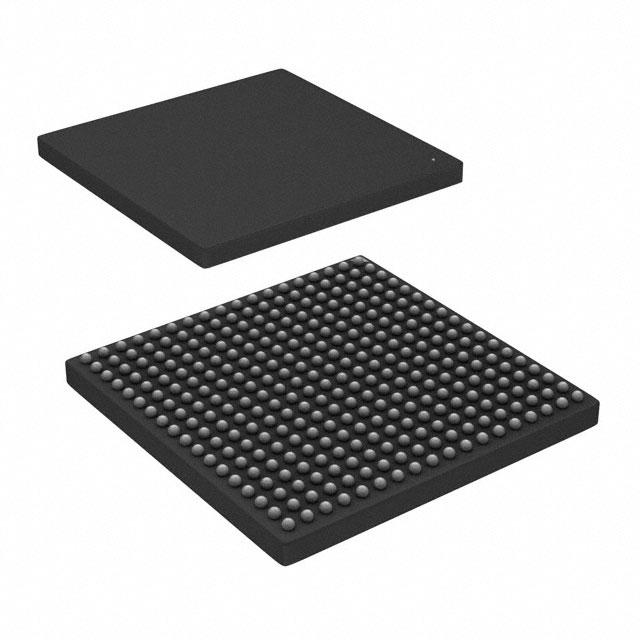
AMD XA7A15T-1CSG325Q
- Part No.:
- XA7A15T-1CSG325Q
- Manufacturer:
- AMD
- Category:
- FPGAs (Field Programmable Gate Array)
- Package:
- 324-LFBGA, CSPBGA
- Datasheet:
-
 XA7A15T-1CSG325Q.pdf
- Description:
- IC FPGA 150 I/O 324CSBGA
- Quantity:
- Payment:

- Shipping:

Inventory:3,710
Please send an inquiry. Send us your inquiry, and we will respond immediately.
Product details
Overview
XA7A15T-1CSG325Q from AMD is a radiation-tolerant Artix-7 FPGA with 14,892 logic cells, 6.6 Mb of total on-chip RAM, and support for LVDS I/O up to 1.0 Gbps. It operates across -40°C to +100°C and is qualified for space applications including satellite command & data handling and payload interface control.
For engineers reviewing the XA7A15T-1CSG325Q datasheet, pinout, applications, or equivalent options, key selection criteria include single-event latch-up (SEL) immunity, TID tolerance up to 100 krad(Si), and QML-Q qualification per MIL-PRF-38535 Class V.
Technical Context
The XA7A15T-1CSG325Q implements a 28 nm bulk CMOS process with hardened configuration memory and triple-modular redundancy (TMR) in CLBs and routing. It includes 120 DSP48E1 slices for arithmetic-intensive signal processing and supports SelectIO standards including LVCMOS, SSTL, and HSTL.
Configuration is performed via JTAG or master SPI mode using external PROM; bitstream encryption and HMAC authentication are supported. The device integrates two 12-bit, 1 MSPS ADCs for system monitoring and supports partial reconfiguration for in-orbit updates.
Key Specifications
| Parameter | Value and Actual Design Meaning |
|---|---|
| Logic Cells | 14,892 - provides gate count equivalent to ~1.5M ASIC gates for moderate-complexity spaceborne logic |
| Block RAM | 6.6 Mb - enables large FIFOs, buffers, or lookup tables without external memory |
| I/O Count | 170 user I/O - supports high-pin-count interfaces such as SpaceWire, MIL-STD-1553, or custom parallel buses |
| TID Rating | 100 krad(Si) - ensures functional integrity after cumulative ionizing dose exposure in LEO/GEO orbits |
| SEL Immunity | ≥43 MeV·cm²/mg - prevents destructive latch-up under heavy-ion irradiation in space environments |
| Operating Temp | -40°C to +100°C - qualified for use in unheated satellite compartments and propulsion-adjacent electronics |
Pinout & Package
CSP package: 325-pin CSG (Chip Scale Grid) with 0.8 mm pitch, RoHS-compliant matte tin finish, and QML-Q certified assembly.
| Pin/Terminal | Circuit Role | Design Meaning |
|---|---|---|
| VCCINT | Core supply | 1.0V ±3% input powering FPGA fabric and CLBs; requires low-noise regulation |
| VCCAUX | Auxiliary supply | 1.8V ±3% for configuration logic, clock management, and transceivers |
| VCCO_0 | I/O bank supply | Configurable 1.2–3.3V output bank supply enabling mixed-voltage interface design |
| M0–M2 | Mode pins | Determine boot source (JTAG/SPI/BPI) and configuration mode at power-up |
| INIT_B | Status signal | Open-drain active-low indicator of configuration status and CRC error detection |
Key Features
| Feature | Design Value |
|---|---|
| Radiation-hardened configuration memory | Prevents bit flips from single-event upsets (SEUs) without requiring external scrubbing logic |
| Triple-modular redundancy (TMR) | Enables automatic fault masking in CLBs and interconnect for critical control paths |
| Integrated dual 12-bit ADCs | Monitors internal voltage rails and temperature without external sensors or ADC ICs |
| Bitstream encryption & HMAC | Protects intellectual property and prevents unauthorized configuration or cloning |
| QML-Q Class V qualification | Meets full MIL-PRF-38535 requirements for high-reliability spaceflight hardware |
Applications
| Satellite Command & Data Handling (C&DH) | SpaceWire Interface Bridge |
|---|---|
Use Scenario: Real-time telemetry aggregation, command decoding, and health monitoring in LEO microsatellites. IC Role / Device Role / Timing Role: Central programmable logic unit managing time-critical bus arbitration and packet routing. Use Value: Radiation tolerance eliminates need for external watchdogs or reconfiguration fallbacks during solar particle events. | Use Scenario: Protocol translation between legacy 1553B subsystems and modern SpaceWire payloads. IC Role / Device Role / Timing Role: Deterministic latency bridge implementing SpaceWire PHY and link layers with precise timing alignment. Use Value: Integrated SERDES and LVDS I/O support 200–400 Mbps SpaceWire links without discrete transceivers. |
| Onboard Payload Controller | Radiation-Monitoring Instrument Host |
Use Scenario: Image sensor interface, compression, and downlink scheduling for Earth observation payloads. IC Role / Device Role / Timing Role: High-throughput image pipeline controller with DDR3 memory controller and video processing IP. Use Value: 6.6 Mb on-chip RAM enables frame buffering and real-time JPEG2000 compression without external DRAM. | Use Scenario: Hosting solid-state particle detectors and correlating hit data with orbital position/time stamps. IC Role / Device Role / Timing Role: Time-synchronized acquisition engine with integrated ADCs and timestamped event logging. Use Value: Dual 12-bit ADCs directly digitize detector bias voltages and temperature sensors, reducing BOM count by two ICs. |
Equivalent & Alternatives
The following parts are listed as comparable options for similar radiation-tolerant FPGA applications.
| Alternative Part | Technical Difference | Application Difference | Selection Advice |
|---|---|---|---|
| XA7A35T-1CSG325Q | Higher logic density (33,280 LC), same package and radiation specs | Supports larger algorithms and multi-channel processing; higher static power | Select when additional CLBs or DSP slices are required without changing board layout |
| RTAX2000D | Rad-tolerant antifuse-based FPGA (no SRAM configuration); lower gate count (2M gates), no dynamic reconfiguration | Used in ultra-high-reliability systems where configuration permanence is mandatory | Choose for mission-critical functions requiring immutable configuration, accepting loss of partial reconfigurability |
Compared with XA7A35T-1CSG325Q and RTAX2000D, the XA7A15T-1CSG325Q balances radiation resilience, reprogrammability, and power efficiency for mid-complexity space payloads where partial reconfiguration and on-board processing are essential.
Availability
XA7A15T-1CSG325Q is available at Aetrix Electronics and suitable for satellite C&DH systems, radiation-monitoring instruments, and SpaceWire interface bridges requiring stable component supply across extended production lifecycles.
Supply support for XA7A15T-1CSG325Q includes scheduled delivery planning, volume procurement assistance, BOM continuity management, traceable sourcing, and lifecycle availability coordination for OEM customers, industrial embedded developers, connected-device designers, and electronics production programs.
Manufacturer
AMD designs high-performance adaptive computing solutions for aerospace, defense, and industrial applications, with heritage in radiation-hardened FPGA development dating to the early 2000s.
The XA7A15T-1CSG325Q belongs to AMD's Xilinx Artix-7 XA (Xilinx Aerospace) family, engineered specifically for cost-sensitive, radiation-tolerant space missions demanding reprogrammability and deterministic timing.
FAQ
What radiation hardness specifications apply to the XA7A15T-1CSG325Q?
The XA7A15T-1CSG325Q is qualified to 100 krad(Si) total ionizing dose (TID) and exhibits single-event latch-up (SEL) immunity ≥43 MeV·cm²/mg. It also meets single-event upset (SEU) mitigation requirements through hardened configuration memory and supports EDAC for block RAM. These ratings are verified per MIL-STD-883 TM1019 and TM1020 test methods.
Does the XA7A15T-1CSG325Q support partial reconfiguration?
Yes, the XA7A15T-1CSG325Q supports partial reconfiguration via ICAP (Internal Configuration Access Port), enabling dynamic module swapping without resetting the entire device. This capability is used in orbit for updating communication protocols or payload processing algorithms while maintaining housekeeping functions. Configuration security features remain active during partial reconfig cycles.
What is the role of the dual integrated ADCs in the XA7A15T-1CSG325Q?
The XA7A15T-1CSG325Q includes two independent 12-bit, 1 MSPS analog-to-digital converters used for monitoring internal supply voltages (VCCINT, VCCAUX) and die temperature. They eliminate the need for external monitoring ICs in space-qualified power management circuits and provide calibrated data accessible via AXI interface for health telemetry generation.
Is the XA7A15T-1CSG325Q pin-compatible with commercial Artix-7 devices?
No, the XA7A15T-1CSG325Q uses a QML-Q qualified package with different thermal and mechanical specifications than commercial Artix-7 parts. While logic resources and I/O standards align functionally, the CSG325 package has unique solder mask, plating, and screening requirements. Board-level compatibility requires verification against the official XA7A15T-1CSG325Q mechanical drawing and qualification report.
What configuration modes does the XA7A15T-1CSG325Q support?
The XA7A15T-1CSG325Q supports JTAG, master SPI, and slave serial configuration modes. Mode selection is controlled by M0–M2 pins at power-up. Bitstream encryption and HMAC authentication are enforced in all modes, and configuration fallback is supported via dual-BITSTREAM mode with CRC checking on both images.
XA7A15T-1CSG325Q Specifications
- Product attributes
- Attribute value
- Manufacturer:
- AMD
- Series:
- Artix-7 XA
- Package/Case:
- 324-LFBGA, CSPBGA
- Packaging:
- Bulk
- Product Status:
- Active
- Programmable:
- Not Verified
- Number of LABs/CLBs:
- 1300
- Number of Logic Elements/Cells:
- 16640
- Total RAM Bits:
- 921600
- Number of I/O:
- 150
- Number of Gates:
- -
- Voltage - Supply:
- 0.95V ~ 1.05V
- Mounting Type:
- Surface Mount
- Operating Temperature:
- -40°C ~ 125°C (TJ)
- Grade:
- Automotive
- Qualification:
- AEC-Q100
- Supplier Device Package:
- 324-CSPBGA (15x15)
XA7A15T-1CSG325Q FAQ
1.How can I place an order for XA7A15T-1CSG325Q through Aetrix?
Please submit a Request for Quotation (RFQ) for XA7A15T-1CSG325Q on Aetrix. Our sales agent will provide a competitive quotation and guide you through the order confirmation once you accept the terms.
2.Are the price and stock information for XA7A15T-1CSG325Q reliable?
The price and inventory of XA7A15T-1CSG325Q are updated periodically and may fluctuate due to market conditions. Stock and pricing data are typically refreshed every 24 hours. Quotation validity for XA7A15T-1CSG325Q is usually 5 days.
3.What payment methods are accepted for XA7A15T-1CSG325Q?
We accept Wire Transfer, PayPal, Credit Card, Western Union, MoneyGram, and Escrow for XA7A15T-1CSG325Q transactions.
Note: Certain payment methods may incur a processing fee.
4.How is shipping managed for XA7A15T-1CSG325Q?
XA7A15T-1CSG325Q orders can be shipped via leading logistics carriers, including DHL, UPS, FedEx, TNT, or Registered Mail.
Once your XA7A15T-1CSG325Q order is processed, you will receive an email with the shipment details and tracking number.
Note: Tracking information may take up to 24 hours to appear. Express delivery typically takes 3–5 business days.
5.How can I obtain technical support or documentation for XA7A15T-1CSG325Q?
For technical support, including XA7A15T-1CSG325Q datasheets, pinout diagrams, or application guidance, please contact our engineering support team. They can provide detailed documentation and assistance for your XA7A15T-1CSG325Q requirements.
6.How does Aetrix verify that XA7A15T-1CSG325Q is sourced from the original manufacturer or authorized distributors?
All XA7A15T-1CSG325Q products on Aetrix are procured from qualified distributors and authorized channels. Our dedicated quality assurance team conducts strict verification, including traceability checks and, if necessary, third-party testing. This ensures that XA7A15T-1CSG325Q meets industry standards.
7.What is the process for return or replacement of XA7A15T-1CSG325Q?
All XA7A15T-1CSG325Q units undergo pre-shipment inspection (PSI). If there is an issue with XA7A15T-1CSG325Q, returns or replacements are accepted under the following conditions:
1.Quantity discrepancies, incorrect items, or visible external defects (such as breakage or corrosion), acknowledged by Aetrix.
2.The issue is reported within 90 days of delivery.
3.The XA7A15T-1CSG325Q part is unused and in its original packaging.
Return procedure for XA7A15T-1CSG325Q:
1.Submit a request within 90 days.
2.Obtain a Return Material Authorization (RMA) from Aetrix.
XA7A15T-1CSG325Q Tags
-
ICE40LP384-SG32
Lattice Semiconductor Corporation
-
ICE40UL640-CM36AI
Lattice Semiconductor Corporation
-
ICE40UL1K-CM36AI
Lattice Semiconductor Corporation
-
LCMXO2-256HC-4SG32C
Lattice Semiconductor Corporation
-
10M02DCV36C8G
Intel
-
LCMXO2-256HC-4SG32I
Lattice Semiconductor Corporation
-
ICE5LP1K-SG48ITR
Lattice Semiconductor Corporation
-
ICE40LP1K-CM36
Lattice Semiconductor Corporation
-
LCMXO2-256ZE-1SG32I
Lattice Semiconductor Corporation
-
LCMXO2-256HC-4SG48I
Lattice Semiconductor Corporation
-
ICE40LP1K-CM81
Lattice Semiconductor Corporation

-
T20W80I4
Efinix, Inc.
Tech Hub

A practical engineering and sourcing framework covering lifecycle verification, lifetime-buy calculations, replacement qualification, supplier checks and counterfeit-risk controls.

TTL and CMOS logic families differ in thresholds, loading, output drive, power and timing. This engineering guide compares 74HC and 74HCT, calculates noise margins and checks 3.3 V/5 V compatibility.

A practical engineering guide to 3.3V and 5V logic compatibility, input thresholds, resistor dividers, translator ICs, MOSFET level shifting, I2C pull-ups, timing limits and power-sequencing risks.

The 74HC595 uses push-pull logic outputs, while the TPIC6B595 uses 50 V open-drain DMOS sinks for higher-power loads. This guide compares timing, current limits, 3.3 V interfacing, load wiring, thermal…

The 74HC595 converts serial data into eight stable parallel outputs. This guide covers pin functions, shift and storage timing, OE and MR behavior, drive-current limits, cascading, voltage compatibilit…

A technical comparison of level-sensitive latches and edge-triggered flip-flops, covering timing windows, setup and hold limits, master–slave operation, time borrowing, race-through, HDL inference and…

A D latch stores one bit while Enable controls when data can pass. This reference covers gate-level operation, truth tables, transparency, setup and hold timing, LE versus OE, common ICs and practical …

An SR latch stores one bit through cross-coupled feedback. This engineering reference covers NOR and NAND implementations, truth tables, forbidden-state recovery, gated operation, switch debouncing, fa…

Latch circuits retain one bit through feedback. This technical reference covers SR and D latches, truth tables, transparency, timing limits, latch-versus-flip-flop behavior, applications and common log…

An engineering guide to LED driver operation, constant-current and constant-voltage outputs, linear and switching topologies, dimming, IC selection, calculations, replacement compatibility, and fault c…


